
The global breakfast cereal market, valued at over $46.8 billion in 2023 and projected to exceed $62 billion by 2030, continues to drive demand for high-capacity, precision-engineered production infrastructure. Within this sector, corn flakes remain the dominant RTE (Ready-to-Eat) segment, accounting for approximately 35% of total cereal production volume worldwide. For investors and facility operators evaluating capital expenditure in this high-margin category, the selection of extrusion-based corn flakes manufacturing equipment represents a critical determinant of long-term operational profitability and product consistency.
Extrusion Technology: The Engineering Foundation of Modern Cereal Production
At the core of industrial corn flakes manufacturing lies extrusion technology—a thermomechanical process that simultaneously cooks, shapes, and texturizes cereal dough through controlled heat, pressure, and shear forces. Unlike traditional flaking methods that require separate cooking and drying stages, modern twin-screw extrusion systems achieve gelatinization rates of 85-95% in a single continuous operation, reducing processing time by up to 60% while ensuring uniform moisture distribution (critical for achieving the 2-4% final moisture content required for shelf stability).
Advanced extrusion configurations now offer real-time viscosity monitoring and automated die-pressure adjustments, enabling manufacturers to produce diverse product specifications—from standard toasted flakes to fortified, high-fiber variants—without extended changeover downtime. For B2B operators, this technological flexibility translates directly to SKU diversification capabilities and faster response to shifting consumer nutritional preferences.
Production Efficiency Metrics: The ROI Imperative
In the current food manufacturing landscape, where energy costs constitute 15-20% of total production overhead and labor shortages persist across major markets, equipment efficiency metrics have become primary investment criteria. Leading-edge corn flakes production lines now achieve Overall Equipment Effectiveness (OEE) rates of 85-92%, with throughput capacities ranging from 200kg/hour for boutique operations to 1,200kg/hour for industrial-scale facilities.
Critical efficiency differentiators include:
– Energy optimization: Advanced extrusion barrels with induction heating systems reduce thermal energy consumption by 25-30% compared to conventional resistance heating
– Automation integration: Industry 4.0-enabled lines featuring AI-driven process control reduce manual intervention by 70%, minimizing human error in moisture and density regulation
– Yield optimization: Precision flaking roller systems with hydraulic gap control maintain thickness tolerances of ±0.1mm, reducing waste from out-of-specification products to under 2%
The China Manufacturing Advantage
China has evolved from a component supplier to a hub for complete cereal processing system engineering, with domestic manufacturers now supplying approximately 40% of global extrusion-based snack and cereal processing equipment. Chinese manufacturers offer distinct competitive advantages: integrated supply chains reducing lead times to 45-60 days (versus 4-6 months for European counterparts), customization capabilities for regional raw material variations (dent corn vs. flint corn processing parameters), and comprehensive after-sales networks across emerging markets.
However, quality variance remains significant across the estimated 1,200+ machinery suppliers in the region. CE certification, FDA-compliant sanitary design (3-A SSI standards), and ISO 22000-aligned food safety protocols separate tier-1 manufacturers from commodity equipment producers.
The following analysis examines ten preeminent Chinese manufacturers of corn flakes maker machines, evaluated across technical specifications, international certification compliance, R&D capabilities, and global service infrastructure—providing investors and facility owners with actionable intelligence for high-stakes procurement decisions in this specialized equipment category.
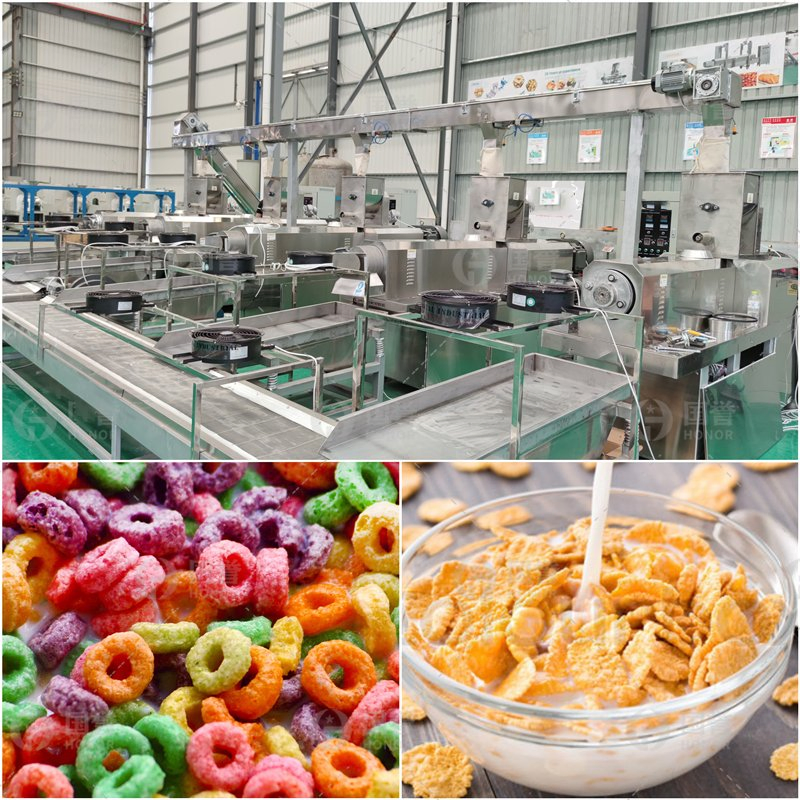
Best Corn Flakes Maker Machine Suppliers & Factory List
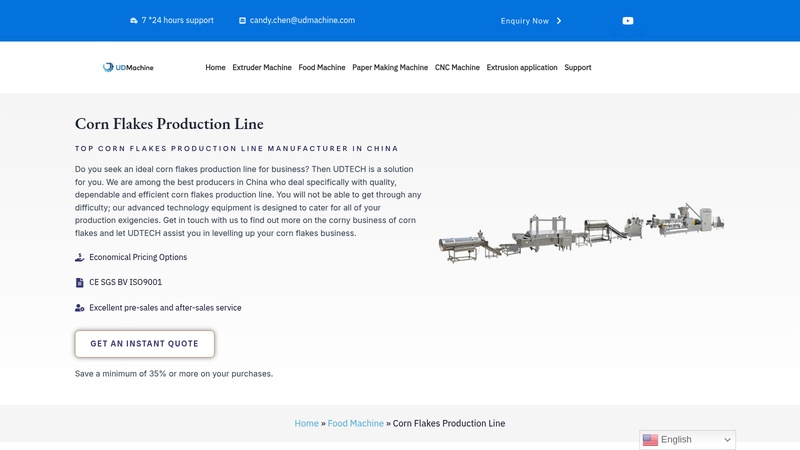


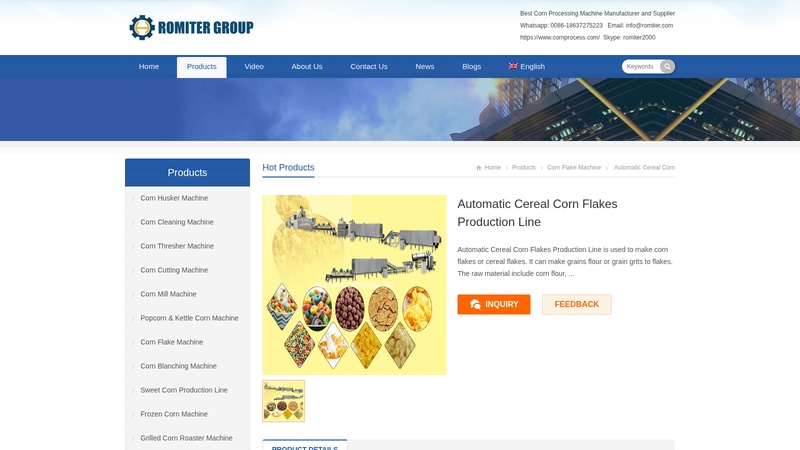
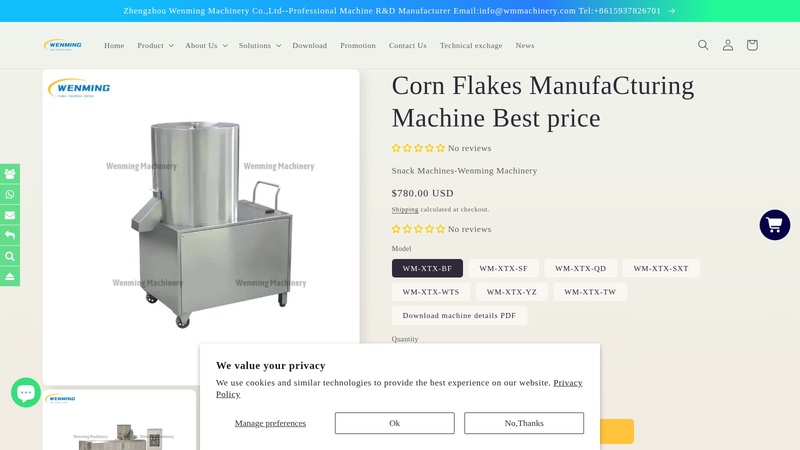

Sourcing Guide: Key Factors for Corn Flakes Maker Machine
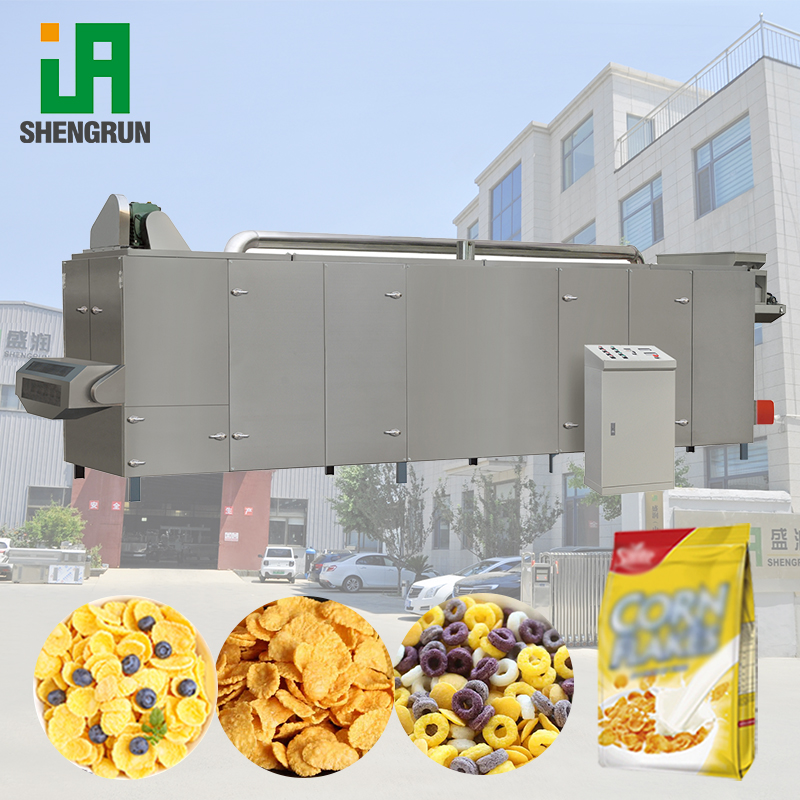
B2B Machinery Sourcing Guide: Industrial Corn Flakes Production Lines from China
For international investors and food processing plant operators, sourcing breakfast cereal manufacturing equipment from China represents a strategic opportunity to optimize CAPEX without compromising production capabilities. However, the variance in engineering standards among Chinese manufacturers necessitates a rigorous technical evaluation framework. This guide provides decision-makers with critical assessment criteria for extrusion-based corn flakes production systems, moving beyond generic “Corn Flakes Maker Machine” listings to industrial-grade procurement intelligence.
Executive Summary: The Extrusion Technology Landscape
Industrial corn flakes production relies on twin-screw extrusion technology—a continuous cooking process that gelatinizes corn grits under controlled heat, moisture, and mechanical shear. When evaluating Chinese suppliers, distinguish between commodity-grade extruders (suitable for animal feed or snack pellets) and precision cereal extrusion systems designed for human consumption breakfast products. The following three technical factors determine equipment longevity, product consistency, and regulatory compliance in export markets.
H3 Critical Factor 1: Extrusion System Engineering & Screw Configuration
The screw assembly constitutes the heart of your production line and directly impacts gelatinization efficiency, throughput stability, and energy consumption.
Modular Screw Design Architecture
Demand fully modular screw configurations rather than single-piece designs. Premium Chinese manufacturers utilize segmented screws comprising:
– Feeding elements: Deep-flight conveying sections for consistent grit intake
– Compression zones: Gradually decreasing pitch to build pressure
– Shearing/kneading blocks: 30°, 45°, or 60° staggered discs for optimal starch modification
– Venting sections: Atmospheric or vacuum degassing ports for moisture control
Critical Specification: Insist on a Length-to-Diameter (L/D) ratio between 20:1 and 24:1. Ratios below 18:1 insufficiently cook corn grits, resulting in poor flake integrity and bowl-life stability. Request metallurgical specifications for screw elements—tool steel (W6Mo5Cr4V2) with nitriding surface treatment (HV 900-1000) provides 8,000+ operational hours before wear becomes significant.
Barrel Configuration: Verify that the extruder barrel features independent temperature control zones (typically 4-6 zones) with cartridge heaters and cooling jackets. The intersection between screw and barrel clearance should not exceed 0.3mm to prevent backflow while maintaining mechanical safety.
H3 Critical Factor 2: Material Durability & Food-Grade Compliance
Corn grits are highly abrasive, and production environments require 24/7 operational capability. Material specifications determine both food safety compliance and total cost of ownership.
Stainless Steel Grading & Surface Treatment
– Contact Surfaces: Mandate 316L stainless steel (not 304) for all product-contact components including barrels, dies, and cutting assemblies. 316L offers superior chloride resistance during CIP (Clean-in-Place) sanitation cycles.
– Surface Roughness: Specify Ra ≤ 0.8μm (32 micro-inches) finish on internal surfaces to prevent bacterial harboring and facilitate cleaning validation.
– Structural Framework: While non-contact frames may utilize 304 stainless steel or carbon steel with food-grade epoxy coating, insist on full stainless steel construction if your facility operates in high-humidity environments.
Wear Resistance Engineering
Examine the die plate material—premium systems utilize X46Cr13 martensitic stainless steel (1.4034) hardened to HRC 50-55. For high-volume operations (>500kg/h), inquire about tungsten carbide inserts in high-wear zones. Request documentation of FDA 21 CFR 177.1550 compliance or EU 1935/2004 food contact material certifications.
H3 Critical Factor 3: Process Automation & Control Architecture
Modern breakfast cereal production requires precise control over 12+ process parameters. Inadequate control systems result in product variability, waste, and regulatory non-compliance.
PLC & HMI Specifications
– Controller Platform: Insist on Siemens S7-1200/1500 series or Schneider Electric Modicon PLCs. Avoid proprietary or generic Chinese control systems that limit future integration and spare parts availability.
– Human-Machine Interface: 10-inch+ industrial touchscreen with recipe management capability—minimum 50 stored recipes with password-protected access levels (Operator/Supervisor/Engineer).
– Temperature Precision: Verify PID control algorithms maintaining barrel temperatures within ±1°C variance. Corn flakes extrusion typically requires 120°C-140°C cooking zones; thermal drift destroys product texture.
Integration & Traceability
Demand Ethernet/IP or Profinet communication protocols for integration with MES (Manufacturing Execution Systems) and ERP platforms. The system should provide:
– Real-time data logging of critical control points (CCPs)
– Automatic alerts for deviation from HACCP parameters
– Remote diagnostics capability (VPN access for manufacturer technical support)
Safety Systems: Verify Category 3 PLd safety circuits per EN ISO 13849-1, including emergency stops with monitored relays and interlocked guards.
Additional Sourcing Considerations
Energy Efficiency & Power Specifications
Corn flakes lines are energy-intensive (typically 0.15-0.25 kWh/kg output). Evaluate:
– Drive Systems: AC vector motors with VFD (Variable Frequency Drives) for 20-30% energy savings versus direct-drive systems
– Thermal Efficiency: Insulated barrels reducing heat loss by 15-20%
– Power Configuration: Confirm voltage compatibility (380V/3-phase/50Hz standard in China; request 460V/60Hz or 400V/50Hz configurations for your region)
Certification Verification
Beyond CE marking (mandatory for EU import), verify:
– ISO 22000 or FSSC 22000 certification of the manufacturing facility
– CE compliance to Machinery Directive 2006/42/EC, including risk assessment documentation
– UL/CSA components for North American installations
After-Sales Service Architecture
Evaluate the supplier’s international service capability:
– Spare parts inventory within your region (24-48 hour availability)
– English-speaking technical support (video verification recommended)
– Installation supervision and commissioning protocols
– Training programs covering operation, maintenance, and HACCP integration
Vendor Evaluation Checklist
Before finalizing procurement, conduct or commission:
1. Factory Acceptance Testing (FAT): Witness trial runs using your specific corn grits formulation
2. Metallurgical Verification: Third-party testing of stainless steel grades (XRF analysis)
3. Reference Site Audits: Visit operational installations in similar climatic/regulatory environments
4. Warranty Negotiation: Minimum 12-month full warranty with 10-year spare parts availability guarantees
Conclusion
Sourcing corn flakes production technology from China requires moving beyond Alibaba listings to engineering-level due diligence. The intersection of precision extrusion mechanics, food-grade materials science, and industrial automation determines whether your investment yields a 10-year production asset or a maintenance liability. Prioritize manufacturers demonstrating vertical integration capabilities (in-house CNC machining for screws, in-house PLC programming) over trading companies offering “turnkey solutions” without engineering depth.
For investors scaling breakfast cereal operations, the incremental cost premium (typically 15-25%) for Tier-1 Chinese extrusion technology pays for itself within 18 months through reduced downtime, energy efficiency, and product yield consistency.
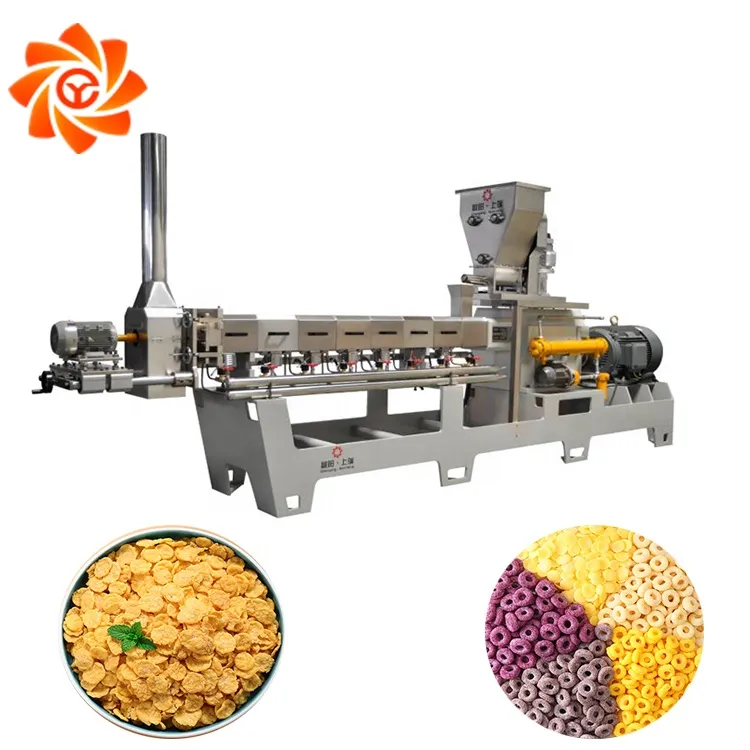
Why Experience is Non-Negotiable in Corn Flakes Manufacturing
Selecting an experienced factory for your Corn Flakes Maker Machine is critical because breakfast cereal production demands precision engineering that novice suppliers cannot deliver. Corn flakes require exacting extrusion parameters, precise moisture control, and uniform toasting profiles to achieve the signature crunch and shelf stability. An established manufacturer brings proven expertise in:
• Process Integration: Seamless coordination between extrusion, flaking, drying, and coating systems to prevent texture inconsistencies and product waste
• Regulatory Compliance: Deep knowledge of food-grade stainless steel standards, hygienic design principles, and international safety certifications
• Operational Reliability: Battle-tested mechanical designs that minimize unplanned downtime and maximize OEE (Overall Equipment Effectiveness)
• Recipe Flexibility: Engineering capability to handle varying corn grits qualities and fortification requirements without compromising output
Pivot to Excellence: Your Production Success Starts with Jinan Dayi
This is why leading food manufacturers partner with Jinan Dayi Extrusion Machinery Co., Ltd.—a name synonymous with extrusion excellence since 1996.
With over 20 years of specialized expertise in advanced extrusion technology, Dayi has evolved from machinery builder to total production solution architect. We don’t just sell equipment; we deliver full turnkey solutions that transform raw corn grits into market-ready breakfast cereals, complete with integrated packaging systems.
The Dayi Advantage:
✓ Decades of Engineering Mastery: Established in 1996, our dedicated expert team has refined high-efficiency extrusion technology across thousands of installations worldwide
✓ Complete Process Ownership: From raw material preprocessing and extrusion to flaking, toasting, sugar coating, and final packaging—we engineer every critical control point
✓ Proven Corn Flakes Expertise: Our dedicated Corn Flakes Production Line leverages precision twin-screw extrusion and advanced flaking mills to deliver consistent flake thickness, optimal moisture content, and superior crunch retention
Beyond Corn Flakes: Our portfolio encompasses puffed snacks, fortified rice, pet food, tortilla chips, and nutrition powder systems—all built to the same rigorous standards that have defined us for two decades.
Ready to Optimize Your Breakfast Cereal Production?
Don’t compromise on experience when your product quality depends on it. Contact Jinan Dayi Extrusion Machinery Co., Ltd. today for a customized solution and detailed quotation tailored to your capacity requirements, facility layout, and product specifications.
Let our 20+ years of extrusion expertise become your competitive advantage.
Contact us now to discuss your Corn Flakes production goals.