
The global snack food market, projected to exceed \$620 billion by 2028 at a CAGR of 6.2%, is undergoing a fundamental operational transformation. For investors and facility operators, the shift from conventional batch processing to continuous manufacturing systems represents not merely an equipment upgrade, but a strategic imperative for margin protection and market responsiveness. At the epicenter of this evolution stands extrusion technology—a processing methodology that now accounts for over 70% of all savory snack production worldwide.
The Extrusion Imperative: Engineering Precision Meets Product Innovation
Modern twin-screw extrusion systems have transcended their traditional role as simple forming mechanisms. Today’s advanced extruders operate with specific mechanical energy (SME) inputs of 0.15–0.25 kWh/kg, enabling precise texturization of protein matrices, controlled expansion ratios (critical for bulk density specifications), and real-time moisture manipulation within ±0.5% accuracy. This technological sophistication allows manufacturers to pivot between product categories—from direct-expanded corn snacks to complex co-extruded filled products—without line changeover penalties exceeding 45 minutes.
For capital deployment decisions, extrusion technology offers quantifiable advantages: ingredient utilization rates exceeding 95%, elimination of intermediate drying stages (reducing energy footprints by 30–40% compared to conventional frying), and the capability to process alternative proteins (pea, fava bean, insect flour) that conventional forming technologies cannot handle. These parameters directly impact unit economics, with modern extrusion lines delivering OEE (Overall Equipment Effectiveness) rates of 85–92% when properly integrated with upstream mixing and downstream coating systems.
Production Efficiency as Competitive Architecture
In an environment where labor costs in major processing markets have increased 18% year-over-year and energy volatility persists, production efficiency metrics have become primary valuation drivers. High-throughput snack manufacturing lines from tier-1 Chinese suppliers now achieve outputs of 3,000–8,000 kg/hour while maintaining CV (coefficient of variation) below 4% on weight consistency—specifications critical for retail compliance and ingredient yield optimization.
The integration of Industry 4.0 architectures further distinguishes contemporary equipment investments. SCADA-enabled extrusion systems with predictive maintenance algorithms reduce unplanned downtime by up to 37%, while automated die-swapping mechanisms and CIP (Clean-in-Place) systems minimize changeover intervals that previously eroded production calendars. For investors evaluating CapEx proposals, these efficiency gains translate to payback periods compressed to 2.5–3.8 years in high-volume operations.
China’s Manufacturing Ecosystem: Beyond Cost Arbitrage
China’s food machinery sector has evolved from component assembly to integrated R&D leadership, with domestic manufacturers now holding 34% of global patents in extrusion die technology and thermal process control. Tier-1 Chinese suppliers now offer CE-compliant, FDA-standard equipment featuring servo-driven cutting systems, AI-powered vision sorting, and hygienic design principles aligned with EHEDG guidelines—specifications previously associated exclusively with European OEMs.
The strategic advantage extends beyond initial acquisition costs (typically 40–60% below Western equivalents while achieving comparable MTBF rates of 8,000+ hours). Chinese manufacturers now provide modular line architectures that allow scalable capacity expansion, critical for investors executing phased market entry strategies or private equity firms engineering roll-up platforms in the snack sector.
Selection Criteria for Strategic Procurement
As you evaluate manufacturing partners for your next facility investment or capacity expansion, technical differentiation increasingly resides in extrusion screw profile optimization, heat exchanger efficiency coefficients, and MES (Manufacturing Execution System) integration capabilities—not merely stainless steel gauges and motor specifications.
The following analysis examines ten Chinese manufacturers distinguished by their engineering depth, international certification portfolios, and demonstrated track records in deploying high-efficiency extrusion systems across global snack processing operations. Each evaluation prioritizes verifiable production metrics, aftermarket support infrastructure, and compliance with BRC, ISO 22000, and NSF standards essential for export-market production.
Continue reading for detailed technical specifications, referenceable installation case studies, and comparative ROI analyses of each manufacturer’s extrusion platform capabilities…
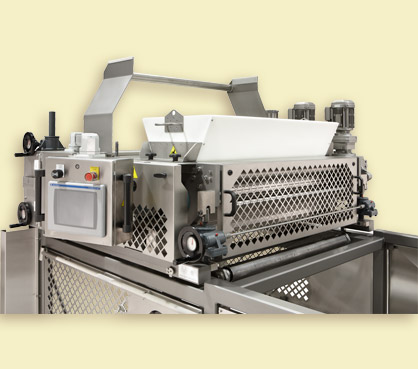
B2B Machinery Sourcing Guide: Snacks Making Machines from China
For international food processing investors and factory owners, sourcing extrusion-based snacks making equipment from China represents a strategic opportunity to balance capital expenditure with production scalability. However, the variance in engineering standards across Chinese manufacturers necessitates a rigorous technical evaluation framework. This guide provides actionable intelligence for securing high-capacity, compliant snack production lines—whether for direct expanded snacks, co-extruded fillings, or pellet-based products.
Critical Technical Evaluation Factors
When assessing Chinese-manufactured snacks extrusion systems, move beyond quoted capacity metrics (kg/h) and scrutinize these three engineering pillars that determine long-term ROI, product consistency, and regulatory compliance.
H3 Extruder Screw Configuration and L/D Ratio Optimization
The screw assembly is the heart of any snacks extruder, determining shear rate, cooking degree, and texture development.
- Segmented Screw Design: Demand modular screw configurations with interchangeable elements (conveying, kneading, and reverse-flight segments). Premium Chinese manufacturers utilize nickel-based alloy screws (38CrMoAlA nitrided steel) with individual segment hardness exceeding HRC 60. Verify that the supplier provides screw drawings showing the compression ratio progression—typically 3:1 to 4:1 for direct expanded snacks, but requiring adjustment for high-fiber or high-protein formulations.
- L/D Ratio Specifications: For industrial snack production, insist on extruders with a Length-to-Diameter ratio of 15:1 to 20:1. Ratios below 15:1 compromise gelatinization and expansion volume, while ratios above 20:1 increase mechanical wear and energy consumption unnecessarily. Confirm the barrel utilizes independent heating zones (usually 3-5 zones) with PID temperature control accuracy of ±1°C.
- Shear Rate Calculability: Request Computational Fluid Dynamics (CFD) analysis data or empirical residence time distribution (RTD) studies. This indicates the manufacturer’s engineering sophistication and ensures uniform cooking—critical for avoiding “dead zones” that create burnt particulates or ungelatinized starch centers.
H3 Food-Grade Material Durability and Sanitary Design
Material specification directly impacts food safety compliance (FDA, EU 1935/2004) and equipment lifecycle costs in high-moisture, high-temperature environments.
- Contact Surface Standards: All product-contact surfaces must be 304 or 316L stainless steel with surface roughness Ra ≤ 0.8μm (preferably electropolished). Verify that Chinese suppliers provide mill test certificates (MTC) for steel sourcing, not just generic compliance letters. Avoid manufacturers using 201 stainless steel or carbon steel with chrome plating—these fail under acidic product conditions (cheese-flavored snacks, tomato-based seasonings).
- Wear-Resistant Barrel Liners: The extruder barrel must feature bimetallic liners (typically centrifugally cast with tungsten carbide or cobalt-based alloys) achieving 58-62 HRC hardness. This prevents “barrel scoring” when processing abrasive materials (whole grain flours, bran, or mineral-fortified mixes). Clarify liner replacement protocols—modular liner designs reduce maintenance downtime by 70% compared to monolithic barrels.
- Sanitary Construction Protocols: Inspect for sloped surfaces (minimum 3° angle) to prevent water pooling, continuous welding with Ra ≤ 0.8μm finish, and IP65-rated electrical enclosures. Demand compliance with CE Machinery Directive 2006/42/EC and EC 1935/2004 for food contact materials. Reputable Chinese OEMs will provide third-party verification from SGS, TÜV, or Bureau Veritas—not self-declared conformity.
H3 PLC Control Systems and Industry 4.0 Integration
Automation sophistication determines operator dependency, recipe reproducibility, and integration with existing MES (Manufacturing Execution Systems).
- Control Architecture: Specify Siemens S7-1200/1500 or Allen-Bradley CompactLogix PLCs—avoid proprietary or generic Chinese PLC brands that create spare parts vulnerabilities. The system must feature a 10-inch+ industrial touchscreen HMI (Human-Machine Interface) with multi-language support (English, Spanish, Arabic) and role-based access control (RBAC) for quality assurance protocols.
- Process Parameter Logging: Require automatic data logging of critical control points (CCPs): barrel zone temperatures, screw RPM, main motor amperage (torque indication), and die pressure. Data should export via Ethernet/IP or Profinet to your SCADA system, with CSV/Excel compatibility for HACCP documentation. Advanced systems offer cloud-based OEE (Overall Equipment Effectiveness) monitoring via secure VPN tunnels.
- Recipe Management: Verify the ability to store 100+ product recipes with encrypted backup. The system should allow “ramp and soak” temperature profiles and automatic water/steam injection modulation based on real-time product moisture feedback (NIR sensors). This precision prevents the “trial-and-error” waste common in manually controlled extrusion.
Strategic Sourcing Protocols for Chinese Markets
Factory Audit Checklist: Beyond technical specs, verify the manufacturer’s CNC machining capabilities (5-axis machining centers for die fabrication), in-house metallurgy lab for hardness testing, and pilot plant facilities. Reputable suppliers offer trial runs with your specific raw materials before shipment.
Power Consumption Benchmarks: For energy cost modeling, target specific energy consumption (SEC) of 0.12–0.18 kWh/kg for direct expanded snacks. Request motor efficiency ratings (IE3 or IE4 premium efficiency motors) and variable frequency drives (VFDs) for all rotating components.
After-Sales Infrastructure: Confirm the supplier maintains regional service centers in your target market (Africa, Middle East, Southeast Asia) with native-language technicians. Demand a 24-month warranty on mechanical components and 12 months on electrical systems, with video diagnostic support capabilities.
Conclusion
Sourcing snacks making machinery from China requires moving beyond price-per-kilogram comparisons to engineering validation. By enforcing strict standards on screw metallurgy, sanitary-grade construction, and PLC interoperability, investors secure equipment that meets BRC, SQF, or ISO 22000 facility standards while maintaining the cost advantages of Chinese manufacturing. Always commission third-party pre-shipment inspections (PSI) focusing on die alignment tolerances (±0.05mm) and electrical safety testing (IEC 60204-1) before final payment release.
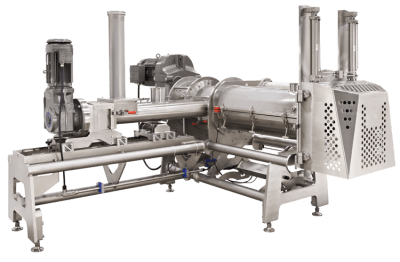
Why Experience is Non-Negotiable in Snacks Making Machine Selection
Selecting an experienced factory for your snacks making machinery is not merely a procurement preference—it is a strategic risk mitigation decision. Seasoned manufacturers bring critical advantages that directly impact your operational ROI:
- Process Maturity: Experienced builders possess deep institutional knowledge of extrusion physics, thermal dynamics, and ingredient behavior, ensuring equipment is engineered for consistent product quality rather than just mechanical function.
- Compliance & Safety Architecture: Long-standing factories have evolved with global food safety standards (FDA, CE, BRC), integrating hygienic design, traceability systems, and material safety protocols from the ground up.
- Operational Reliability: Years of field data inform robust component selection and predictive maintenance algorithms, minimizing unplanned downtime that can cost processors thousands per hour.
- Turnkey Integration: Veteran suppliers understand that extrusion is only one node in the value chain; they engineer seamless upstream and downstream integration, from precise dosing systems to packaging synchronization.
- Agile Customization: True expertise enables rapid adaptation of screw profiles, barrel configurations, and die designs to accommodate novel recipes or functional ingredients without lengthy R&D cycles.
Pivot to Excellence: Your Production Partner Since 1996
When experience matters, Jinan Dayi Extrusion Machinery Co., Ltd. stands as the definitive choice. Established in 1996, we have spent over two decades perfecting advanced, high-efficiency extrusion technology, establishing ourselves as leaders in the global food machinery landscape.
The DAYI Distinction:
- Expert Engineering Core: Our dedicated specialist team combines mechanical precision with food science expertise, delivering extruders optimized for your specific rheological requirements.
- High-Efficiency Extrusion Architecture: We deploy next-generation screw geometries and thermal control systems that maximize specific mechanical energy (SME) conversion while minimizing waste and utility consumption.
- True Turnkey Solutions: From raw material preprocessing and extrusion cooking to drying, flavoring, and final packaging integration, we provide complete production ecosystems—not just isolated machines.
Comprehensive Portfolio for Diverse Markets:
Whether you are entering the puffed snack sector, expanding into functional foods, or scaling pet food operations, DAYI delivers proven production lines including:
* Puffed Snack Food Production Lines
* 3D Pellet Snack Systems
* Corn Flakes & Breakfast Cereal Lines
* Fortified/Nutritional Rice Extrusion Systems
* Tortilla Chips Processing Lines
* Baby Food & Nutrition Powder Production
* Pet Food Extrusion Systems
* Soya Chunk (Textured Vegetable Protein) Lines
* Bread Crumbs Manufacturing Systems
Ready to Optimize Your Extrusion Operations?
Don’t compromise on machinery maturity. Contact Jinan Dayi Extrusion Machinery Co., Ltd. today to discuss your specific product specifications and raw material profiles. Our engineers will configure a custom solution tailored to your capacity targets and quality standards.
Request your detailed technical consultation and competitive quotation now—partner with 20+ years of extrusion excellence.