
Executive Market Intelligence: Strategic Sourcing in the Global Snacks Manufacturing Landscape
The global savory snacks market, valued at $213.4 billion in 2023, is projected to reach $287.6 billion by 2028 (6.2% CAGR), driven by evolving consumption patterns in emerging economies and premiumization trends in mature markets. For capital allocators and facility operators, this expansion presents a critical inflection point: the machinery decisions made today will determine competitive positioning during this growth phase.
China has emerged as the strategic manufacturing hub for high-capacity snacks production equipment, commanding 34% of global food processing machinery exports and demonstrating particular dominance in extrusion-based systems. This shift reflects not merely cost arbitrage, but a fundamental evolution in engineering capabilities—Chinese manufacturers now supply twin-screw extrusion systems achieving throughputs of 3,000–5,000 kg/h with coefficient of variation (CV) below 4%, matching European precision standards at significantly optimized CAPEX levels.
The Extrusion Imperative: Technology as Competitive Moat
Extrusion technology remains the backbone of modern snack manufacturing, processing 68% of all puffed and textured snack categories globally. The transition from single-screw to intermeshing co-rotating twin-screw extruders has revolutionized production economics, enabling:
– Precise starch gelatinization control (95–98% efficiency rates) critical for texture consistency in direct-expanded and third-generation snacks
– Modular barrel configurations reducing changeover times by 40–60% for multi-SKU operations
– Energy consumption optimization to 0.18–0.22 kWh/kg output—vital as energy costs represent 15–22% of operational expenditure (OPEX) in high-volume facilities
Current industry data indicates that facilities utilizing advanced extrusion systems with Industry 4.0 integration (real-time viscosity monitoring, automated die-pressure adjustment) achieve Overall Equipment Effectiveness (OEE) rates of 85–92%, compared to 65–72% for legacy mechanical systems.
Production Efficiency: The Capital Efficiency Equation
For investors evaluating machinery procurement, the metric of interest has shifted from initial acquisition cost to Total Cost of Ownership (TCO) and Output per Square Meter. Leading Chinese manufacturers now deliver fully integrated production lines—mixing, extrusion, drying, seasoning, and packaging—achieving continuous operation cycles exceeding 168 hours with <2% waste ratios.
The following analysis evaluates ten Chinese manufacturers whose engineering standards, after-sales service networks, and compliance certifications (CE, FDA, HALAL) meet the rigorous demands of international B2B procurement. These selections prioritize scalable automation architectures, hygienic design principles (EHEDG-compliant stainless steel construction), and modular upgrade pathways—ensuring your capital deployment aligns with both immediate production targets and long-term operational agility in the $287 billion snacks economy.
This intelligence brief serves as your decision-support framework for machinery investments that optimize throughput, minimize downtime, and ensure compliance with evolving global food safety standards.
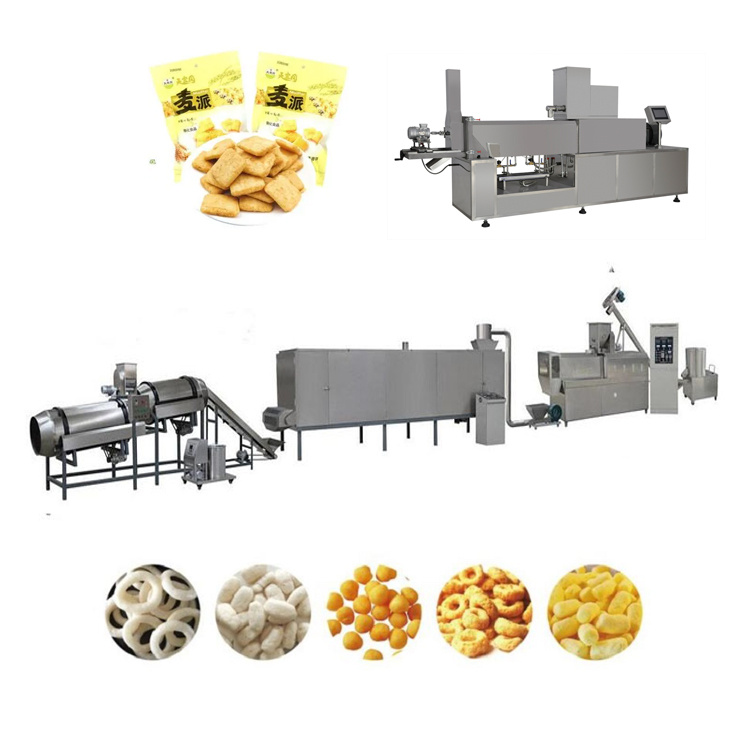
B2B Machinery Sourcing Guide: Strategic Procurement of Snacks Production Machines from China
For international food processing investors and plant operators, sourcing snacks production machinery from China represents a significant capital expenditure decision that extends far beyond unit pricing. With the global extruded snacks market demanding increasingly sophisticated product textures, allergen-free production capabilities, and Industry 4.0 integration, selecting the right equipment partner requires rigorous technical evaluation. This guide addresses the critical engineering specifications and compliance frameworks that determine long-term operational ROI when procuring extrusion systems, forming lines, and auxiliary processing equipment from Chinese manufacturers.
H3 Screw Configuration & Extrusion Mechanics
The extrusion system constitutes the technological core of any snacks production line, and screw geometry directly dictates product expansion ratio, texture density, and throughput consistency. When evaluating Chinese-manufactured extruders, prioritize twin-screw co-rotating systems over single-screw alternatives, as they provide superior mixing uniformity for complex formulations (including high-fiber or gluten-free matrices) and allow precise shear rate control critical for direct-expanded snacks.
Technical Specifications to Verify:
– L/D (Length-to-Diameter) Ratio: Demand minimum 15:1 for snack applications, with premium systems offering 20:1+ for enhanced cooking and gelatinization
– Modular Screw Elements: Ensure the barrel utilizes segmented, interchangeable screw configurations (conveying, kneading, and reverse elements) to accommodate product line pivots without complete screw replacement
– Wear-Resistant Coatings: Verify nitriding treatment depth (minimum 0.4mm) or tungsten carbide inlaid technology on high-wear zones, particularly for abrasive cornmeal or rice flour formulations
– Die Plate Engineering: Inspect die land length and orifice geometry optimization for uniform expansion; inferior die design causes density variations exceeding ±8%, unacceptable for automated packaging integration
Red Flag: Manufacturers offering “universal” single-screw systems for both pet food and human snacks typically compromise on shear sensitivity required for delicate cereal-based products.
H3 Material Durability & Sanitary Design
Food safety compliance and equipment longevity hinge on metallurgical quality and sanitary engineering—areas where significant variance exists across Chinese supplier tiers. For machinery contacting acidic doughs (cheese-flavored snacks, fruit-based inclusions) or requiring aggressive CIP (Clean-in-Place) protocols, 316L stainless steel construction for all product-contact surfaces is non-negotiable, despite higher procurement costs compared to 304-grade alternatives.
Critical Inspection Points:
– Surface Finish Standards: Demand Ra ≤0.8μm (micrometers) on all internal contact surfaces to prevent microbial harboring; premium suppliers achieve Ra 0.4μm through electropolishing
– Seamless Welding Protocols: Verify TIG welding with 100% penetration and elimination of crevices at joints—critical for preventing allergen cross-contamination during product changeovers
– Gasket Materials: Confirm FDA-compliant silicone or EPDM seals rated for continuous operation above 150°C, with quick-release clamping systems for tool-free maintenance
– Frame Corrosion Resistance: Even non-contact frames should utilize 304 stainless steel or powder-coated carbon steel with salt-spray testing certification (ASTM B117) for humid production environments
Operational Impact: Substandard material specifications typically manifest as pitting corrosion within 18-24 months, necessitating costly component replacement and potential production halts during peak demand cycles.
H3 Intelligent Control Systems & Compliance Architecture
Modern snacks manufacturing requires precise parameter control and traceability that obsolete relay-based systems cannot provide. Evaluate Chinese machinery based on PLC (Programmable Logic Controller) integration sophistication and international certification validity—not just presence of CE stickers, but substantive compliance documentation.
Essential Technical Criteria:
– Control Hierarchy: Specify Siemens S7-1200/1500 series or equivalent Rockwell Automation PLCs with 10-inch+ HMI (Human-Machine Interface) touchscreens, enabling real-time monitoring of barrel temperature zones (±1°C accuracy), screw RPM, and die pressure
– Data Integration: Demand Ethernet/IP or Profinet connectivity for MES (Manufacturing Execution Systems) integration, with automatic recipe storage for minimum 100 product SKUs and batch data logging for 12+ months—critical for BRC or SQF audit compliance
– Energy Management: Verify VFD (Variable Frequency Drive) implementation on all motors, reducing power consumption by 20-35% compared to direct-on-line starters; request specific kWh/kg throughput metrics for your target products
– Certification Verification: Beyond CE marking (Machinery Directive 2006/42/EC), validate:
– UL certification for North American electrical safety
– FDA 21 CFR compliance for all polymer contact materials
– ISO 22000 or HACCP alignment in the manufacturer’s quality management system
Warning: “CE self-certification” without notified body involvement (particularly for high-voltage extrusion systems) creates liability exposure in EU markets and may invalidate insurance coverage.
Supplementary Due Diligence Protocols
Beyond these three technical pillars, institutional investors should implement:
Factory Acceptance Testing (FAT): Require witnessed trials using your actual raw material specifications, not generic cornmeal demos, with contractual throughput guarantees (e.g., “minimum 800kg/hour at 95% OEE”).
Spare Parts Localization Strategy: Negotiate 10-year availability guarantees for wear parts (screw segments, dies, cutter blades) and establish regional spare parts depots to avoid 6-8 week shipping delays from China.
After-Sales Service Infrastructure: Verify the supplier maintains certified technicians in your target market regions; language barriers during emergency breakdowns can extend downtime costs exponentially beyond equipment savings.
Conclusion
Sourcing snacks production machinery from China offers compelling CAPEX advantages, but only when technical specifications prioritize total cost of ownership over initial procurement price. By rigorously evaluating screw engineering for product versatility, metallurgical standards for regulatory longevity, and control architecture for operational intelligence, investors secure production assets capable of supporting premium snack innovation cycles for 15+ years. Engage qualified third-party inspection agencies (SGS, Bureau Veritas) for pre-shipment verification, and structure payment terms with substantial retainage (minimum 30%) until successful commissioning and operator training completion.
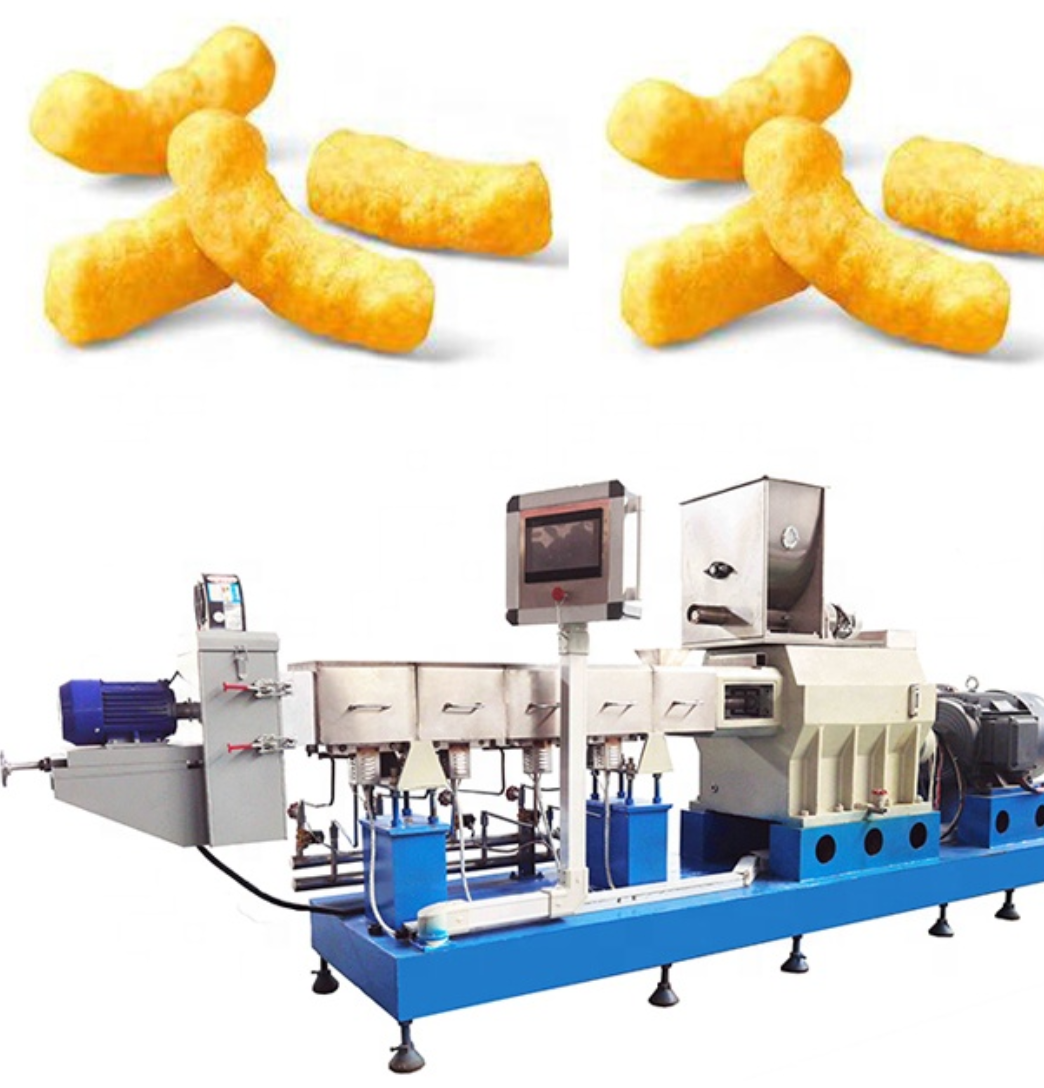
Why Experience is Non-Negotiable in Snacks Production Machinery
Selecting an established factory for your snacks production line is not merely a procurement decision—it is a strategic investment in operational continuity and product quality. Experienced manufacturers bring critical advantages that directly impact your bottom line:
- Engineering Precision & Reliability: Seasoned factories possess deep institutional knowledge of extrusion dynamics, thermal profiling, and material flow behaviors. This expertise translates into robust machinery designs that minimize unplanned downtime and maintain consistent product density, texture, and expansion rates—factors that define market competitiveness.
- Regulatory Compliance & Food Safety: Veteran suppliers understand the stringent hygiene standards (FDA, CE, HACCP) governing food contact surfaces and production environments. Their equipment incorporates sanitary design principles from inception, ensuring seamless certification and reduced contamination risks.
- Process Optimization: An experienced partner offers more than hardware; they provide process intelligence. They can anticipate raw material variances, optimize energy consumption, and configure integrated systems that maximize yield while minimizing waste.
- Lifecycle Support: Longevity in the industry ensures stable access to spare parts, technical documentation, and field service expertise—critical for maintaining OEE (Overall Equipment Effectiveness) over a machine’s 10–15 year lifespan.
Partner with Proven Excellence: Jinan Dayi Extrusion Machinery Co., Ltd.
This is precisely why global food manufacturers trust Jinan Dayi Extrusion Machinery Co., Ltd. Since our establishment in 1996, we have spent over two decades perfecting advanced, high-efficiency extrusion technology. We are not just equipment builders; we are extrusion process architects dedicated to transforming your raw material concepts into profitable, market-ready products.
The Dayi Advantage:
- Dedicated Expert Team: Our engineering corps comprises extrusion specialists who understand the rheological complexities of cereal, protein, and starch-based formulations.
- High-Efficiency Extrusion Technology: Proprietary screw configurations, barrel heating systems, and die designs that ensure optimal gelatinization, texture control, and energy efficiency.
- True Turnkey Solutions: From raw material preprocessing and extrusion cooking to drying, flavoring, and final packaging integration—we deliver complete production ecosystems, not isolated machines.
Comprehensive Production Portfolio:
Whether you are expanding into emerging snack categories or optimizing existing operations, Dayi provides specialized lines for:
* Puffed Snack Food Production
* Pet Food & Aquafeed Processing
* Tortilla & Corn Chips Manufacturing
* Fortified/Nutritional Rice Extrusion
* Breakfast Cereals & Corn Flakes
* Infant & Baby Food Nutrition
* Industrial Bread Crumbs Processing
* 3D Pellet Snack Systems
* Nutritional & Protein Powders
* Textured Vegetable Protein (Soya Chunks)
Ready to Extrude Your Competitive Edge?
Don’t compromise on trial-and-error engineering. Leverage Dayi’s 20+ years of extrusion mastery to accelerate your product development and ensure production line reliability from day one.
Contact Jinan Dayi Extrusion Machinery Co., Ltd. today to discuss your specific raw materials, capacity requirements, and product specifications. Our engineers are ready to design your custom solution and provide a detailed project quotation.
Let’s build your next successful production line together.