
The $15.2 Billion Breakfast Revolution: Navigating Corn Flakes Manufacturing Economics Through Advanced Extrusion Technology
The global breakfast cereal market, projected to reach $15.2 billion by 2027 (CAGR 4.2%), is undergoing a structural transformation driven by private-label manufacturing and regional production localization. For international investors and facility operators, the decision to source corn flakes production lines from China no longer centers on capital expenditure minimization alone—it requires sophisticated evaluation of extrusion engineering capabilities and operational efficiency metrics that determine 10-year Total Cost of Ownership (TCO).
The Extrusion Imperative: Beyond Basic Expansion
Modern corn flakes manufacturing hinges on twin-screw extrusion (TSE) technology, which has rendered traditional batch cooking methods economically obsolete. Contemporary high-shear extrusion systems achieve starch gelatinization rates of 85-95% while operating at throughputs of 300–800 kg/h per line—parameters that directly correlate with unit economics. The critical differentiator among Chinese manufacturers lies in barrel temperature precision (±1°C variance control), screw configuration modularity (interchangeable elements for product versatility), and die-head pressure consistency (maintaining 40–60 bar for optimal flake density).
Investors must scrutinize extruder specifications: pre-conditioned corn grits processing requires L/D (length-to-diameter) ratios of 15:1 to 20:1 for adequate residence time distribution, while direct expansion systems demand specific mechanical energy (SME) inputs of 120–160 kWh/ton to achieve the glassy matrix structure essential for subsequent flaking and toasting operations.
Production Efficiency as Capital Strategy
In an industry where energy costs represent 18–25% of operational expenditure, production efficiency transcends throughput metrics. Leading Chinese manufacturers now integrate Industry 4.0 architectures featuring PLC-controlled automated feeding systems (±0.5% dosing accuracy), continuous rotary dryers with heat recovery systems (reducing thermal energy consumption by 30–40%), and optical sorting technology achieving 99.5% defect detection rates.
The operational benchmark has shifted toward Overall Equipment Effectiveness (OEE) scores above 85%, achievable through hygienic design principles (EHEDG-compliant stainless steel 304/316 construction), quick-changeover mechanisms (sub-30-minute product transition protocols), and predictive maintenance algorithms that minimize unplanned downtime below 2%.
The China Sourcing Calculus
As Chinese equipment manufacturers transition from cost-competitive to technology-competitive positioning, the evaluation matrix for corn flakes lines now prioritizes CE/UL certification compliance, ISO 22000-aligned sanitary design, and after-sales technical support networks spanning installation supervision to recipe optimization. The following Top 10 Manufacturers represent the convergence of competitive capital investment (typically 40–60% below European equivalents) and extrusion engineering sophistication capable of delivering consistent product quality at industrial scales exceeding 2,000 tons annually.
For facility owners evaluating capacity expansion or greenfield investments, these manufacturers offer the critical intersection of extrusion technological advancement and production efficiency optimization required to capture margin in increasingly commoditized breakfast cereal markets.
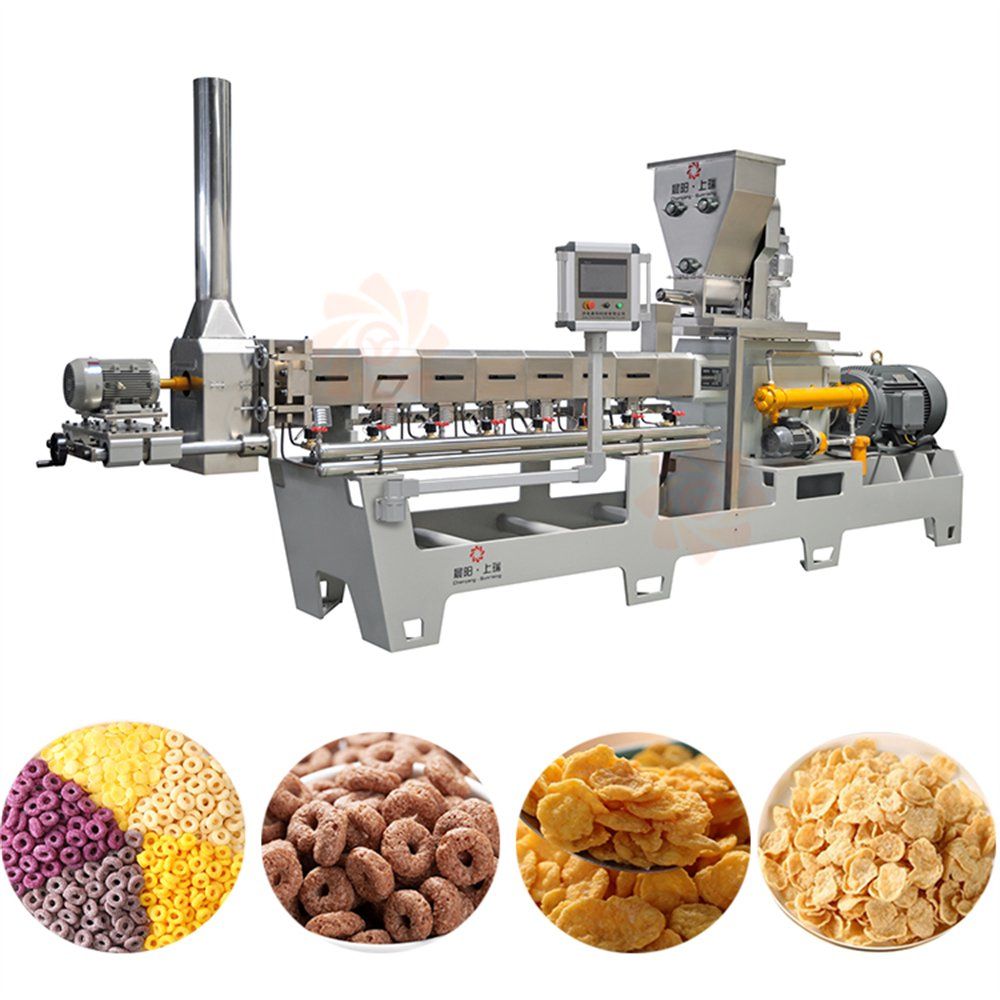
Best Corn Flakes Making Machine Cost Suppliers & Factory List
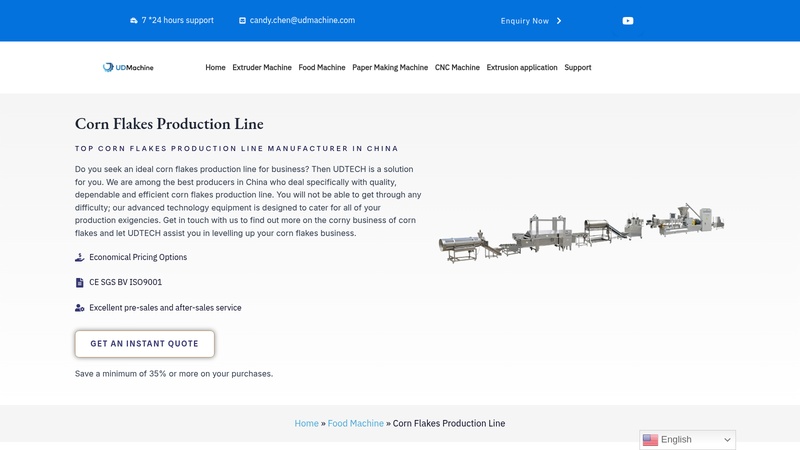
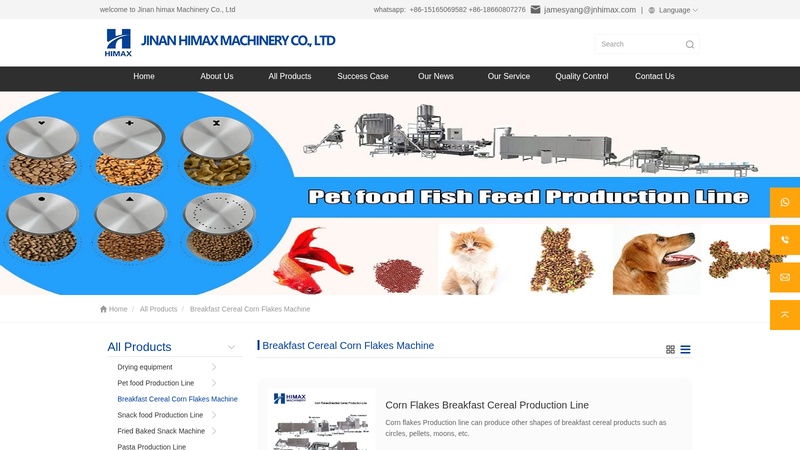


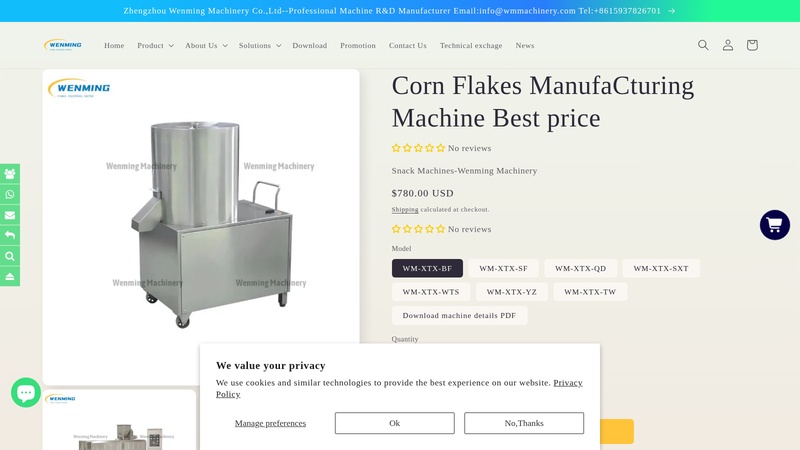

Sourcing Guide: Key Factors for Corn Flakes Making Machine Cost
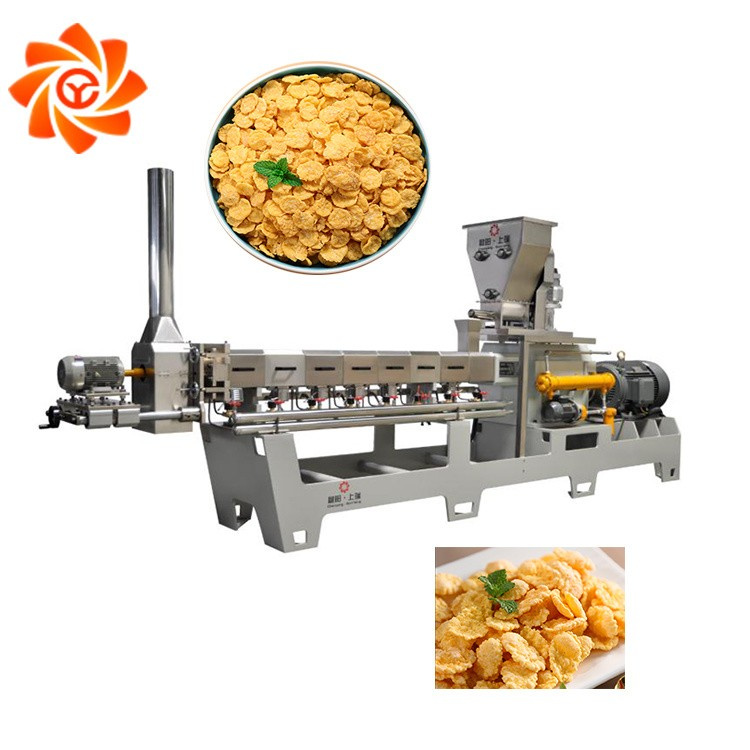
B2B Machinery Sourcing Guide: Evaluating Corn Flakes Making Machine Cost from China
For international food processing investors and facility operators, sourcing corn flakes production lines from China represents a strategic opportunity to optimize CAPEX without compromising production integrity. However, the variance in machine costs—ranging from \$50,000 for basic models to \$500,000+ for industrial turnkey systems—reflects significant differences in engineering precision, component quality, and compliance standards.
This guide provides a technical framework for evaluating true equipment value beyond FOB pricing, ensuring your sourcing decision aligns with HACCP requirements, production scalability targets, and long-term operational expenditure (OPEX) goals.
H3: Extrusion Screw Configuration and L/D Ratio Engineering
The extrusion system constitutes the core value determinant in corn flakes manufacturing costs. When assessing quotations, prioritize twin-screw extrusion technology over single-screw alternatives, despite the 20-30% price premium. Twin-screw configurations provide superior mixing uniformity for corn grits preconditioning and precise gelatinization control—critical for achieving the characteristic flaking texture and bowl-life stability.
Technical Specifications to Verify:
– L/D Ratio: Demand screws with a Length-to-Diameter ratio between 20:1 and 40:1. Higher ratios ensure adequate residence time for starch modification, directly impacting expansion rates and final product density.
– Modular Screw Design: Confirm the supplier offers segmented screw elements (conveying, kneading, and mixing sections) that can be reconfigured for recipe variations (high-fiber, fortified, or gluten-free formulations).
– Screw Material: Inquire about nitrided alloy steel (38CrMoAl) or bimetallic wear-resistant coatings. Standard carbon steel screws may reduce initial costs by 15%, but require replacement every 6-8 months when processing abrasive corn grits, whereas premium materials offer 3-5 year lifespans.
Cost Impact: Precision-engineered screw systems account for 25-35% of total machine investment but reduce specific energy consumption (SEC) by 0.15-0.20 kWh/kg, generating ROI within 18 months for facilities processing >2 tons/hour.
H3: Material Durability and Food-Grade Compliance Standards
The divergence in Chinese manufacturer pricing often stems from material specification shortcuts invisible in promotional brochures. For B2B investors targeting FDA, EU 1935/2004, or Halal certification, material traceability is non-negotiable.
Critical Material Audit Points:
– Contact Surface Grades: Insist on 304 or 316L stainless steel for all product-contact surfaces, with 2B surface finish minimum and Ra ≤0.8μm roughness. Lower-cost 201 stainless or carbon steel with chrome plating will fail BRC audit standards and risk metallic contamination.
– Die and Cutter Hardness: The flaking rolls and cutting dies must utilize HRC 58-62 hardened tool steel or tungsten carbide inserts. Corn flakes production involves high-pressure extrusion (15-25 bar) and abrasive cutting; inferior dies develop micro-cracks that harbor bacterial biofilms and require \$8,000-\$12,000 replacement costs annually.
– Frame Construction: Non-contact frames should utilize 304 stainless or powder-coated carbon steel with IP65 protection ratings for wet-washdown environments.
Compliance Verification: Request material certificates (Mill Test Certificates) and verify the supplier holds ISO 22000 certification. Machines constructed with substandard materials may cost 30% less initially but incur \$50,000+ in facility retrofit costs to pass third-party hygiene audits.
H3: Integrated Control Systems and CE Safety Certification
Automation sophistication separates commodity equipment from industrial-grade assets suitable for 24/7 continuous production. When evaluating control architecture, prioritize systems that offer recipe-driven flexibility while maintaining stringent safety protocols for international markets.
Control System Evaluation Criteria:
– PLC Architecture: Specify Siemens S7-1200/1500 series, Schneider Electric Modicon, or Mitsubishi FX5U controllers. Proprietary or no-name PLC systems reduce upfront costs by \$3,000-\$5,000 but create catastrophic single-source vulnerability for spare parts and void interoperability with existing MES (Manufacturing Execution Systems).
– HMI and Recipe Management: Demand 10-inch+ touchscreen interfaces with capacity for 100+ recipe storage, automatic parameter adjustment (temperature, screw speed, cutter frequency), and batch data logging for traceability compliance.
– Safety Certifications: Verify CE marking compliance with Machinery Directive 2006/42/EC, including emergency stop circuits (Category 1 or 3), safety interlocks on inspection doors, and ATEX compliance for dust explosion protection in drying zones. For North American markets, confirm UL 508A industrial control panel certification.
Operational Impact: Advanced PLC systems with Industry 4.0 connectivity (Ethernet/IP, Profinet) enable predictive maintenance algorithms that reduce unplanned downtime by 40%, justifying the 12-18% higher capital investment over basic relay-logic controlled machines.
Strategic Sourcing Recommendations
Total Cost of Ownership (TCO) Analysis:
When comparing Chinese suppliers, calculate the 10-year TCO rather than initial procurement costs. A \$180,000 system with precision screws, 316L stainless construction, and Siemens automation typically delivers lower TCO than a \$120,000 alternative due to 60% reduced spare parts consumption and 25% higher throughput efficiency.
Supplier Vetting Protocol:
1. Factory Acceptance Testing (FAT): Require live production trials using your specific corn grits specifications before shipment payment terms.
2. After-Sales Infrastructure: Verify the presence of regional service engineers in your target market (EU, North America, Southeast Asia) and availability of critical spare parts inventory within 72 hours.
3. Documentation Integrity: Insist on English/French/Spanish operation manuals, electrical schematics in Eplan format, and CE Declaration of Conformity—notarized copies, not templates.
Hidden Cost Mitigation:
Budget an additional 15-20% above machine costs for sea freight (Incoterms clarity), customs brokerage, installation supervision (typically 2-3 weeks for corn flakes lines), and commissioning validation. Reputable Chinese manufacturers will provide CIF pricing but clarify that installation and training require separate technical service agreements (\$300-\$500/day plus travel).
By applying these technical benchmarks to your sourcing evaluation, you position your facility to secure high-efficiency corn flakes production assets that meet global food safety standards while maintaining the cost advantages of Chinese manufacturing expertise.
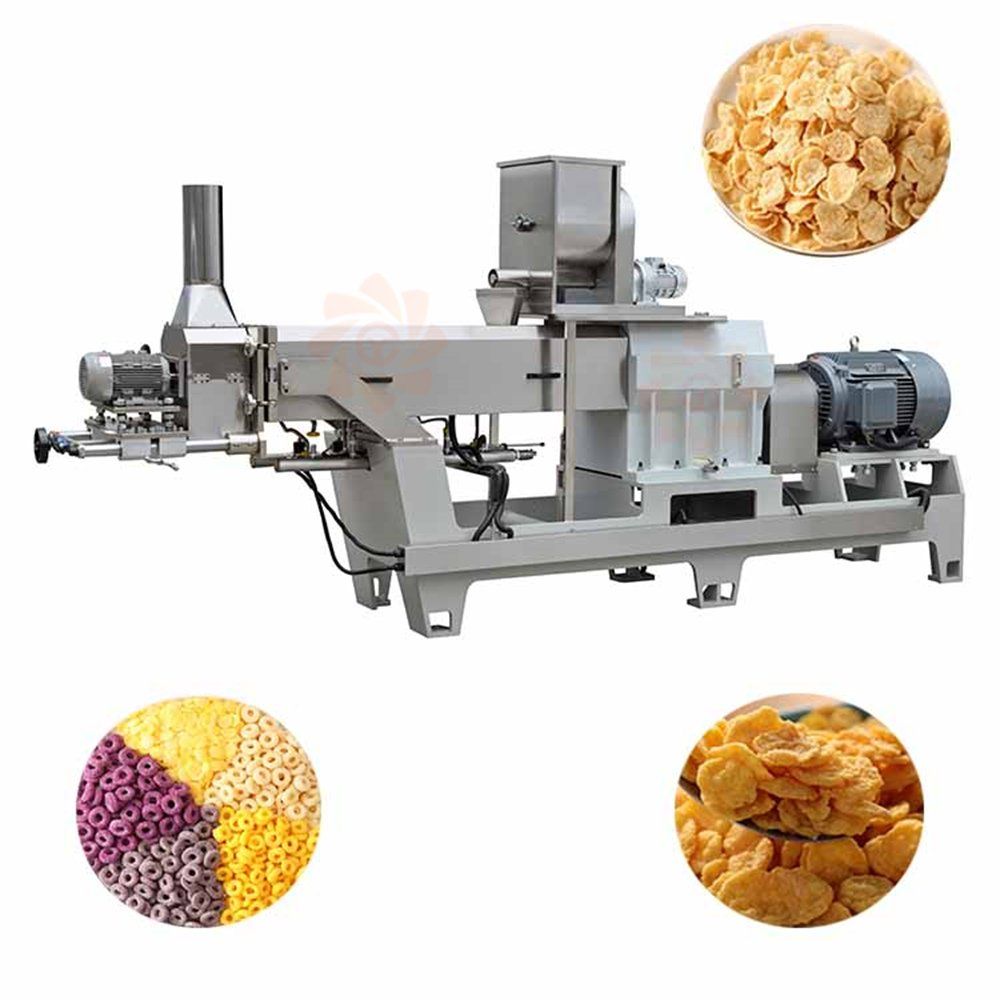
Why Experience Dictates True Corn Flakes Making Machine Cost
When evaluating Corn Flakes Making Machine Cost, selecting an experienced factory is not merely a preference—it is a critical business decision that determines your Total Cost of Ownership (TCO). Corn flakes production demands precise control over extrusion cooking, flaking, drying, and toasting; any deviation results in broken flakes, inconsistent texture, and raw material waste that rapidly erodes margins.
Inexperienced suppliers often attract buyers with lower upfront capital expenditure, but hidden costs emerge through frequent mechanical failures, inefficient thermal energy transfer, and substandard die designs that increase scrap rates by 15–30%. Conversely, seasoned manufacturers deliver process-optimized engineering—machinery calibrated for high-yield output, reduced downtime, and energy efficiency that lowers per-unit production costs over the machine’s lifecycle. Furthermore, established factories provide robust after-sales infrastructure—critical spare parts availability, remote diagnostics, and process optimization support—that prevents costly production halts. In food extrusion, technical maturity directly translates to profitability; cutting corners on experience inevitably inflates operational costs.
Your Strategic Partner: Jinan Dayi Extrusion Machinery Co., Ltd
This is where Jinan Dayi Extrusion Machinery Co., Ltd distinguishes itself as your definitive solution provider. Established in 1996, we bring nearly three decades of specialized expertise as leaders in advanced, high-efficiency extrusion food machinery—far surpassing the industry’s typical “20+ years” benchmark.
Why Dayi Delivers Superior ROI:
-
Deep Technical Mastery: Unlike generalist equipment fabricators, our dedicated expert team focuses exclusively on extrusion technology. We understand the rheological complexities of corn grits gelatinization and the precise moisture-temperature curves required for premium corn flakes—ensuring your line operates at peak efficiency from day one.
-
Integrated Turnkey Solutions: We eliminate integration risks and vendor fragmentation. Dayi provides full turnkey solutions encompassing raw material preprocessing, extrusion cooking, flaking, drying, toasting, coating, and final packaging. This single-source accountability streamlines commissioning and ensures seamless process continuity.
-
Proven High-Efficiency Engineering: Our extrusion systems are optimized for thermal efficiency and minimal waste, directly reducing your utility costs and raw material loss compared to conventional designs.
Our Production Portfolio Includes:
* Corn Flakes Production Line (Breakfast Cereals)
* Puffed Snack Food Production Line
* Pet Food Production Line
* Fortified Rice Production Line
* Tortilla & 3D Pellet Snack Lines
* Baby Food, Nutrition Powder, Soya Chunk & Bread Crumbs Production Lines
Take the Next Step
Do not compromise on equipment maturity when your product quality and operational margins are at stake. Contact Jinan Dayi Extrusion Machinery Co., Ltd today to discuss your specific capacity requirements, raw material specifications, and layout constraints. Our engineers will configure a custom solution tailored to your market goals and provide a detailed quotation that reflects true long-term value.
Contact us now for your personalized Corn Flakes production line consultation and competitive quote.