
The Global Breakfast Cereal Market: A \$54.3 Billion Opportunity Hinging on Extrusion Excellence
With the global breakfast cereal market projected to reach \$67.8 billion by 2028 (CAGR 4.2%), corn flakes remain the category’s volume leader, commanding 28% of total production share. For institutional investors and facility operators, the decision to enter or expand in this sector hinges on one critical capital expenditure: the extrusion-based corn flakes production line.
Why Extrusion Technology Defines ROI
Modern corn flakes manufacturing is essentially an exercise in precision thermo-mechanical engineering. High-shear twin-screw extrusion systems—now the industry standard over traditional cooking-flaking methods—deliver gelatinization rates exceeding 95% while reducing processing time by 60%. This directly correlates with operational metrics that matter to your bottom line: energy consumption below 0.35 kWh/kg of finished product, moisture deviation control within ±0.5%, and throughput capacities scaling from 200 kg/h pilot lines to 2,000 kg/h industrial configurations.
The technological gap between commodity extruders and precision-engineered systems manifests in yield economics. Advanced extrusion setups with automated die-pressure control and real-time density monitoring can reduce raw material waste from industry-average 8% to sub-3% levels—a differential that translates to \$480,000+ annual savings on a standard 1,000 kg/h operation running 6,000 hours annually.
Production Efficiency as Competitive Moat
In an industry where margin compression averages 2.3% annually due to raw material volatility, Overall Equipment Effectiveness (OEE) separates viable operations from distressed assets. Current-generation Chinese-manufactured corn flakes lines have closed the automation gap with European counterparts, now featuring:
– Automated recipe management reducing changeover downtime to <15 minutes
– Integrated CIP (Clean-in-Place) systems cutting sanitation labor by 40%
– IoT-enabled predictive maintenance reducing unplanned downtime to <2%
Critically, Chinese equipment manufacturers now deliver CE-certified, FDA-compliant systems at 40-60% lower capital expenditure than Western alternatives, with delivery timelines compressed to 90-120 days versus 8-10 months—accelerating time-to-revenue for greenfield investments.
Methodology: Selecting the Top 10
Our evaluation of China’s corn flakes machine manufacturers prioritizes verifiable engineering capabilities over marketing claims. Selection criteria include: R&D investment exceeding 5% of annual revenue (indicating continuous extrusion technology advancement), minimum 50+ successful installations in GFSI-certified facilities, and demonstrated after-sales technical support networks spanning minimum three continents.
The following manufacturers represent the convergence of extrusion engineering sophistication, scalable automation architecture, and total cost of ownership optimization required by serious B2B food processing investors in 2024.
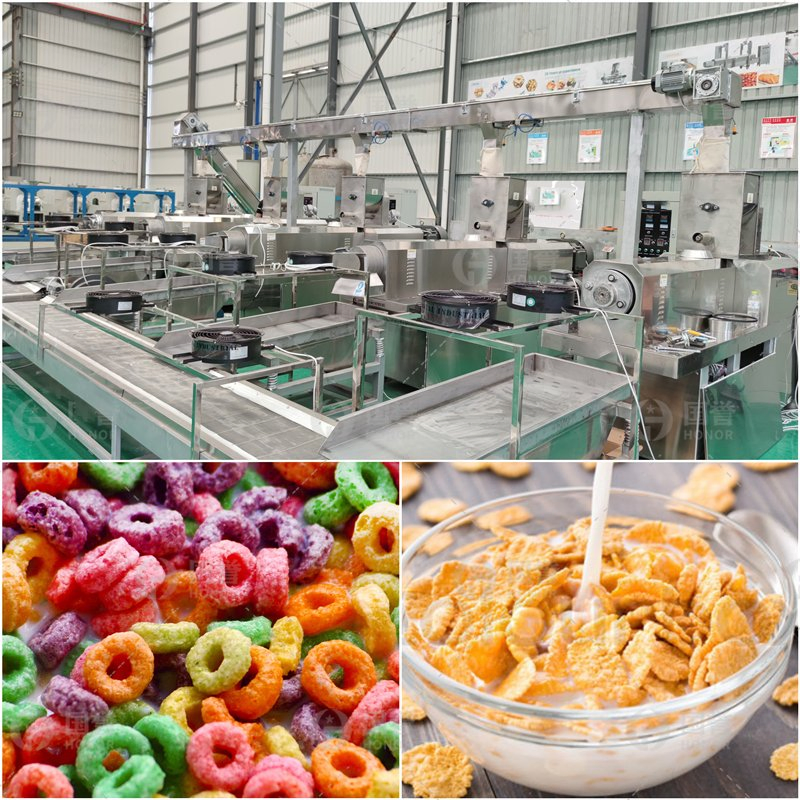
Best Corn Flakes Machine Suppliers & Factory List
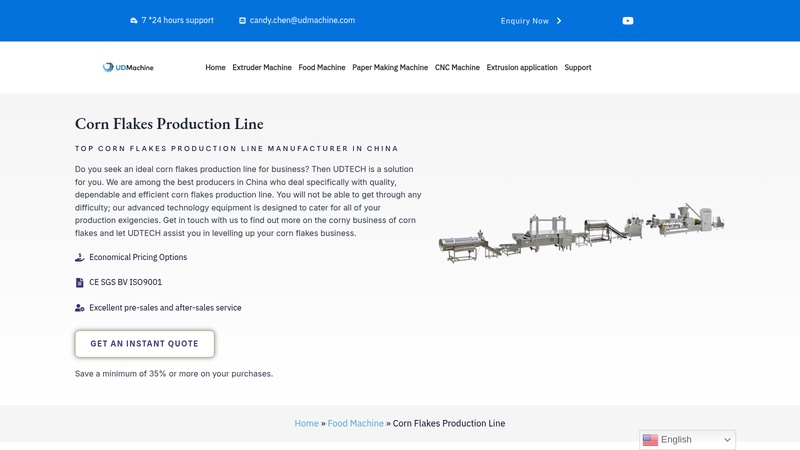
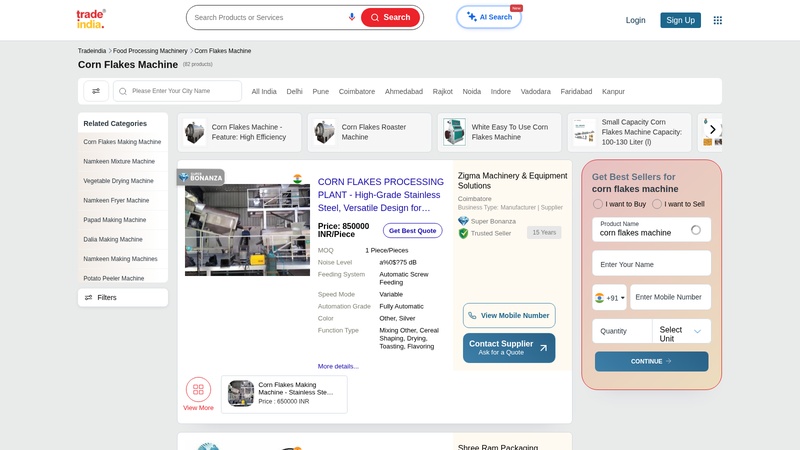
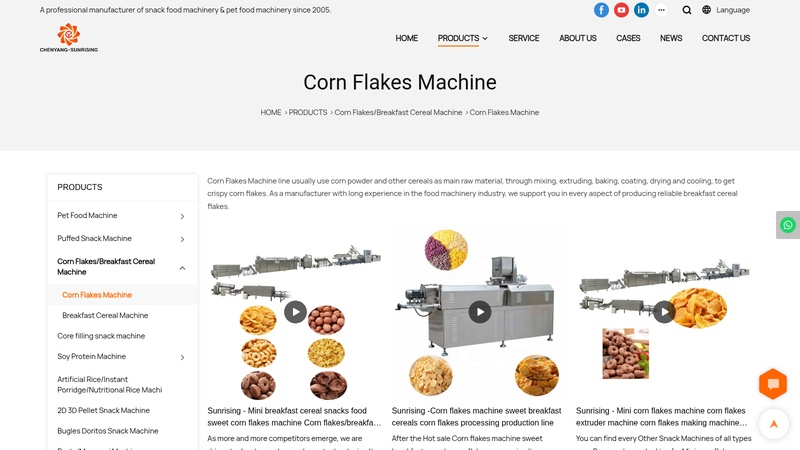


Sourcing Guide: Key Factors for Corn Flakes Machine
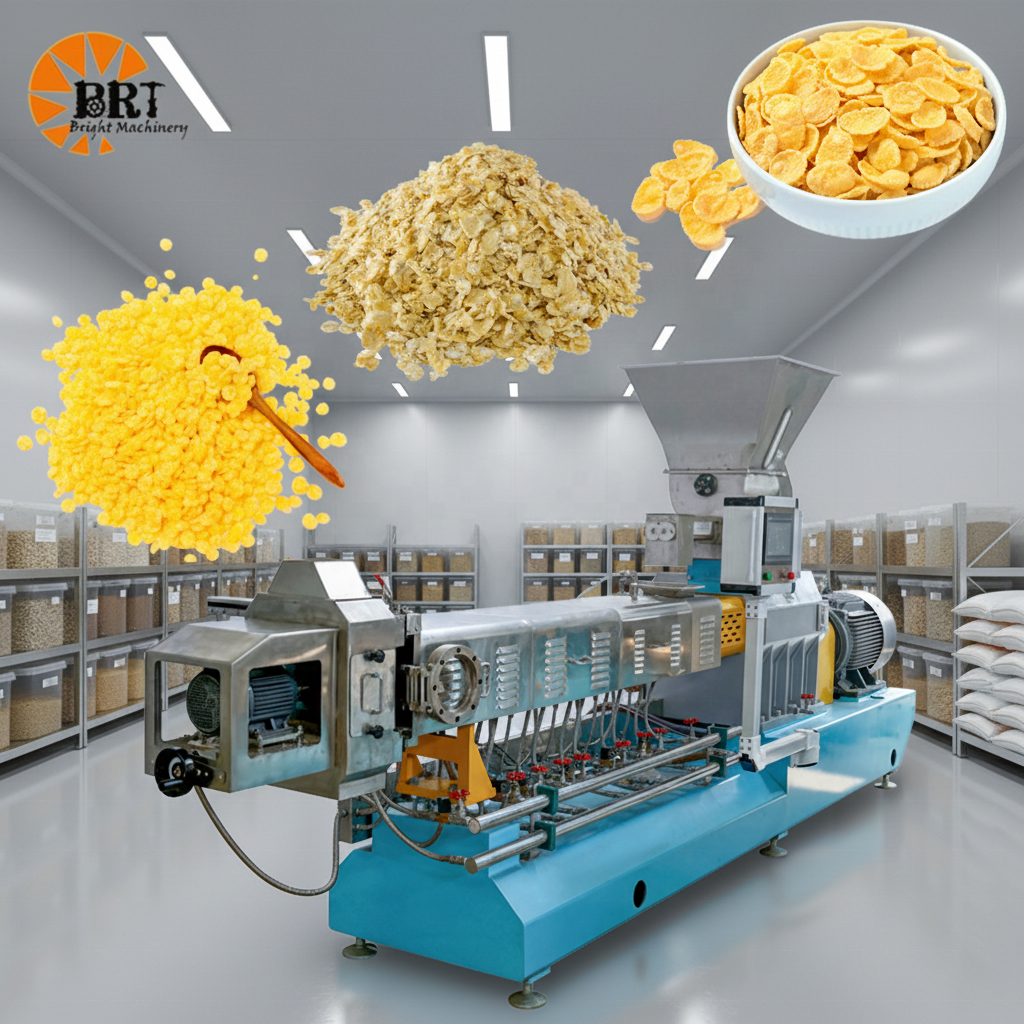
B2B Machinery Sourcing Guide: Corn Flakes Production Lines from China
For international food processing investors and facility operators, sourcing corn flakes manufacturing equipment from China represents a strategic opportunity to optimize capital expenditure without compromising production standards. However, the variance in engineering quality across Chinese manufacturers necessitates a rigorous technical evaluation framework. This guide provides factory owners and procurement teams with the critical technical benchmarks required to assess high-capacity breakfast cereal production systems.
H3 Extrusion Screw Configuration and L/D Ratio Optimization
The extrusion system serves as the technological core of any corn flakes line, directly determining gelatinization rates, texture consistency, and final product expansion. When evaluating Chinese-manufactured extruders, prioritize twin-screw configurations over single-screw alternatives for superior mixing capability and self-cleaning properties.
Critical specifications to verify include:
– Length-to-Diameter (L/D) Ratio: Demand systems offering 15:1 to 20:1 ratios for adequate cooking residence time, ensuring complete starch gelatinization critical for flaking integrity
– Modular Screw Design: Confirm the availability of interchangeable screw segments (conveying, kneading, and mixing elements) to accommodate varying corn grits formulations and future product diversification (e.g., frosted flakes or multigrain variants)
– Compression Ratio: Optimal ranges between 3:1 and 4:1 prevent excessive shear heat while maintaining proper density for subsequent flaking operations
– Wear Resistance: Inquire about nitriding depth (minimum 0.4mm) or bimetallic barrel linings (containing tungsten carbide or cobalt-based alloys) to withstand abrasive corn grits processing over 8,000+ operational hours
Red Flag: Avoid suppliers utilizing standard carbon steel screws without surface hardening treatments, as these demonstrate rapid wear patterns that compromise product consistency within 12-18 months of high-volume production.
H3 Material Durability and Food-Grade Compliance Standards
Material specification directly correlates with equipment lifespan, sanitation compliance, and total cost of ownership. Premium Chinese manufacturers should demonstrate adherence to international food safety standards through material traceability certificates.
Essential material criteria include:
– Stainless Steel Grading: Insist on AISI 304 or 316L stainless steel for all product-contact surfaces, with 316L preferred for high-humidity toasting sections due to superior chloride corrosion resistance
– Surface Finish Standards: Demand Ra (Roughness Average) values ≤ 0.8μm on extruder barrels and flaking rolls, with electropolishing on mixing hoppers to prevent microbial adhesion and facilitate CIP (Clean-in-Place) protocols
– Bearing and Seal Quality: Verify use of NSK, SKF, or equivalent sealed bearings rated for food-grade lubricants (NSF H1 certified), particularly in flaking mills where roller precision affects flake thickness uniformity (target variance ±0.05mm)
– Structural Framework: Non-contact frames should utilize 304 stainless steel or carbon steel with epoxy powder coating (minimum 80μm thickness) to prevent corrosion in washdown environments
Compliance Verification: Request material composition certificates (mill test certificates) and confirm FDA 21 CFR Part 177 compliance for all polymer components (seals, gaskets, and conveyor belts).
H3 PLC Control Systems and Energy Consumption Optimization
Advanced automation architecture distinguishes industrial-grade equipment from entry-level alternatives, directly impacting operator efficiency, batch consistency, and utility costs. Evaluate the control ecosystem beyond basic start/stop functionality.
Technical requirements for control systems:
– PLC Architecture: Specify Siemens S7-1200/1500 series, Schneider Electric Modicon, or Mitsubishi FX5U controllers with Ethernet/IP connectivity for Industry 4.0 integration and remote diagnostics capability
– HMI Interface: 10-inch+ touchscreen panels with multilingual support (English, Spanish, Arabic), recipe storage capacity (minimum 100 product profiles), and real-time trending of critical parameters (barrel temperature, screw RPM, main motor amperage)
– Energy Management: Demand variable frequency drives (VFDs) on all major motors (extruder main drive, flaking mill, drying fans) to reduce power consumption by 15-25% during partial load conditions. Verify IE3 or IE4 motor efficiency ratings per IEC 60034-30-1
– Safety Integration: Confirm CE-certified safety PLCs with Category 3, PLd architecture per EN ISO 13849-1, including emergency stop chains and interlocked guards on all access points
Power Consumption Benchmarks: For a 500kg/hour capacity line, total installed power should range between 180-220kW, with specific energy consumption targets of 0.35-0.42 kWh per kilogram of finished product.
Additional Sourcing Considerations
Supplier Verification Protocols
– Request reference installations operating for 3+ years in markets with stringent regulatory environments (EU, North America, GCC)
– Verify ISO 9001:2015 and ISO 22000 certifications for the manufacturing facility, not just the parent company
– Conduct pre-shipment inspections (PSI) focusing on weld quality (penetration testing), electrical panel wiring standards, and hydrostatic pressure testing of steam systems
After-Sales Technical Support
– Ensure availability of English-speaking technical documentation (operation manuals, electrical schematics, spare parts lists)
– Confirm 24/7 remote diagnostic capability via VPN or TeamViewer integration
– Negotiate comprehensive spare parts packages including critical wear components (screw segments, die inserts, flaking rolls) for the first 12 months of operation
Customization Capabilities
Leading Chinese manufacturers should offer:
– Adjustable flaking roll gaps (0.3mm-1.2mm) for varying flake thickness requirements
– Modular line configurations allowing future integration of sugar coating drums or vitamin spray systems
– Steam or electric heating options for drying/toasting sections based on local utility infrastructure
Conclusion
Investing in Chinese-manufactured corn flakes equipment requires moving beyond price-centric evaluation to technical due diligence. By enforcing strict standards regarding screw configuration precision, material traceability, and control system sophistication, factory owners secure production assets capable of delivering consistent ROI while meeting international food safety mandates. Prioritize manufacturers demonstrating engineering depth through detailed FAT (Factory Acceptance Testing) protocols and proven track records in your target export markets.
Next Step: Request detailed technical questionnaires from shortlisted suppliers addressing the three critical factors above, and schedule virtual factory tours focusing on CNC machining centers for screw manufacturing and quality control laboratories for material verification.
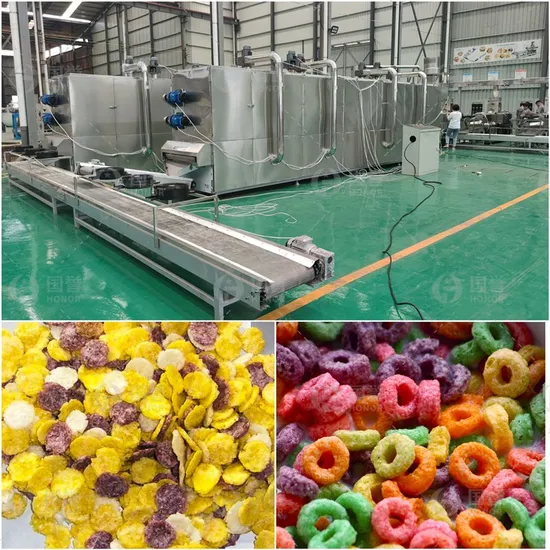
Why Experience Matters in Corn Flakes Manufacturing
Selecting an experienced factory for your Corn Flakes Machine is not merely a procurement decision—it is a strategic investment in operational reliability and product consistency. Breakfast cereal production demands precise extrusion control, exact moisture management, and consistent flake formation to achieve the texture and shelf-stability global markets require. An established manufacturer brings critical advantages: proven extrusion technology that minimizes waste and energy consumption; deep process knowledge to handle complex formulations including fortified grains and gluten-free alternatives; robust after-sales infrastructure ensuring minimal downtime; and turnkey integration capabilities that synchronize mixing, extrusion, drying, flaking, toasting, and coating into a seamless workflow. In an industry where a single parameter deviation can compromise an entire batch, experience translates directly to ROI and brand reputation.
Partner with Proven Excellence: Jinan Dayi Extrusion Machinery Co., Ltd.
When precision matters, industry leaders turn to Jinan Dayi Extrusion Machinery Co., Ltd. Since 1996, we have defined the standard for advanced, high-efficiency extrusion food machinery, amassing over two decades of specialized expertise that transforms raw ingredients into market-ready breakfast cereals and snacks.
The DAYI Advantage
As a dedicated professional manufacturer, we don’t just build machines—we engineer complete production ecosystems. Our dedicated expert team combines mechanical precision with food science mastery to deliver high-efficiency extrusion technology optimized for your specific application. Whether you require standard corn flakes, frosted variants, or nutrient-fortified formulations, our systems ensure uniform gelatinization, precise flake thickness, and consistent toasting profiles.
True Turnkey Solutions
We eliminate integration headaches by providing full turnkey solutions—from raw material preprocessing and extrusion to flaking, drying, coating, and final packaging. Your corn flakes line arrives as a synchronized, automated system, ready for immediate commercial production.
Comprehensive Portfolio
While our Corn Flakes Production Line represents a flagship solution, our expertise spans the entire extrusion spectrum: Puffed Snacks, Fortified Rice, 3D Pellets, Pet Food, Tortilla Chips, Baby Food, Bread Crumbs, Nutrition Powders, and Soya Chunks. This cross-category mastery ensures your cereal line benefits from innovations derived across multiple food sectors.
Ready to Optimize Your Production?
Don’t compromise on breakfast cereal quality or operational efficiency. Contact Jinan Dayi Extrusion Machinery Co., Ltd. today to discuss your specific capacity requirements, formulation needs, and facility layout. Our engineers are prepared to design your custom corn flakes solution and provide a detailed quotation tailored to your market objectives.
Connect with DAYI now—where 20+ years of extrusion excellence becomes your competitive advantage.