
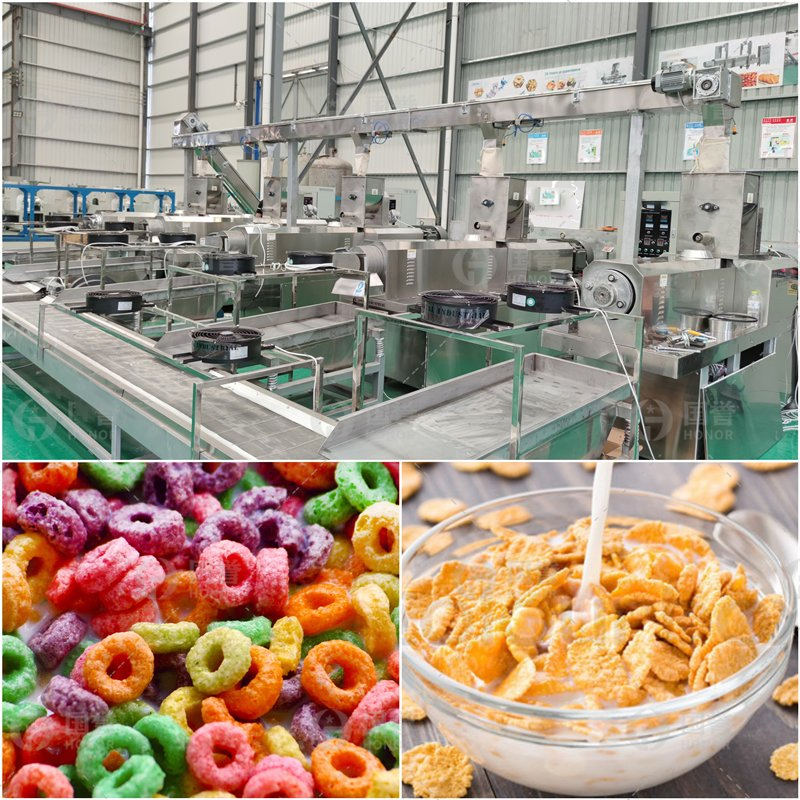
The global breakfast cereal and savory snack flakes market, valued at approximately $54.8 billion in 2023 and projected to exceed $78 billion by 2030, is undergoing a fundamental operational shift. For investors and facility operators evaluating capital equipment acquisitions, the selection of extrusion-based flake processing systems has become a critical determinant of both product quality and long-term ROI. As Chinese manufacturing capabilities have evolved from cost-centric production to precision engineering compliant with FDA, CE, and BRC standards, sourcing high-capacity Flakes Making Machines from established Chinese OEMs now represents a strategic entry point into high-margin RTE (Ready-to-Eat) and functional food segments.
Extrusion Technology: The Core Value Driver
Modern flake production relies predominantly on twin-screw extrusion technology, which offers superior control over starch gelatinization, moisture content, and textural density compared to traditional rolling or flaking methods. Advanced extrusion systems achieve 95%+ gelatinization rates, ensuring consistent bowl-life stability and crunch characteristics essential for premium positioning. For investors, the critical specification lies in the extruder’s specific mechanical energy (SME) input capabilities—machines offering variable screw configurations (modular pitch and kneading blocks) enable rapid product changeovers between corn flakes, multigrain clusters, and protein-fortified variants without complete line disassembly. This versatility directly impacts asset utilization rates in an industry where SKU proliferation has increased by 40% across major retail categories since 2020.
Production Efficiency Metrics That Matter
In the current high-inflation operational environment, production efficiency transcends simple throughput measurements. Leading flake manufacturing lines now emphasize Overall Equipment Effectiveness (OEE) benchmarks, with top-tier Chinese manufacturers achieving 85-92% OEE through integrated automation systems. Key efficiency differentiators include:
– Energy consumption optimization: Advanced extrusion-cooking systems reduce thermal energy requirements by 25-30% compared to conventional processing through precise barrel temperature zoning and direct-drive motor configurations
– Yield maximization: Precision cutting and forming mechanisms minimize waste to <2% of raw material input, critical when managing commodity grain price volatility
– Labor arbitrage: Fully automated lines with HMI (Human-Machine Interface) controls reduce operator requirements by 60%, addressing persistent skilled labor shortages in food processing sectors
The China Sourcing Advantage
Chinese manufacturers have transitioned from component assembly to proprietary R&D in extrusion mechanics, with leading firms now holding ISO 22000 food safety management certifications and ATEX compliance for explosive dust environments. The convergence of ** Industry 4.0 connectivity (remote diagnostics, predictive maintenance algorithms) with competitive TCO (Total Cost of Ownership) models—typically 30-40% lower** than European equivalents with comparable specifications—has positioned Chinese equipment as the infrastructure backbone for emerging market expansion and developed market capacity augmentation.
The following curated list of Top 10 Flakes Making Machine Manufacturers represents facilities that have demonstrated engineering excellence in extrusion precision, scalable production architectures (ranging from 200kg/h pilot lines to 3,000kg/h industrial systems), and post-installation technical support networks critical for 24/7 food production environments. Each profile evaluates extrusion technology specifications, automation integration capabilities, and verifiable export track records to inform your capital allocation decisions.
Best Flakes Making Machine Suppliers & Factory List


Sourcing Guide: Key Factors for Flakes Making Machine
B2B Machinery Sourcing Guide: Flakes Making Machines from China
As global demand for breakfast cereals, snack flakes, and extruded food products continues to rise, Chinese manufacturers have evolved from commodity producers to precision engineering partners capable of delivering industrial-scale flakes making systems that meet stringent international standards. For investors and facility operators evaluating extrusion-based flake production lines—whether for corn flakes, multigrain cereals, or savory snack matrices—technical specification accuracy determines both product quality and long-term operational economics.
When sourcing high-capacity flakes making machines (extrusion systems typically ranging from 200kg/h to 2,000kg/h), three technical parameters separate industrial-grade equipment from standard fabrication:
Screw Configuration and L/D Ratio Engineering
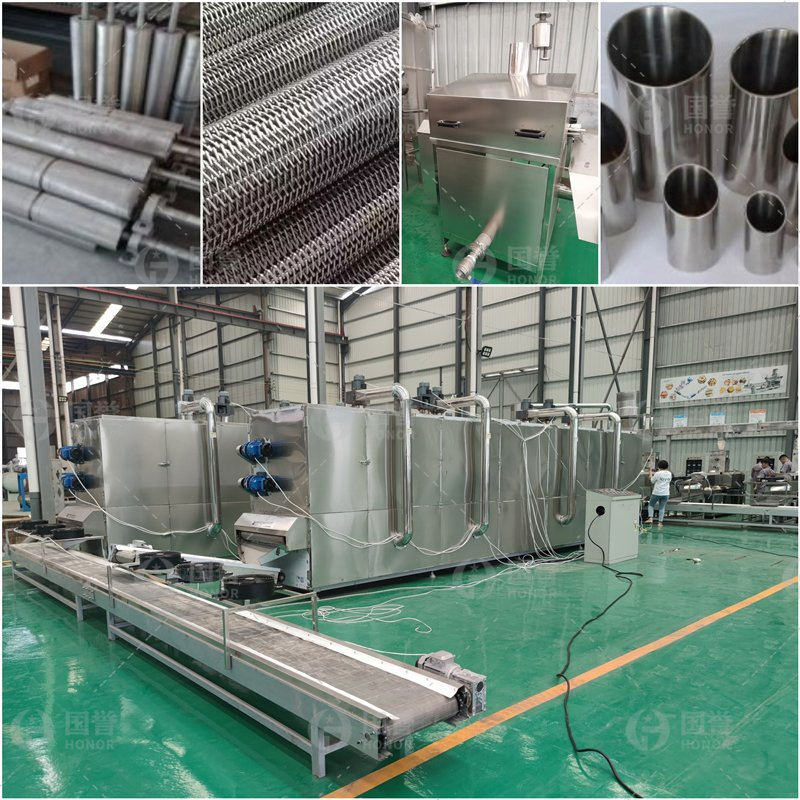
The extrusion screw assembly constitutes the heart of flake production, directly impacting gelatinization rates, texture formation, and energy efficiency. Critical evaluation criteria include:
-
Modular Screw Design: Demand twin-screw extrusion systems with interchangeable screw elements (conveying, kneading, and mixing segments) to accommodate varying raw material profiles—from high-starch corn grits to fiber-rich multigrain blends. Single-screw configurations may suffice for homogeneous materials but lack the processing flexibility required for premium flake diversification.
-
Length-to-Diameter (L/D) Ratio: Specify barrels with L/D ratios between 15:1 and 20:1. Higher ratios ensure complete starch gelatinization and proper protein denaturation before the die plate, critical for achieving the blistered, crispy texture characteristic of commercial flakes. Insufficient L/D ratios result in dense, poorly expanded products requiring excessive drying energy downstream.
-
Torque Transmission: Verify that the gearbox and drive system can sustain specific mechanical energy (SME) inputs of 0.15–0.25 kWh/kg without thermal degradation, ensuring consistent shear rates across high-moisture and low-moisture recipe variations.
Food-Grade Material Durability and Sanitary Construction
Flake production involves abrasive materials, high-pressure steam injection, and caustic cleaning protocols. Material specifications must address:
-
Stainless Steel Grading: Insist on 304 or 316L stainless steel construction for all product-contact surfaces, with 316L mandatory for acidic fruit-inclusion recipes or high-salt savory applications. Non-contact frames should utilize 304 minimum to prevent corrosion in humid processing environments.
-
Surface Finish Standards: Require surface roughness (Ra) values ≤0.8μm on extrusion barrels and die assemblies to prevent microbial harboring and ensure compliance with FDA/EU hygiene regulations. Electropolished finishes on the extruder barrel interior reduce material adhesion and facilitate CIP (Clean-in-Place) protocols.
-
Wear-Resistant Alloys: Screw elements and barrel liners should incorporate nitrided steel or cobalt-based alloys (Stellite) in high-wear zones, extending component lifespan beyond 8,000 operating hours when processing mineral-fortified or whole-grain formulations.
-
IP Protection Ratings: Confirm that electrical enclosures and motor housings carry minimum IP65 ratings to withstand high-pressure washdowns mandatory in GMP-compliant food facilities.
Precision Control Systems and Industry 4.0 Integration
Modern flake production requires real-time process control to maintain product density, moisture content, and dimensional consistency across batch variations. System architecture should feature:
-
PLC and HMI Specifications: Demand Siemens S7-1200/1500 series or equivalent Schneider Electric/Mitsubishi PLCs with 10-inch+ industrial touchscreens. The control logic must offer recipe management storage for 50+ product profiles, with automatic parameter adjustment for screw speed, barrel temperature zones (typically 6–8 independent zones), and feed rate synchronization.
-
Sensor Accuracy: Verify the inclusion of infrared moisture analyzers and pressure transducers at the die head with ±1% accuracy, enabling closed-loop control that compensates for raw material moisture variations. Temperature control precision must maintain ±1°C across the extrusion barrel to prevent scorching or under-cooking.
-
Data Integration: Ensure Ethernet/IP or Profinet connectivity for MES (Manufacturing Execution Systems) integration, allowing real-time production monitoring, OEE (Overall Equipment Effectiveness) tracking, and predictive maintenance algorithms that reduce unplanned downtime by 15–30%.
-
Safety Compliance: Confirm comprehensive CE marking (Machinery Directive 2006/42/EC, Low Voltage Directive 2014/35/EU, and EMC Directive 2014/30/EU) alongside UL/CSA certifications for North American installations.
Due Diligence Recommendations
Beyond technical specifications, evaluate potential Chinese suppliers based on their R&D calibration capabilities (request video documentation of trial runs with your specific raw materials), spare parts inventory proximity (critical screws and barrels should be available within 72 hours), and field service engineer availability for commissioning support. Request references from comparable installations in your target market regarding energy consumption benchmarks—modern twin-screw flake extruders should operate at 0.18–0.22 kWh/kg finished product under standard conditions.
By rigorously assessing screw engineering, material integrity, and control system sophistication, investors secure not merely equipment, but a production platform capable of adapting to evolving consumer preferences—from traditional corn flakes to functional, protein-fortified, or gluten-free alternative grains—while maintaining the hygienic standards and operational efficiencies demanded by global food manufacturing.
Why Experience Matters in Flakes Making Machine Selection
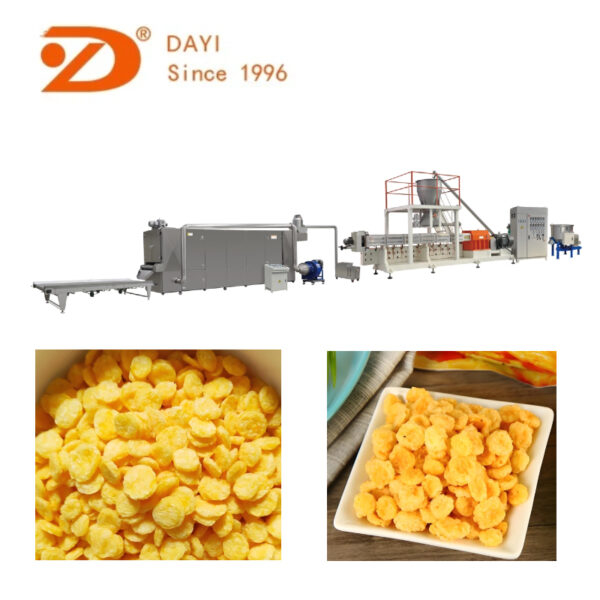
Selecting an experienced factory for your Flakes Making Machine is not merely a procurement choice—it is a strategic investment in operational reliability and product quality. Flakes production demands precision extrusion technology to achieve uniform thickness, optimal crispness, and consistent moisture content, all while maintaining strict food safety standards. An established manufacturer brings critical expertise in thermal process control, die design optimization, and integrated line synchronization (from extrusion through drying, coating, and packaging). Furthermore, experienced factories provide essential long-term value through robust after-sales support, readily available spare parts, and the ability to customize formulations for fortified cereals, corn flakes, or specialty grain products—ensuring your equipment evolves with market demands rather than becoming obsolete.
Partner with Proven Excellence: Jinan Dayi Extrusion Machinery Co., Ltd
This is precisely why industry leaders choose Jinan Dayi Extrusion Machinery Co., Ltd—your strategic partner since 1996 with over 20 years of specialized expertise in advanced, high-efficiency extrusion food machinery.
As a professional manufacturer backed by a dedicated expert engineering team, Dayi delivers more than equipment; we provide full turnkey solutions that seamlessly integrate raw material processing, precision extrusion, and final product packaging into optimized production ecosystems.
Our Comprehensive Production Line Portfolio:
– Corn Flakes & Breakfast Cereals Production Line (specialized flakes manufacturing expertise)
– Puffed Snack Food Production Line
– Pet Food Production Line
– Tortilla Chips Production Line
– Fortified Rice Production Line
– Baby Food Production Line
– Bread Crumbs Production Line
– 3D Pellet Snack Food Production Line
– Nutrition Powder Production Line
– Soya Chunk Production Line
Leveraging cutting-edge high-efficiency extrusion technology, Dayi ensures maximum yield, minimal waste, and superior product consistency across every batch.
Ready to optimize your flakes production? Contact Jinan Dayi Extrusion Machinery Co., Ltd today for a customized solution and detailed quotation tailored to your specific capacity requirements, raw material specifications, and market objectives. Let our two decades of extrusion excellence engineer your competitive advantage.