
In the vast universe of snack foods, filled rice snacks—known by various names such as rice crisps, rice balls, or, in Japanese, okaki and arare—hold a unique position. They are a study in contrasts: a shell that is ethereally light and shatteringly crisp, giving way to a core that is dense, creamy, sweet, or savory. This textural symphony, combined with an almost infinite variety of flavors, has captivated palates from Asia to the Americas. To the consumer, it’s a simple pleasure. But to the food scientist and process engineer, it represents one of the most intricate and precisely orchestrated feats in modern food manufacturing.
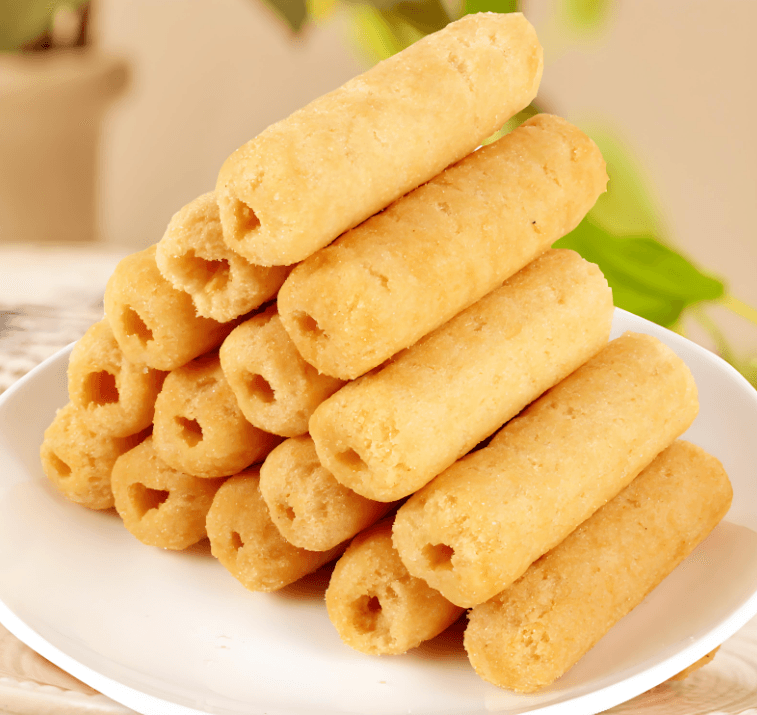
The journey from raw, humble grains to a perfectly formed, filled snack is a marvel of food engineering, involving thermodynamics, chemistry, rheology, and advanced mechanics. The process must achieve the impossible: creating a hollow, airy structure strong enough to be injected with a filling without collapsing, yet delicate enough to dissolve pleasingly on the tongue. This article will pull back the curtain on this complex operation, providing a comprehensive, step-by-step examination of the entire production process. We will move beyond a superficial overview and delve into the critical parameters, potential pitfalls, and the ingenious solutions that make mass production possible. The process can be broken down into six fundamental stages: 1) Raw Material Selection and Preparation; 2) The Creation of the Puffed Rice Shell via Co-Extrusion; 3) The Formulation and Preparation of the Filling; 4) The Precise Injection of the Filling; 5) Drying, Toasting, and Seasoning; and 6) Final Packaging and Quality Assurance.
Stage 1: The Foundation – Raw Material Selection and Preparation
The quality of the final product is inextricably linked to the quality of its raw materials. This stage is about creating the perfect building blocks for the snack’s structure.
1.1 The Heart of the Snack: Rice Selection and Milling
Not all rice is created equal for snack production. The primary ingredient is typically rice flour, chosen for its specific functional properties.
- Rice Variety: Short-grain or medium-grain rice is often preferred over long-grain varieties like Basmati or Jasmine. The reason lies in starch composition. Short-grain rice has a higher percentage of amylopectin, a highly branched starch molecule, compared to the more linear amylose. Amylopectin contributes to a softer, more gelatinous and cohesive texture when cooked, which is crucial for forming a durable dough that can puff uniformly. The target is often a rice with low amylose content (less than 20%).
- Particle Size of the Flour: The rice is milled into a fine, consistent flour. The particle size distribution is critical. If the flour is too coarse, it will not hydrate evenly, leading to incomplete gelatinization and weak spots in the dough that can cause failure during extrusion. If it is too fine, it can become compact and impede water penetration, also affecting gelatinization. Manufacturers use precision milling and air classification to achieve a consistent granulation, typically aiming for a majority of particles to pass through a 100-mesh screen.
- Moisture Content: The moisture content of the raw rice flour is strictly controlled (usually below 14%) to prevent microbial growth and ensure predictable behavior in the subsequent mixing and extrusion stages.
1.2 The Supporting Cast: Other Ingredients in the Shell
While rice flour is the main component, other ingredients are added to the dry mix to modify the texture, flavor, and processing characteristics.
- Starches: Modified food starches (e.g., from tapioca or corn) are frequently added. These act as binders and help control the expansion and crispiness of the final shell. They can enhance the dough’s elasticity and provide a more uniform cell structure.
- Leavening Agents: Small amounts of chemicals like ammonium bicarbonate (NH₄HCO₃) and sodium bicarbonate (NaHCO₃) are incorporated. When heated during the extrusion and toasting stages, these compounds decompose to release gases (carbon dioxide, ammonia, and steam). These tiny gas bubbles serve as nucleation sites for the rapid expansion of steam within the dough, leading to a finer, more controlled, and less dense puff.
- Salt, Sugar, and Seasonings: Base levels of salt and sugar are added to the dough to provide a foundational flavor profile. More delicate seasonings are often applied later to avoid degradation during the high-heat extrusion process.
- Water: The Plasticizer: Water is not just an ingredient; it is the essential agent that enables the transformation. Its precise addition is what allows starch gelatinization to occur.
1.3 The Precision of Mixing
The dry ingredients (rice flour, starches, leavening agents, etc.) are loaded into a high-speed ribbon blender or a paddle mixer. The goal is to achieve a perfectly homogeneous dry blend. Any inconsistency here—a pocket of unmixed leavening agent, for example—would result in uneven puffing, with some sections expanding too much or too little. Once the dry mix is uniform, water is added in a controlled manner. The mixture is blended until it reaches a specific moisture content, typically between 25% and 35%. The resulting mass is not a smooth dough like bread dough, but a damp, crumbly mixture that can be consistently fed into the extruder. This mixture is often referred to as the “grit” or “meal.”
Stage 2: The Engineering Marvel – Creation of the Puffed Shell via Co-Extrusion
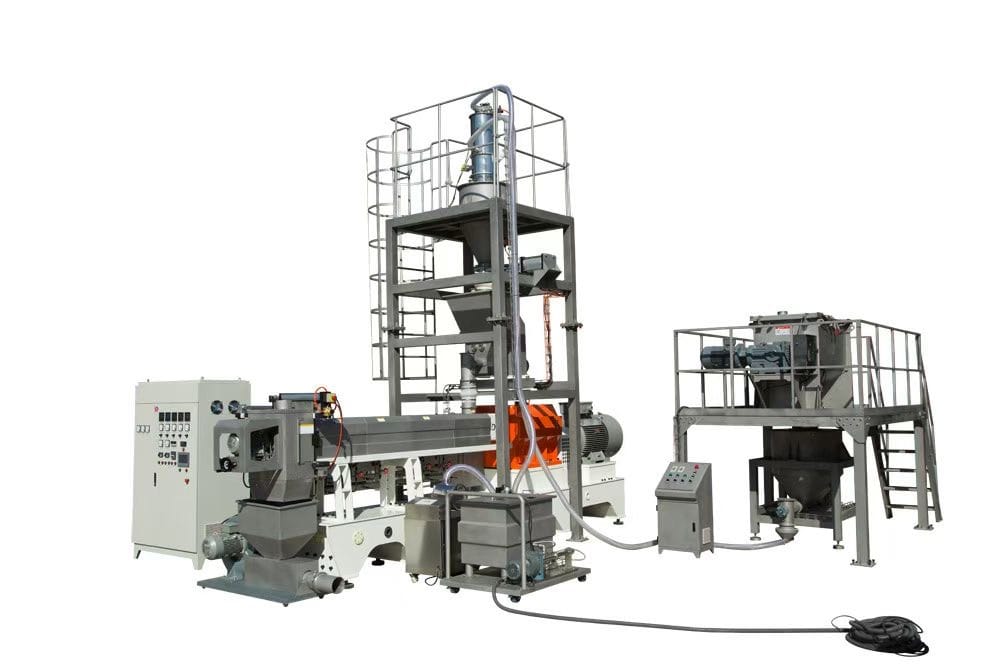
This is the most critical and technologically complex stage of the entire process. It is here that the magic happens: the damp powder is transformed into a hollow, puffed shell in a single, continuous operation. This is achieved using a specialized machine called a co-extruder.
2.1 The Co-Extrusion System: A Machine with Two Personalities
A co-extruder is essentially two extruders in one, working in perfect synchrony.
- The Outer Shell Extruder: This part of the machine is responsible for handling the rice meal described in Stage 1. It is a screw-type extruder where the screw rotates within a barrel. The rice meal is fed into the feed hopper and is conveyed forward by the screw.
- The Inner Filling Extruder: This is a separate, simpler pumping system dedicated to handling the filling. It must be designed to handle viscous, often paste-like materials without applying excessive shear or heat that could damage the filling’s texture or flavor.
2.2 The Transformation Within the Barrel: Starch Gelatinization
As the rice meal is conveyed along the barrel of the outer extruder, it undergoes a profound physical and chemical change. The barrel is heated, either by external electric bands or steam jacketing, and the mechanical action of the screw generates significant friction and pressure. The combination of this heat (typically 130°C – 180°C), moisture, and shear causes starch gelatinization.
In their native state, starch granules are semi-crystalline and insoluble in cold water. Under heat and moisture, they absorb water, swell, and lose their crystalline structure. The granules rupture, and the starch molecules (amylose and amylopectin) leach out, forming a viscous, gelatinized, plasticized melt. This transformation is essential; it makes the starch malleable and capable of trapping the steam that will cause it to puff.

2.3 The Die Head: Where the Magic Takes Shape
At the end of the extruder barrel is the die head, a precision-machined block of metal where the two streams—the molten rice dough and the filling—meet. The die head contains a set of concentric nozzles.
- The viscous rice melt is forced through the outer annular gap.
- Simultaneously, the filling is pumped through the inner nozzle.
This creates a continuous, co-axial rope where the filling is perfectly centered inside the molten rice dough.
2.4 The “Die Bite” and Puffing: The Instant of Creation
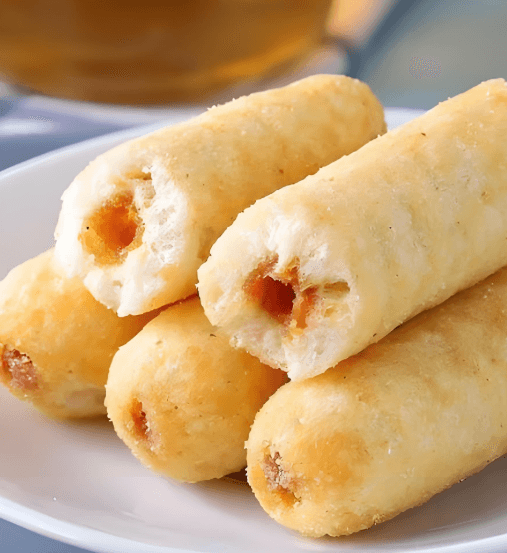
The co-axial rope is extruded out of the die face into the open atmosphere. This is the moment of truth, known as the “die bite” or “flash-off.” The pressurized, superheated mass is suddenly exposed to ambient (room temperature and pressure) conditions. The water trapped within the gelatinized starch matrix instantly flashes into steam. The pressure of this expanding steam causes the plasticized starch to balloon outwards, creating a porous, airy, and crisp structure. The filling, being pumped cool or at a much lower temperature, does not expand and remains dense, forming the core.
2.5 Cutting and Shaping
Immediately outside the die, a rotating knife cuts the continuously extruding, expanding rope into individual pieces of the desired length. The speed of the knife and the extrusion rate are synchronized to determine the final size of the snack. The pieces are typically cut at an angle, creating the characteristic oval or elliptical shape of many filled rice snacks.
2.6 Critical Control Points in Co-Extrusion
This stage is a ballet of precise parameter control:
- Dough Moisture Content: Too much water, and the dough will be too fluid, causing it to over-expand and collapse or become too fragile. Too little water, and gelatinization will be incomplete, resulting in a dense, hard, poorly expanded shell.
- Barrel Temperature Profile: The temperature must be carefully controlled along the length of the barrel. Too low, and the starch won’t fully gelatinize. Too high, and the product can burn, or the expansion can be too violent.
- Screw Speed and Configuration: The design of the screw (compression ratios, presence of kneading blocks) and its rotational speed control the shear and pressure, directly impacting texture.
- Filling Viscosity and Temperature: The filling must have a viscosity that is high enough to prevent it from being absorbed into the porous shell or leaking out, but low enough to be pumped smoothly without requiring excessive pressure that could rupture the delicate shell.
Stage 3: The Soul of the Snack – Formulation and Preparation of the Filling
The filling is what differentiates one product from another and provides the signature flavor experience. Its formulation is a science unto itself.
3.1 Filling Base Components
Fillings can be sweet, savory, or creamy, but they share common base ingredients.
- Fat Phase: Oils and fats (e.g., palm oil, soybean oil, hydrogenated oils for stability) provide richness and a creamy mouthfeel. They also act as a carrier for fat-soluble flavors.
- Sugar Phase: For sweet fillings, sugars (sucrose, dextrose, fructose), corn syrup, or malt syrup provide sweetness and contribute to the viscous texture.
- Powder Phase: This includes milk powder, cocoa powder, nut pastes (peanut, almond), and starches. Starches are crucial for thickening the filling and giving it body, preventing it from being too runny.
- Flavorings and Seasonings: This includes everything from vanilla and chocolate for sweet fillings to cheese powder, soy sauce powder, and hydrolyzed vegetable protein for savory versions.
3.2 The Filling Manufacturing Process
The filling is typically prepared in large, heated mixing kettles.
- Emulsification: For creamy fillings, the process often involves creating an emulsion. The oil and water-based ingredients (like syrups) are combined with an emulsifier (e.g., lecithin, mono- and diglycerides) and subjected to high-shear mixing. This breaks the fat into tiny droplets that are suspended evenly throughout the water phase, creating a smooth, homogeneous, and stable paste that will not separate.
- Cooking: The mixture is often cooked to dissolve sugars, hydrate starches, and pasteurize the filling, ensuring microbiological safety.
- Cooling and Tempering: After cooking, the filling is cooled to a specific temperature that gives it the ideal viscosity for the co-extrusion process. It is then transferred to the holding tank of the co-extruder’s filling pump.
3.3 Technical Challenges in Filling Design
- Water Activity (Aw): This is a critical factor. The water activity of the filling must be balanced with that of the shell. If the filling has a significantly higher Aw, moisture will migrate from the filling into the crispy shell over time, causing the shell to become soft and soggy. To prevent this, fillings are often formulated with humectants like glycerin or sorbitol to bind water and lower the Aw, or the shell may include moisture barriers.
- Syncronization with Shell: The filling’s rheology must be perfectly matched to the shell expansion. If it’s too thick, it can cause the shell to rupture during extrusion. If it’s too thin, it can leak out or be unevenly distributed.
Stage 4: The Delicate Operation – Drying, Toasting, and Seasoning
The snacks exiting the co-extruder are fully formed but still soft and moist on the surface. They require further processing to develop their final texture, color, and flavor.
4.1 Multi-Zone Drying
The soft, freshly extruded snacks are conveyed through a multi-pass or multi-zone dryer, often a conveyor belt dryer.
- Objective: The primary goal is to reduce the surface moisture of the shell without making it tough. The drying process sets the structure, making it rigid and crisp.
- Process: Warm, dry air is circulated over the product. The temperature, humidity, and air velocity are carefully controlled in each zone. An initial zone might use lower temperatures to gently remove moisture without case-hardening (creating a hard outer crust that traps moisture inside). Subsequent zones gradually increase the temperature to achieve the final target moisture content, typically below 4%. This low moisture content is what gives the shell its signature crispness and extended shelf life.
4.2 Oven Toasting (Optional but Common)
After drying, the snacks may pass through a baking or toasting oven. This step serves multiple purposes:
- Color Development: It induces Maillard browning reactions between amino acids and reducing sugars, giving the shell a pleasant golden-brown color and a richer, toasted, nutty flavor.
- Final Texturization: It drives off any remaining traces of moisture, ensuring maximum crispiness.
- Flavor Development: It can “set” any seasonings that were added to the dough before extrusion.
4.3 Seasoning Application
While some flavor is in the dough, the majority of the seasoning is applied after drying/toasting.
- The Seasoning Tumbler: The snacks are transferred to a rotating drum, similar to a large cement mixer.
- Oil Spray: A fine mist of vegetable oil is sprayed onto the tumbling snacks. This oil acts as a “glue,” helping the dry seasoning powders adhere to the surface.
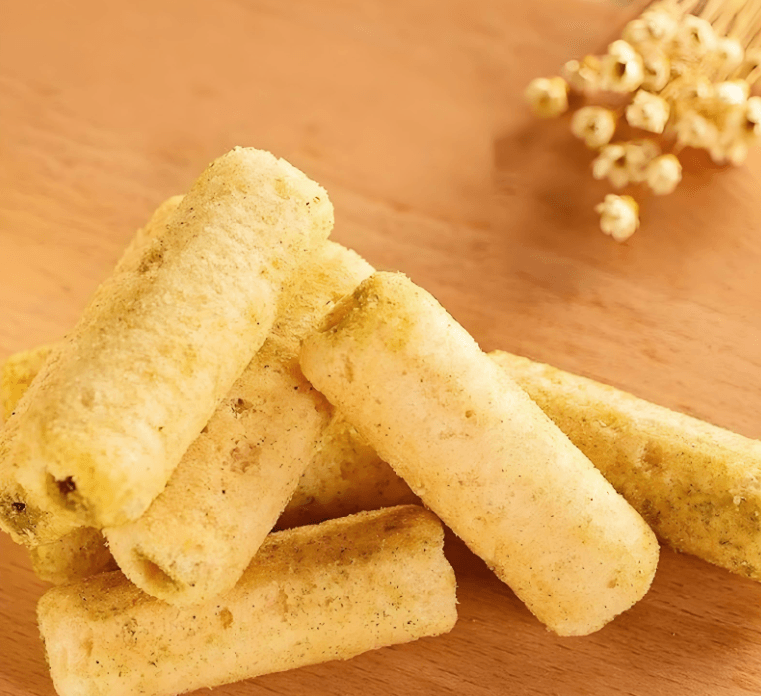
- Powder Application: The dry seasoning blend is then metered into the drum. As the oily snacks tumble, they pick up a uniform coating of the seasoning. The seasoning can be applied to the outside, but advanced systems can also apply a dusting of powder that adheres to the filling exposed at the ends of the snack.
Stage 5: The Final Shield – Cooling, Inspection, and Packaging
The final steps are crucial to preserving the quality achieved through the complex previous stages.
5.1 Cooling
The hot snacks coming from the toasting oven must be cooled to near ambient temperature before packaging. If packaged hot, residual heat would cause condensation inside the package, leading to immediate sogginess. Cooling is typically done on long, open conveyor belts with ambient air circulation or in a dedicated cooling tunnel.
5.2 Automated Inspection
Before packaging, the snacks undergo several automated quality checks.
- Metal Detection: Every piece passes through a metal detector to ensure no metal fragments from the machinery have contaminated the product.
- Checkweighers: These ensure that each package contains the correct weight of product.
- Optical Sorters: High-resolution cameras can detect and automatically reject off-color, misshapen, or broken pieces, ensuring only perfect snacks are packaged.
5.3 The Science of Packaging: Nitrogen Flushing
The cooled and inspected snacks are funneled into their final packaging—usually metallized polypropylene or polyester bags that offer an excellent barrier against moisture, oxygen, and light. The most critical step is nitrogen flushing. Just before the bag is sealed, a jet of inert nitrogen gas is injected into the bag, displacing the oxygen-rich air. The bag is then immediately heat-sealed.
- Why Nitrogen? Oxygen is the enemy of crispy snacks and fats. It causes:
- Oxidative Rancidity: The fats in the filling and any oil in the seasoning react with oxygen, producing off-flavors and unpleasant odors.
- Loss of Crispiness: Moisture is not the only cause of sogginess; oxidative reactions can also degrade the starch structure over time.
- Nutrient Degradation: It can degrade certain vitamins and colors.
By replacing oxygen with inert nitrogen, the shelf life of the product is extended from a few days to many months, all while preserving the perfect texture and flavor.
The production of a filled rice snack is a testament to the precision and ingenuity of modern food engineering. What appears as a simple, delightful treat is the result of a meticulously controlled process where the laws of physics and chemistry are harnessed to create a specific sensory experience. From the selection of the rice variety to the final nitrogen-flushed seal, every single parameter—moisture, temperature, pressure, viscosity—is a critical note in a complex symphony. The next time you enjoy the satisfying crunch and burst of flavor from a filled rice snack, you can appreciate the remarkable technological ballet that made it possible. It is a process where science truly serves the art of snacking.