
The global breakfast cereal market, valued at $54.8 billion in 2024 and projected to exceed $68 billion by 2029 (CAGR 4.5%), continues to drive demand for high-capacity, precision-engineered production infrastructure. Within this landscape, corn flakes maintain their dominance as the category’s volume leader, commanding approximately 32% of total breakfast cereal consumption worldwide. For international investors and facility operators, sourcing production technology from China’s mature food machinery ecosystem—specifically the Shandong and Jiangsu manufacturing corridors—now represents a strategic imperative, with Chinese extrusion equipment exports to food processing sectors growing 18% year-over-year while delivering 30-40% capital expenditure advantages over European counterparts.
Extrusion Technology: The Critical Differentiator
Modern corn flakes manufacturing hinges on twin-screw extrusion technology, which has largely supplanted traditional cooking and flaking mill methods in greenfield investments. The technical sophistication of extrusion systems directly determines product integrity: advanced lines achieve gelatinization rates of 95-98% through precise thermal-mechanical processing (maintaining barrel temperatures within ±1°C across 120-180°C zones), ensuring the characteristic crisp texture and bowl-life stability that define premium brands.
Leading Chinese manufacturers now deploy co-rotating twin-screw configurations with L/D ratios of 20:1 to 24:1, enabling throughputs from 300kg/h to 2,000kg/h while accommodating diverse corn grits specifications (moisture content 12-14%, particle size distribution 30-60 mesh). Critical innovation differentiators include:
– Die-head pressure control systems (maintaining 40-80 bar consistency) for uniform flake formation
– Pneumatic conveyance with moisture recovery (reducing post-extrusion drying energy by 15-22%)
– Quick-change die technology enabling 20-minute product changeovers between corn flakes, multigrain variants, and extruded snacks
Production Efficiency as ROI Driver
In an environment where energy costs constitute 35-40% of operational expenditure in cereal manufacturing, production efficiency metrics separate viable investments from obsolete infrastructure. Current industry benchmarks demand Overall Equipment Effectiveness (OEE) ratings above 85%, with top-tier Chinese lines achieving 88-92% through integrated automation.
Key efficiency parameters for investor evaluation include:
– Specific energy consumption: Leading systems operate at 0.28-0.35 kWh/kg of finished product (compared to 0.45+ kWh/kg in legacy equipment)
– Drying profile optimization: Continuous fluidized bed dryers with zonal temperature control reducing thermal waste by 25%
– Industry 4.0 integration: SCADA-enabled lines with predictive maintenance algorithms reducing unplanned downtime by 40%
– CIP (Clean-in-Place) automation: Full sanitation cycles completed in 90 minutes versus 4-hour manual protocols
Navigating the Selection Landscape
With over 200 registered manufacturers in China’s food extrusion sector alone—ranging from precision engineering firms to assembly workshops—investors face significant due diligence challenges. Certification portfolios (CE, FDA 21 CFR Part 117, ISO 22000), installed base references in GFSI-certified facilities, and R&D expenditure ratios (top performers invest 6-8% of revenue in extrusion technology development) serve as critical vetting criteria.
The following Top 10 Manufacturers evaluation synthesizes production capacity metrics, automation sophistication, export compliance history, and aftermarket service network density to identify partners capable of delivering ROI within 18-30 months—the benchmark for industrial cereal processing investments in 2024-2025.
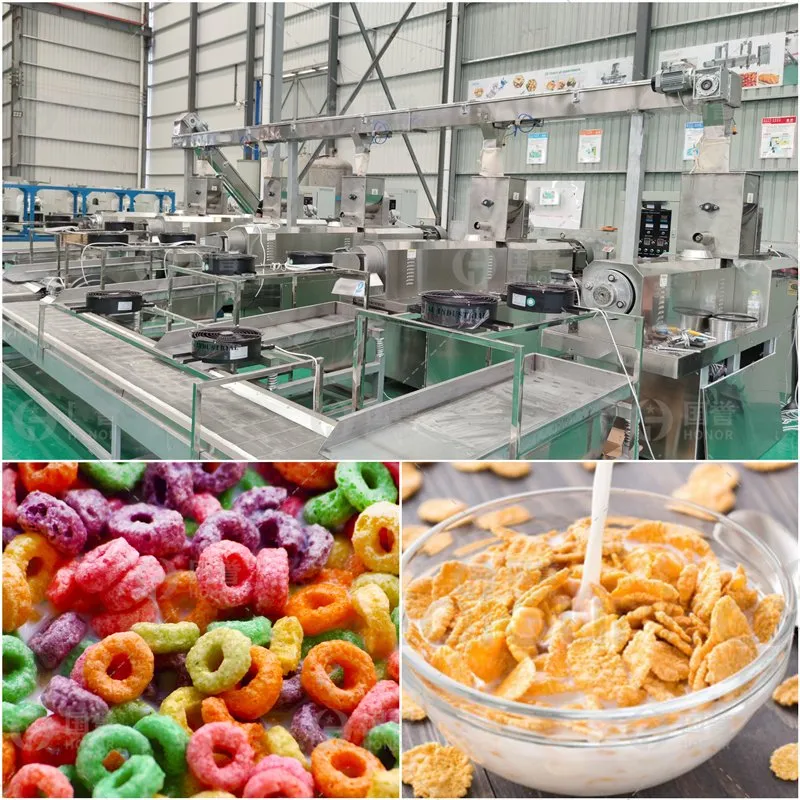
Best Corn Flakes Production Line Suppliers & Factory List

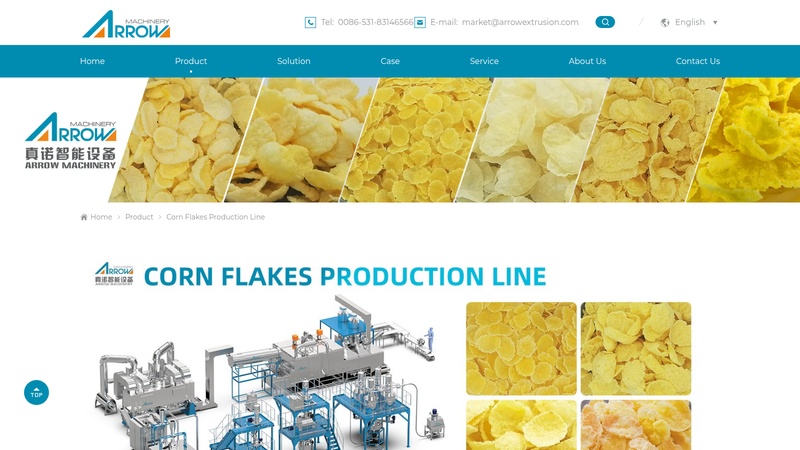

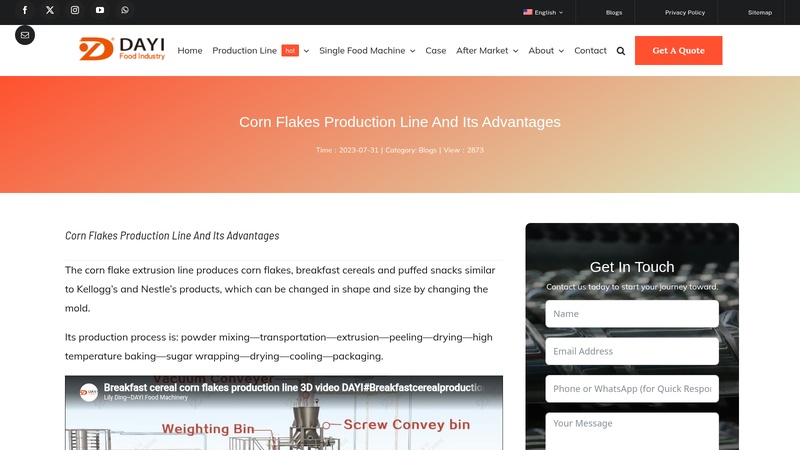
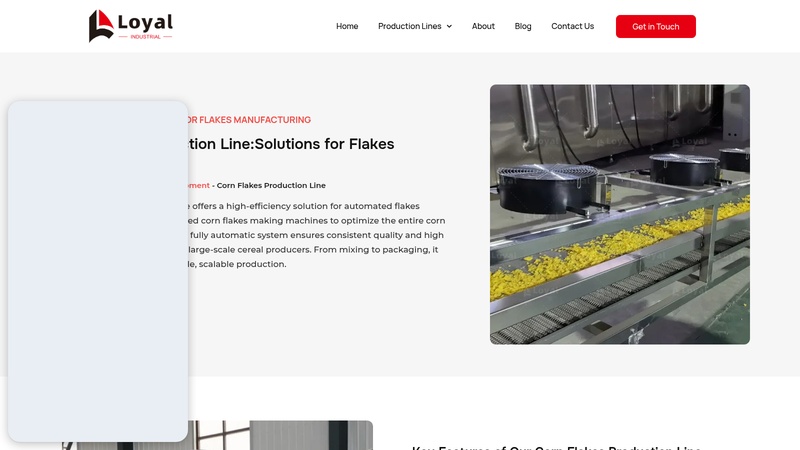

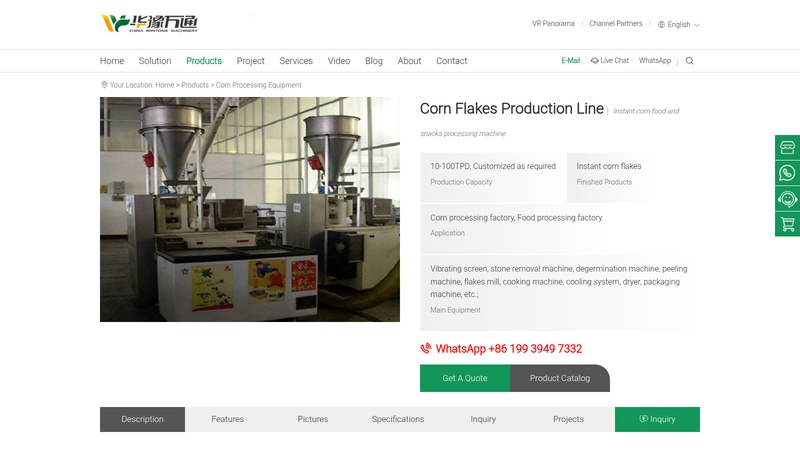
Sourcing Guide: Key Factors for Corn Flakes Production Line
B2B Machinery Sourcing Guide: Corn Flakes Production Lines from China
For international investors and facility operators entering the breakfast cereal market, sourcing a Corn Flakes Production Line from China represents a strategic capital expenditure requiring rigorous technical evaluation. While Chinese manufacturers offer competitive CAPEX advantages and scalable turnkey solutions, the variance in engineering standards necessitates a due-diligence framework focused on performance longevity, food safety compliance, and operational efficiency. This guide outlines the three non-negotiable technical pillars that determine equipment ROI and production consistency.
Extrusion System and Screw Configuration
The extrusion module constitutes the technological core of any corn flakes operation, directly dictating product expansion ratios, gelatinization rates, and texture uniformity. When evaluating Chinese suppliers, prioritize twin-screw extruders with modular screw designs featuring an L/D (length-to-diameter) ratio between 20:1 and 25:1. This geometry ensures optimal shear rate control during high-moisture extrusion (25-30% moisture content), critical for proper starch gelatinization before flaking.
Insist on bi-metallic screw barrels with nitrided treatment (HV 900-1000 hardness) to withstand abrasive corn grits over 20,000+ operating hours. Examine the die plate configuration—variable die geometries with independent heating zones (PID-controlled) allow real-time density adjustments, enabling seamless switching between standard corn flakes, frosted variants, and co-extruded products. Request extrusion-specific data: specific mechanical energy (SME) consumption should remain below 0.12 kWh/kg for energy-efficient operations, and the system must maintain barrel temperature uniformity within ±1.5°C to prevent product deviation.
Material Durability and Sanitary Design
Food-grade material specifications determine both regulatory compliance and total cost of ownership (TCO). Demand AISI 316L stainless steel (not 304) for all product-contact surfaces, particularly in the mixing, extrusion, and drying sections where chloride-induced pitting from cleaning agents poses risks. Surface finish requirements are critical—specify Ra ≤0.8μm (mirror polish) on extruder barrels and pneumatic conveyance lines to prevent microbial adhesion and ensure CIP (Clean-in-Place) efficacy.
Evaluate the frame architecture and welding standards. Structural components should utilize 304 stainless steel with argon-arc welding (TIG) followed by passivation treatment. Inspect gasket materials—FDA-compliant silicone or EPDM seals rated for 150°C+ thermal resistance are mandatory for the flaking rollers and rotary dryers. For high-humidity environments, verify that electrical enclosures carry IP65 ratings minimum, with cable glands utilizing nickel-plated brass to prevent corrosion-induced failures that plague budget installations.
Process Control Systems and Compliance Architecture
Modern corn flakes manufacturing requires SCADA-integrated control architectures to maintain HACCP protocols and minimize giveaway. Insist on PLC systems from Tier-1 providers (Siemens S7-1500 or Schneider Electric Modicon series) with 10-inch+ industrial HMI interfaces supporting multilingual operation. The control logic must include recipe management with 50+ storage slots, automatic moisture feedback loops (via NIR sensors), and alarm logging with timestamp traceability for BRC/SQF audits.
Certification verification extends beyond superficial CE marking. Confirm the entire line carries CE compliance under Machinery Directive 2006/42/EC, including specific certifications for low-voltage components (LVD) and electromagnetic compatibility (EMC). For North American markets, UL-listed electrical panels and NSF/ANSI 51 certification for food zone materials are essential. Additionally, verify the supplier’s capability to provide DQ/IQ/OQ documentation (Design, Installation, and Operational Qualification) to support your facility’s validation protocols.
Strategic Sourcing Recommendation
When negotiating with Chinese OEMs, request a Factory Acceptance Test (FAT) witnessing the production line operating at 110% rated capacity for 72 continuous hours. Evaluate the supplier’s spare parts strategy—critical wear components (screw segments, die inserts, flaking rollers) should be available from regional warehouses with <72-hour delivery commitments. Finally, assess the engineering team’s English-language technical competency and remote diagnostic capabilities, as post-installation support quality often differentiates premium suppliers from commodity traders.
By rigorously validating these three technical domains—extrusion precision, metallurgical integrity, and control sophistication—you mitigate the operational risks inherent in cross-border machinery procurement while securing equipment capable of delivering 95%+ OEE (Overall Equipment Effectiveness) in continuous breakfast cereal operations.
Why Experience is Non-Negotiable in Corn Flakes Production Line Selection
Selecting an experienced factory for your Corn Flakes Production Line is a strategic imperative that directly impacts product quality, operational efficiency, and long-term profitability. Corn flakes manufacturing demands precise orchestration of extrusion parameters, moisture control, flaking consistency, and thermal processing to achieve the signature crisp texture and uniform golden appearance that consumers expect. An established manufacturer brings critical institutional knowledge in extrusion die engineering, heat transfer optimization, and automated process control—eliminating costly trial-and-error phases and production downtime. Furthermore, experienced suppliers ensure stringent compliance with international food safety standards, provide robust after-sales technical support with readily available spare parts, and deliver proven turnkey integration from raw material handling through final packaging. In an industry where batch consistency and throughput reliability define market success, partnering with a factory that possesses decades of cereal-specific extrusion expertise mitigates technical risks and accelerates your path to ROI.
Your Strategic Partner: Jinan Dayi Extrusion Machinery Co., Ltd
This is precisely where Jinan Dayi Extrusion Machinery Co., Ltd distinguishes itself as the industry leader you need.
Since our establishment in 1996, Dayi has pioneered advanced, high-efficiency extrusion food machinery, accumulating over 20 years of specialized expertise in the breakfast cereal and snack food sectors. We are not merely equipment fabricators—we are process engineers who understand the science of cereal expansion and texture optimization.
Our Core Competitive Advantages:
- Dedicated Expert Team: Our food engineers and mechanical designers possess deep, cereal-specific knowledge to optimize your production parameters.
- High-Efficiency Extrusion Technology: Proprietary systems that maximize throughput while minimizing energy consumption and raw material waste.
- True Turnkey Solutions: Seamless integration from raw material processing and extrusion through flaking, drying, seasoning, and final packaging—delivering a production-ready ecosystem, not just isolated machines.
Comprehensive Product Portfolio:
While our Corn Flakes Production Line represents the pinnacle of our breakfast cereal expertise, our capabilities span the entire extrusion spectrum: Puffed Snack Food, Pet Food, Tortilla Chips, Fortified Rice, Baby Food, Bread Crumbs, 3D Pellet Snacks, Nutrition Powder, and Soya Chunk production lines. This diversity demonstrates our mastery of extrusion physics across applications, ensuring your corn flakes system benefits from cross-industry innovation.
Ready to Optimize Your Cereal Production?
Don’t entrust your market entry to unproven machinery. Contact Jinan Dayi Extrusion Machinery Co., Ltd today to consult with our engineering team. We will design a customized Corn Flakes Production Line tailored to your specific capacity targets, facility constraints, and product specifications.
Request your detailed technical proposal and competitive quote now. Let Dayi transform your raw materials into premium breakfast cereals with the precision, efficiency, and reliability that only two decades of extrusion mastery can deliver.