
The Global Breakfast Revolution: Strategic Sourcing of Corn Flakes Processing Lines from China
The global breakfast cereal market, valued at $62.8 billion in 2023, is projected to reach $85.4 billion by 2030, driven by accelerating urbanization and the premiumization of convenience foods across emerging economies. Within this sector, corn flakes maintain dominant market share—yet profitability hinges not on raw commodity costs, but on manufacturing precision. For institutional investors and facility operators evaluating capital equipment decisions, China has evolved from a low-cost alternative to a high-technology hub, currently supplying approximately 35% of global food extrusion machinery while offering 40-60% cost advantages over European counterparts without compromising on Industry 4.0 integration.
The Extrusion Imperative: Engineering Texture and Yield
At the heart of corn flakes production lies extrusion technology—the critical determinant of product expansion ratio, gelatinization degree, and shelf stability. Modern twin-screw extrusion systems achieve starch gelatinization rates exceeding 92%, compared to 75-80% in legacy single-screw configurations, directly impacting digestibility and bowl-life crispiness. Advanced preconditioning systems with precise moisture control (±0.5% accuracy) and variable screw speed configurations (up to 600 RPM) enable manufacturers to process diverse corn grit specifications while maintaining consistent bulk density—typically 100-120 g/L for standard flakes and 80-95 g/L for honey-coated variants.
Leading Chinese manufacturers now integrate PLC-controlled extrusion barrels with segmented heating zones (independent temperature control within ±1°C) and automated die-face cutting systems, reducing material waste from 8-12% in conventional lines to sub-3% in optimized configurations. This precision extrusion capability separates commodity equipment from industrial-grade solutions capable of achieving 99.2%+ Overall Equipment Effectiveness (OEE) ratings.
Production Efficiency: The New Competitive Frontier
In an era of margin compression and energy volatility, production efficiency metrics define ROI timelines. State-of-the-art processing lines from tier-1 Chinese suppliers now feature:
- Throughput Optimization: Continuous production capacities ranging from 300kg/hr for mid-scale operations to 2,000kg/hr industrial configurations, with specific energy consumption reduced to 0.28-0.32 kWh/kg through heat recovery systems and optimized thermal transfer designs.
- Smart Manufacturing Integration: IoT-enabled extrusion systems with SCADA interfaces providing real-time monitoring of motor load, barrel pressure, and product moisture content, reducing unplanned downtime by up to 45% compared to non-integrated lines.
- Rapid Changeover Capabilities: Tool-less die replacement systems and automated CIP (Clean-in-Place) protocols enabling product changeovers in under 45 minutes—critical for facilities producing multiple SKUs including frosted variants, chocolate-infused lines, and fortified formulations with micro-nutrient injection systems.
Navigating the Supplier Landscape
However, equipment specification sheets rarely reveal operational reality. The Chinese corn flakes processing line market spans from precision engineering firms with ISO 22000-certified fabrication facilities to assembly operations utilizing substandard thermal components that compromise heat distribution uniformity. Critical differentiation factors include extruder screw metallurgy (nitrided steel vs. standard alloy), flaking mill roll grinding precision (micron-level tolerance maintenance), and drying system thermal efficiency (single-pass vs. multi-zone convection).
The following comprehensive analysis evaluates ten manufacturers based on extrusion technology sophistication, automation integration depth, after-sales technical support infrastructure, and verified production efficiency data from operational facilities across Southeast Asia, Africa, and Latin America. Whether you are commissioning a greenfield 10-ton/day facility or upgrading legacy equipment for gluten-free product diversification, these rankings provide the technical due diligence framework essential for seven-figure capital equipment procurement decisions.
Methodology Note: Rankings derive from technical specification audits, energy consumption benchmarking, and 36-month operational data from installed bases, weighted 40% on extrusion system engineering, 30% on automation/smart features, and 30% on total cost of ownership metrics.
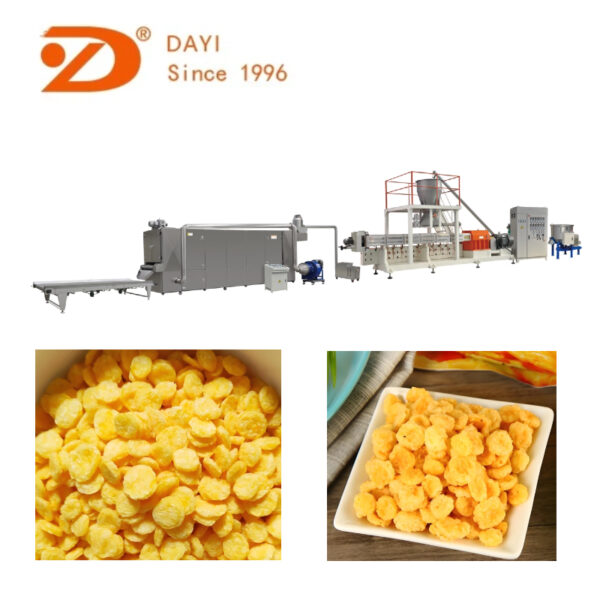
Best Corn Flakes Processing Line Suppliers & Factory List
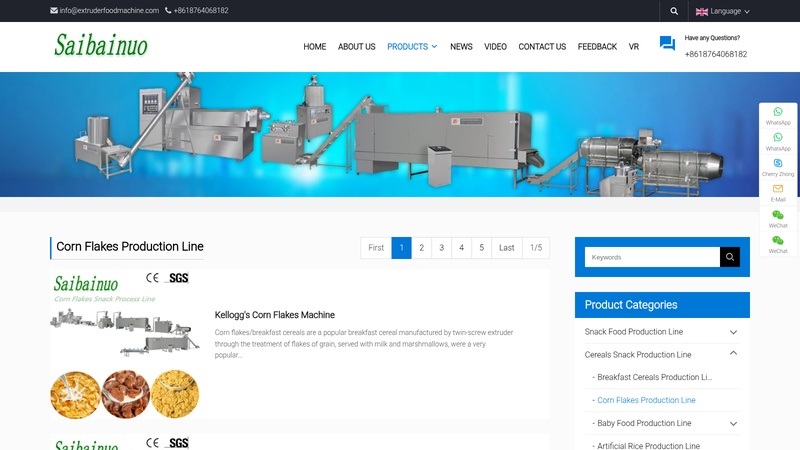
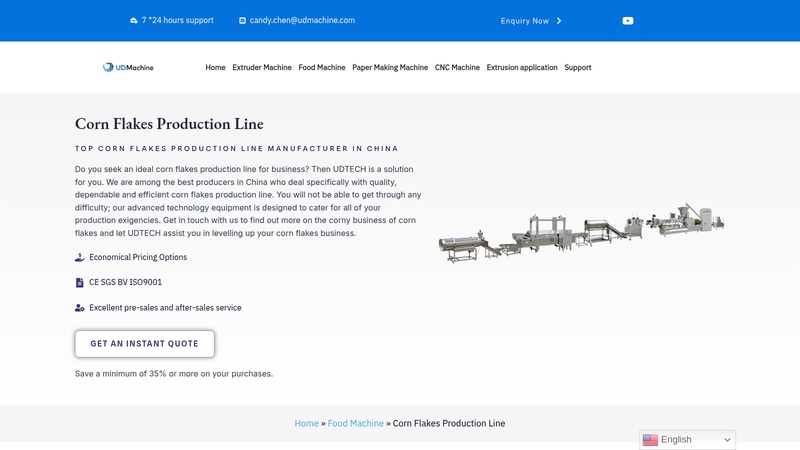
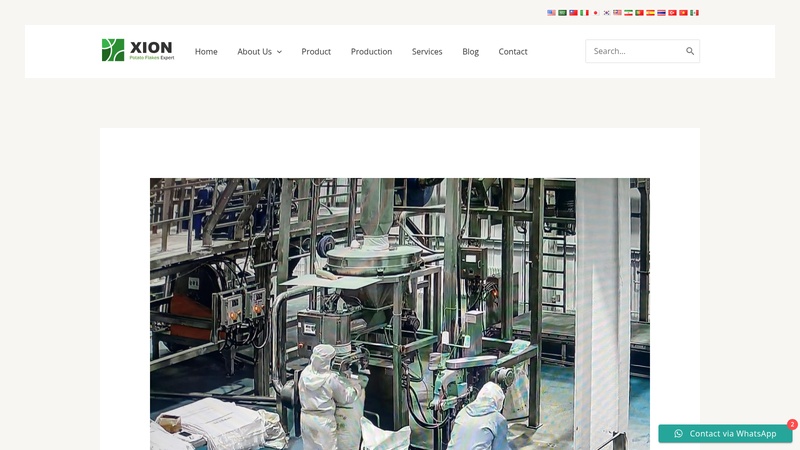
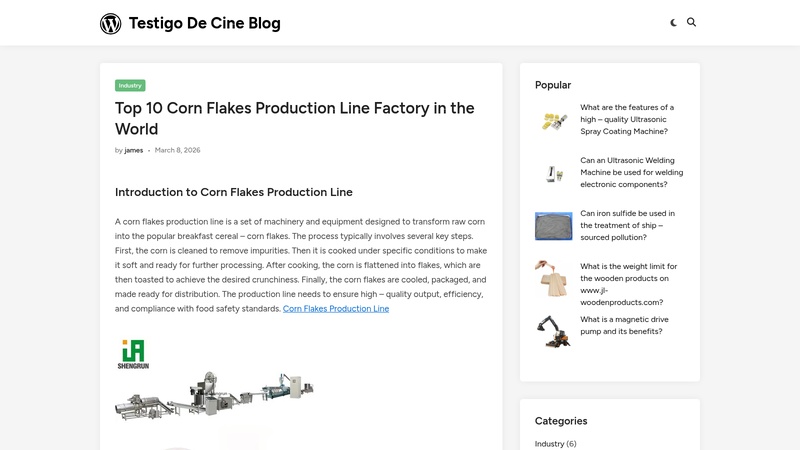
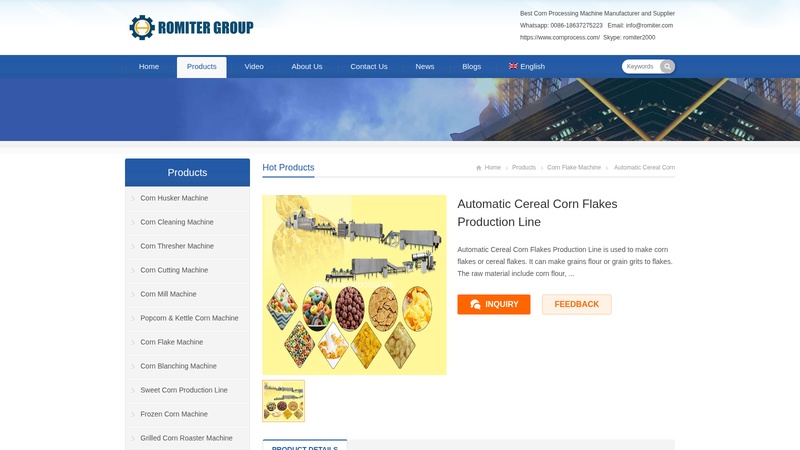


Sourcing Guide: Key Factors for Corn Flakes Processing Line
B2B Machinery Sourcing Guide: Corn Flakes Processing Lines from China
For international food processing investors and factory owners, China represents the world’s largest manufacturing hub for extrusion-based breakfast cereal equipment. However, the market bifurcates sharply between commodity-grade machinery and industrial-scale systems capable of meeting Western hygiene, efficiency, and automation standards. This guide provides a technical framework for evaluating high-capacity Corn Flakes Processing Lines (CFPLs) specifically engineered for export-quality production.
Critical Technical Factor 1: Extruder Screw Configuration and L/D Ratio Optimization
The extrusion cooking system constitutes the thermal and mechanical heart of any corn flakes line. When sourcing from Chinese manufacturers, technical scrutiny of the screw geometry separates precision equipment from commodity extruders.
Key Specifications to Demand:
* Length-to-Diameter (L/D) Ratio: Insist on a minimum 15:1 to 20:1 L/D ratio for corn flakes specifically. Lower ratios (10:1–12:1) common in budget Chinese lines produce inadequate gelatinization, resulting in fragile flakes and excessive breakage during subsequent flaking and toasting.
* Modular Screw Design: Verify that the screw elements are splined or keyed for interchangeability, not welded monobloc designs. This allows reconfiguration for varying corn grits moisture content (typically 28–32%) and permits future recipe diversification (e.g., multigrain or fortified flakes).
* Compression Ratio Gradients: The screw must feature distinct feeding, compression, and metering zones with specific pitch variations. Request computational fluid dynamics (CFD) simulation data or pressure curve documentation from the supplier.
Red Flags in Chinese Manufacturing:
Avoid suppliers utilizing fixed-speed, single-screw configurations with nitrided 38CrMoAlA steel as the only barrel material option. Premium lines should offer bimetallic barrel liners (WC-Co or Ni-based alloy) in the high-wear compression section, extending service life from 3,000 hours to over 8,000 hours between maintenance cycles.
Critical Technical Factor 2: Material Durability and Food-Grade Compliance
Corn flakes production involves abrasive maize grits, high-pressure steam injection, and thermal cycling that aggressively stress equipment metallurgy. Material specification discrepancies represent the most common failure point in imported Chinese machinery.
Non-Negotiable Material Standards:
* Contact Surface Metallurgy: All product-contact surfaces must be 304 or 316L stainless steel with surface roughness (Ra) ≤ 0.8μm. Demand mill test certificates (MTCs) with chemical composition analysis; substandard Chinese suppliers often substitute 201 stainless steel or apply cosmetic chrome plating over carbon steel in non-visible areas.
* Die and Cutter Hardness: The extrusion die and rotary cutter blades must utilize H13 tool steel or tungsten carbide inserts hardened to 58–62 HRC. Corn grits extruded at 120–140°C create significant abrasive wear; inferior dies degrade within months, altering product density and toasting characteristics.
* Coating Integrity: Verify that any non-contact structural steel (frames, housings) undergoes sandblasting (Sa 2.5) and epoxy powder coating (80–120μm thickness) suitable for high-humidity environments, not standard alkyd paint.
Compliance Verification:
Require current FDA 21 CFR 177.1520 and EU 1935/2004 compliance declarations for all polymer components (gaskets, conveyor belts). Reputable Chinese manufacturers will provide third-party SGS or Bureau Veritas material certifications; avoid suppliers offering only self-declared conformity.
Critical Technical Factor 3: Integrated Control Systems and International Certifications
Automation architecture determines your operational efficiency, recipe reproducibility, and regulatory acceptance in target markets. The gap between domestic Chinese control standards and international industrial norms is substantial.
Control System Specifications:
* PLC Architecture: Insist on Tier-1 automation brands (Siemens S7-1200/1500, Schneider Electric Modicon, or Allen-Bradley CompactLogix). Domestic Chinese PLCs (Inovance, Delta) may offer cost savings but create long-term obsolescence risks and integration difficulties with existing plant SCADA systems.
* HMI and Data Logging: The human-machine interface should support English, Spanish, Arabic, or other required languages natively—not via aftermarket translation patches. Demand batch reporting functionality with SQL database connectivity for traceability compliance (BRC, IFS, or SQF standards).
* Recipe Management: Verify storage capacity for minimum 50 product recipes with automatic parameter adjustment for extruder speed, zone temperatures, and cutter velocity. Manual adjustment between production runs creates unacceptable downtime in high-volume operations.
Certification Due Diligence:
* CE Marking: Verify the CE Declaration of Conformity covers the Machinery Directive 2006/42/EC, Low Voltage Directive 2014/35/EU, and EMC Directive 2014/30/EU. Request the NB (Notified Body) number; legitimate certificates are issued by entities like TÜV, SGS, or BV, not self-certified by the factory.
* Electrical Safety: For North American markets, confirm UL 508A industrial control panel certification or CSA C22.2 compliance. Chinese manufacturers often default to GB (Guobiao) standards incompatible with international electrical codes.
Additional Sourcing Considerations
After-Sales Infrastructure: Verify that your Chinese supplier maintains overseas service engineers or authorized technical partners in your region. Extruder barrels and screws require specialized reconditioning; confirm availability of wear parts inventory within your continent to avoid 8–12 week shipping delays from China.
Trial Production Protocol: Reputable manufacturers offer virtual FAT (Factory Acceptance Testing) via live video stream and physical sample production using your specified raw materials. Insist on producing minimum 50kg of finished corn flakes with <3% breakage rate and moisture content 2–3% before shipment acceptance.
Total Cost of Ownership (TCO): Budget Chinese lines often quote 30–40% lower capital expenditure but consume 15–20% more energy per ton due to inefficient motor systems (IE2 vs. IE4 efficiency classes) and poor thermal insulation. Calculate 10-year TCO including energy, spare parts, and downtime costs before procurement.
Conclusion
Sourcing a Corn Flakes Processing Line from China requires moving beyond brochure specifications to metallurgical verification, automation architecture validation, and certification authentication. By enforcing the technical standards outlined above—specifically regarding extruder screw engineering, material traceability, and control system interoperability—investors secure equipment capable of producing export-grade breakfast cereals with the reliability necessary for 24/7 industrial operations.
Why Experience is Non-Negotiable in Corn Flakes Processing Line Selection
Selecting an experienced factory for your Corn Flakes Processing Line is not merely a procurement preference—it is a strategic imperative that directly impacts product quality, operational efficiency, and long-term profitability. Breakfast cereal production demands exacting control over extrusion parameters, moisture content, flaking pressures, and toasting profiles; even minor deviations result in inconsistent flake integrity, coating uniformity issues, or costly batch failures. Veteran manufacturers possess the process knowledge to engineer systems that maintain precise thermal transfer and mechanical stability at industrial scale, ensuring the golden crispness and structural durability that define premium corn flakes. Furthermore, experienced providers understand global food safety compliance (HACCP, FDA, EU standards) and hygienic design principles, reducing contamination risks and regulatory liabilities. Critically, they offer robust after-sales infrastructure—essential for minimizing downtime in continuous-production environments where every hour of interruption translates to significant revenue loss.
The DAYI Advantage: Your Turnkey Extrusion Partner
This is where Jinan Dayi Extrusion Machinery Co., Ltd distinguishes itself as your strategic manufacturing ally. Established in 1996, we bring over 20 years of specialized expertise in advanced, high-efficiency extrusion food machinery, cementing our position as an industry pioneer.
Our Core Value Proposition:
- Dedicated Expert Team: We are not just equipment builders; we are process engineers. Our professional manufacturing team designs solutions around your specific recipe requirements, facility constraints, and production targets.
- High-Efficiency Extrusion Technology: Our proprietary extrusion systems optimize energy consumption while maximizing throughput, delivering superior textural control for expanded cereals and flakes.
- True Turnkey Solutions: From raw material preprocessing and extrusion to flaking, toasting, coating, drying, and final packaging integration, we deliver complete production ecosystems—not just isolated machines.
Comprehensive Product Portfolio:
While our Corn Flakes Production Line represents a flagship solution, our capabilities span the entire extruded food spectrum: Puffed Snack Food Lines, Pet Food Production Systems, Tortilla Chip Lines, Fortified Rice Processing, Baby Food Production, Bread Crumb Systems, 3D Pellet Snack Lines, Nutrition Powder Plants, and Soya Chunk Processing Equipment.
Ready to Optimize Your Production?
Don’t compromise on experience when investing in breakfast cereal infrastructure. Contact Jinan Dayi Extrusion Machinery Co., Ltd today to discuss your specific requirements. Our engineers will configure a custom solution tailored to your capacity needs, recipe specifications, and budget parameters, followed by a detailed technical quote and implementation roadmap.
Reach out now to leverage two decades of extrusion excellence for your competitive advantage.