
Introduction: Navigating the Global Market for cornflake machine
Sourcing industrial cornflake machines for scaling breakfast cereal operations presents a complex maze of technical specifications, supplier reliability concerns, and regional compliance requirements that can overwhelm even experienced food production investors. Whether you are establishing a new extrusion facility in Lagos, expanding grain processing capabilities in São Paulo, or upgrading lines in Riyadh or Berlin, navigating the global marketplace for extrusion and flaking equipment demands more than comparing price lists. Equipment quality directly impacts product texture, nutritional retention, and your ability to meet international food safety standards while maintaining competitive production costs.
How Can Buyers Overcome the Complexity of Global Cornflake Equipment Procurement?
The global manufacturing landscape spans from compact twin-screw extrusion systems for emerging African markets to high-capacity automated lines meeting European industrial standards. Buyers frequently face challenges distinguishing essential features—food-grade stainless steel construction, compatible motor systems, and flexible heating sources—from costly unnecessary add-ons. This guide cuts through market noise to provide actionable frameworks for evaluating extrusion technology and flaking processes against your specific production goals.
What Strategic Insights Will Empower Your Investment Decision?
This comprehensive resource examines critical procurement factors including equipment type selection, supplier vetting protocols for international manufacturers, total cost of ownership calculations, and region-specific compliance requirements. You will discover how to assess production line scalability, validate technical training offerings, and optimize energy efficiency for your local infrastructure—whether operating in Middle Eastern high-temperature environments or under Europe’s stringent regulatory frameworks.
Why Is This Guide Essential for International B2B Buyers?
For decision-makers across Africa, South America, the Middle East, and Europe, this guide serves as a strategic roadmap to mitigate procurement risks and accelerate facility commissioning. We address unique regional operational contexts, from managing supply chain logistics to Nigeria or Saudi Arabia, to meeting CE certification for German markets. By the conclusion, you will possess the technical knowledge necessary to secure cornflake production equipment that delivers consistent quality, operational longevity, and sustainable ROI in your specific market environment.
Understanding cornflake machine Types and Variations
| Type Name | Key Distinguishing Features | Primary B2B Applications | Brief Pros & Cons for Buyers |
|---|---|---|---|
| High-Capacity Twin-Screw Extrusion Lines | Continuous processing via intermeshing twin-screw extruders; real-time parameter control; compatible with electricity, gas, oil, or steam thermal systems; food-grade stainless steel construction; SIEMENS/ABB motor configurations | Large-scale cereal manufacturers; industrial food conglomerates in Germany, Saudi Arabia; high-volume export operations | Pros: Automated continuous output (200–1000+ kg/h), consistent product density, self-cleaning screw options reduce downtime. Cons: High capital investment; requires skilled technical operators; significant floor space requirements. |
| Compact Small-Scale Production Systems | Modular skid-mounted design; 50–150 kg/h capacity; simplified HMI controls; reduced utility demands; quick-install configuration | Food startups in Africa and South America; regional distributors; pilot R&D facilities; SME entrants to breakfast cereal markets | Pros: Lower barrier to entry; faster ROI; minimal infrastructure requirements; often includes onsite technical training packages. Cons: Limited scalability without significant retrofit; higher per-unit labor costs; restricted automation features. |
| Multi-Grain Versatile Cereal Lines | Interchangeable die heads and roller configurations; processes corn, rice, wheat, and oat flour; capable of producing flakes, puffed balls, loops, and extruded snacks; adaptable coating systems for sweet/savory profiles | Co-manufacturers; diversified snack producers in Middle East and Europe; companies serving multiple cereal categories | Pros: Rapid product changeover enables seasonal adaptation; broadens market portfolio; single line serves multiple B2B contracts. Cons: Complex sanitation protocols between batches; longer changeover times; requires comprehensive operator training on multiple settings. |
| Traditional Batch Cooking & Flaking Systems | Steam-pressure cooking vessels (batch); heavy-duty roller flaking mills; separate drying/baking ovens; gentle processing preserving native starch structures | Premium artisanal brands; traditional markets preferring authentic textures; European heritage cereal producers; specialty organic manufacturers | Pros: Superior flake integrity and “traditional” mouthfeel; gentle nutrient preservation; established technology with local maintenance familiarity. Cons: Labor-intensive batch operations; extended processing cycles; larger physical footprint; higher utility consumption per output unit. |
Which cornflake machine configuration delivers optimal throughput for industrial operations?
High-capacity twin-screw extrusion lines represent the gold standard for B2B operations targeting mass distribution across Middle Eastern and European markets. These systems utilize continuous extrusion cooking—where corn grits undergo high-pressure thermal treatment within intermeshing screws—before precision flaking and toasting. For buyers in regions with fluctuating energy infrastructure, prioritize models offering multi-fuel compatibility (electricity, gas, oil, or steam) to ensure operational continuity. While the initial capital outlay is significant, the automation level reduces per-unit labor costs and ensures the consistency demanded by international retail chains. When sourcing, verify that suppliers provide comprehensive commissioning support and recipe documentation tailored to local raw material specifications.
What cornflake production solutions work best for emerging market entry?
Compact small-scale systems offer strategic entry points for African and South American entrepreneurs entering the breakfast cereal sector without prohibitive infrastructure investments. These modular units typically deliver 50–150 kg/h output through simplified extrusion or hybrid cooking methods, requiring minimal factory modifications and reduced utility loads. Key purchasing considerations include the availability of localized after-sales networks and training programs—critical factors in regions where specialized maintenance expertise may be scarce. While these systems demand more manual intervention for packaging and quality control, their lower throughput aligns perfectly with regional distribution models and allows manufacturers to validate market demand before scaling to industrial-capacity equipment.
How can manufacturers diversify output with multi-grain cereal processing equipment?
Multi-grain versatile lines address the growing B2B demand for portfolio diversification, enabling single-facility production of corn flakes, rice-based crispy cereals, wheat loops, and oat-inclusive blends. These systems feature quick-change die assemblies and adjustable roller gaps that accommodate varying grain viscosities and expansion ratios. For buyers serving diverse cultural preferences—from sweetened varieties popular in Saudi Arabia to savory formulations in parts of South America—this flexibility proves invaluable. However, procurement teams must evaluate the sanitation design; look for systems with “self-cleaning” screw configurations and accessible contact surfaces to minimize cross-contamination risks during rapid product transitions. Ensure your supplier provides detailed SOPs for changeover protocols to maintain operational efficiency.
When should businesses consider traditional cooking methods over extrusion technology?
Traditional batch cooking and flaking systems remain relevant for B2B buyers targeting premium market segments where authentic texture commands price premiums, particularly within European artisanal food sectors. Unlike extrusion, these systems employ steam-pressure cooking followed by heavy-duty roller flaking, producing distinctively flat, translucent flakes with superior bowl-life stability. While requiring greater labor input and extended processing times, this technology offers familiarity to operators in regions with established food-processing traditions. When evaluating these systems, prioritize manufacturers offering robust recipe development support and energy-efficient steam recovery mechanisms, as utility costs represent a significant operational variable in large-batch production environments.
Key Industrial Applications of cornflake machine
| Industry/Sector | Specific Application of cornflake machine | Value/Benefit for the Business | Key Sourcing Considerations for this Application |
|---|---|---|---|
| Commercial Breakfast Cereal Manufacturing | Continuous production of toasted corn flakes and multigrain cereals using twin-screw extrusion, flaking rollers, and automated coating systems | High-volume output with consistent product quality, reduced labor costs through automation, and ability to process diverse grain flours (corn, rice, wheat, oats) | Energy source flexibility (gas/electric/steam), food-grade stainless steel construction, compliance with EU hygiene or Halal standards, SIEMENS or equivalent certified motors |
| Savory & Sweet Snack Production | Manufacturing of puffed cereal bases, crispy rice crackers, and extruded savory bites via adjustable die configurations and dual-purpose coating drums | Equipment versatility allowing rapid switching between breakfast and snack profiles, maximizing ROI through diversified product portfolios | Quick-change die systems, humidity control for tropical climates, compatibility with local grain varieties, robust coating systems for both sugar and savory flavorings |
| Nutraceutical & Functional Food | Production of protein-enriched and vitamin-fortified flakes with precision powder feeding systems and gentle extrusion processing | Preservation of heat-sensitive nutritional additives while creating palatable textures for health-conscious and geriatric nutrition markets | Sanitary powder handling with CIP capabilities, precise temperature control zones, pharmaceutical-grade food safety certifications, micronutrient dispersion technology |
| Contract Manufacturing & Private Label | Centralized bulk production for hotel chains, airlines, and retail private labels with integrated packaging and recipe flexibility | Quick-changeover capabilities enabling multiple client portfolios, modular scaling from pilot to industrial volumes | Multilingual HMI interfaces, packaging line integration, remote diagnostic capabilities, comprehensive spare parts networks across target regions |
| Animal Feed & Pet Food Processing | Extrusion of high-density livestock pellets and floating fish feed using agricultural by-products and alternative proteins | Cross-utilization of extrusion infrastructure for non-food products, serving growing agricultural sectors in emerging markets | Heavy-duty construction for abrasive materials, adjustable density controls, segregation capabilities for human/animal product facilities, extended wear parts for high-fiber materials |
How are cornflake machines utilized in large-scale breakfast cereal operations?
Industrial extrusion systems enable continuous production of uniform corn flakes from various grain flours, utilizing twin-screw technology to achieve precise cooking and gelatinization before flaking and toasting. For buyers in Germany and Saudi Arabia, equipment must comply with strict EU hygiene standards or Halal certification requirements while offering energy flexibility between gas
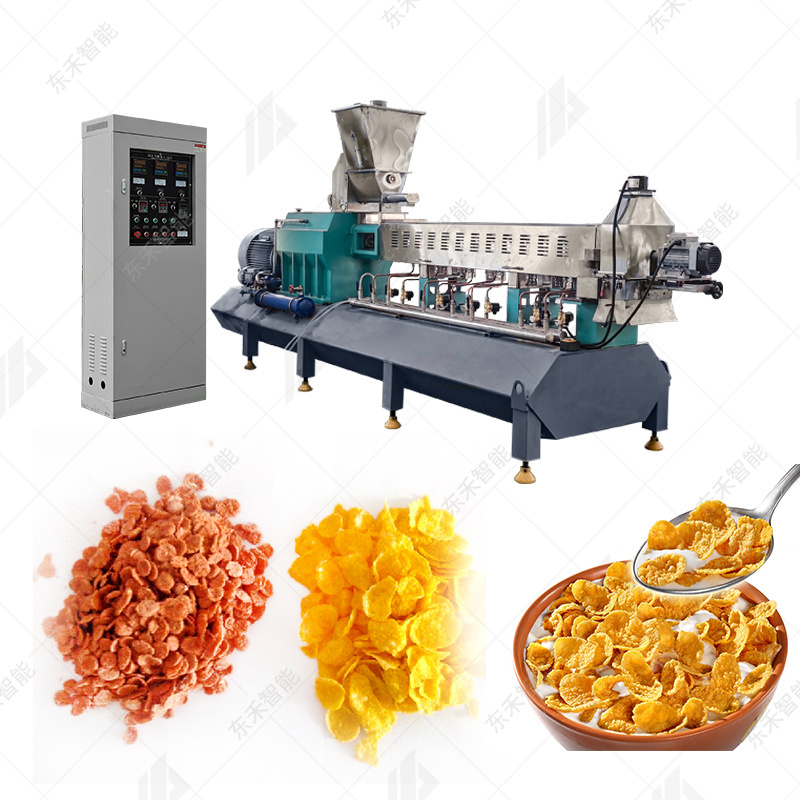
A stock image related to cornflake machine.
3 Common User Pain Points for ‘cornflake machine’ & Their Solutions
Scenario 1: How Can Emerging Market Buyers Balance Capital Constraints with Equipment Reliability?
The Problem: Procurement teams in Africa, South America, and the Middle East frequently encounter a critical dilemma when sourcing industrial cornflake lines. Entry-level equipment often appears attractive due to lower upfront costs, yet these systems typically employ generic motors and non-food-grade alloys that precipitate chronic operational failures. Common issues include pressing roller adhesion, inconsistent extrusion pressure, and premature screw wear, which cascade into production bottlenecks, elevated rejection rates for malformed flakes, and unplanned capital expenditure for emergency repairs. Without clear visibility into total cost of ownership, buyers risk selecting machinery that cannot achieve the throughput necessary for profitability in competitive breakfast cereal markets.
The Solution: Implement a procurement framework that prioritizes twin-screw extrusion technology constructed from 304 or 316 food-grade stainless steel, coupled with internationally certified electrical components such as SIEMENS or Schneider systems. Rather than evaluating purchase price in isolation, calculate the five-year TCO incorporating energy efficiency ratings, spare parts availability, and projected downtime costs. Seek manufacturers offering modular production lines that allow capacity expansion from 200kg/h to 1000kg/h without complete system replacement. Ensure contractual agreements include guaranteed throughput specifications, on-site installation supervision, and operator training programs tailored to local workforce technical levels.
Scenario 2: What Solutions Address Inconsistent Flake Quality and Raw Material Variability?
The Problem: Commercial producers transitioning from traditional flaking mills to automated extrusion systems often face significant formulation challenges when adapting to local agricultural inputs. Corn varieties exhibit substantial regional variation in moisture content, starch composition, and particle size—factors that directly impact extrusion viscosity and flake integrity. Without precise control over the cooking, drying, and pressing phases, facilities experience high rates of broken flakes, uneven toasting, and texture inconsistencies that fail to meet international breakfast cereal quality standards. Additionally, operators frequently lack the technical expertise to adjust screw configurations and temperature profiles for different cereal blends, resulting in off-flavor profiles and low shaping rates.
The Solution: Deploy advanced extrusion lines featuring PLC-controlled automated feeding systems and precision temperature management across the pre-conditioning, extrusion, and baking stages. Specify equipment with self-cleaning twin-screw designs that prevent material accumulation and cross-contamination between batches. Critical to success is selecting suppliers who provide comprehensive recipe development services, including laboratory testing of local corn varieties and optimization of moisture ratios for specific altitude and humidity conditions. The system should incorporate variable-speed flaking rollers with adjustable gap settings and automated coating drums capable of precise sugar and flavor application to ensure consistent product characteristics regardless of raw material variability.
Scenario 3: How to Optimize Energy Consumption and Infrastructure Compatibility?
The Problem: Manufacturing facilities across geographically diverse markets—from regions with intermittent electrical supply in parts of Africa to European areas facing volatile natural gas pricing—confront significant operational constraints when standardized equipment demands specific energy inputs. Traditional flaking processes typically require substantial thermal energy for steam generation and consistent high-temperature baking, creating vulnerability to infrastructure instability. Furthermore, buyers often underestimate the utility costs associated with continuous drying and toasting operations, eroding profit margins in markets where energy subsidies are unavailable or grid reliability is inconsistent, particularly in developing economies or during peak demand periods in industrial zones like Germany or Saudi Arabia.
The Solution: Configure production lines with hybrid thermal systems capable of seamless switching between electricity, liquefied petroleum gas, diesel, or steam based on real-time availability and cost optimization. Modern extrusion-based cornflake manufacturing reduces thermal energy requirements by 25-40% compared to conventional flaking mills through efficient mechanical heat generation during the extrusion process. Prioritize equipment with heat recovery systems and insulated baking chambers to minimize thermal loss. Additionally, verify that electrical specifications accommodate local voltage fluctuations and that manufacturers maintain regional spare parts depots and technical service teams capable of rapid response to minimize production interruptions caused by infrastructure instability.
Strategic Material Selection Guide for cornflake machine
Material specification constitutes one of the most critical due diligence checkpoints when procuring cornflake production equipment, directly influencing equipment longevity, food safety compliance, and total cost of ownership across diverse operational environments. For international buyers managing facilities in climates ranging from the humid tropics of West Africa to the arid conditions of the Middle East, selecting appropriate metallurgical grades and polymer composites requires balancing regulatory requirements, maintenance capabilities, and capital expenditure constraints. The following analysis examines four material categories commonly specified in breakfast cereal manufacturing equipment, providing actionable insights for procurement teams evaluating extrusion, drying, and coating systems.
Why is Food-Grade Stainless Steel 304 the Default Choice for Cornflake Extrusion Systems?
Austenitic stainless steel grade 304 (18/8 chromium-nickel) dominates the cornflake machinery landscape, particularly for twin-screw extruder barrels, mixing chambers, and product-contact conveying surfaces. This material demonstrates exceptional resistance to organic acids present in corn grits and withstands thermal stresses up to 870°C, accommodating the high-pressure cooking phases essential for gelatinization. Its non-porous surface structure prevents microbial harboring, facilitating compliance with HACCP and ISO 22000 standards prevalent in European and Saudi Arabian markets. For operations in Germany and other EU-regulated environments, 304 stainless ensures adherence to EC 1935/2004 food contact material regulations while offering optimal weldability for custom line configurations. The material’s widespread availability also simplifies spare parts procurement across African and South American markets, reducing downtime risks associated with specialized component shortages.
When Does 316L Stainless Steel Become Essential for High-Corrosion Environments?
Grade 316L stainless steel, enhanced with 2-3% molybdenum content, provides critical chloride resistance for cornflake facilities operating in coastal regions of Brazil, Nigeria, or the Middle East where atmospheric salinity accelerates equipment degradation. This low-carbon variant prevents intergranular corrosion in welded joints—a common failure point in flaking roller assemblies and steam injection zones subjected to thermal cycling. While procurement costs typically exceed 304 grades by 20-30%, 316L proves indispensable for high-humidity drying chambers where condensation meets food particulates, significantly extending service intervals in maintenance-constrained environments. Buyers should specify 316L specifically for components exposed to aggressive CIP (Clean-in-Place) chemicals or continuous steam contact, whereas structural elements may utilize 304 without compromising hygiene integrity.
Can Carbon Steel with Food-Safe Coatings Reduce Capital Expenditure for Emerging Markets?
Carbon steel substrates treated with FDA-compliant epoxy or PTFE coatings present cost-reduction opportunities for non-contact structural frames, motor housings, and external support infrastructure. However, procurement teams must exercise caution when evaluating coated carbon steel for cornflake-specific applications—thermal expansion differentials between substrate and coating can create micro-fractures during baking oven proximity, potentially harboring allergens or bacterial contaminants. This material configuration suits auxiliary equipment in climate-controlled facilities but requires rigorous inspection protocols every 6-12 months. For budget-conscious buyers in Africa and South America, a hybrid approach specifying carbon steel for external housing while mandating 304 stainless for all product-contact zones offers a pragmatic middle ground, though this necessitates detailed supplier agreements delineating contact surface boundaries to prevent cross-contamination risks.
How Do Food-Grade Engineering Plastics Optimize Gentle Handling in Cornflake Processing?
High-performance polymers including UHMW-PE (Ultra-High Molecular Weight Polyethylene) and PEEK (Polyether Ether Ketone) increasingly feature in specialized cornflake machine components such as scraper blades, conveyor wear strips, and cooling section guides. These materials reduce friction coefficients against delicate flakes during sugar coating and cooling phases, minimizing breakage rates by 15-20% compared to metal-to-metal contact systems. Their inherent lubricity decreases motor load requirements, offering energy efficiency advantages for operations in regions with unstable power infrastructure. However, temperature limitations (typically 90-120°C for UHMW-PE) restrict deployment away from baking and toasting zones. Procurement teams should verify FDA 21 CFR compliance and UV stabilization ratings for plastic components, particularly for facilities in high-sunlight regions where polymer degradation could introduce contamination risks.
| Material | Typical Use Case for cornflake machine | Key Advantage | Key Disadvantage/Limitation | Relative Cost |
|---|---|---|---|---|
| Food-Grade Stainless Steel 304 | Extruder barrels, mixing tanks, conveyors, product contact surfaces | Excellent corrosion resistance, easy sanitation, widely available | Susceptible to chloride pitting in coastal/humid environments | Medium |
| Food-Grade Stainless Steel 316L | Steam injection zones, high-humidity drying chambers, coastal installations | Superior resistance to chlorides and aggressive cleaning agents | 15-25% premium over 304; overkill for dry inland operations | High |
| Carbon Steel with Food-Safe Coating | Structural frames, non-contact support elements, external housing | Lower material cost; adequate for non-contact applications | Coating degradation risk; not suitable for direct food contact | Low |
| Food-Grade Engineering Plastics | Scraper blades, conveyor wear strips, cooling section guides | Reduced product damage; energy efficiency; chemical resistance | Temperature limitations; potential wear particle contamination | Low-Medium |
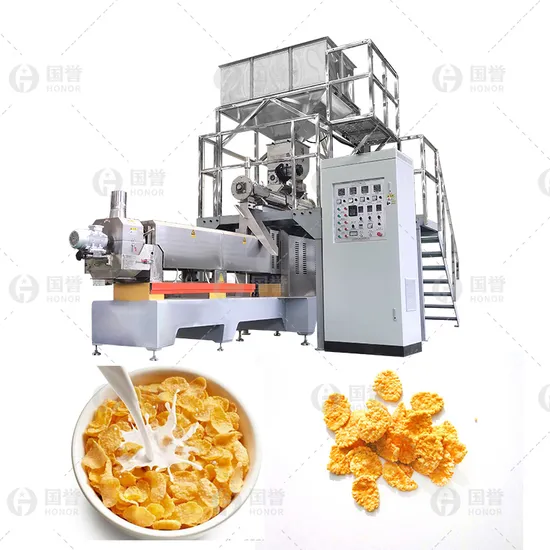
A stock image related to cornflake machine.
In-depth Look: Manufacturing Processes and Quality Assurance for cornflake machine
Understanding the manufacturing backbone of your cornflake production line is essential for B2B procurement decisions that impact long-term operational costs and product consistency. For international buyers operating across diverse markets—from the high-humidity climates of West Africa to the stringent regulatory environments of Germany or Saudi Arabia—the engineering specifications and quality assurance protocols built into your equipment directly determine your factory’s uptime, energy efficiency, and ability to meet local food safety standards. This section examines the critical manufacturing processes and validation procedures that distinguish industrial-grade cornflake machinery from basic food processing equipment.
How Does Twin-Screw Extrusion Technology Ensure Consistent Flake Quality?
Modern cornflake machines utilize advanced twin-screw extrusion systems that perform continuous cooking and forming in a single, automated sequence. Unlike traditional batch cooking methods, these systems force corn flour or grits through a precisely heated barrel where mechanical shear and thermal energy gelatinize starches uniformly, creating the ideal texture base for flaking. High-torque motors from certified brands like Siemens provide the consistent rotational force necessary for processing varying moisture contents without stalling, while variable-frequency drives from Schneider or Delta enable real-time speed adjustments to accommodate different cereal formulations. Self-cleaning screw profiles represent a critical innovation for B2B operations, automatically removing residual dough during operation and reducing downtime between recipe changes by up to 40%, which proves essential for facilities producing multiple cereal varieties on shared production lines.
What Material Standards and Energy Configurations Should B2B Buyers Specify?
Food-grade stainless steel construction—specifically 304 or 316L grades—forms the non-negotiable foundation for equipment longevity and hygiene compliance in international markets. All product-contact surfaces must feature mirror polishing to prevent bacterial adhesion and facilitate cleaning protocols required by FDA, CE, and Halal certification bodies. Energy flexibility constitutes another procurement priority; leading manufacturers design dryer and baking systems with modular heat sources allowing configuration for electricity, natural gas, diesel, or steam depending on regional infrastructure availability. This adaptability proves particularly valuable for buyers in regions with unstable power grids or fluctuating fuel costs, enabling factories to switch energy sources without replacing entire subsystems. Additionally, insulation layers surrounding heating zones should utilize ceramic fiber or similar high-efficiency materials to minimize thermal loss, directly impacting operational expenditure in high-volume manufacturing environments.
Which Critical Control Points Define Quality Assurance in Cornflake Production?
Quality assurance extends beyond final product inspection to encompass precise control throughout the manufacturing sequence. In the mixing phase, automated batching systems with load cell accuracy of ±0.5% ensure consistent hydration and ingredient distribution, preventing texture variations that lead to downstream waste. The flaking process demands hydraulic or pneumatic roller gap control maintaining tolerances within 0.1mm, as inconsistent flake thickness directly affects toasting uniformity and shelf stability. Baking parameters require PID temperature controllers with thermocouple feedback loops capable of maintaining ±2°C accuracy across the drying tunnel, ensuring moisture content reaches precisely 3-5% for optimal crunch and preservation. Inline metal detection systems and X-ray inspection capabilities integrated into the cooling conveyor section provide additional safeguards against contamination, particularly important when processing imported raw materials with variable purity levels.
How Can Manufacturers Validate Equipment Performance Before International Shipment?
Reputable suppliers provide comprehensive Factory Acceptance Testing (FAT) protocols that simulate production conditions using your specified raw materials and recipes. During FAT, engineers verify extrusion stability across 72-hour continuous runs, measuring motor amperage draw, barrel temperature uniformity, and specific mechanical energy (SME) values to confirm the machine meets designed throughput rates—typically 100-500kg/h for mid-scale lines. Electrical systems must comply with regional voltage standards—380V/50Hz for most of Europe and Africa, or 220V/60Hz for specific South American markets—with transformers and motor starters pre-configured to avoid costly field modifications. Documentation packages should include detailed process flow diagrams, electrical schematics with IEC-standard component labeling, and validated standard operating procedures (SOPs) for cleaning and maintenance. Buyers should insist on witnessing the production of trial batches that undergo laboratory analysis for moisture content, bulk density, and water activity levels, ensuring the equipment delivers commercial-quality output before container loading.
What After-Sales Support Structures Ensure Long-Term Operational Excellence?
Sustainable equipment performance relies on accessible technical support networks capable of addressing mechanical issues without extended production halts. Prioritize manufacturers offering regional spare parts depots in your target continent—whether in Casablanca for African markets, Dubai for Middle Eastern operations, or Frankfurt for European facilities—to minimize logistics delays for critical wear parts like extruder screws, cutter blades, and roller bearings. Remote diagnostic capabilities utilizing IoT-enabled PLCs allow overseas engineers to troubleshoot parameter deviations and upload corrected recipes without requiring on-site visits, reducing resolution time from weeks to hours. Furthermore, comprehensive warranty terms should cover not just mechanical defects but also performance guarantees regarding energy consumption and output consistency, backed by documented response time commitments for technical inquiries. Training certification programs for your maintenance staff ensure autonomous management of routine adjustments, empowering local teams to optimize production parameters independently.
Practical Sourcing Guide: A Step-by-Step Checklist for ‘cornflake machine’
Procuring a cornflake production line represents a significant capital investment requiring careful technical evaluation. Beyond basic extrusion capabilities, buyers must assess energy compatibility, raw material flexibility, and post-installation support structures—particularly when sourcing from international manufacturers. This checklist provides a systematic framework for evaluating equipment specifications, ensuring your selected system aligns with local infrastructure constraints while delivering consistent cereal quality and operational efficiency.
What Production Capacity Should You Specify When Sourcing a Cornflake Machine?
Begin by calculating your target output in kilograms per hour, factoring in both immediate needs and projected growth. Small-scale operations might require 100-150 kg/h systems, while industrial facilities need 500+ kg/h capacity. Verify that the proposed line includes proportional mixing, extrusion, and drying modules to prevent bottlenecks during peak operation.
How Do You Evaluate Extrusion Technology for Regional Energy Availability?
Examine whether the dryer and baking systems accommodate your local infrastructure—whether electricity, gas, oil, or steam. Twin-screw extruders offer superior cooking control for corn, rice, or oat flour bases, but energy source compatibility determines operational costs. Request specifications showing thermal efficiency ratings and alternative heating configurations to mitigate supply volatility in emerging markets.
Which Material Standards Ensure Food Safety Compliance in International Markets?
Insist on food-grade stainless steel construction for all product-contact surfaces to prevent contamination and corrosion. Confirm that electrical components, particularly motors and inverters, meet international safety certifications (such as CE marking for European entry or SASO for Saudi Arabia). Documentation should include material traceability certificates and hygiene design protocols.
Why Does Recipe Flexibility Matter for Local Raw Material Adaptation?
Your system must process diverse grain flours—maize, wheat, rice, or sorghum—available in your region without mechanical modification. Verify that the extruder handles varying moisture contents and that flaking rollers resist sticking across different formulations. Request test runs using your specific raw materials to validate texture consistency and shaping rates before finalizing contracts.
What Technical Support Structure Protects Your Overseas Investment?
Comprehensive sourcing includes engineer-led installation, operator training, and recipe documentation transfer. Confirm the manufacturer provides multilingual support (Arabic, Spanish, Portuguese, or French) and maintains regional service partnerships. Clarify response times for critical failures and availability of remote diagnostic capabilities to minimize downtime during production interruptions.
How Should You Plan Logistics for Heavy Industrial Food Equipment?
Coordinate shipping incoterms that account for the extruder’s weight and dimensional constraints. Verify that packaging meets ISPM-15 standards for wooden crates to prevent customs delays. Request pre-shipment inspection reports and detailed HS codes for tariff classification, particularly when importing complete production lines into markets with strict industrial machinery regulations.
What Warranty Terms Secure Long-Term Operational Continuity?
Secure minimum 12-month warranties on mechanical components and electrical systems, with explicit coverage for the extruder screws and heating elements. Negotiate a spare parts package including dies, cutters, and heating coils, ensuring these are stocked regionally or shipped within 72 hours. Document maintenance schedules to preserve warranty validity and extend equipment lifespan.
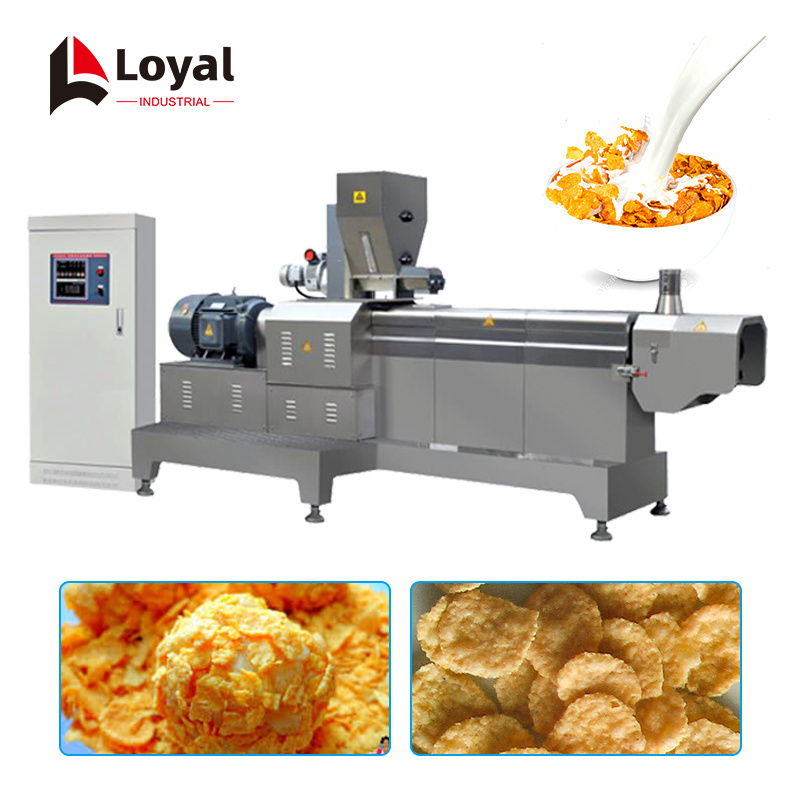
A stock image related to cornflake machine.
Comprehensive Cost and Pricing Analysis for cornflake machine Sourcing
When sourcing cornflake production lines from international manufacturers, particularly Chinese suppliers serving markets in Africa, South America, the Middle East, and Europe, understanding the nuanced cost structure prevents budget overruns and ensures operational compatibility. Pricing typically ranges from \$50,000 for entry-level semi-automatic systems to over \$300,000 for high-capacity, fully automated lines, with significant variations driven by technical specifications, component sourcing, and regional compliance requirements.
What Factors Determine Cornflake Machine Pricing for International Buyers?
The primary cost drivers include extruder specifications, material grades, and automation tiers. Twin-screw extruders with food-grade stainless steel construction command premium pricing but offer superior durability and hygiene compliance essential for European and Middle Eastern markets. Component branding significantly impacts costs—machines equipped with Siemens motors and Schneider inverters typically cost 15-25% more than those using domestic Chinese electrical components, though they offer better longevity and local serviceability in regions like Germany or Saudi Arabia.
How Do Production Capacity and Automation Levels Impact Total Investment?
Entry-level lines producing 100-150 kg/hour suit small-scale operations in emerging markets, while industrial-scale systems exceeding 500 kg/hour require substantial capital outlay but deliver economies of scale. Fully automated lines featuring self-cleaning twin-screw extrusion and continuous pressing systems reduce labor costs—a critical consideration for African and South American markets facing skilled technician shortages. However, semi-automatic configurations often provide better value for startups, allowing gradual automation upgrades as production volumes justify the investment.
Which Energy Configuration Offers the Best ROI for Your Regional Market?
Energy source flexibility represents a crucial cost variable frequently overlooked in initial quotations. While electric heating systems offer precision control ideal for European operations with stable grids, gas or steam configurations prove more economical in regions with fluctuating electricity costs or infrastructure limitations, such as parts of Africa or the Middle East. Suppliers offering modular energy conversion systems enable buyers to adapt to local utility pricing without complete equipment replacement, protecting long-term operational budgets against energy market volatility.
How Can Buyers Evaluate Hidden Costs Beyond the Initial Equipment Price?
Comprehensive budgeting must account for shipping logistics, import duties, installation supervision, and recipe formulation support. Many manufacturers provide complimentary technical training and process documentation—essential for operations in Brazil or Pakistan where local cereal processing expertise may be limited. Additionally, evaluate warranty terms for wear parts like pressing rollers and extruder screws; suppliers offering extended coverage on these high-friction components often deliver superior lifetime value despite marginally higher upfront costs.
Strategic buyers should request detailed breakdowns distinguishing between core machinery, optional coating systems, and utility infrastructure requirements. By aligning equipment specifications with regional raw material availability, energy costs, and labor skill levels, international investors can optimize capital deployment while establishing resilient breakfast cereal production capabilities.
Alternatives Analysis: Comparing cornflake machine With Other Solutions
When evaluating breakfast cereal production technologies, international B2B buyers must assess whether twin-screw extrusion—the dominant method in modern cornflake manufacturing—aligns with their operational scale, capital constraints, and regional market preferences. While extrusion-based cornflake machines offer continuous processing, high automation, and multigrain flexibility, alternative technologies present distinct advantages for specific market niches, traditional product textures, or phased investment strategies in developing markets. Understanding these alternatives enables informed decisions that balance initial capital expenditure against long-term operational flexibility, energy costs, and product differentiation in competitive landscapes across Africa, the Middle East, and South America.
| Comparison Aspect | Extrusion-Based Cornflake Machine | Traditional Roller Flaking | Hot Air Puffing (Gun Puffing) |
|---|---|---|---|
| Production Method | Continuous twin-screw extrusion, flaking, toasting | Batch steam cooking + mechanical rolling | High-pressure steam explosion in batch chamber |
| Initial Investment | Medium-High ($150K–$500K+) | High ($300K–$800K+) | Low-Medium ($50K–$200K) |
| Throughput Capacity | 100–2000 kg/hour (continuous) | 200–1000 kg/hour (batch dependent) | 50–500 kg/hour (batch) |
| Product Texture | Uniform thin flakes, consistent density | Ir |
Essential Technical Properties and Trade Terminology for cornflake machine
When procuring cornflake manufacturing equipment for international markets, understanding precise technical specifications and standard industry nomenclature ensures accurate supplier communication and equipment compatibility with local infrastructure. This knowledge base prevents costly specification mismatches and facilitates smoother customs clearance and facility integration.
What Are the Critical Technical Specifications for Industrial Cornflake Machines?
Twin-Screw Extruder Configuration: The heart of any production line, twin-screw extruders offer superior mixing and cooking uniformity compared to single-screw systems. Key metrics include screw diameter (typically 65mm–135mm for commercial operations) and length-to-diameter (L/D) ratios between 15:1 and 20:1, determining shear intensity and residence time critical for proper starch gelatinization.
Thermal Energy Source Compatibility: Given regional infrastructure variations across Africa, the Middle East, and South America, modular heating systems accommodating electricity, natural gas, diesel, or steam are essential. Verify burner efficiency ratings and heat exchanger materials to optimize operational costs in markets with fluctuating energy availability.
Flaking Roller Specifications: High-pressure flaking rollers (alloy steel with chrome plating) require adjustable gap settings between 0.1mm–0.5mm to achieve consistent flake thickness. Anti-stick surface treatments and hydraulic cooling systems prevent material adhesion—a common failure point in high-humidity climates prevalent in tropical regions.
Throughput Modularity: Production capacity ranges from 100kg/hour for entry-level operations to 1,000kg/hour for industrial plants. Specify scalable configurations allowing downstream equipment upgrades without complete line replacement, crucial for emerging market expansion strategies.
Material Compliance Standards: Food-grade 304 or 316L stainless steel construction for all product-contact surfaces ensures compliance with EU CE marking, Saudi SFDA, and Brazilian ANVISA regulations. Verify surface roughness (Ra ≤ 0.8μm) and welding certifications to avoid contamination risks during export inspections.
What Industry Terminology Should International Buyers Know?
L/D Ratio: This denotes the extruder screw’s length-to-diameter proportion, directly impacting cooking intensity and starch modification. Higher ratios (18:1–20:1) suit complex formulations requiring extended heat treatment, while lower ratios optimize throughput for standard corn grits.
Pre-drying vs. Final Drying: Pre-drying reduces surface moisture to 15–18% before flaking, preventing roller slippage. Final drying (baking) reduces moisture to 2–4% for shelf stability. Understanding this distinction clarifies energy consumption calculations and equipment spacing requirements.
Tempering/Conditioning: The hydrothermal treatment phase where grain moisture equilibrates before extrusion. Proper tempering (12–24 hours) ensures uniform gelatinization and prevents “blowing” (uneven expansion) in final products—a critical quality parameter for Middle Eastern and European markets.
CIP (Clean-in-Place) Systems: Automated cleaning protocols using circulated detergents and sanitizers without equipment disassembly. Essential for facilities targeting BRC or ISO 22000 certification, reducing downtime between production runs of flavored versus plain cereals.
Inverter Control: Variable frequency drives (VFDs) managing extruder screw speed, feeder rates, and cutter synchronization. Specifying brands like Siemens, Schneider, or Delta ensures spare part availability across global supply chains and precise process control.
Coating Drum Retention Time: The duration product remains within rotating drums for sugar, vitamin, or chocolate application. Retention time (typically 3–5 minutes) affects coating uniformity and breakage rates—key metrics for negotiating performance guarantees with equipment suppliers.
Navigating Market Dynamics and Sourcing Trends in the cornflake machine Sector
What Are the Current Market Dynamics Driving Cornflake Machine Procurement in Emerging Economies?
The global cornflake machine sector is experiencing significant diversification as breakfast cereal consumption expands beyond traditional Western markets into Africa, South America, and the Middle East. B2B buyers in these regions are driving demand for production lines capable of processing indigenous grains—including sorghum, rice, wheat, and local maize varieties—rather than relying solely on imported corn grits. This agricultural localization trend necessitates advanced twin-screw extrusion technology that offers superior versatility compared to conventional flaking systems, enabling manufacturers to adapt recipes to local crop outputs, seasonal availability, and cost structures while maintaining consistent product texture and shelf stability.
Energy infrastructure variability represents another critical market dynamic influencing procurement strategies. Leading equipment manufacturers now provide modular drying and baking systems configurable for electricity, natural gas, diesel, or steam power sources. This operational flexibility proves essential for facilities in regions with intermittent grid reliability, ensuring production continuity despite local energy constraints. German and Saudi Arabian buyers particularly emphasize precision engineering and high-capacity automated systems with Industry 4.0 integration, while emerging markets in Africa and South America prioritize scalable solutions ranging from 100kg/hour pilot lines to industrial 2000kg/hour systems that accommodate gradual capacity expansion without complete line replacement.
The procurement landscape is further evolving from standalone machinery transactions toward comprehensive partnership
Frequently Asked Questions (FAQs) for B2B Buyers of cornflake machine
What is the typical investment range for an industrial cornflake production line?
Investment costs for industrial cornflake machinery typically range from $50,000 for entry-level semi-automatic lines to over $500,000 for high-capacity, fully integrated systems. Pricing variables include hourly output capacity (100kg/h versus 1000kg/h+), automation levels, and energy configuration options. When evaluating quotes, consider the total cost of ownership, including shipping, installation, and potential import duties specific to your region, rather than focusing solely on the base equipment price.
How do I determine the optimal production capacity for my cornflake manufacturing facility?
Commercial cornflake lines typically offer capacities spanning 100kg to 2000kg per hour, with modular designs allowing future scalability. For emerging markets in Africa or South America, starting with a 200-500kg/h line often balances initial capital expenditure with market penetration potential. Conduct a demand analysis considering your target demographic, distribution radius, and storage capabilities, as overcapacity leads to unnecessary energy costs while under-capacity limits ROI.
Which regions specialize in manufacturing high-quality industrial cornflake processing equipment?
While European manufacturers (particularly German and Italian firms) are renowned for precision engineering and CE-certified systems, Chinese suppliers from Shandong province currently dominate the mid-market segment with competitive pricing and rapid customization capabilities. When sourcing internationally, verify that manufacturers possess ISO 22000 food safety certifications and established after-sales service networks in your specific region—critical for buyers in the Middle East and Africa where local technical support may be limited.
How does an extrusion cornflake machine differ from traditional flaking mill technology?
Twin-screw extrusion systems cook cereal flour under high pressure and temperature before flaking, whereas traditional flaking mills rely on pre-cooked grits processed through heavy-duty roller presses. Extrusion technology offers superior gelatinization control, allowing processing of diverse raw materials including rice, wheat, and oat flours beyond standard corn grits. Modern extrusion lines also solve historical issues like roller sticking and low shaping rates while maintaining nutritional integrity through precise thermal processing.
Can industrial cornflake equipment process alternative grains and co-products for diversified product lines?
Advanced extrusion-based systems accommodate corn flour, rice flour, wheat bran, and multigrain blends, enabling production of coco balls, fruit loops, and crispy rice cereals on the same line. This flexibility proves particularly valuable for B2B buyers seeking to maximize equipment utilization across multiple breakfast cereal SKUs. Ensure your supplier provides recipe development support and process parameter documentation for each raw material variant to optimize texture and expansion ratios.
How do energy source configurations impact operational costs in different geographic markets?
Industrial cornflake dryers and baking ovens can be configured for electricity, natural gas, diesel, or steam, with selection depending on regional infrastructure and pricing. Gas-fired systems often prove most economical for Middle Eastern operations, while European facilities may prioritize electric configurations for carbon compliance, and African plants might benefit from steam integration where boiler infrastructure exists. Request energy consumption specifications in kWh or BTU per ton of output to accurately calculate regional operating expenses.
What comprehensive technical support should B2B buyers expect during international equipment commissioning?
Reputable suppliers provide complete recipe documentation, operator training programs, and on-site installation supervision lasting 15-30 days. Verify that your contract includes formulation development for local taste preferences—critical for markets like Saudi Arabia or Brazil where sweetness levels and flavor profiles vary significantly from Western standards. Additionally, confirm availability of spare parts inventories within your continent and multilingual technical documentation to minimize downtime during maintenance cycles.
How can manufacturers prevent common production inefficiencies like roller adhesion and inconsistent flake thickness?
Modern cornflake lines utilize food-grade stainless steel construction with specialized surface treatments and precision temperature control systems to eliminate roller sticking—a persistent issue in older flaking mill designs. Implementing automated feeding systems with consistent moisture content control (typically 9-12% pre-flaking) ensures uniform flake thickness and reduces waste. Establish preventive maintenance schedules for screw elements and die plates every 2,000-3,000 operating hours to sustain optimal extrusion pressure and product quality consistency.
Important Disclaimer & Terms of Use
⚠️ Important Disclaimer
The information provided in this guide, including content regarding manufacturers, technical specifications, and market analysis, is for informational and educational purposes only. It does not constitute professional procurement advice, financial advice, or legal advice.
B2B buyers must conduct their own independent and thorough due diligence before making any purchasing decisions. The risk of relying on any information in this guide is borne solely by the reader.
Top 3 Cornflake Machine Manufacturers & Suppliers List
1. CornProcess – Processing Equipment
2. Loyal – Corn Flakes Production Line

Domain: loyalmachines.com
Registered: 2024 (2 years)
Introduction: Corn Flakes Production Line manufactured by Loyal (Shandong, China). Advanced automated production line utilizing modern technology, precision engineering, and strict quality management controls for breakfast cereal manufacturing. Process flow includes quality maize selection, preparation, shear extrusion cooking, flaking, toasting, drying, and packaging to produce crunchy toasted maize flakes wit…
3. Kellogg’s – Corn Flakes

Domain: discovery.patsnap.com
Registered: 2006 (20 years)
Introduction: Corn flakes (or cornflakes) are a breakfast cereal made by toasting flakes of corn (maize). Created by John Harvey Kellogg in 1894 as a healthy food for patients of the Battle Creek Sanitarium in Michigan. The Kellogg Company (Kellogg’s) was established by Will Kellogg to produce corn flakes for the wider public. A patent for the production process was granted in 1896.
Strategic Sourcing Conclusion and Outlook for cornflake machine
How Can Buyers Future-Proof Their Cornflake Production Investment?
Selecting a cornflake machine in 2024 demands more than comparing specifications; it requires evaluating a supplier’s capacity for long-term technological partnership. Prioritize extrusion systems offering modular energy configurations—whether gas, steam, or electric—to accommodate regional infrastructure constraints prevalent across Africa and the Middle East. Ensure your chosen line supports diverse grain inputs beyond standard corn flour, including rice, wheat, and oat derivatives, to capitalize on shifting consumer preferences toward multigrain cereals. Additionally, verify that manufacturers provide comprehensive recipe documentation and hands-on operator training, as proprietary process knowledge often determines profitability margins more than hardware specifications alone.
What Are the Next Steps for Scaling Breakfast Cereal Operations?
As breakfast cereal consumption accelerates in emerging markets from São Paulo to Lagos, strategic buyers should view equipment procurement as an entry point into innovation ecosystems rather than a terminal transaction. Seek partners with proven after-sales networks in your specific region—evidenced by successful installations in Brazil, Pakistan, or European markets—and demand customizable automation tiers that scale with your workforce capabilities. By aligning with manufacturers who combine food-grade stainless steel construction with adaptive twin-screw extrusion technology, processors secure not just immediate production capacity, but sustainable competitive advantage in the rapidly evolving global breakfast foods sector.