
The Global Breakfast Renaissance: Strategic Sourcing of Corn Flakes Extrusion Systems from China
The global breakfast cereal market, valued at $46.8 billion in 2023 and projected to reach $62.3 billion by 2030 (CAGR 4.2%), continues to be dominated by corn flakes—accounting for over 35% of total category volume. For investors and facility operators, this represents not merely a commodity opportunity, but a high-margin manufacturing play where production technology directly dictates market penetration and profitability. As operational costs in traditional manufacturing hubs escalate, China’s advanced food processing machinery sector has emerged as the strategic sourcing epicenter, with exports of cereal extrusion equipment growing 18.7% year-over-year and now commanding 28% of the global installed base.
The Extrusion Imperative: From Art to Precision Engineering
Modern corn flakes production has undergone a paradigm shift from traditional flaking mills to high-shear, twin-screw extrusion systems—a transition driven by the technology’s ability to deliver ±2% moisture uniformity and 95%+ gelatinization rates, critical parameters for shelf stability and texture consistency. Contemporary extrusion lines leverage Specific Mechanical Energy (SME) optimization, allowing manufacturers to process diverse corn grit specifications (from #2 to #4 particle sizes) while maintaining throughput rates of 800–2,500 kg/hour per line.
The technical differentiator in 2024 lies in Industry 4.0 integration: leading Chinese manufacturers now equip extruders with real-time viscosity sensors and AI-driven die-pressure modulation, reducing product deviation by 40% compared to conventional pneumatic systems. This precision translates directly to raw material yield improvements of 3–5%—a significant margin when corn input represents 60–70% of variable costs.
Efficiency Metrics as Competitive Moats
For capital deployment decisions, Overall Equipment Effectiveness (OEE) has become the definitive KPI. Advanced Chinese extrusion systems currently achieve OEE ratings of 85–92%, compared to the industry average of 65–75%, through:
– Automated die changeover systems reducing flavor/format transition downtime from 4 hours to 45 minutes
– Energy recovery heat exchangers cutting thermal processing costs by 22–30%
– Integrated CIP (Clean-in-Place) protocols reducing labor allocation by 15 FTEs per shift
These efficiency gains compress CapEx payback periods to 2.8–3.5 years for mid-scale operations (5–10 tons/day), even in markets with moderate utility pricing.
Navigating the Supplier Landscape
Selecting machinery partners in China’s fragmented equipment market—comprising over 400 registered manufacturers but only ~12 with true export-grade certification (CE, FDA, HALAL-compliant sanitary design)—requires rigorous technical due diligence. The following analysis evaluates the top-tier manufacturers based on R&D intensity (patent portfolios in extrusion screw geometry), global reference installations (minimum 50+ lines operational in OECD markets), and after-sales technical support infrastructure (24/7 remote diagnostics capability).
For investors evaluating vertical integration or facility modernization, these ten manufacturers represent the convergence of Chinese manufacturing scale and European-equivalent engineering standards—delivering the extrusion precision and production economics necessary to compete in premium private-label and branded cereal markets.
The following rankings are based on 2023–2024 export data, installed base analysis across 47 countries, and technical audits of extrusion system capabilities.
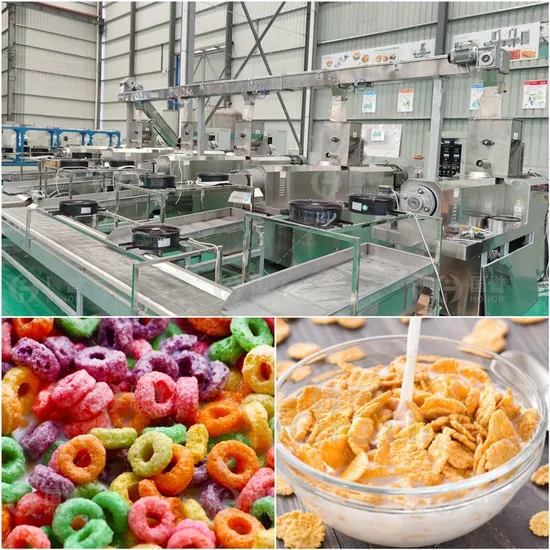
Best Corn Flakes Machinery Manufacturers Suppliers & Factory List
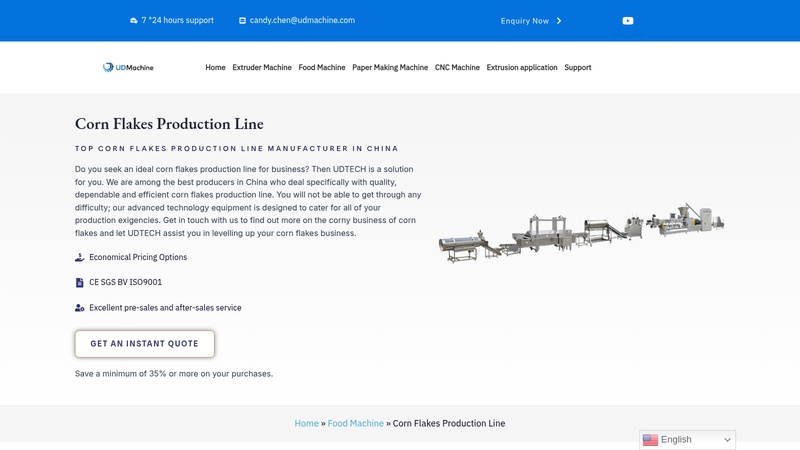



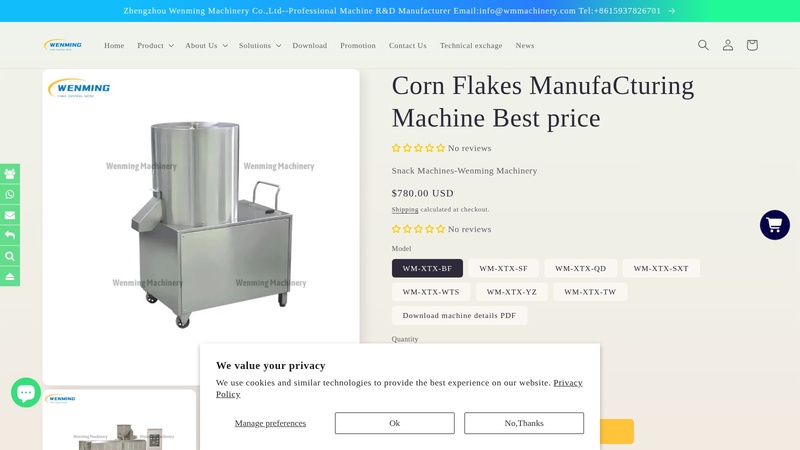
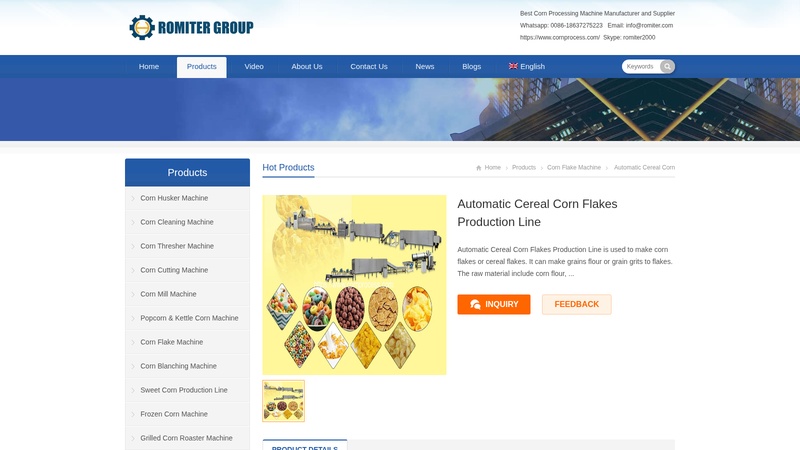
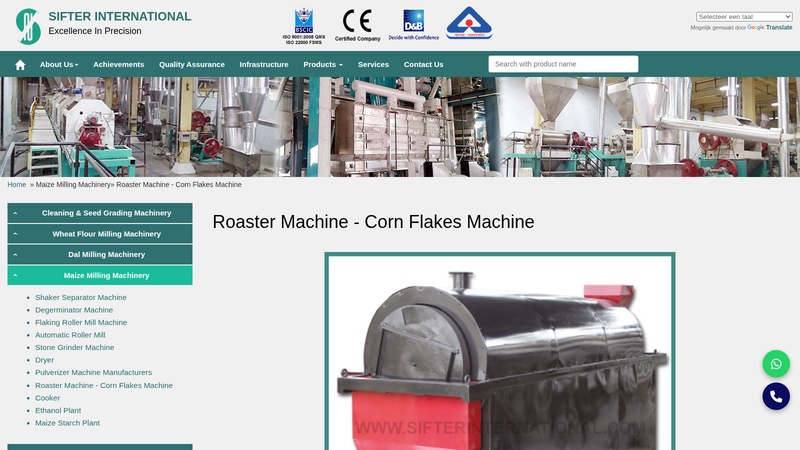
Sourcing Guide: Key Factors for Corn Flakes Machinery Manufacturers
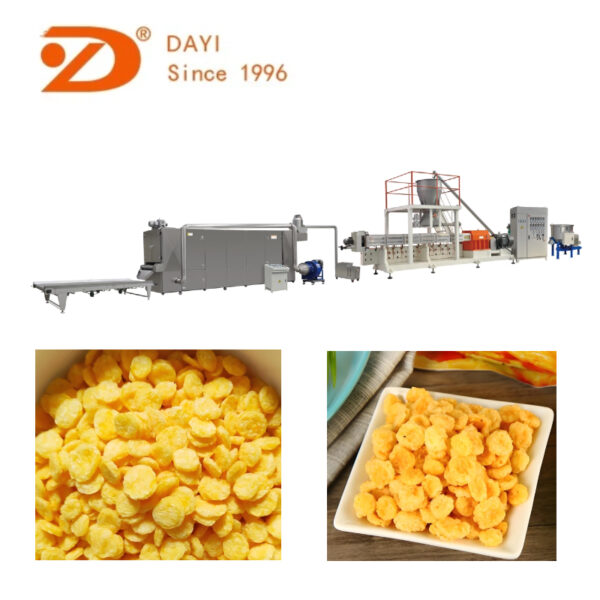
B2B Machinery Sourcing Guide: Evaluating Corn Flakes Machinery Manufacturers from China
For international investors and facility operators entering the $30+ billion global breakfast cereal market, sourcing extrusion and flaking equipment from China represents a strategic opportunity to optimize capital expenditure without compromising production capabilities. However, the variance in engineering standards among Chinese manufacturers necessitates rigorous technical evaluation. This guide provides a framework for assessing Corn Flakes Machinery Manufacturers based on critical performance determinants that directly impact yield consistency, food safety compliance, and long-term operational ROI.
H3 Extrusion Screw Configuration and Precision Thermal Control
The extrusion system constitutes the technological core of corn flakes production, governing gelatinization rates, expansion ratios, and final product texture. When evaluating Chinese manufacturers, prioritize suppliers utilizing co-rotating twin-screw extrusion technology over single-screw alternatives. Critical specifications include:
- Modular Screw Element Design: Verify that the manufacturer offers interchangeable screw elements (conveying, kneading, and mixing segments) with L/D (Length-to-Diameter) ratios between 15:1 and 20:1. This modularity enables precise shear rate adjustments for varying corn grits formulations (yellow maize vs. white corn) and inclusion of pre-mix additives.
- Barrel Temperature Zoning: Demand independent PID temperature control across at least five barrel sections, capable of maintaining thermal stability within ±1°C. Superior manufacturers utilize ceramic heating bands with cast aluminum cooling fins for rapid thermal response—essential for preventing starch degradation during the cooking extrusion phase.
- Die Plate Engineering: Inspect die specifications for uniform pressure distribution capabilities. High-precision CNC-machined die plates with optimized orifice geometries reduce shear stress variance, ensuring consistent flake density and reducing raw material waste by 8-12% compared to standard cast dies.
H3 Food-Grade Material Durability and Sanitary Design Standards
In high-moisture extrusion environments (18-24% moisture content during processing), material degradation poses significant contamination risks and maintenance liabilities. Discriminate manufacturers based on metallurgical specifications and hygienic design principles:
- Stainless Steel Grading: Insist on AISI 316L stainless steel (low-carbon variant) for all product-contact surfaces, particularly in the extrusion barrel, cutting knives, and pneumatic conveying lines. While 304-grade is industry standard, 316L offers superior chloride corrosion resistance when processing fortified cereals containing mineral additives. Verify material certificates (EN 10204 3.1) to prevent substitution with inferior 201-grade alloys.
- Surface Finish Requirements: Confirm Ra (Roughness Average) values ≤0.8μm on all internal surfaces, achieved through electropolishing rather than mechanical polishing alone. This prevents microbial adhesion and facilitates Clean-in-Place (CIP) protocols essential for BRC or SQF certification.
- Sealing and Gasket Integrity: Examine gasket materials for FDA 21 CFR 177.2600 compliance (fluoroelastomer or platinum-cured silicone). Avoid manufacturers using standard nitrile rubber, which degrades rapidly under thermal cycling and creates particulate contamination risks.
H3 Integrated Automation Architecture and Process Control Systems
Modern corn flakes production requires precise orchestration between extrusion, flaking rollers, toasting ovens, and coating drums. Evaluate the manufacturer’s automation sophistication through:
- PLC and HMI Specifications: Require Siemens S7-1200/1500 series or Rockwell Allen-Bradley CompactLogix PLCs with 10-inch industrial HMI touchscreens. The control system must offer recipe management storage for minimum 50 product SKUs, with automatic parameter adjustment for screw speed, thermal profiles, and cutter velocity.
- IoT Connectivity and Data Logging: Leading Chinese manufacturers now integrate OPC UA or MQTT protocols for Industry 4.0 compatibility. This enables real-time OEE (Overall Equipment Effectiveness) monitoring, predictive maintenance alerts for bearing temperatures, and digital HACCP documentation—critical for export-oriented facilities requiring full batch traceability.
- Inter-Machine Synchronization: Verify that the flaking mill (roller gap control) and rotary toaster communicate via Profibus or Ethernet/IP with the main extruder. Synchronized speed ratios between extruder output and flaking roller rotation (typically 1:4.5 to 1:6 depending on flake thickness) prevent product bridging and density inconsistencies.
Additional Compliance and Operational Considerations
Power Consumption Optimization: Evaluate specific energy consumption (SEC) metrics, targeting <0.35 kWh/kg of finished product for the extrusion section. Premium manufacturers employ IE3/IE4 premium efficiency motors and regenerative braking systems on high-inertia components.
Certification Verification: Beyond CE marking (mandatory for EU export), verify the manufacturer holds ISO 22000 (Food Safety Management) and that electrical components comply with UL or CSA standards for North American installations. Request third-party inspection reports from SGS or Bureau Veritas for welding quality (EN ISO 5817) and surface finish validation.
After-Sales Technical Infrastructure: Confirm the manufacturer maintains overseas service depots or authorized technical partners in your target market. Critical spare parts (screw shafts, die inserts, heating elements) should be deliverable within 72 hours to minimize production downtime.
Conclusion
Selecting a Corn Flakes Machinery Manufacturer from China requires moving beyond unit price comparison to technical specification auditing. By rigorously evaluating extrusion screw engineering, material metallurgy, and automation integration, investors secure equipment capable of producing RTE (Ready-to-Eat) cereals meeting international quality standards while maintaining operational efficiencies that protect long-term profitability. Engage manufacturers willing to provide pilot-scale testing (minimum 200kg batch trials) before final contract execution to validate performance claims against your specific raw material specifications.
Why Experience is Non-Negotiable in Corn Flakes Machinery Selection
Selecting an experienced manufacturer for corn flakes production lines is a strategic imperative that directly impacts your operational efficiency and market competitiveness. Seasoned factories bring critical advantages that inexperienced suppliers cannot replicate:
- Precision Engineering & Recipe Mastery: Corn flakes production demands exacting control of extrusion parameters, moisture content, and toasting profiles. Veteran manufacturers possess the metallurgical and thermal processing knowledge to ensure consistent flake integrity, crunch texture, and uniform coating—preventing costly batch variations.
- Proven Downtime Mitigation: Experienced builders understand failure points in high-temperature extrusion systems. Their machinery incorporates robust screw configurations, wear-resistant barrels, and intelligent temperature controls that minimize unplanned stoppages, directly protecting your OEE (Overall Equipment Effectiveness).
- Regulatory Compliance & Food Safety: Established suppliers engineer to global standards (CE, FDA, ISO 22000), utilizing food-grade stainless steel construction and sanitary design principles that simplify HACCP implementation and audits.
- Lifecycle ROI: Beyond initial CapEx, experienced partners provide validated spare parts ecosystems, remote diagnostics, and process optimization support that extend equipment lifespan and reduce Total Cost of Ownership (TCO) by 20-30% over a decade.
Your Strategic Partner for Extrusion Excellence: Jinan Dayi Extrusion Machinery Co., Ltd.
When precision cereal production demands a partner with proven staying power, Jinan Dayi Extrusion Machinery Co., Ltd (DAYI) stands as the definitive choice. Established in 1996, we have spent over two decades perfecting advanced, high-efficiency extrusion technology—evolving from industry pioneers to global leaders in automated food processing solutions.
The DAYI Advantage:
- Deep Domain Expertise: Our dedicated engineering team combines mechanical mastery with food science proficiency, ensuring your corn flakes production line delivers optimal expansion ratios, precise flake thickness, and consistent toasting—batch after batch.
- High-Efficiency Extrusion Architecture: We deploy state-of-the-art twin-screw extrusion systems that maximize thermal energy transfer and mechanical energy efficiency, reducing specific energy consumption while boosting throughput.
- True Turnkey Integration: DAYI eliminates integration headaches by delivering comprehensive solutions—from raw material pneumatic conveying and extrusion cooking to flaking, drying, sugar coating, and final packaging automation. You receive a single-source solution engineered for seamless workflow.
Comprehensive Production Portfolio:
While our Corn Flakes Production Line represents a core specialty, our extrusion expertise spans the entire spectrum of expanded food manufacturing:
- Puffed Snack Food Production Line
- Pet Food Production Line
- Tortilla Chips Production Line
- Fortified Rice Production Line
- Corn Flakes Production Line
- Baby Food Production Line
- Bread Crumbs Production Line
- 3D Pellet Snack Food Production Line
- Nutrition Powder Production Line
- Soya Chunk Production Line
Ready to Optimize Your Cereal Production?
Don’t compromise on extrusion expertise. Whether you are launching a new corn flakes facility or upgrading legacy equipment, DAYI’s 20+ years of extrusion innovation ensure you receive machinery engineered for reliability, efficiency, and product excellence.
Contact Jinan Dayi Extrusion Machinery Co., Ltd today to discuss your specific capacity requirements, recipe parameters, and layout constraints. Our engineers are ready to design your custom turnkey solution and provide a detailed quotation tailored to your operational goals.
DAYI: Two Decades of Extrusion Excellence, Delivered.