
The Global Breakfast Revolution: Strategic Sourcing of High-Performance Corn Flakes Extrusion Systems
With the global breakfast cereal market projected to exceed \$62.7 billion by 2027, expanding at a CAGR of 4.8%, the demand for industrial-scale corn flakes production has shifted from commodity manufacturing to precision-engineered food processing. For international investors and facility operators, the selection of extrusion-based cereal production lines represents a critical capital decision—one where equipment specifications directly correlate with market share, margin retention, and brand consistency.
The Extrusion Imperative: Technology as Competitive Advantage
Modern corn flakes manufacturing hinges on twin-screw extrusion technology, which has displaced traditional flaking methods due to superior process control and ingredient versatility. Contemporary high-shear extrusion systems operating at 300-600 rpm enable precise gelatinization control (typically 85-95% starch conversion), determining the critical textural attributes—crunch retention, bowl-life stability, and bulk density—that define premium cereal positioning.
Leading Chinese manufacturers now deploy continuous production configurations achieving throughput rates of 800–2,000 kg/hour while maintaining extrusion temperatures within ±1°C variance through PLC-controlled thermal regulation. This precision engineering reduces raw material waste by 12-18% compared to legacy batch systems and supports the industry pivot toward clean-label formulations, including ancient grain variants and reduced-sugar matrices that require modified shear profiles.
Efficiency Metrics Driving Capital Allocation
In the current operational landscape, Overall Equipment Effectiveness (OEE) serves as the primary valuation metric for production line investments. Top-tier extrusion systems from established Chinese suppliers demonstrate operational availability exceeding 92%, with energy consumption benchmarks of 0.35–0.45 kWh per kilogram of finished product—representing 30-40% efficiency gains over equipment manufactured just five years ago.
Automation integration has become non-negotiable: Industry 4.0-ready lines featuring real-time moisture monitoring, automated die-pressure adjustment, and predictive maintenance algorithms reduce labor dependency by 60% while ensuring HACCP and FDA compliance for export-oriented facilities. These systems accommodate rapid changeover protocols (under 45 minutes between SKU transitions), enabling the production agility required for private-label contract manufacturing and seasonal product variations.
China’s Manufacturing Ecosystem: Quality at Scale
China’s food processing machinery sector has evolved from cost-based competition to technology-driven partnerships, with leading manufacturers now holding CE, UL, and ISO 22000 certifications alongside proprietary extrusion patents. The convergence of advanced metallurgy (hardened alloy screws with 50,000+ hour lifespans), localized supply chain optimization, and R&D investment exceeding 8% of annual revenue has positioned Chinese equipment suppliers as preferred partners for multinational cereal brands seeking capacity expansion without compromising European or North American engineering standards.
As facility owners evaluate capital expenditure for greenfield projects or line upgrades, the differentiation between commodity equipment and strategic manufacturing assets lies in extrusion precision, thermal efficiency, and scalable automation architecture.
Below, we analyze the ten manufacturers redefining production economics in the breakfast cereal sector through engineering excellence and measurable operational ROI.
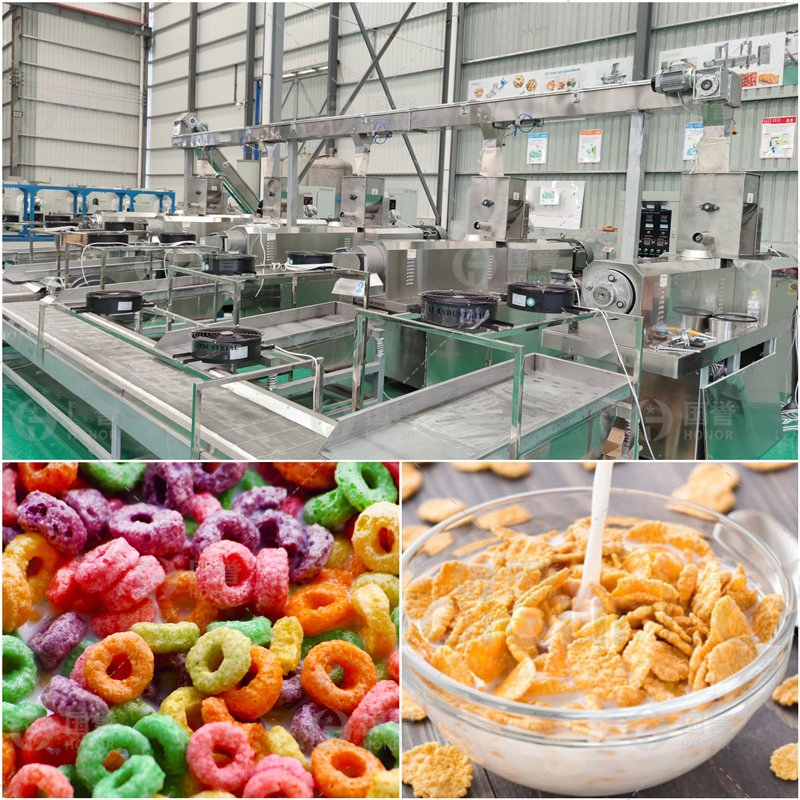
Best Corn Flakes Maker Suppliers & Factory List
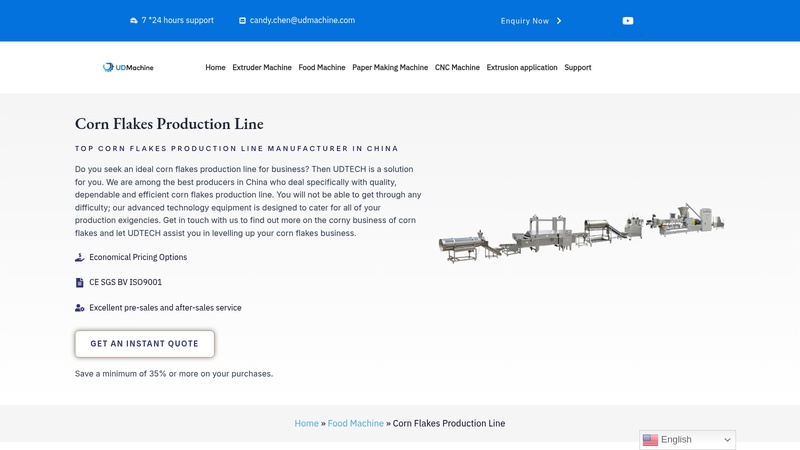

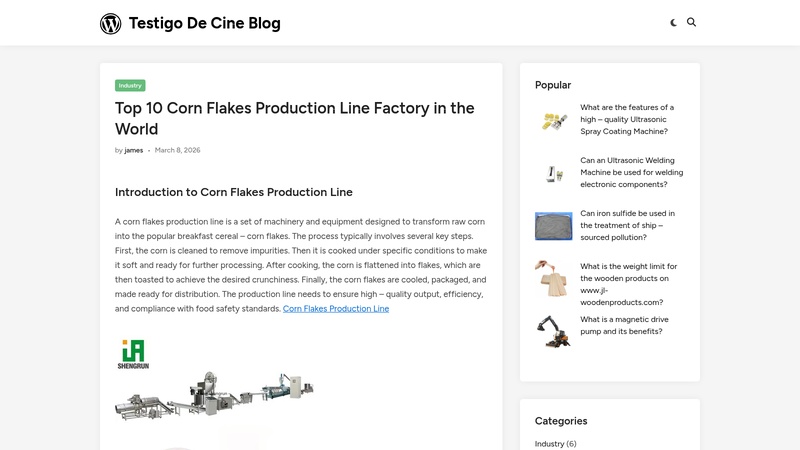



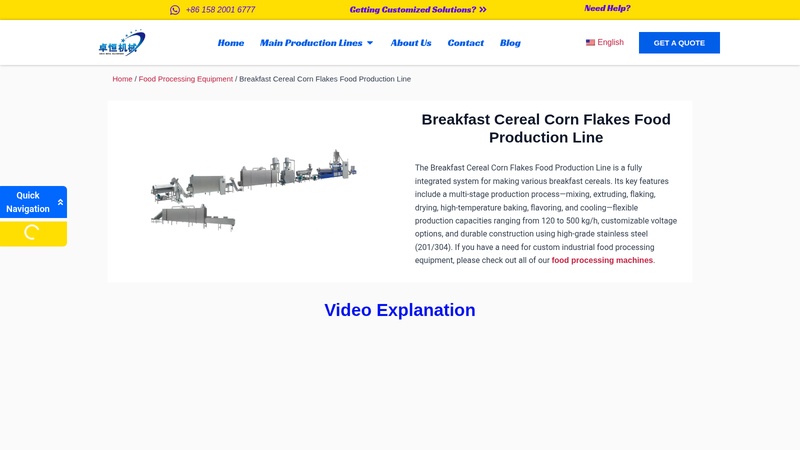
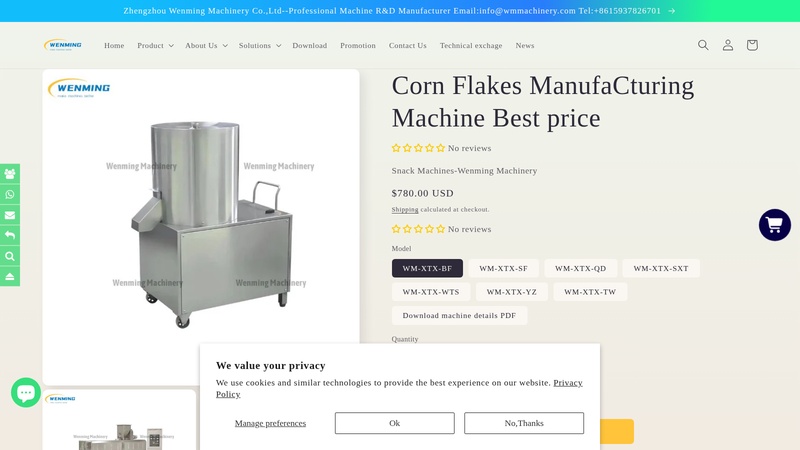
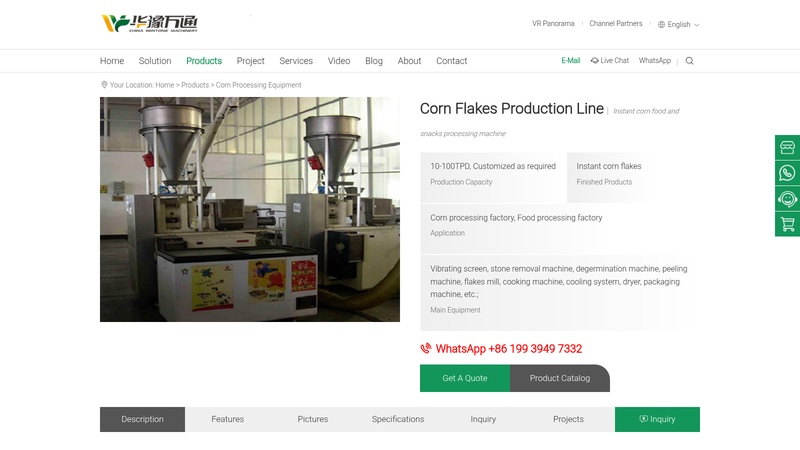
Sourcing Guide: Key Factors for Corn Flakes Maker
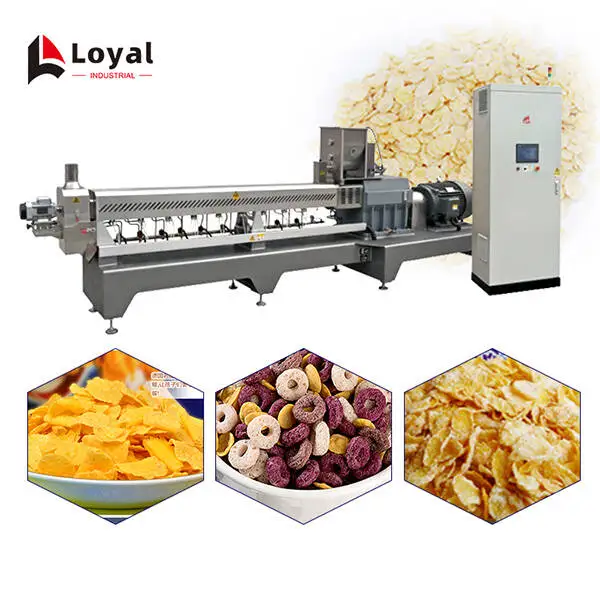
B2B Machinery Sourcing Guide: Industrial Corn Flakes Production Lines from China
The global breakfast cereal market continues to expand at a CAGR of 4.5%, driving unprecedented demand for high-capacity extrusion technology. For international investors and facility operators sourcing Corn Flakes Maker equipment from China’s manufacturing hub, technical due diligence separates high-ROI production assets from costly operational liabilities. This guide addresses the engineering specifications that determine production consistency, food safety compliance, and long-term profitability.
Extrusion Screw Configuration and L/D Ratio Optimization
The extrusion system represents the core processing engine of any Corn Flakes Maker, directly determining gelatinization rates, texture uniformity, and throughput capacity.
Twin-Screw vs. Single-Screw Architecture
Prioritize intermeshing co-rotating twin-screw extruders for corn flakes production. Unlike single-screw systems, twin-screw configurations provide superior conveying efficiency, self-wiping characteristics that prevent material stagnation, and enhanced mixing intensity essential for uniform moisture distribution in corn grits.
Critical L/D Specifications
Demand extrusion barrels with a Length-to-Diameter (L/D) ratio between 20:1 and 25:1. This extended processing length ensures complete starch gelatinization (95%+ conversion rate) while maintaining the specific mechanical energy (SME) input of 120-180 kJ/kg required for proper flake expansion. Shorter L/D ratios (below 18:1) result in ungelatinized centers and inconsistent flaking performance.
Modular Screw Element Design
Verify that the screw configuration utilizes modular segment construction rather than integral one-piece designs. This allows for rapid reconfiguration between direct expansion (ball shapes) and indirect expansion (traditional flakes) recipes. Look for hardened alloy steel screw elements (HRC 58-62 hardness) with nitriding treatment to withstand abrasive corn particle wear over 8,000+ operating hours.
Food-Grade Material Durability and Compliance Certification
Material specification determines equipment longevity, contamination risk, and market access eligibility—particularly critical when sourcing from international suppliers.
Stainless Steel Grade Specifications
Insist on 304 or 316L stainless steel construction for all product contact surfaces, with 316L preferred for high-humidity environments or acidic coating applications. Non-contact frames may utilize 201 stainless steel with anti-rust treatment, but verify surface finish standards: product zones require Ra ≤0.8μm (sanitary grade) to prevent bacterial adhesion and facilitate CIP (Clean-in-Place) protocols.
International Certification Verification
CE marking is non-negotiable for European market access, but scrutinize the certification scope—ensure it covers the complete production line (extruder, dryer, flaking mill, toaster) under Machinery Directive 2006/42/EC, not just individual electrical components. For North American operations, confirm NSF/ANSI 51 compliance for food zone materials and UL certification for electrical panels. Reputable Chinese manufacturers should provide EU-type examination certificates from notified bodies (TÜV, SGS, or BV), not self-declared conformity documents.
Wear Resistance Engineering
Corn grits exhibit significant abrasiveness during high-pressure extrusion. Examine barrel liner specifications: bimetallic liners with alloy powder metallurgy coatings should offer 2-3 times the wear resistance of standard nitrided steel. Request documented MTBF (Mean Time Between Failures) data for critical wear components—premium systems should demonstrate 12,000+ hours of continuous operation before screw element replacement.
PLC Control Systems and Power Consumption Efficiency
Automation sophistication and energy metrics directly impact operational expenditure and product consistency in 24/7 production environments.
Integrated Control Architecture
Specify Siemens S7-1200/1500 or equivalent Allen-Bradley CompactLogix PLC systems with 10-inch+ industrial HMI (Human Machine Interface) touchscreens. Advanced systems must offer recipe management with 50+ storage slots, real-time process visualization of barrel temperature zones (±1°C precision), and automated alarm protocols for pressure deviations above 25 bar. Industry 4.0-ready equipment should include Ethernet/IP connectivity for remote diagnostics and OEE (Overall Equipment Effectiveness) monitoring.
Energy Efficiency Metrics
Evaluate specific energy consumption (SEC) ratings—efficient Corn Flakes Makers should operate at 0.35-0.45 kWh per kilogram of finished product, inclusive of extrusion, drying, and toasting phases. Demand variable frequency drive (VFD) technology on main motors and high-efficiency IE3/IE4 motors for auxiliary equipment. Heat recovery systems that capture exhaust energy from the drying oven to pre-heat incoming air can reduce thermal energy consumption by 15-20%, significantly impacting TCO (Total Cost of Ownership) over a 10-year depreciation cycle.
Precision Flaking Control
The flaking mill subsystem requires independent servo-motor control with gap adjustment accuracy of ±0.05mm. Hydraulic roll cooling systems with closed-loop temperature control prevent thermal expansion that compromises flake thickness uniformity (target variance <5%).
Sourcing Implementation Strategy
When evaluating Chinese manufacturers, request video documentation of trial runs using your specific corn grits formulation, not generic demonstrations. Verify that the supplier maintains ISO 9001:2015 quality management systems and can provide installation supervision by engineers with visa accessibility to your region. Secure guaranteed spare parts availability for 10 years minimum, with critical components (screw segments, die plates) stocked in regional warehouses to minimize MTTR (Mean Time To Repair).
Final Recommendation: Prioritize manufacturers offering pilot-scale testing facilities where you can validate flake density, moisture content (target 3-5% final), and breakage rates before finalizing purchase agreements. The technical specifications outlined above serve as your baseline for distinguishing industrial-grade equipment from commodity extruders incapable of meeting multinational retail standards.
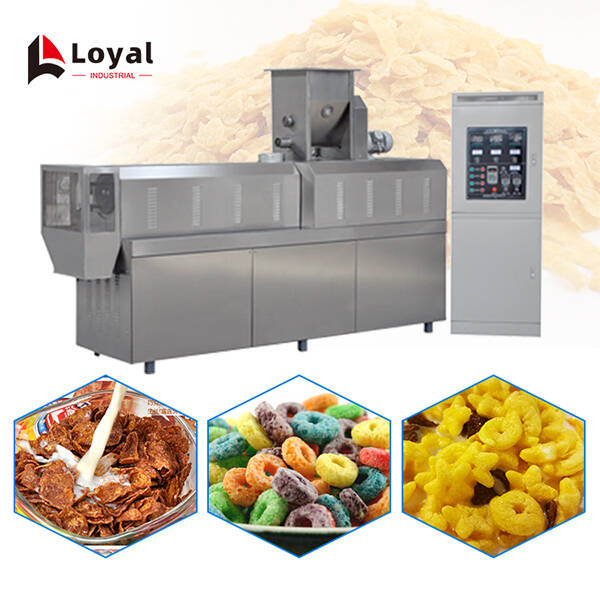
Why Experience is Non-Negotiable in Corn Flakes Manufacturing
Selecting an experienced factory for your Corn Flakes production line is not merely a procurement preference—it is a strategic quality imperative. Breakfast cereal extrusion demands micron-level precision in thermal control, pressure consistency, and moisture management to achieve the signature crunch, uniform flaking, and extended shelf stability that global markets require. An established manufacturer brings critical institutional knowledge in cereal-specific challenges: optimizing gluten development, managing sugar caramelization points, and ensuring vitamin fortification stability through high-temperature extrusion. Furthermore, experienced suppliers minimize costly commissioning delays and raw material waste during startup, provide robust spare parts logistics, and ensure full compliance with HACCP and international food safety standards—factors that directly impact your OEE (Overall Equipment Effectiveness) and long-term ROI.
The DAYI Difference: Three Decades of Extrusion Excellence
This is precisely where Jinan Dayi Extrusion Machinery Co., Ltd distinguishes itself as your strategic partner.
Since our establishment in 1996, we have spent over 20 years perfecting advanced, high-efficiency extrusion technology. We are not simply equipment fabricators; we are extrusion food machinery leaders delivering full turnkey solutions—from raw material preprocessing and precision extrusion to final packaging integration.
Our Core Competitive Advantages:
- Dedicated Expert Team: Our professional engineers possess deep, cereal-specific process knowledge to optimize your recipes and production parameters.
- High-Efficiency Extrusion Technology: Proprietary systems designed for maximum throughput with minimal energy consumption and waste.
- End-to-End Integration: Complete project management from initial design to installation and after-sales support, ensuring seamless commissioning.
Comprehensive Production Portfolio:
While our Corn Flakes Production Line represents a flagship solution, our expertise spans the entire extrusion food spectrum—including Puffed Snack, Pet Food, Tortilla Chips, Fortified Rice, Baby Food, Bread Crumbs, 3D Pellet Snacks, Nutrition Powder, and Soya Chunk production lines. This diverse capability ensures we bring cross-industry innovation to your specific cereal application.
Ready to Optimize Your Production?
Don’t compromise on experience when your product quality depends on it. Contact Jinan Dayi Extrusion Machinery Co., Ltd today to discuss your specific capacity requirements, recipe specifications, and layout constraints. Our team is ready to engineer a custom solution tailored to your operational goals and provide a detailed competitive quote.
Reach out to DAYI now—where decades of extrusion expertise meet your production ambitions.