
Navigating the \$45.8 Billion Breakfast Cereal Market: Strategic Sourcing of High-Performance Corn Flakes Extrusion Systems from China
The global breakfast cereal market, projected to reach \$62.7 billion by 2028 at a CAGR of 5.4%, continues to drive unprecedented demand for precision-engineered corn flakes production lines. For international investors and facility operators evaluating capital expenditure (CapEx) decisions, China has emerged as the dominant manufacturing hub, commanding approximately 38% of global food extrusion equipment exports. However, navigating the variance in Corn Flakes Making Machine Price—ranging from \$25,000 entry-level units to \$450,000+ fully automated continuous production systems—requires rigorous technical due diligence beyond unit cost analysis.
At the core of modern cereal manufacturing lies twin-screw extrusion technology, the critical determinant of product texture consistency, gelatinization rates, and yield optimization. Current industry benchmarks indicate that advanced extrusion systems achieving specific mechanical energy (SME) inputs of 120–180 kJ/kg can increase production efficiency by 30–40% compared to conventional single-screw configurations, directly impacting Overall Equipment Effectiveness (OEE) scores. Leading Chinese manufacturers now integrate Industry 4.0 capabilities—real-time moisture control, automated die-pressure adjustment, and predictive maintenance algorithms—reducing specific energy consumption (SEC) to 0.35–0.45 kWh/kg while maintaining throughputs of 300–1,200 kg/h.
For factory owners, production efficiency transcends raw output metrics. The shift toward continuous processing lines with automated drying and coating systems has reduced labor dependency by 60% in greenfield installations, while HACCP-compliant stainless steel construction (304/316L grade) and CE-certified safety protocols ensure compliance with FDA and EFSA standards. The Total Cost of Ownership (TCO) calculation now favors systems offering modular scalability—allowing capacity expansion from 500 kg/h to 2,000 kg/h without complete line replacement.
The following analysis examines the Top 10 Corn Flakes Making Machine Manufacturers in China, evaluated against technical parameters including extrusion precision (±1% weight consistency), energy efficiency ratios, after-sales technical support networks, and customization capabilities for specialized formulations (gluten-free, fortified, or organic variants). This data-driven assessment prioritizes machinery ROI, operational reliability, and compliance architecture to guide strategic procurement decisions in high-volume breakfast cereal production.
Best Corn Flakes Making Machine Price Suppliers & Factory List
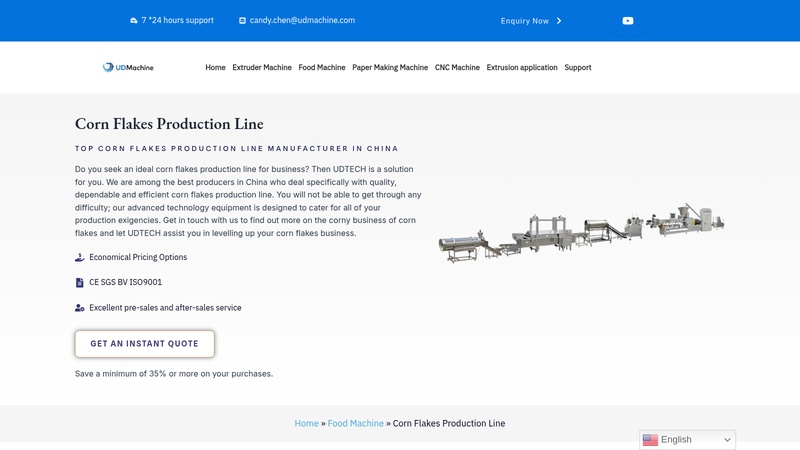

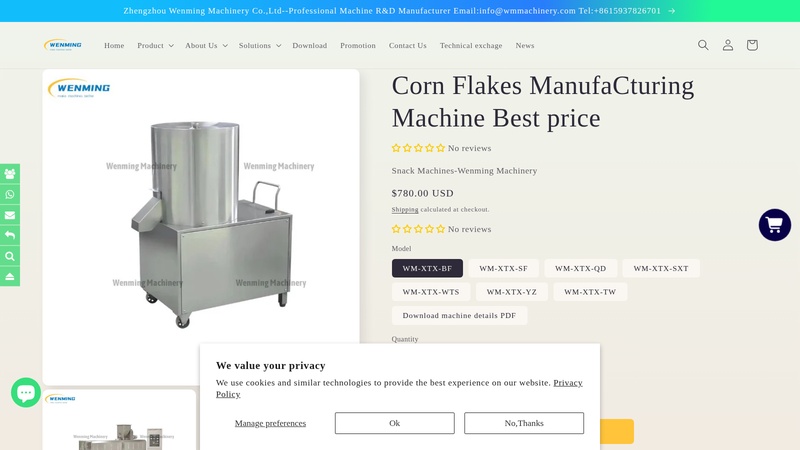


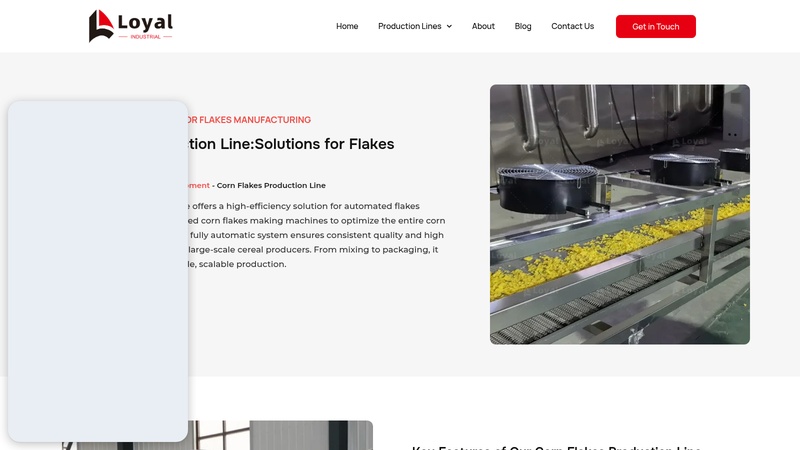
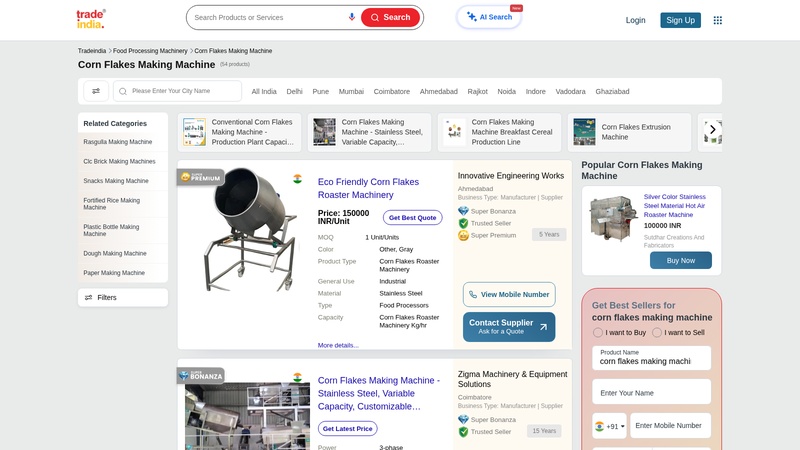
Sourcing Guide: Key Factors for Corn Flakes Making Machine Price
B2B Machinery Sourcing Guide: Strategic Evaluation of Corn Flakes Making Machine Price & Technical Specifications from China
For international food processing investors and facility operators, sourcing corn flakes production lines from China represents a significant capital expenditure requiring technical due diligence beyond unit pricing. While Chinese manufacturers offer competitive Corn Flakes Making Machine Price points—typically 30-40% lower than European counterparts without compromising core functionality—the variance in engineering standards necessitates a rigorous assessment of technical specifications to ensure ROI and regulatory compliance.
This guide outlines the critical technical parameters that determine machine longevity, product consistency, and operational efficiency, enabling data-driven procurement decisions for industrial-scale breakfast cereal operations.
H3 Extrusion Screw Configuration and L/D Ratio Optimization
The extrusion system constitutes the technological core of any corn flakes line, directly impacting product expansion rates, texture uniformity, and throughput capacity. When evaluating Corn Flakes Making Machine Price quotations, prioritize screw configuration specifications:
Length-to-Diameter (L/D) Ratio: High-quality systems utilize screws with L/D ratios between 15:1 and 20:1, enabling sufficient residence time for proper starch gelatinization (critical for corn flakes’ characteristic crunch). Budget models often feature 10:1 ratios, resulting in inadequate cooking and higher raw material waste.
Modular Screw Design: Premium machines employ segmented screw elements (conveying, kneading, and mixing sections) that allow configuration adjustments for different cereal formulations (corn, wheat, rice, or multigrain blends). Verify that the supplier provides alloy steel screws (38CrMoAlA nitrided to 0.5-0.7mm depth, surface hardness HV900-1000) rather than standard carbon steel, which degrades rapidly under abrasive corn grit processing.
Compression Ratio Gradients: Effective corn flakes extrusion requires precise compression ratios transitioning from 3:1 in the feeding section to 1.5:1 in the metering section. This gradient ensures proper shear heating without thermal degradation of vitamins and additives—a common failure point in low-cost extruders that results in off-flavor products and nutritional loss.
Price Correlation: Advanced twin-screw extrusion systems command 15-25% higher initial investment but reduce specific energy consumption (SEC) by 0.15-0.20 kWh/kg, delivering ROI within 18-24 months through utility savings and reduced rework rates.
H3 Food-Grade Material Durability and Sanitary Design Standards
Material specification discrepancies represent the primary hidden cost in imported food machinery. When assessing Corn Flakes Making Machine Price competitiveness, verify material certifications against these benchmarks:
Stainless Steel Grading: Insist on 304 or 316L stainless steel for all product-contact surfaces (barrel liners, die plates, cutting assemblies), with surface roughness Ra ≤ 0.8μm to prevent microbial adhesion. Lower-priced alternatives often substitute 201-grade steel or apply chrome plating, which flakes under thermal cycling and creates contamination risks that violate FDA, EFSA, and GFSI standards.
Die Plate Hardness: Corn flakes shaping dies require alloy tool steel (H13 or D2) heat-treated to HRC 48-52 hardness to withstand abrasive corn particle flow. Inadequate die hardness leads to edge rounding within 6-8 months, causing inconsistent flake thickness and increased breakage rates during packaging.
Sanitary Welding Standards: Verify that frame welding follows 3A Sanitary Standards with continuous TIG welding and ground smooth seams. Poor fabrication creates harborage points for bacteria, necessitating costly CIP (Clean-in-Place) system modifications post-installation.
Price Correlation: Full 316L construction increases base machine cost by 8-12% but eliminates the 3-5 year replacement cycles required for inferior materials, while ensuring compliance with BRC and IFS certification audits required by major retail distributors.
H3 PLC Control Systems and Industry 4.0 Integration
Automation sophistication directly correlates with labor efficiency and product consistency in 24/7 production environments. Evaluate control architecture when comparing Corn Flakes Making Machine Price packages:
PLC Architecture: Demand Siemens S7-1200/1500 series or Schneider Electric Modicon M340 processors with IP65-rated electrical enclosures. Proprietary or generic PLC systems limit spare parts availability and technical support responsiveness, creating vulnerability to extended downtime.
HMI Interface Capabilities: Advanced systems feature 10-12 inch touchscreen interfaces with recipe management (minimum 50+ stored profiles), real-time temperature curve monitoring (±1°C accuracy), and automatic fault diagnosis with troubleshooting protocols. This functionality reduces operator training time by 60% and minimizes human error in moisture content control (critical for 8-10% final product moisture targets).
Data Connectivity: Industry 4.0-ready machines include Ethernet/IP or Profinet connectivity for MES (Manufacturing Execution Systems) integration, enabling remote monitoring of OEE (Overall Equipment Effectiveness), predictive maintenance alerts, and energy consumption tracking. These features support Industry 4.0 audit requirements increasingly demanded by multinational food conglomerates.
Price Correlation: Integrated automation adds $8,000-$15,000 to base pricing but reduces labor requirements from 4 operators to 1.5 FTE per shift, while reducing giveaway (overweight product) by 0.3-0.5% through precise weight control systems.
Additional Sourcing Considerations
CE Certification Verification: Ensure the manufacturer holds valid CE certificates for the Machinery Directive 2006/42/EC and Low Voltage Directive 2014/35/EU, verified through the EU’s NANDO database. Request third-party inspection reports (SGS, Bureau Veritas) for electrical safety and electromagnetic compatibility (EMC) testing.
Power Consumption Benchmarks: For lines producing 200-500kg/hour, specific energy consumption should not exceed 0.45 kWh/kg finished product. Request power audit calculations based on your local voltage (380V/50Hz or 220V/60Hz configurations) to avoid transformer upgrade costs.
After-Sales Technical Support: Evaluate the supplier’s overseas service network. Premium Chinese manufacturers now offer 48-hour response guarantees and maintain spare parts depots in North America, Europe, and Southeast Asia—critical for minimizing MTTR (Mean Time To Repair) in continuous operations.
Conclusion
While Corn Flakes Making Machine Price quotations from Chinese suppliers typically range from $45,000 for entry-level 100kg/h systems to $180,000+ for industrial 1000kg/h automated lines, the 20-year TCO (Total Cost of Ownership) favors machines engineered with the three technical factors above.
Investors should allocate procurement budgets with a 70/30 weighting—70% allocated to technical specification compliance (screw engineering, material grades, control systems) and 30% to base unit cost negotiation. This approach ensures compliance with international food safety standards while achieving the 25-30% capital expenditure savings that make Chinese sourcing strategically advantageous for breakfast cereal manufacturing ventures.
Next Step: Request detailed technical datasheets from shortlisted suppliers, specifically requiring material certificates, screw drawings with metallurgical specifications, and PLC I/O point diagrams to verify engineering claims against these critical benchmarks.
Why Experience Dictates True Value in Corn Flakes Making Machine Procurement
When evaluating Corn Flakes Making Machine Price, selecting an established manufacturer is not merely a preference—it is a strategic business imperative that directly impacts your Total Cost of Ownership (TCO) and production uptime. Experienced factories deliver value far beyond the initial invoice:
- Technical Maturity & Consistency: Seasoned manufacturers possess refined extrusion parameters and thermal control systems developed over decades, ensuring consistent flake texture, moisture content, and browning—critical factors that cheap, inexperienced suppliers often fail to stabilize, leading to costly waste and rework.
- Turnkey Integration Efficiency: Corn flakes production demands precise coordination between mixing, extrusion, flaking, drying, and coating systems. An experienced provider offers seamless line integration, reducing commissioning time and eliminating the hidden costs of compatibility errors between disparate equipment.
- Recipe Flexibility & Optimization: Veteran engineers understand the rheological properties of various corn grits and fortification additives, enabling them to customize screw configurations and die designs for your specific product specifications—capability that inexperienced factories lack, locking you into rigid, inefficient production parameters.
- After-Sales Infrastructure: Longevity in the market correlates with spare parts availability, remote diagnostic capabilities, and rapid-response technical teams. This minimizes costly downtime, whereas discount suppliers often disappear when critical wear parts are needed or process deviations occur.
- Compliance & Safety Assurance: Established factories adhere to international food safety standards (CE, ISO, FDA-compliant materials) and hygienic design principles, mitigating regulatory risks that could halt production or trigger costly recalls.
Pivot to Excellence: Your Production Deserves a Legacy Partner
This is precisely why global processors trust Jinan Dayi Extrusion Machinery Co., Ltd.—a name synonymous with extrusion excellence since 1996.
With over 20 years of specialized expertise in advanced, high-efficiency extrusion technology, Dayi has evolved from a machinery manufacturer into a strategic production partner. We don’t just sell equipment; we engineer full turnkey solutions that transform raw corn grits into perfectly flaked, toasted, and packaged breakfast cereals—optimized for your capacity targets and local market preferences.
The Dayi Advantage:
✓ Unrivaled Technical Depth: Our dedicated expert team leverages two decades of extrusion R&D to deliver precision-engineered Corn Flakes Production Lines featuring advanced twin-screw extrusion technology, ensuring superior gelatinization, uniform flake formation, and energy-efficient thermal processing.
✓ True Turnkey Integration: From raw material preprocessing and extrusion to flaking, drying, sugar coating, and final packaging systems, we provide synchronized line solutions that eliminate integration headaches and accelerate your time-to-market.
✓ Versatile Portfolio, Specialized Focus: While our capabilities span puffed snacks, fortified rice, pet food, and nutrition powders, our Corn Flakes Production Line remains a flagship solution—engineered for high-volume continuity and recipe flexibility, whether producing traditional corn flakes, frosted variants, or fortified cereals.
✓ Global Reliability: Since 1996, our high-efficiency extrusion systems have powered production facilities across six continents, backed by comprehensive technical documentation, operator training, and lifetime spare parts support.
Ready to Optimize Your Breakfast Cereal Production?
Don’t compromise on equipment maturity when your market position depends on product consistency and operational reliability. Contact Jinan Dayi Extrusion Machinery Co., Ltd. today to discuss your specific capacity requirements, recipe parameters, and layout constraints.
Request your customized Corn Flakes Production Line solution and competitive quotation now—let Dayi’s 20+ years of extrusion expertise become your competitive advantage.
Jinan Dayi Extrusion Machinery Co., Ltd.: Engineering Your Success Since 1996.