
The Global Breakfast Renaissance: Why Extrusion Technology Defines Modern Corn Flake Manufacturing
The global breakfast cereal market, valued at $46.8 billion in 2023 and projected to reach $62.4 billion by 2028 (CAGR 5.9%), is undergoing a technical renaissance driven by evolving consumer preferences for convenient, fortified, and texture-optimized nutrition. For B2B investors and facility operators, this growth trajectory represents more than market expansion—it signals a critical inflection point where production efficiency and extrusion precision determine competitive viability.
At the heart of commercial corn flake production lies twin-screw extrusion technology—the industry standard that accounts for 78% of global puffed cereal manufacturing capacity. Unlike traditional flaking mills, modern extrusion systems enable precise control of gelatinization rates (typically 85-95%), moisture content (12-14% optimal range), and expansion ratios (1:4 to 1:6), directly impacting product texture, shelf stability, and nutritional retention. For factory owners, this translates to throughput capabilities exceeding 500-800 kg/hour per production line, with advanced Chinese manufacturers now achieving OEE (Overall Equipment Effectiveness) rates of 85-92% through integrated automation.
The current food industry landscape demands Industry 4.0 integration. Leading processing lines now feature real-time extrusion parameter monitoring, AI-driven temperature control (±1°C accuracy), and automated packaging synchronization—reducing labor dependency by 35-40% while minimizing product waste to <2%. Energy efficiency has become equally critical; next-generation extruders from top-tier Chinese OEMs demonstrate 25-30% reduction in specific energy consumption (kWh/kg) compared to legacy systems, directly impacting operational expenditure and sustainability metrics.
China has emerged as the strategic sourcing hub for high-capacity cereal processing infrastructure, with the nation’s food machinery exports growing 12.3% annually. Beyond cost advantages, premier Chinese manufacturers now deliver CE-certified, FDA-compliant systems featuring 304/316 stainless steel construction, modular designs for rapid SKU changeovers (15-20 minutes), and scalable configurations supporting outputs from 100 kg/h pilot lines to 2,000+ kg/h industrial operations.
For investors evaluating capital expenditure in breakfast cereal manufacturing, selecting the right equipment partner requires scrutiny of extrusion screw geometry expertise, automation integration capabilities, and post-installation technical support networks.
Below, we analyze the Top 10 Corn Flake Processing Machine Manufacturers in China, evaluating their technological sophistication, production efficiency metrics, and global service infrastructure to inform your facility’s strategic equipment procurement.
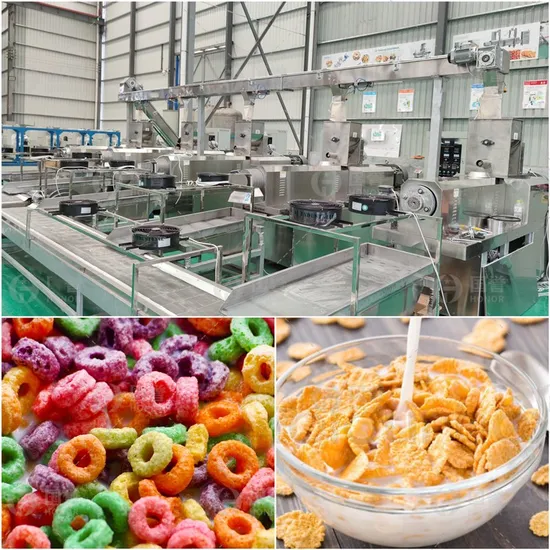
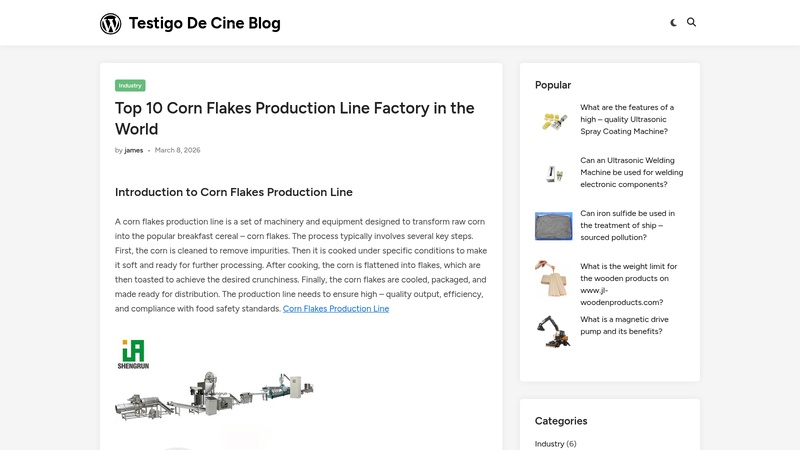
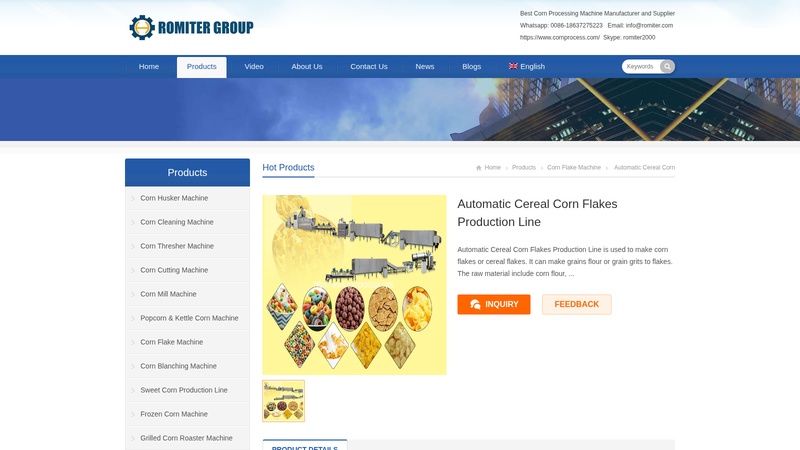
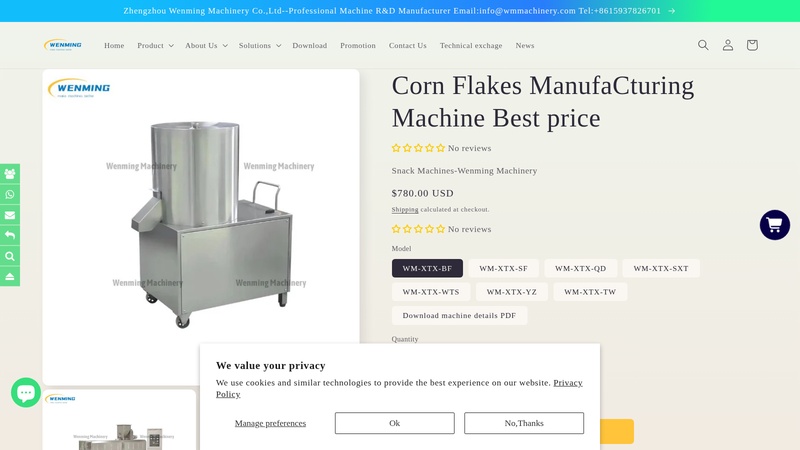
Best Corn Flakes Processing Machine Suppliers & Factory List
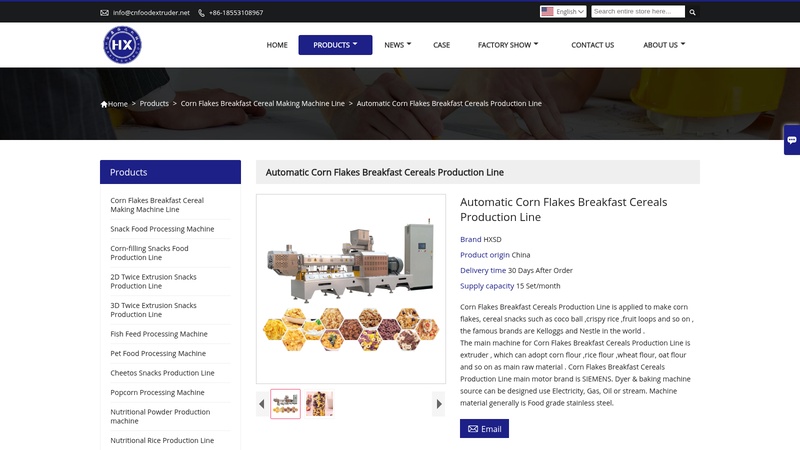
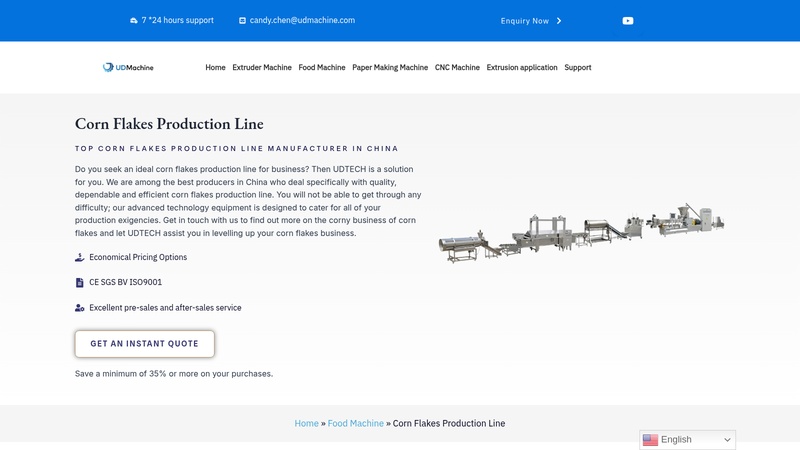


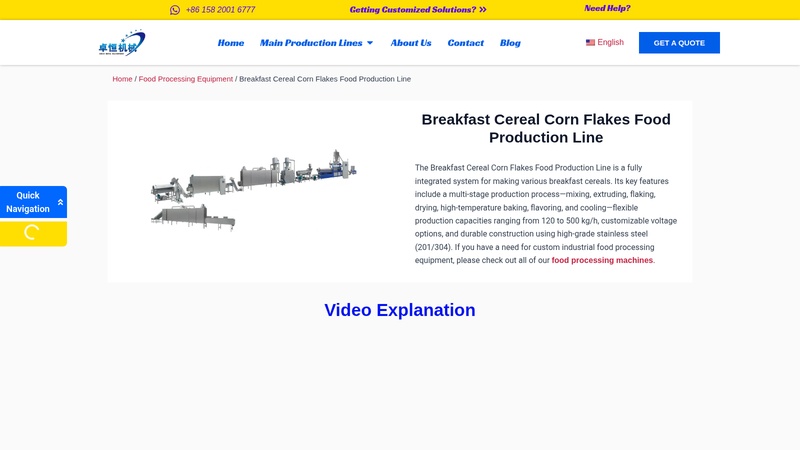
Sourcing Guide: Key Factors for Corn Flakes Processing Machine
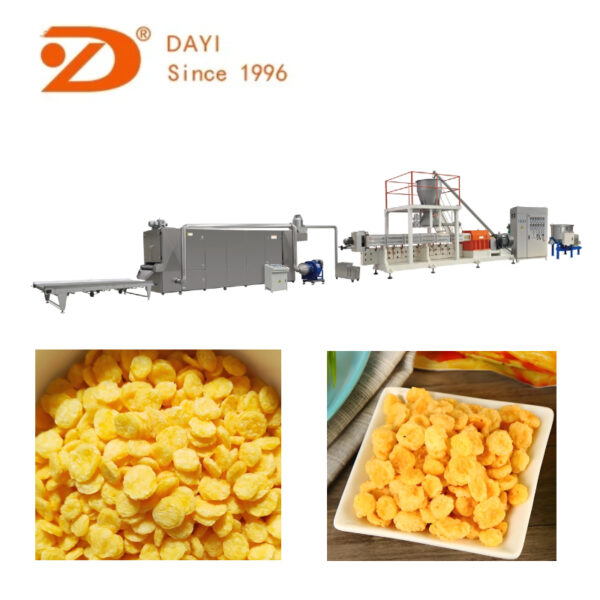
B2B Machinery Sourcing Guide: Corn Flakes Processing Equipment from China
The global breakfast cereal market continues to expand at a CAGR of 4.2%, driven by evolving consumer preferences in emerging economies. For investors and facility operators establishing or upgrading corn flakes production lines, China has evolved from a low-cost alternative to a hub for sophisticated food processing technology—offering competitive CAPEX without compromising on Industry 4.0 capabilities.
However, navigating the Chinese manufacturing landscape requires technical discernment. Unlike commodity equipment, corn flakes processing involves precise extrusion cooking, flaking, and toasting stages where machinery specifications directly impact product texture, shelf stability, and operational margins.
This guide identifies three non-negotiable technical parameters that distinguish industrial-grade equipment from standard fabrication, ensuring your sourcing decision aligns with long-term production efficiency and food safety compliance.
H3: 1. Extrusion Screw Configuration and L/D Ratio Engineering
The extrusion system represents the thermal and mechanical heart of your production line, where raw corn grits undergo gelatinization and texturization. When evaluating Chinese manufacturers, prioritize twin-screw extrusion systems over single-screw alternatives for corn flakes applications.
Critical Specifications:
– L/D Ratio (Length-to-Diameter): Demand ratios between 40:1 and 48:1. This extended configuration ensures sufficient residence time for complete starch gelatinization (critical for flakability) while preventing excessive shear that degrades final texture.
– Modular Screw Design: Verify that the screw elements (conveying, kneading, and mixing sections) are interchangeable and constructed from nitrided steel or cobalt-based alloys. This allows recipe flexibility (from traditional corn to multigrain formulations) without complete screw replacement.
– Shear Rate Control: Insist on variable speed drives (VFD) for both main drive and feeder systems, enabling precise control of specific mechanical energy (SME) input—typically 120-160 kJ/kg for standard corn flakes.
Red Flag: Manufacturers offering fixed-speed extruders or L/D ratios below 35:1 often produce equipment incapable of handling high-moisture precooking or whole-grain variants, limiting your product portfolio scalability.
H3: 2. Food-Grade Material Durability and Surface Engineering
Corn flakes processing involves abrasive materials (corn grits), high temperatures (120-180°C), and aggressive CIP (Clean-in-Place) protocols using caustic solutions. Material shortcuts in Chinese manufacturing often manifest as corrosion pitting and metal fatigue within 18-24 months.
Verification Checklist:
– Contact Surface Specifications: All product-contact surfaces must utilize AISI 316L stainless steel (not 304), particularly in the extrusion barrel and flaking rollers. 316L’s molybdenum content resists chloride attack from cleaning agents and salt-based flavorings.
– Surface Finish Standards: Require Ra ≤0.8μm (or better, 0.4μm) on all internal surfaces with continuous TIG welding and sanitary polishing. This prevents microbial harboring and ensures compliance with FDA 21 CFR and EU 1935/2004 regulations.
– Wear-Resistant Coatings: For high-pressure zones (extrusion barrel liners, die plates), confirm the use of tungsten carbide or chromium-carbide coatings with hardness ratings above 60 HRC. This extends component lifespan from 2,000 hours to 8,000+ hours under continuous operation.
Investment Insight: While 316L construction increases initial machinery costs by 15-20%, it reduces total cost of ownership (TCO) by eliminating unplanned downtime for component replacement and preventing contamination risks that trigger batch recalls.
H3: 3. Integrated Control Architecture and Recipe Management
Modern corn flakes production requires seamless transitions between product SKUs (sugar-frosted, chocolate-coated, multigrain) without manual reconfiguration delays. Chinese manufacturers vary significantly in automation sophistication.
Essential Control Features:
– PLC Ecosystem: Insist on globally supported platforms (Siemens S7-1500, Schneider Electric, or Mitsubishi MELSEC). Avoid proprietary or obscure PLC brands that create spare parts vulnerabilities and integration headaches with existing MES (Manufacturing Execution Systems).
– HMI and Data Integrity: 10-inch+ touchscreen interfaces with multilingual support (English, Spanish, Arabic) and role-based access control. Critical: Ensure the system stores minimum 50 recipe profiles with automatic parameter adjustment for temperature zones, screw speed, and cutter rates.
– IoT-Ready Connectivity: Demand Ethernet/IP or Profinet communication protocols for real-time monitoring of OEE (Overall Equipment Effectiveness), energy consumption tracking, and predictive maintenance alerts.
Operational Impact: Advanced control systems reduce changeover times from 90 minutes to under 20 minutes, directly increasing daily productive capacity by 12-15%—a crucial metric for ROI calculations in high-volume facilities.
Additional Sourcing Considerations
While the three factors above form your technical foundation, validate these operational elements before contract execution:
- Certification Authenticity: Verify original CE marking documentation (not photocopies) and ISO 22000 compliance. For North American markets, confirm NSF/ANSI 169 certification for food equipment.
- Spare Parts Logistics: Establish contractual agreements for critical spare parts availability (dies, bearings, heating elements) with 48-hour international shipping guarantees.
- Acceptance Testing Protocol: Mandate Factory Acceptance Testing (FAT) at the manufacturer’s facility using your specified raw materials, with video documentation of continuous 8-hour production runs before shipment.
Conclusion
Sourcing corn flakes processing machinery from China offers compelling capital efficiency, but only when technical specifications prioritize process control, material longevity, and automation integration. By rigorously evaluating screw engineering, metallurgical standards, and control system architecture, investors secure equipment capable of 20+ year operational lifespans while maintaining the product consistency demanded by global retail brands.
Engage manufacturers who demonstrate engineering depth through CAD simulations, material certificates, and referenceable installations in GFSI-audited facilities—this due diligence separates strategic partnerships from costly procurement errors.
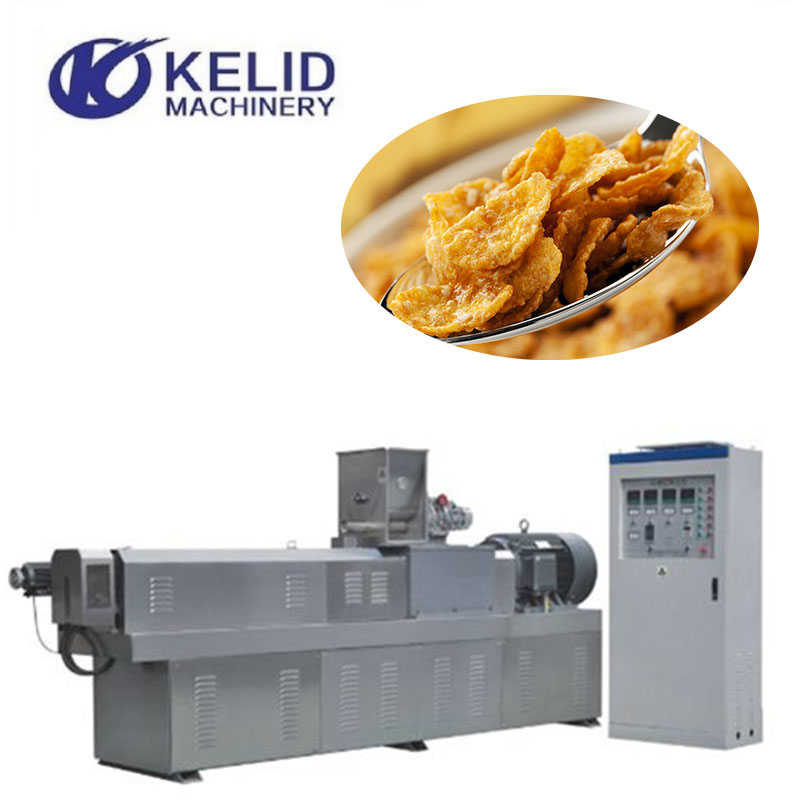
Why Experience is Non-Negotiable in Corn Flakes Processing Machinery
Selecting an experienced factory for your Corn Flakes Processing Line is not merely a procurement preference—it is a strategic operational imperative. Breakfast cereal production demands exacting precision across extrusion, flaking, drying, and coating stages, where micron-level tolerances directly impact product texture, shelf stability, and yield rates. An established manufacturer brings proven engineering protocols that ensure continuous 24/7 operational reliability, critical compliance with international food safety standards (HACCP, ISO, CE), and optimized thermal efficiency that significantly reduces waste and energy consumption. Furthermore, seasoned providers offer indispensable post-installation support: rapid spare parts fulfillment, process parameter optimization, and troubleshooting expertise that minimizes costly downtime. In an industry where equipment failure can halt entire production cycles, partnering with a factory that has decades of proven extrusion expertise mitigates risk and secures long-term ROI.
The DAYI Advantage: Your Turnkey Solution for Extrusion Excellence
This is precisely where Jinan Dayi Extrusion Machinery Co., Ltd. distinguishes itself as your ideal strategic partner.
Since our establishment in 1996, DAYI has stood at the forefront of advanced extrusion technology, amassing over 20 years of specialized expertise in designing high-efficiency food production systems. We are not merely equipment suppliers; we are extrusion technology architects dedicated to transforming raw materials into market-ready products through precision engineering.
Our Core Competitive Advantages:
- Dedicated Expert Team: Our professional manufacturing base is staffed by specialized engineers who understand the nuanced rheology of cereal extrusion, ensuring your corn flakes achieve the perfect balance of crispness, density, and golden-toast appearance.
- High-Efficiency Extrusion Technology: We deploy advanced twin-screw extrusion systems that maximize thermal efficiency and output consistency, delivering superior product quality with optimized energy consumption.
- Complete Turnkey Solutions: From raw material preprocessing and extrusion to flaking, drying, sugar coating, and final packaging integration, we provide end-to-end production lines that eliminate compatibility issues and streamline commissioning.
Comprehensive Production Portfolio:
While our Corn Flakes Production Line represents a flagship solution for breakfast cereal manufacturers, our expertise spans the entire extrusion spectrum: Puffed Snack Food Lines, Pet Food Systems, Tortilla Chip Production, Fortified Rice Extrusion, Baby Food Processing, Bread Crumb Manufacturing, 3D Pellet Snack Lines, Nutritional Powder Systems, and Soya Chunk Production.
Ready to Optimize Your Production?
Don’t compromise on equipment reliability when entering the competitive breakfast cereal market. Contact Jinan Dayi Extrusion Machinery Co., Ltd. today to discuss your specific capacity requirements, facility constraints, and product specifications. Our engineering team is prepared to design a customized solution tailored to your operational goals and provide a detailed quotation that reflects true value engineering.
Reach out now—let’s build your production success on 20+ years of extrusion excellence.