
Introduction: Navigating the Global Market for corn flakes making machine
Sourcing corn flakes making machines for scalable breakfast cereal production presents a complex maze of technical specifications, supplier reliability concerns, and regional compliance requirements that can overwhelm even experienced procurement teams. As global demand for convenient, fortified breakfast options surges across emerging markets in Africa, South America, and the Middle East—alongside established European manufacturing hubs like Germany—buyers face the critical challenge of identifying equipment that balances automation efficiency with raw material versatility. Whether you’re establishing a new production facility in Nigeria or upgrading existing lines to handle multi-grain extrusion, navigating this specialized machinery market requires more than catalog browsing; it demands strategic insight into extrusion technology, capacity optimization, and cross-border logistics frameworks.
What Critical Factors Should Buyers Evaluate in Global Corn Flakes Machinery Markets?
From distinguishing twin-screw versus single-screw extrusion systems to assessing pre-conditioning requirements for diverse grain inputs—including corn, wheat, and rice flour—purchasing decisions extend far beyond capital expenditure. This guide examines configurations ranging from compact 100kg/h startup units to industrial-scale 500kg/h+ automated lines, while addressing energy profiles, CE certification standards, and after-sales support networks essential for maintaining production continuity across facilities in Lagos, São Paulo, or Dubai.
How Does This Guide Empower Strategic Procurement Across Regional Markets?
Designed for international B2B procurement teams, this resource demystifies supplier vetting protocols for Asian and European manufacturers alike. We analyze total cost of ownership, shipping logistics for Middle Eastern and African ports, and installation requirements tailored to diverse electrical standards. By providing actionable intelligence on machinery specifications and quality benchmarks, we equip decision-makers—from German industrial zones to Nigerian processing corridors—with the clarity needed to secure extrusion equipment that drives sustainable profitability.
Understanding corn flakes making machine Types and Variations
| Type Name | Key Distinguishing Features | Primary B2B Applications | Indicative Price Range (e.g., $, $$, $$$) | Brief Pros & Cons for Buyers |
|---|---|---|---|---|
| Twin-Screw Extruder Production Lines | High-shear cooking with intermeshing screws; handles fine and coarse granulation; continuous thermal control; superior expansion capability | Large-scale breakfast cereal manufacturers; fortified cereal producers; export-oriented facilities in Europe and Africa | $$$ | Pros: Exceptional product consistency, versatile raw material handling, high automation compatibility. Cons: Significant capital investment, requires skilled technical operators, higher energy consumption. |
| Collet Extruder Systems | Single-screw design optimized for coarse corn grits; gentler extrusion process; produces denser texture; lower thermal processing requirements | Traditional regional markets (Middle East, South America); processors utilizing coarse granulation byproducts; energy-conscious operations | $$ | Pros: Lower energy costs, simpler mechanical maintenance, optimal for specific heritage textures. Cons: Limited to coarse granulation inputs, reduced versatility for multi-grain formulations, lower expansion ratios. |
| Multi-Grain Cereal Production Lines | Modular architecture with quick-change dies; compatible with corn, wheat, rice, and oat flours; adjustable screw profiles for varying fiber content | Diversified cereal manufacturers; health-food co-packers; facilities requiring whole-grain and gluten-free product flexibility | $$$ | Pros: Rapid product changeover, future-proofing against market trends, diversified revenue streams. Cons: Complex sanitation protocols between batches, higher initial configuration costs, extended changeover downtime. |
| Compact Entry-Level Production Lines | Reduced footprint (100–150kg/h capacity); modular downstream equipment; semi-automatic operation options; compatible with limited utility infrastructure | Startup ventures in Nigeria and South America; pilot plants; agricultural cooperatives testing market viability; educational institutions | $$ | Pros: Lower barrier to entry, reduced installation complexity, upgradeable extruder components. Cons: Limited economies of scale, higher per-unit production costs, constrained throughput for export demands. |
What are the operational advantages of twin-screw extruder lines for large-scale corn flake manufacturing?
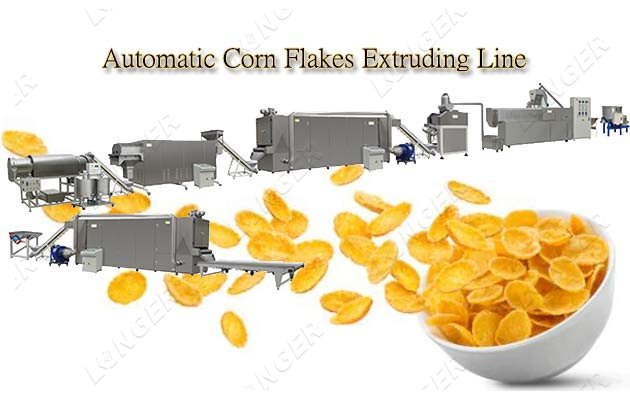
Twin-screw extruder lines represent the industry standard for high-volume corn flake production, utilizing intermeshing screws to provide intense mixing, shearing, and cooking within a precisely controlled thermal environment. These systems excel in processing both de-germed corn flour and whole-grain formulations, offering superior expansion ratios critical for achieving the characteristic light, crispy texture demanded by international markets. For B2B buyers in Germany and Nigeria seeking consistent product quality and high automation, these lines minimize manual intervention while maximizing throughput. Key purchasing considerations include evaluating screw configuration options for specific starch gelatinization requirements, ensuring compatible flaking roller durability for continuous 24/7 operations, and verifying steam preconditioning capabilities for optimal moisture management.
When should B2B processors select collet extruder systems over twin-screw alternatives?
Collet extruder systems utilize a single-screw mechanism specifically optimized for coarse corn grits rather than fine flours, producing flakes with a denser, crunchier texture profile distinct from highly expanded extruded products. These machines are particularly suitable for manufacturers targeting traditional markets in South America and the Middle East where specific mouthfeel preferences and heritage recipes dominate purchasing decisions. B2B buyers should consider these systems when local raw material availability favors coarse granulation or when energy efficiency and lower thermal processing requirements outweigh the need for multi-grain flexibility. The simpler mechanical design reduces maintenance complexity and spare parts costs, though it limits formulation versatility and expansion capabilities compared to twin-screw configurations.
How do multi-grain compatible production lines enhance manufacturing flexibility and ROI?
Multi-grain cereal production lines incorporate quick-change die systems, adjustable screw profiles, and versatile feeding
Key Industrial Applications of corn flakes making machine
| Industry/Sector | Specific Application of corn flakes making machine | Value/Benefit for the Business | Key Sourcing Considerations for this Application |
|---|---|---|---|
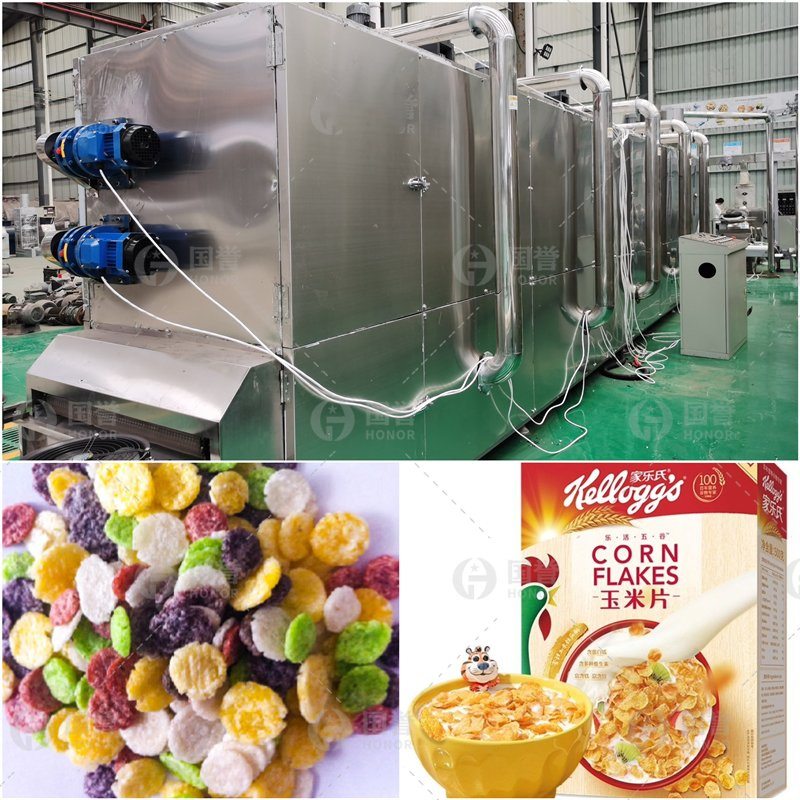
| Commercial Breakfast Cereal Manufacturing | Continuous extrusion of degermed corn grits into pre-gelatinized flakes with uniform expansion and toasting | High-volume output (200-500kg/h) with consistent texture; reduced labor costs via automation; energy-efficient thermal processing | Stainless steel food-grade construction; twin-screw configuration for precise shear control; energy |
A stock image related to corn flakes making machine.
3 Common User Pain Points for ‘corn flakes making machine’ & Their Solutions
Scenario 1: How to Maintain Consistent Flake Quality When Scaling from Pilot to Commercial Production
The Problem:
B2B buyers transitioning from small-batch testing to continuous commercial output frequently encounter quality control failures that threaten market entry. Variations in flake thickness, excessive breakage during packaging, and inconsistent moisture retention occur when extrusion parameters fluctuate between shifts. These defects result in products lacking the uniform crispiness required by retail chains and export markets in Germany or Nigeria, leading to rejected batches, increased waste, and damage to brand reputation in competitive breakfast cereal sectors.
The Solution:
Implement twin-screw extrusion technology with precision barrel temperature control and variable screw speed configurations. These systems provide consistent heating, cooling, and shearing necessary to form a uniform thermoplastic mass before flaking, ensuring each pellet expands identically. Pair this with calibrated flaking rollers featuring adjustable gap settings to control thickness within millimeter tolerances. Integrate a high-temperature baking oven and controlled cooling conveyor to finalize texture and prevent sogginess. Establish strict raw material preparation protocols, ensuring corn flour moisture content remains between 12-14% and particle size is uniform, preventing density variations that cause uneven cooking and coating adhesion issues.
Scenario 2: How to Manage High Energy Consumption in Regions with Unstable or Expensive Power Infrastructure
The Problem:
Commercial corn flakes lines typically require 80-140kW of continuous real power consumption across extrusion, drying, and high-temperature baking processes. For manufacturers in regions with high electricity tariffs, frequent grid instability, or diesel generator dependence—common in parts of Africa and the Middle East—these energy demands create unsustainable operational expenditures. Buyers often underestimate the gap between installed capacity (130-180kW) and actual consumption, leading to cash flow problems when scaling from 100kg/h pilot production to 500kg/h commercial capacity.
The Solution:
Select energy-optimized twin-screw extruders designed to maximize throughput while minimizing per-kilogram power draw. Look for systems where real power usage represents a smaller ratio of installed capacity, indicating efficient motor and drive systems rather than oversized, inefficient components. Implement heat recovery mechanisms that capture thermal energy from baking and drying sections to pre-heat incoming raw materials, reducing the extruder’s thermal energy load. Consider modular line configurations allowing production scaling from 100kg/h to 300kg/h without running full-capacity equipment at partial load, which wastes energy. Additionally, specify equipment compatible with power factor correction systems to reduce peak demand charges from local utilities.
Scenario 3: How to Ensure Raw Material Flexibility Amid Agricultural Supply Chain Volatility
The Problem:
Dependency on specific degermed corn grits becomes a critical vulnerability when local harvests fail, import costs spike due to currency fluctuations, or seasonal availability shifts in South American or African markets. Many traditional collet extruders cannot process alternative grains like wheat, oats, or mixed bean flours without extensive mechanical retooling and screw replacements. This inflexibility forces production halts during raw material shortages and prevents manufacturers from pivoting to locally available, cost-effective grains or producing fortified blended foods (FBF) for institutional contracts.
The Solution:
Specify versatile twin-screw extrusion systems capable of processing diverse granulations—from fine whole-grain flours to coarse grits—without requiring barrel or screw replacements. Unlike single-screw collet extruders limited to coarse materials, twin-screw designs handle corn, rice, wheat, and oat formulations interchangeably, allowing rapid recipe changes based on commodity prices. Ensure your mixing and extrusion system accommodates varying moisture profiles and fortification additives (vitamins, folic acid, minerals). This flexibility enables production of multi-grain cereals or FBF during corn shortages, maximizes equipment utilization year-round, and supports health-conscious product lines using whole grains for markets demanding higher nutritional value.
Strategic Material Selection Guide for corn flakes making machine
Selecting appropriate construction materials for corn flakes manufacturing equipment represents a critical procurement decision that directly impacts operational longevity, food safety compliance, and total cost of ownership. Given the high-temperature extrusion, mechanical shearing, and hygroscopic processing conditions inherent in cereal production, material specifications must balance corrosion resistance, thermal stability, and mechanical durability. For international B2B buyers operating across diverse climatic conditions—from the humid environments of Nigeria to the industrial standards of Germany—understanding material specifications ensures regulatory compliance while optimizing capital expenditure. Below is an analysis of four essential material categories that procurement teams should evaluate when sourcing extrusion and processing lines.
Why is AISI 304 Stainless Steel the industry standard for corn flakes machine construction?
AISI 304 stainless steel serves as the foundational material for the majority of food-contact surfaces in corn flakes production lines, including extruder barrels, mixing chambers, and conveyor frameworks. This austenitic grade offers excellent resistance to organic acids present in corn grits and withstands standard CIP (Clean-in-Place) protocols using alkaline detergents common in European facilities. For manufacturers operating in moderate humidity environments across South America and Africa, 304 SS provides sufficient corrosion protection while maintaining cost efficiency in capital budgets. However, facilities utilizing aggressive chloride-based sanitizers or processing high-salt formulations may experience pitting corrosion over extended operational cycles, necessitating strategic upgrades for critical wear components.
When should buyers specify AISI 316 stainless steel for cereal processing equipment?
AISI 316 stainless steel, distinguished by its molybdenum content, becomes essential for components exposed to saline coating applications, acidic fruit additives, or high-chloride cleaning regimens prevalent in Middle Eastern and coastal manufacturing facilities. This grade demonstrates superior resistance to crevice corrosion in flaking rollers and drying chamber interfaces where moisture accumulation and salt deposits occur. While procurement costs typically exceed 304 SS by 25-30%, the extended service life in aggressive environments often justifies the investment for high-capacity lines exceeding 300 kg/h output. B2B buyers should prioritize 316 SS for coating drums, steam injection zones, and product contact areas where chemical exposure peaks and regulatory scrutiny intensifies.
How do hardened tool steels extend the lifespan of extruder screws and flaking rollers?
Extruder screws and flaking rollers endure extreme mechanical abrasion from corn grits and thermal cycling above 120°C, necessitating materials beyond standard stainless grades for these high-wear applications. Hardened tool steels such as H13 or D2, often featuring nitriding or tungsten carbide coatings, provide exceptional wear resistance and maintain dimensional stability under intense shear forces generated during twin-screw extrusion. These properties prevent metal particle contamination that could compromise food safety while reducing downtime for component replacement. The primary limitation involves susceptibility to corrosion if protective coatings degrade, requiring rigorous maintenance protocols in humid climates. Despite premium pricing, tool steel components typically deliver 3-5x longer operational life than standard steel alternatives in high-volume African and South American facilities.
Are aluminum alloys cost-effective for heat transfer components in corn flakes drying systems?
Food-grade aluminum alloys, specifically 6061-T6 or 3003 series, offer optimal thermal conductivity for heat exchangers, cooling conveyors, and baking oven radiants where rapid temperature modulation proves critical for product texture consistency. These materials reduce energy consumption by 15-20% compared to stainless alternatives while minimizing thermal lag during production startups, delivering significant operational savings over time. However, aluminum’s lower hardness rating and abrasion resistance make it unsuitable for moving parts or direct grain contact points, and it requires anodizing or protective coating to prevent oxidation in humid processing environments. For European buyers focused on energy efficiency certifications and sustainability metrics, aluminum thermal components present a strategic compromise between thermal performance and long-term operational expenditure.
| Material | Typical Use Case for corn flakes making machine | Key Advantage | Key Disadvantage/Limitation | Relative Cost |
|---|---|---|---|---|
| AISI 304 Stainless Steel | Extruder barrels, mixing tanks, structural frames | Excellent cost-to-corrosion resistance ratio for standard environments | Vulnerable to chloride pitting in high-salt or aggressive chemical environments | Moderate |
| AISI 316 Stainless Steel | Coating drums, steam injection zones, coastal installations | Superior resistance to saline conditions and acidic cleaning agents | 25-30% price premium over 304 grades; requires specialized welding | High |
| Hardened Tool Steel (H13/D2) |
A stock image related to corn flakes making machine.
In-depth Look: Manufacturing Processes and Quality Assurance for corn flakes making machine
Understanding the manufacturing processes and quality assurance protocols behind corn flakes making machines is essential for B2B procurement teams evaluating capital equipment investments. The transition from raw grain to packaged breakfast cereal involves
Practical Sourcing Guide: A Step-by-Step Checklist for ‘corn flakes making machine’
Procuring extrusion-based breakfast cereal equipment requires systematic evaluation beyond initial price points. This checklist provides actionable criteria to mitigate procurement risks and ensure equipment alignment with your operational scale, raw material availability, and market positioning.
1. How Do You Determine the Right Production Capacity and Factory Layout?
Begin by calculating your target output in kilograms per hour, considering standard models range from 100-120kg/h entry-level units to 300-500kg/h industrial configurations. Verify that your facility ceiling height accommodates the vertical drying and cooling towers, typically requiring 4-5 meters clearance. Request detailed dimensional drawings to ensure adequate space for material inflow and packaging outflow zones, particularly critical for operations in Nigeria or Germany where facility retrofits may face strict building codes.
2. What Extruder Technology Specifications Ensure Optimal Corn Flake Texture?
Prioritize twin-screw extrusion systems capable of handling both fine and coarse corn granulations, including de-germed maize for superior expansion rates. Examine the barrel’s heating and cooling zones—precise thermal control during gelatinization directly impacts flake crispiness. Confirm the flaking roller mechanism maintains consistent 0.3-0.8mm thickness tolerance to ensure uniform toasting and market-standard texture.
3. Which Raw Material Flexibility Features Maximize Your Product Portfolio?
Select machinery compatible with diverse cereal inputs beyond corn flour, including wheat, rice, oats, and bean flours to capitalize on emerging health trends in Middle Eastern and South American markets. Verify the mixing system’s capability to integrate fortification additives—vitamins, minerals, and flavorings—without compromising extrusion stability. This versatility enables production of specialized variants like high-fiber or gluten-free formulations using identical core equipment.
4. How Should You Evaluate Energy Efficiency and Regional Utility Compatibility?
Analyze the disparity between installed power (130-180kW) and actual operating consumption (80-140kW) across different models. Confirm voltage specifications align with your regional infrastructure—whether 380V three-phase European standards or alternative configurations common in African markets. Inquire about heat recovery systems that recycle thermal energy from the drying stage to reduce operational expenditures in regions with high electricity costs.
5. What Automation and After-Sales Support Infrastructure Validates Supplier Reliability?
Assess the degree of automation from ingredient feeding through packaging, minimizing labor costs while ensuring batch consistency. Verify the supplier maintains regional service centers or authorized technicians within your timezone for rapid spare parts deployment—particularly for wear-prone components like extruder screws and die plates. Request documentation of successful installations in similar climatic conditions to your region, ensuring equipment resilience against humidity and temperature variations.
A stock image related to corn flakes making machine.
Comprehensive Cost and Pricing Analysis for corn flakes making machine Sourcing
When sourcing corn flakes manufacturing equipment, understanding the complete cost architecture prevents budget overruns and ensures sustainable production economics. Pricing varies significantly based on extrusion capacity, automation levels, and regional manufacturing origins, with Chinese suppliers typically offering competitive entry points for emerging markets in Africa and South America while meeting European quality standards.
What Factors Determine the Base Price of a Corn Flakes Extrusion Line?
Base pricing correlates directly with hourly production capacity and extruder specifications. Entry-level twin-screw extruders handling 100–120 kg/h represent the most accessible investment tier, while industrial-grade systems capable of 300–500 kg/h command substantially higher premiums. Power specifications also influence costs; installed electrical capacity ranges from 130 kW to 180 kW across standard models, though actual operating consumption typically runs 60–75% lower. Stainless steel construction grades, PLC control sophistication, and flaking roller precision further differentiate pricing between commodity and premium equipment tiers.
How Do Chinese Manufacturer Pricing Structures Compare Across Different Capacity Tiers?
Manufacturing hubs in Shandong province offer modular pricing progressions that scale predictably with output requirements. Standard model classifications demonstrate clear cost-to-capacity ratios, with each production tier roughly doubling output potential while increasing investment by 40–60%. Entry-level configurations suit startup operations in Nigeria or Middle Eastern markets, whereas high-capacity lines target established European processors seeking advanced automation integration. Pre-conditioning systems and bulk raw material handling capabilities add incremental upfront costs but significantly reduce per-unit production expenses at commercial scale.
What Hidden Costs Should B2B Buyers Budget Beyond the Machine Purchase Price?
Total cost of ownership extends far beyond FOB pricing. International buyers must factor sea freight expenses—particularly for production lines exceeding 40 meters in length—and import duties varying by destination, typically ranging 5–25% for food processing equipment. Installation supervision, often requiring two to three weeks of specialized technician support, represents significant unbudgeted expenditure. Additionally, spare parts inventories for wear components like extruder screws and flaking rollers should constitute 8–12% of initial equipment investment to prevent costly operational downtime.
How Can Buyers Optimize ROI When Sourcing Corn Flakes Equipment from International Suppliers?
Strategic procurement involves negotiating comprehensive service packages rather than accepting base machine quotes. Requesting extended warranty terms, operator training inclusion, and formulation technology transfer maximizes long-term value. For African and South American markets, establishing local service partnerships with manufacturers reduces maintenance costs compared to distant European alternatives. Payment structuring through Letter of Credit arrangements mitigates currency fluctuation risks while ensuring quality compliance before final fund release, protecting buyers from Germany to emerging economies.
Alternatives Analysis: Comparing corn flakes making machine With Other Solutions
When evaluating entry into the breakfast cereal market, B2B investors must weigh extrusion-based corn flakes making machines against alternative production methodologies. While twin-screw extrusion dominates modern automated facilities, traditional processing routes and import-dependent models remain viable depending on capital constraints, target scale, and local regulatory environments. Understanding these distinct operational paradigms enables decision-makers from emerging markets like Nigeria and industrial hubs like Germany to align equipment selection with long-term profitability and supply chain resilience.
| Comparison Aspect | Corn Flakes Making Machine (Extrusion) | Traditional Steam-Cooking & Flaking Line | Import & Repackaging Model |
|---|---|---|---|
| Production Capacity | 100-500 kg/h continuous output | 200-800 kg/h batch dependent | Unlimited (constrained by supplier) |
| Initial Capital Investment | $50,000-$200,000 (mid-scale) | $300,000-$800,000 (industrial) | $10,000-$50,000 (working capital) |
| Operational Complexity | Moderate; requires extrusion expertise | High; requires steam management & cooking precision | Low; primarily logistics & QC |
| Raw Material Flexibility | High; handles various grain flours (corn, wheat, rice) | Limited; requires specific moisture content & grain quality | None; finished goods only |
| Product Customization | High; easy fortification, shape variation | Moderate; limited to traditional flake profiles | None; dependent on supplier SKU |
| Energy Efficiency | Optimized; 80-140 kW actual power usage | High consumption; steam generation required | Minimal; storage climate control only |
| Implementation Timeline | 4-8 weeks installation & training | 12-24 weeks (infrastructure heavy) | 2-4 weeks (regulatory permitting) |
| Local Value Addition | 60-70% (local sourcing, processing) | 50-60% (local processing) | 10-20% (packaging only) |
How Does Traditional Steam-Cooking Compare to Extrusion-Based Production?
Traditional steam
Essential Technical Properties and Trade Terminology for corn flakes making machine
What Are the Critical Technical Specifications When Sourcing a Corn Flakes Extrusion System?
Twin-Screw Extruder Configuration and L/D Ratio
The core of any production line is the extruder barrel configuration. Twin-screw extruders dominate the breakfast cereal sector because they handle both fine flour and coarse grits without pre-conditioning, unlike single-screw systems. Pay close attention to the Length-to-Diameter (L/D) ratio—typically ranging from 15:1 to 25:1—which determines residence time and cooking intensity. Higher L/D ratios (20:1 and above) ensure complete gelatinization of corn starches, critical for achieving the signature crispy texture demanded in European and Middle Eastern markets.
Throughput Capacity and Scale Metrics
Manufacturers typically offer modular lines rated at 100–120 kg/h (entry-level), 200–240 kg/h (mid-scale), and 300–500 kg/h (industrial). When evaluating capacity, distinguish between nominal throughput and actual stable output; factors like ambient humidity in tropical climates (common in Nigeria or Brazil) can reduce effective yield by 10–15%. Ensure the supplier specifies capacity based on degermed corn flour at standard 12–14% moisture content.
Thermal Zone Management and Power Density
Modern extruders feature segmented barrel heating with independent PID-controlled zones (usually 4–6 zones). Installed power ranges from 130 kW to 180 kW, but “real power” consumption during steady-state operation typically runs 60–75% of installed capacity. For energy-conscious buyers in Germany or South Africa, verify Specific Mechanical Energy (SME) ratings, which indicate how efficiently mechanical shear converts to thermal energy for cooking.
Flaking Roller Precision and Gap Tolerance
Post-extrusion, the flaking unit compresses cooked pellets into uniform flakes. Critical specifications include roller diameter (usually 400–600 mm), surface hardness (HRC 58–62), and adjustable gap precision (±0.1 mm). Inconsistent gap tolerance results in uneven toasting and breakage during packaging—a costly defect for high-volume distributors.
Which Industry Terminology Should B2B Buyers Understand Before Negotiating?
Extrusion Cooking and Thermoplastic Mass Formation
This refers to the process where corn flour undergoes high pressure (20–40 bar), temperature (120–180°C), and mechanical shear within the extruder barrel, transforming into a thermoplastic mass. Understanding this term helps buyers assess whether a machine offers true “cooking extrusion” versus simple forming extrusion, which affects digestibility and expansion ratios.
Degermed Corn Grits vs. Whole Grain Formulations
Degermed corn (endosperm only) expands better and produces lighter flakes, while whole grain formulations retain bran and germ for nutritional fortification common in health-conscious European markets. Clarify with suppliers whether the extruder screws and barrel wear coatings are optimized for abrasive whole grains or refined degermed materials.
Specific Mechanical Energy (SME)
Expressed in kWh/kg or MJ/kg, SME measures the mechanical energy input per unit mass of product. Values between 0.15–0.25 kWh/kg indicate efficient processing. High SME can damage heat-sensitive vitamins during fortification, a key consideration when producing fortified blended foods (FBF) for humanitarian programs in Africa.
Post-Extrusion Toasting and Drying Curves
After flaking, flakes require high-temperature baking (200–300°C) to reduce moisture to 2–4% and develop Maillard browning. Suppliers should provide drying curve data—temperature versus time profiles—to ensure the cooling conveyor and fluidized bed dryer prevent case-hardening, which traps moisture and causes staleness during ocean freight to distant markets.
Navigating Market Dynamics and Sourcing Trends in the corn flakes making machine Sector
The global breakfast cereal market is experiencing robust expansion, driven by urbanization and changing dietary habits across emerging economies. For B2B buyers in Nigeria, Germany, and throughout South America and the Middle East, understanding the evolving technical specifications and sourcing frameworks for corn flakes making machines is critical for capital investment decisions. Modern production lines now offer modular capacities ranging from 100kg/h to 500kg/h, enabling manufacturers to scale operations according to local market penetration rates without prohibitive upfront costs. This flexibility proves particularly valuable when navigating diverse regulatory environments, voltage standards, and space constraints that vary significantly between compact European facilities and expansive industrial zones in Africa.
What Capacity Configurations Best Serve Emerging Market Entry Strategies?
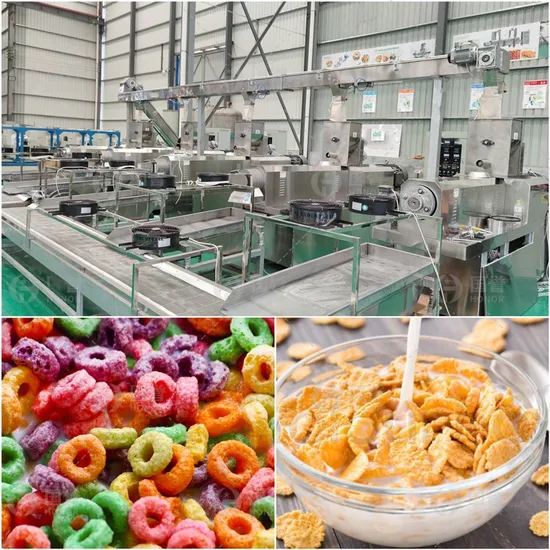
Procurement teams must evaluate production lines that balance initial output requirements with future scalability and regional infrastructure limitations. Entry-level systems delivering 100-120kg/h suit startups in Nigerian or South American markets where capital efficiency precedes volume demands, while mid-range 200-240kg/h configurations address the throughput needs of established distributors in European markets like Germany. Advanced 300-500kg/h lines incorporate extended barrel twin-screw extruders that handle diverse grain matrices—from de-germed corn to whole wheat, rice, oats, and bean flours—accommodating regional raw material availability while maintaining consistent flake integrity. This modular approach allows investors to phase equipment purchases, aligning capital expenditure with actual market absorption rates rather than speculative overcapacity, while ensuring compatibility with local power grids and factory footprints.
How Is Extrusion Technology Adapting to Diverse Cereal Processing Demands?
The shift from single-screw to twin-screw extrusion represents a fundamental technological leap for international B2B buyers seeking operational versatility. These advanced systems eliminate pre-conditioning requirements, allowing direct feeding of powdered ingredients into cooking chambers where precise thermal and mechanical energy application creates uniform thermoplastic masses. This versatility enables manufacturers to produce fortified cereals with added vitamins, minerals, and proteins, responding to health-conscious consumer segments across Middle Eastern and South American markets while maintaining operational flexibility to pivot between corn flakes, puffed snacks, and extruded cereals using identical infrastructure. The technology particularly benefits regions with inconsistent raw material quality, as twin-screw configurations maintain processing stability despite variations in grain moisture content or particle size distribution, reducing waste from rejected batches.
Why Does Energy Efficiency Dictate Long-Term Viability in Corn Flake Manufacturing?
Sustainability in B2B cereal production centers on kilowatt-hour optimization rather than mere regulatory compliance, directly impacting profitability in energy-sensitive markets. Modern extrusion lines demonstrate significant efficiency differentials between installed power (130-180kW) and actual operational consumption (80-140kW), indicating sophisticated energy recovery systems and intelligent load management that reduce operational expenditures critical for thin-margin emerging market operations. Buyers should prioritize machines featuring variable frequency drives, optimized barrel heating zones,
Frequently Asked Questions (FAQs) for B2B Buyers of corn flakes making machine
1. How much does an industrial corn flakes making machine cost and what factors determine the total investment?
Industrial corn flakes production lines typically range from $25,000 to $150,000 USD depending on automation level, hourly output capacity, and the inclusion of auxiliary packaging systems. Entry-level systems producing 100-120kg/hour require lower capital expenditure but may need additional manual labor for quality control and bagging operations. High-capacity automated lines exceeding 300-500kg/hour demand greater initial investment but reduce per-unit labor costs and improve batch consistency for large-scale distribution across multiple regions. Buyers should also budget for international shipping, installation supervision, operator training, and establishing a 10-15% spare parts inventory to prevent costly production interruptions during the first operational year.
2. What is the production capacity of a commercial corn flakes manufacturing line and how do I scale operations?
Standard commercial lines offer scalable outputs from 100kg/hour for emerging markets up to 500kg/hour for industrial-scale distribution, with real power consumption ranging from 80kW to 140kW depending on the model. When selecting capacity, calculate your target market’s daily consumption and seasonality rather than just theoretical maximums, as consistent quality often requires running at 75-80% of rated capacity to allow for maintenance windows. Modular designs allow you to begin with a core extrusion system and incrementally add auxiliary equipment like additional flaking rollers or larger drying ovens as your distribution network expands in Africa, South America, or the Middle East. This phased
Important Disclaimer & Terms of Use
⚠️ Important Disclaimer
The information provided in this guide, including content regarding manufacturers, technical specifications, and market analysis, is for informational and educational purposes only. It does not constitute professional procurement advice, financial advice, or legal advice.
B2B buyers must conduct their own independent and thorough due diligence before making any purchasing decisions. The risk of relying on any information in this guide is borne solely by the reader.
Top 3 Corn Flakes Making Machine Manufacturers & Suppliers List
1. CornProcess – Corn Processing
2. CN Food Extruder – Corn Flakes Production Line

Domain: cnfoodextruder.net
Registered: 2022 (4 years)
Introduction: Product line includes: Automatic Corn Flakes Breakfast Cereals Production Line, Automatic Corn Flake Breakfast Cereal Extruder Machine, Corn Flakes Machine Cornflakes Production Line, Cereals Puffing Extruded Industrial Corn Flakes Machine, and Corn Flake Breakfast Cereal Produce Machine. Manufactured by SHANDONG XINHUA TECHNOLOGY CO., LTD. Uses corn flour, rice flour, wheat flour, oats and other …
3. Kellogg’s – Corn Flakes

Domain: discovery.patsnap.com
Registered: 2006 (20 years)
Introduction: Corn flakes (or cornflakes) are a breakfast cereal made by toasting flakes of corn (maize). The cereal was created by John Harvey Kellogg in 1894 as a healthy food for patients at the Battle Creek Sanitarium in Michigan. It was later commercialized by the Kellogg Company (Kellogg’s), established by Will Kellogg (brother of John Harvey Kellogg) to produce corn flakes for the wider public, with a pa…
Strategic Sourcing Conclusion and Outlook for corn flakes making machine
As global breakfast markets evolve toward functional fortification and clean-label processing, your choice of extrusion technology becomes a long-term strategic asset rather than a mere capital expenditure.
How Can Manufacturers Maximize ROI Through Equipment Versatility?
Modern twin-screw extrusion lines offer far more than single-product output. By selecting systems capable of processing wheat, rice, and fortified blends—including FBF and baby food formulations—facilities across Nigeria, Germany, and emerging South American markets can pivot seamlessly between breakfast cereals and high-margin snack categories without additional capital outlay.
What Strategic Factors Ensure Operational Resilience in Diverse Markets?
For buyers in Africa, the Middle East, and beyond, sourcing decisions must prioritize suppliers offering localized technical support and scalable automation (100–500 kg/h configurations). Energy-efficient thermal systems and modular designs that accommodate future coating and drying upgrades will prove critical as utility costs fluctuate and quality standards tighten in European export markets.
Ultimately, partnering with manufacturers who provide end-to-end solutions—from raw material consultation to robust after-sales networks—transforms equipment procurement into sustainable competitive advantage. The next decade belongs to agile producers who view their corn flake making machine not as a single-purpose tool, but as the central hub of a diversified food processing ecosystem.