
Introduction: Navigating the Global Market for corn flakes making machine manufacturers
Sourcing dependable corn flakes making machine manufacturers for expanding breakfast cereal operations presents a multifaceted challenge for international buyers navigating disparate quality standards, logistical complexities, and technical specifications across global supply chains. As demand for convenient breakfast solutions accelerates across Africa, South America, the Middle East, and Europe, procurement teams face the critical task of identifying equipment partners capable of delivering consistent product quality while accommodating regional variations in raw material availability and energy infrastructure.
What Challenges Define the Corn Flakes Machinery Procurement Journey?
Buyers from emerging markets in Nigeria and Brazil to established European manufacturing hubs like Germany encounter a fragmented equipment landscape where production capacities range from 120kg/hour entry-level extrusion systems to industrial-scale 500kg/hour automated lines. Price variations between $9,000 and $25,000 per set often reflect critical differences in stainless steel grades, extruder screw configurations, and after-sales support infrastructure—factors that significantly impact long-term operational viability in regions with varying technical service availability and import regulation complexities.
How Can This Guide Optimize Your Equipment Investment Strategy?
This comprehensive resource examines the complete production ecosystem, from mixing and extrusion technologies to flaking presses and multi-stage drying systems, while providing rigorous frameworks for supplier vetting, total cost of ownership analysis, and compliance verification with regional food safety standards. Whether establishing greenfield facilities in the Middle East or modernizing existing operations in South America, this guide empowers procurement teams with actionable intelligence to mitigate cross-border supply chain risks, evaluate automation compatibility, and secure machinery partnerships that align with both immediate production targets and scalable growth objectives across diverse international markets.
Understanding corn flakes making machine manufacturers Types and Variations
| Type Name | Key Distinguishing Features | Primary B2B Applications | Indicative Price Range (e.g., $, $$, $$$) | Brief Pros & Cons for Buyers |
|---|---|---|---|---|
| Integrated Extrusion-Turnkey Manufacturers |
Key Industrial Applications of corn flakes making machine manufacturers
| Industry/Sector | Specific Application of corn flakes making machine manufacturers | Value/Benefit for the Business | Key Sourcing Considerations for this Application |
|---|---|---|---|
| Breakfast Cereal Manufacturing | Automated production of toasted corn flakes, frosted variants, and pre-sweetened cereals using twin-screw extrusion, flaking, and integrated sugar spraying systems | High-volume continuous output (120-500kg/h) with consistent starch gelatinization and product texture for retail packaging; reduces manual labor dependency | Verify modular extruder designs (AVN65/70/85 series), hard dent corn processing capability with germ removal, and compliance with EU/Brazilian food safety standards |
| Snack Food Processing | Manufacturing of puffed corn loops, savory crisps, and expanded snack matrices through modified extrusion dies and cutting parameters | Product diversification beyond breakfast foods utilizing same capital equipment; maximizes ROI by filling off-peak production capacity with higher-margin snack categories | Ensure quick-change die systems for shape versatility, and robust drying/baking configurations suitable for high-humidity climates (Africa/South America) |
| Multi-Grain & Functional Food Production | Processing of wheat bran flakes, oat flakes, and fortified nutritional cereals through adjustable flaking pressure and precision temperature controls | Equipment flexibility to process hard dent corn, wheat, and oats; enables portfolio expansion into health-conscious European and Middle Eastern markets | Confirm adjustable roller pressure mechanisms, precision coating systems for vitamin fortification, and capability to handle various grain densities without cross-contamination |
| Hospitality & Institutional Food Service (HORECA) | Bulk production of plain corn flakes and hot cereal bases for hotel breakfast buffets, school feeding programs, and military catering | Cost reduction through in-house production versus import reliance; customizable flake thickness for regional preferences (e.g., Middle Eastern porridge traditions) | Consider compact line footprints for urban facilities, energy-efficient dryers for high electricity cost regions, and technical training availability in Portuguese/Arabic |
| Export-Oriented Manufacturing | Production of international-standard breakfast cereals for cross-border shipment to European and African retail markets | Access to premium export markets requiring consistent quality; leverages local hard dent corn availability to reduce raw material costs | Require CE-certified equipment meeting German safety standards, modular capacity scaling (120-500kg/h), and comprehensive documentation for international logistics |
How can automated extrusion systems transform breakfast cereal production for emerging markets?
Twin-screw extrusion technology enables manufacturers in Brazil and Nigeria to process hard dent corn into uniform flakes with high horny endosperm transparency, essential for premium product appearance. These systems solve inconsistent gelatinization and shape deformation issues by precisely controlling starch conversion temperatures before flaking. Buyers require equipment with integrated peeling and germ removal capabilities to ensure optimal processing, alongside automated sugar spraying for sweetened variants targeting competitive retail sectors in urban centers.
What industrial applications exist for corn flakes equipment in the savory snack sector?
Modern corn flakes lines accommodate puffed loops and savory crisps through specialized die and cutter modifications, allowing African and South American producers to diversify revenue streams into high-margin snack categories during off-peak seasons. This versatility solves capacity underutilization while maximizing ROI on capital equipment. Critical requirements include quick-change tooling systems for rapid product changeovers and robust drying configurations that maintain structural integrity in high-humidity environments prevalent in tropical manufacturing regions like Indonesia and coastal Brazil.
Why should European and Middle Eastern processors invest in versatile flaking equipment?
Advanced flaking machines process wheat bran, oats, and corn interchangeably, enabling German manufacturers to meet sophisticated demand for diverse functional cereals and fiber-rich health products. This addresses market fragmentation in health-conscious European sectors while supporting Middle Eastern preferences for wheat-based morning cereals. Buyers must verify adjustable roller pressure mechanisms and precision coating systems capable of handling heat-sensitive vitamin fortification without thermal degradation, ensuring strict compliance with EU nutritional labeling and halal certification requirements where applicable.
How do corn flakes production lines support institutional catering in high-growth regions?
For Middle Eastern hotel chains and African school feeding programs, in-house flake production significantly reduces import dependency and ensures supply chain resilience against currency fluctuations. These applications require compact, energy-efficient lines suitable for urban facilities with limited floor space and high electricity costs. Manufacturers should prioritize equipment with simple mechanical designs enabling local maintenance capability, alongside comprehensive supplier-provided training in Portuguese, Arabic, or regional languages to ensure sustainable operations without constant foreign technician dependency.
How can corn flakes machinery facilitate export manufacturing for emerging economies?
Specialized production lines enable Brazilian and Turkish manufacturers to produce international-standard breakfast cereals for export to European and African markets, leveraging hard dent corn availability. These systems solve quality consistency challenges through automated moisture control and uniform baking profiles required for long-distance shipping. Buyers require CE-certified equipment meeting German safety standards, modular designs allowing capacity scaling from 120kg/h to 500kg/h, and documentation support for customs clearance and international shipping logistics.
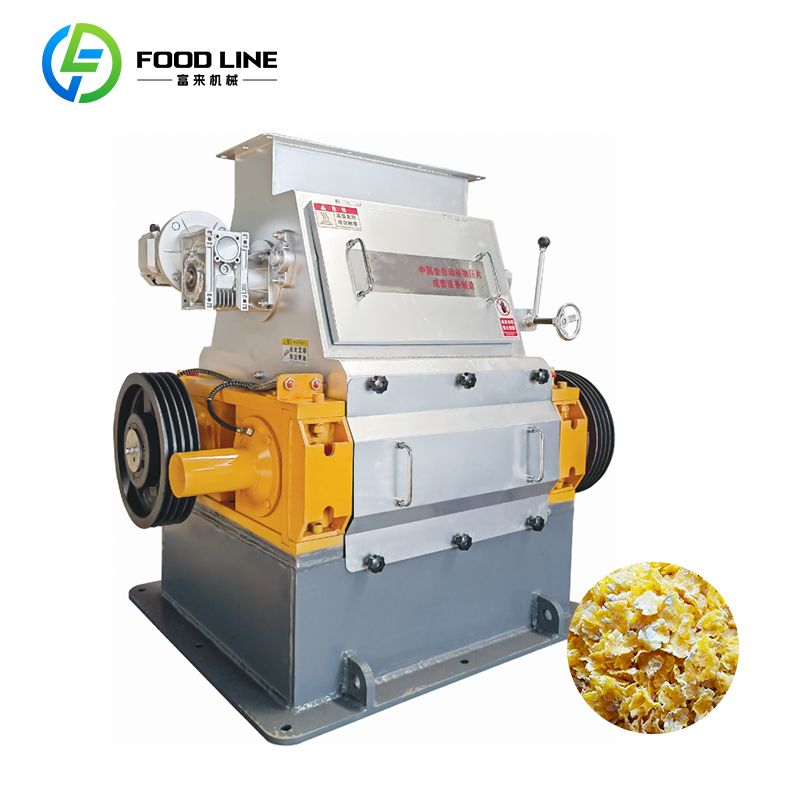
A stock image related to corn flakes making machine manufacturers.
3 Common User Pain Points for ‘corn flakes making machine manufacturers’ & Their Solutions
How Do I Select the Optimal Production Capacity Without Overcommitting Capital Resources?
The Problem: B2B buyers frequently face capacity planning dilemmas when evaluating corn flakes lines ranging from 120kg/h entry-level systems to 500kg/h industrial configurations. Emerging market entrants in Africa and South America often either over-invest in high-capacity extruders that remain underutilized during market penetration phases, or under-provision their operations, creating bottlenecks during demand surges that compromise distribution contracts. Additionally, machines incapable of processing hard dent corn with high horny endosperm content—or lacking flexibility to switch between light, sweet, and savory variants—limit product portfolio expansion and revenue diversification.
The Solution: Prioritize manufacturers offering modular extrusion architectures with upgradeable screw configurations and expandable dryer sections that accommodate growth from 200kg/h to 500kg/h without complete line replacement. Demand detailed starch gelatinization parameters specific to degermed corn grits to ensure product transparency and texture consistency. Negotiate performance-based contracts including trial production runs using your local corn varieties, ensuring the flaking pressure machines and baking ovens maintain calibration across different raw material specifications. Verify that modular additions maintain CE compliance and electrical compatibility with your facility infrastructure to avoid costly retrofitting during expansion phases.
How Can I Verify Manufacturer Quality and Avoid Substandard Equipment When Sourcing Internationally?
The Problem: Procurement teams struggle to distinguish between legitimate production facilities and trading companies when assessing corn flakes making machine manufacturers across continents. Without rigorous verification, buyers risk receiving equipment constructed from non-food-grade materials, featuring inadequate extrusion precision for proper starch gelatinization, or lacking the degerming capabilities necessary for processing corn grits effectively. These quality gaps result in opaque final products, inconsistent flake formation, and potential regulatory non-compliance in strict markets like Germany or Brazil, where equipment must meet CE or ANVISA standards respectively.
The Solution: Implement a multi-layered due diligence protocol including third-party factory audits via ISO-certified inspection agencies, video documentation of actual production runs using hard dent corn, and reference checks with existing installations in comparable regulatory environments. Verify material certifications for food-grade stainless steel components in extruder barrels and contact surfaces. Confirm the manufacturer maintains in-house machining capabilities rather than outsourced assembly, and request documentation of quality control processes for critical components like flake pressure rollers and dryer heat exchangers. Reputable suppliers should provide transparent access to their testing facilities and willingness to process sample batches of your specific corn varieties before contract finalization.
What Strategies Minimize Hidden Costs and Technical Support Gaps in Corn Flakes Production Investments?
The Problem: While initial quotations typically range from $9,000 to $25,000 for standard configurations, buyers frequently encounter unbudgeted expenses for international shipping, customs clearance, on-site installation supervision, and specialized operator training. Furthermore, the absence of localized technical support creates critical vulnerability points—when extruder screws jam or flake calibration drifts, production halts await resolution across time zones, particularly impacting operations in the Middle East and Europe where downtime costs escalate rapidly. Proprietary spare parts availability and language barriers in technical documentation compound these operational risks.
The Solution: Negotiate comprehensive turnkey contracts explicitly covering installation, commissioning, and operator training by manufacturer technicians, with 12-month warranty terms that include defined response time SLAs and remote diagnostic capabilities. Verify established service networks or authorized technical partners in your region—critical for buyers in Brazil, Germany, or Turkey where the manufacturer has proven export experience. Establish spare parts stocking agreements for high-wear components including extruder screws, cutting blades, and dryer conveyor belts. Request multilingual technical documentation and video-based maintenance training to reduce dependency on fly-in technicians for routine calibration and troubleshooting procedures.
Strategic Material Selection Guide for corn flakes making machine manufacturers
Selecting appropriate construction materials for corn flakes manufacturing equipment represents a critical decision point for B2B procurement teams evaluating long-term operational viability. The material composition directly influences production hygiene standards, equipment longevity, and total cost of ownership across diverse climatic conditions prevalent in target markets like Brazil, Nigeria, or Germany. Understanding the specific performance characteristics of each alloy helps buyers balance initial capital expenditure against maintenance requirements and food safety compliance in high-volume breakfast cereal operations.
Why Does Material Selection Affect Corn Flakes Equipment Longevity in High-Humidity Environments?
The extrusion and flaking process exposes machinery to thermal stress, abrasive corn grits, and moisture levels that accelerate material degradation. In tropical African or South American facilities where ambient humidity frequently exceeds 80%, material corrosion resistance becomes paramount for preventing contamination and unplanned downtime. High-quality alloys maintain structural integrity under continuous heating and cooling cycles between 60°C and 200°C, whereas inferior materials risk pitting corrosion that harbors bacteria and compromises product safety during extended production runs.
Is Food-Grade Stainless Steel 304 Sufficient for Standard Extrusion and Mixing Applications?
Austenitic stainless steel 304 serves as the industry baseline for extruder barrels, mixing chambers, and product contact surfaces in standard corn flakes production lines. This alloy offers excellent formability for manufacturing complex extruder screw geometries while providing adequate resistance to organic acids present in corn grits processing. For facilities producing light or sweet corn flakes without aggressive salt content, 304 stainless delivers optimal value, offering straightforward weldability for field repairs and universal availability of replacement components across European, Middle Eastern, and South American supply chains.
When Should Manufacturers Specify 316L Stainless Steel for Corn Flakes Processing Equipment?
Facilities producing savory or salt-enhanced corn flakes, or operating in coastal Middle Eastern environments with atmospheric salinity, require the molybdenum-enhanced corrosion resistance of 316L stainless steel. This material proves essential for sugar spraying systems, high-humidity drying sections, and areas subjected to aggressive CIP (Clean-in-Place) chemical protocols involving chlorinated sanitizers. While procurement costs increase 20-30% over 304 grades, 316L eliminates the risk of chloride-induced pitting that could contaminate batches and necessitate premature equipment replacement, particularly critical for exporters serving EU hygiene standards.
Can Food-Grade Carbon Steel Reduce Capital Expenditure for Non-Contact Components?
Carbon steel with food-safe epoxy or ceramic coatings presents a cost-effective alternative for structural frames, external housing, and non-contact heating jacket applications in corn flakes dryers. This approach reduces initial investment by 40-50% compared to full stainless construction, particularly viable for dryer enclosures and support structures in controlled indoor environments with proper climate control. However, buyers must verify coating integrity inspection protocols, as compromised barriers expose the substrate to rapid oxidation, potentially compromising hygiene through rust particle migration or structural failure in high-vibration flaking operations.
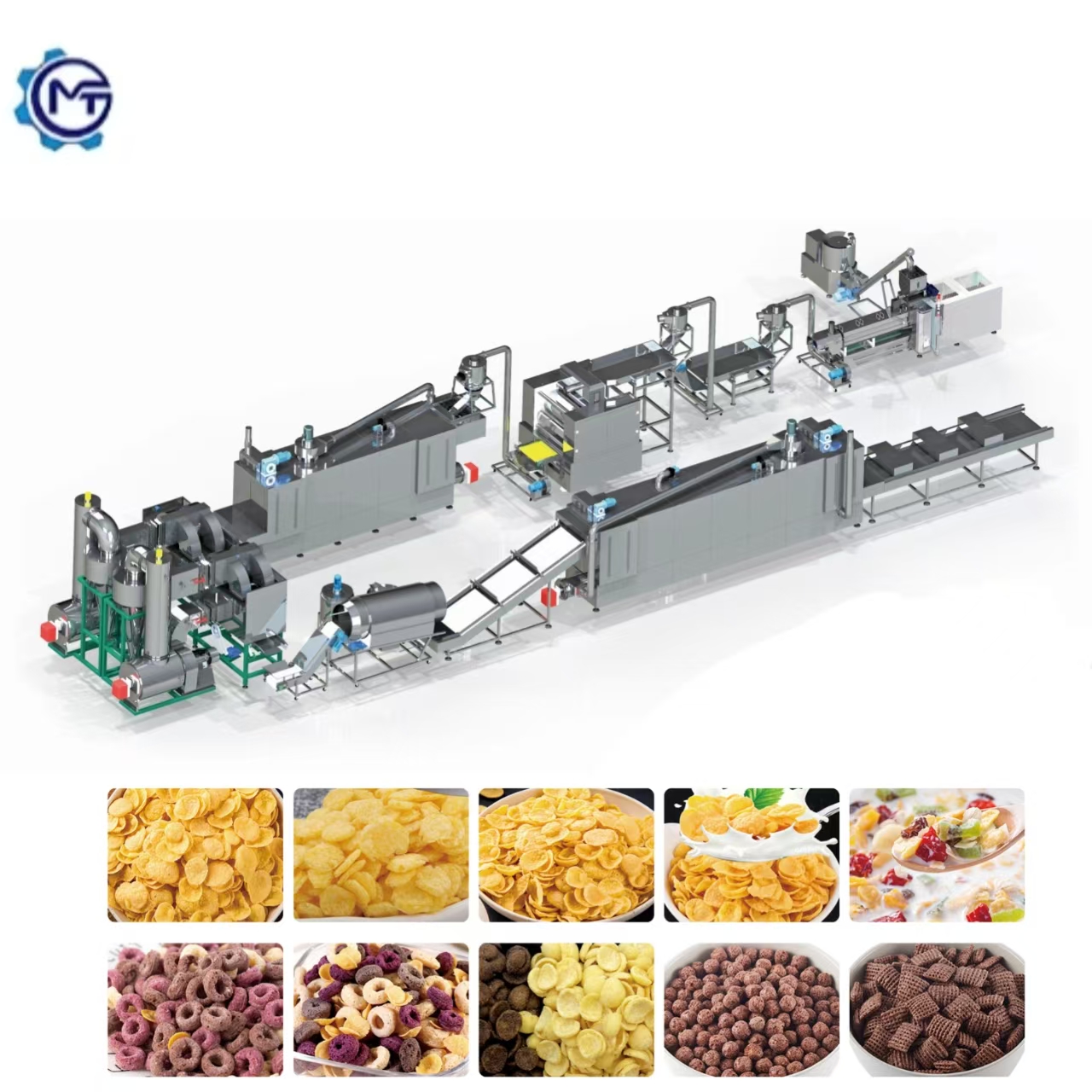
A stock image related to corn flakes making machine manufacturers.
In-depth Look: Manufacturing Processes and Quality Assurance for corn flakes making machine manufacturers
When evaluating capital equipment for breakfast cereal production, discerning B2B buyers must look beyond quoted capacities to understand how corn flakes making machine manufacturers engineer reliability into every component. The integrity of your production line depends on precision manufacturing processes that ensure consistent gelatinization, uniform flaking, and hygienic processing across diverse operational environments—from high-humidity facilities in Brazil to temperature-controlled plants in Germany.
How Do Manufacturers Ensure Precision in Extrusion System Fabrication?
The twin-screw extruder represents the heart of any corn flakes production line, requiring micron-level precision in its manufacture. Leading fabricators machine screws from high-nickel alloy steels to withstand the abrasive nature of corn grits while maintaining consistent compression ratios. Barrel sections undergo CNC machining to ensure concentricity within 0.05mm, preventing material leakage and ensuring homogeneous heat distribution during starch gelatinization. Manufacturers typically construct these components from food-grade 304 or 316 stainless steel, with surface roughness controlled below Ra 0.8μm to prevent bacterial adhesion. The die plates—critical for shaping extruded corn pellets—receive vacuum heat treatment to achieve hardness ratings of HRC 58-62, ensuring dimensional stability through millions of compression cycles.
What Quality Control Measures Govern Flaking Press Assembly?
The flaking mill’s hydraulic or pneumatic roller systems demand exacting assembly standards to achieve the 0.3-0.8mm thickness specifications required for premium corn flakes. Quality assurance protocols include laser alignment verification of counter-rotating rollers to maintain parallel gaps within ±0.02mm across the entire drum length. Manufacturers conduct Rockwell hardness testing on roller surfaces to verify resistance to the abrasive wear of corn grits, typically targeting 60-65 HRC for chilled cast iron or alloy steel rollers. Dynamic balancing tests spin assembled rollers at operational speeds (300-500 RPM) to eliminate vibration that could cause inconsistent flake thickness or premature bearing failure.
Which International Standards Should Equipment Manufacturers Adhere To?
Reputable corn flakes making machine manufacturers engineer their systems for global regulatory compliance from the initial design phase. CE certification remains mandatory for European markets, requiring conformity with Machinery Directive 2006/42/EC and Low Voltage Directive 2014/35/EU. For Middle Eastern and African markets, manufacturers increasingly pursue ISO 22000 certification for food safety management systems, ensuring that equipment design eliminates contamination risks through smooth welds, sloped surfaces for drainage, and sealed electrical enclosures rated IP65 or higher. Brazilian buyers should verify compliance with NR-12 safety regulations, while FDA-compliant construction using 3A Sanitary Standards materials proves essential for North American export-oriented facilities.
How Are Thermal Processing Components Engineered for Consistency?
The transition from extruded pellets to crispy flakes requires sophisticated drying and baking infrastructure manufactured to tight tolerances. Multi-pass dryers utilize precisely perforated stainless steel conveyors with aperture tolerances of ±0.1mm to ensure uniform hot air distribution at 120-180°C. Baking ovens incorporate PID-controlled heating elements with thermocouple calibration certificates traceable to national standards, maintaining temperature uniformity within ±2°C across the baking chamber. Manufacturers typically insulate these components with ceramic fiber blankets rated for 1260°C continuous operation, minimizing heat loss and reducing operational costs for energy-conscious processors in Europe and South America.
What Pre-Shipment Testing Protocols Validate Machine Performance?
Before dispatch to international destinations, comprehensive Factory Acceptance Testing (FAT) procedures verify that each production line meets specified performance parameters. Manufacturers conduct 72-hour continuous run tests using actual hard dent corn grits—the preferred raw material for high-horniness endosperm—to verify sustained output capacities ranging from 120kg/h for entry-level models to 500kg/h for industrial-scale systems. Vibration analysis, thermal imaging of electrical panels, and torque verification of drive systems form part of standardized QC checklists. Additionally, manufacturers apply anti-corrosion coatings and vacuum-sealed packaging with desiccants to protect precision-machined components during ocean freight to African or South American ports.
How Do Manufacturers Support Long-Term Operational Quality?
Sustainable quality assurance extends beyond the factory floor through robust after-sales infrastructure. Premium manufacturers maintain regional spare parts depots stocked with critical wear components—extruder screws, roller bearings, and heating elements—to minimize downtime. Technical documentation packages include material certificates, welding procedure specifications (WPS), and calibration certificates for all instrumentation. Many suppliers now offer remote diagnostic capabilities via IoT-enabled PLCs, allowing real-time monitoring of motor amperage, barrel temperatures, and throughput metrics. Installation supervision by certified technicians ensures proper commissioning, while operator training programs cover preventive maintenance schedules that preserve the original manufacturing tolerances throughout the equipment’s 10-15 year service life.
Practical Sourcing Guide: A Step-by-Step Checklist for ‘corn flakes making machine manufacturers’
Navigating the procurement of industrial corn flakes manufacturing equipment requires systematic evaluation of technical capabilities, regional support infrastructure, and long-term operational sustainability. This checklist provides B2B buyers—particularly those entering high-growth markets across Africa, South America, and the Middle East—with actionable steps to mitigate sourcing risks and ensure seamless integration of extrusion-based cereal production lines.
1. How Do You Determine Optimal Production Capacity and Raw Material Specifications?
Align machine capacity with projected demand, selecting from standard outputs ranging from 120kg/hour for pilot operations to 500kg/hour for industrial-scale production. Verify that the extruder system processes hard dent corn or degermed corn grits effectively, as high horny endosperm content ensures proper starch gelatinization and flake transparency. Confirm whether the manufacturer provides formulation support for light, sweet, or savory variants to match regional consumer preferences in your target markets.
2. What Critical Technical Components Should You Evaluate in the Processing Line?
Analyze the complete process flow from mixing through final cooling, ensuring the line includes precision flaking rollers, multi-stage drying ovens, and automated sugar spraying systems. Examine extruder screw configurations for thermal consistency, and verify that vibration conveyors maintain product integrity during transfer. Request detailed specifications on energy consumption and utility requirements to calculate total cost of ownership beyond the initial USD 9,000–25,000 equipment investment.
3. How Can You Verify Manufacturer Credibility and Regional Service Capabilities?
Investigate the supplier’s export track record to regions similar to yours—prioritize manufacturers with documented installations across Europe, Turkey, Russia, and emerging markets. Confirm availability of multilingual technical support via WhatsApp or dedicated regional representatives. Validate that they provide comprehensive documentation including operation manuals and electrical diagrams compliant with local standards.
4. What Customization and Layout Design Services Should You Request?
Engage manufacturers who provide complimentary factory layout design based on your facility dimensions and workflow requirements. Ensure they accommodate customization for packaging integration points and local voltage configurations. Clarify lead times, distinguishing between 7–10 day availability for stocked models versus 20–25 day schedules for customized configurations.
5. How Should You Structure Warranty Terms and Spare Parts Provisions?
Negotiate comprehensive warranty coverage extending at least 12 months from commissioning, not merely delivery. Secure agreements for immediate spare parts availability and remote troubleshooting support. Confirm that the manufacturer commits to dispatching technicians for installation supervision, equipment calibration, and hands-on operator training until the line achieves stable production parameters.
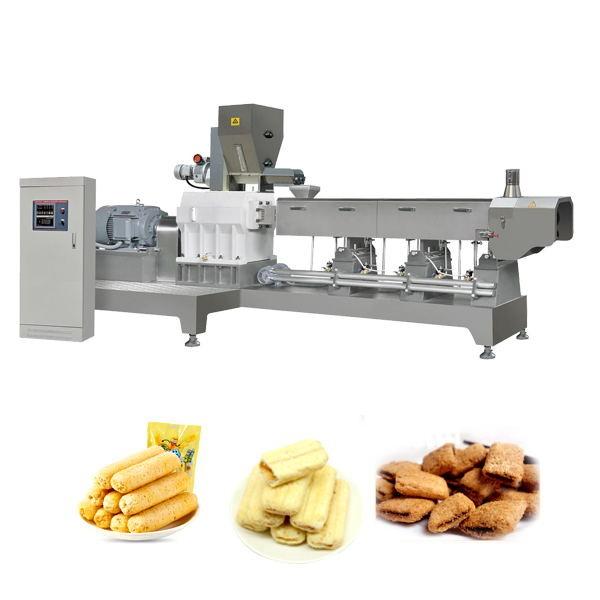
A stock image related to corn flakes making machine manufacturers.
Comprehensive Cost and Pricing Analysis for corn flakes making machine manufacturers Sourcing
When evaluating capital expenditure for breakfast cereal production lines, discerning buyers recognize that manufacturer quotations represent only the visible portion of total investment. A rigorous cost analysis must dissect equipment specifications, cross-border logistics complexities, and long-term operational expenditures to establish realistic budget frameworks for facilities in diverse regulatory environments from São Paulo to Frankfurt.
What Factors Determine Corn Flakes Making Machine Pricing Tiers?
Base pricing typically correlates directly with extrusion capacity and automation sophistication. Systems rated for 120kg/hour output utilize smaller twin-screw extruders (AVN65-class specifications) with basic flaking rollers, positioning entry points around $9,000–$12,000. Mid-tier 200kg/hour configurations incorporating precision temperature controls and automated vibratory conveyors occupy the $15,000–$18,000 range. High-volume 500kg/hour industrial lines featuring reinforced extruder barrels, multi-layer drying ovens, and integrated sugar spraying systems command $22,000–$25,000+ investments. Material construction significantly influences costs—food-grade stainless steel 304 components versus carbon steel alternatives can create 20–30% price differentials while ensuring compliance with EU hygiene regulations.
How Do Logistics and Import Duties Affect Total Procurement Costs?
Heavy machinery freight from Asian manufacturing hubs to Atlantic or European ports typically adds $3,000–$8,000 depending on container utilization efficiency. Buyers must specify Incoterms carefully; CIF (Cost, Insurance, Freight) pricing provides cost certainty but may obscure local port handling charges, while FOB (Free On Board) requires independent freight forwarding expertise. Brazilian importers face specific challenges with ICMS tax calculations and ANVISA sanitary inspections, potentially adding 18–25% to landed costs. German buyers should verify CE conformity assessment documentation inclusion to avoid expensive retroactive certification. African and Middle Eastern markets often benefit from duty exemptions on agricultural processing equipment, though documentation proving “farm-to-table” utility becomes crucial for customs clearance.
What Hidden Costs Should Buyers Factor Beyond the Machine Price?
Comprehensive budgeting must accommodate installation supervision (typically $200–$400 daily plus accommodation for 10–15 days), electrical infrastructure upgrades for high-amperage baking ovens, and initial raw material calibration batches. Energy consumption represents a significant TCO element—efficient infrared drying systems versus conventional gas ovens create divergent utility cost trajectories over five-year operational horizons. Additionally, proprietary recipe formulation support, operator training programs beyond basic commissioning, and strategic spare parts inventories (particularly extruder screws and die plates) constitute essential ancillary investments frequently excluded from initial quotations but critical for sustained production continuity.
How Can Regional Buyers Optimize Currency and Payment Terms?
Structuring payment schedules to mitigate exchange rate volatility proves essential when denominating contracts in USD or EUR. Progressive milestones—30% deposit, 60% against shipping documents, and 10% post-installation acceptance—protect both parties while preserving buyer leverage for final commissioning adjustments. Letters of credit remain preferable for initial transactions with new manufacturers, though established relationships may negotiate open account terms. Buyers should explicitly clarify warranty scope regarding international technician travel costs, as “on-site service” definitions vary significantly between suppliers regarding airfare and lodging responsibilities.
Alternatives Analysis: Comparing corn flakes making machine manufacturers With Other Solutions
When evaluating entry into the breakfast cereal market, procurement teams must weigh the long-term ROI of dedicated corn flakes making machine manufacturers against alternative production strategies that accommodate different capital constraints and risk appetites. While specialized extrusion lines from manufacturers like AVAN or Romiter offer automation and scale, alternatives such as contract manufacturing partnerships and retrofitted general-purpose extrusion systems present distinct advantages for specific market entry scenarios, particularly for buyers in emerging markets testing regional demand before committing to full production infrastructure.
| Comparison Aspect | Corn Flakes Making Machine Manufacturers | Contract Manufacturing Partnerships | Retrofitted General Snack Extrusion Systems |
|---|---|---|---|
| Initial Capital Expenditure | High ($9,000–$25,000+ per line plus facility preparation) | Low to Minimal (service-based fees, no asset purchase) | Moderate (40-60 |
Essential Technical Properties and Trade Terminology for corn flakes making machine manufacturers
What Are the Critical Technical Specifications When Evaluating Corn Flakes Machinery?
When sourcing extrusion-based breakfast cereal equipment, buyers must evaluate specifications beyond nominal capacity to ensure compatibility with local corn varieties and energy infrastructure. Extrusion Throughput Rates typically range from 120kg/h for compact models to 500kg/h for industrial lines, though actual output depends on corn grits moisture content, bulk density, and desired flake density. Gelatinization Temperature Control represents another vital metric; precision thermal management within the extruder barrel—often utilizing modular heating zones—ensures optimal starch modification for hard dent corn varieties, directly impacting flake transparency and structural integrity during subsequent processing stages.
Flaking Roller Compression Specifications determine final product thickness and texture consistency. High-grade machines employ hardened alloy rollers with adjustable gap settings (typically 0.3–0.8mm) and hydraulic pressure systems to process gelatinized corn mats into uniform flakes without fragmentation. Additionally, Drying Chamber Configuration—whether single-pass or multi-layer convection systems with precise airflow dynamics—affects moisture reduction efficiency from approximately 25% post-extrusion to the critical 3–5% final content required for shelf stability. Finally, Hygienic Design Standards require food-contact surfaces manufactured from SS304 or SS316 stainless steel with Ra ≤0.8μm surface finish to comply with EU 1935/2004 or FDA regulations, particularly vital for European and North American export markets.
What Industry Terminology Should B2B Buyers Understand When Negotiating with Manufacturers?
Extrusion Cooking refers to the high-pressure, high-temperature thermomechanical process where corn grits undergo starch gelatinization and dextrinization within the extruder barrel under mechanical shear. This continuous processing method differs fundamentally from traditional batch cooking, offering precise residence time control and energy efficiency. Flaking Mill (or flaker) denotes the compression unit that transforms extruded corn mats into thin flakes through counter-rotating rollers—a critical component where automated gap control and hydraulic pressure maintenance systems prevent roller deflection and ensure thickness uniformity.
Tempering (or conditioning) describes the intermediate moisture equilibration phase between extrusion and flaking, wherein product rests in controlled environments to ensure uniform plasticity for optimal flake formation without catastrophic breakage. Factory Acceptance Testing (FAT) constitutes a mandatory pre-shipment verification protocol where manufacturers demonstrate operational parameters, throughput validation, and safety compliance before international transport, often witnessed by buyer representatives. Turnkey Solutions indicate comprehensive project scope encompassing facility layout design, installation supervision, commissioning, and operator training—essential procurement considerations for emerging market buyers lacking specialized extrusion technical teams. Finally, Recipe Formulation Support covers the proprietary processing parameters, moisture profiles, and ingredient ratios provided by manufacturers to achieve specific product characteristics ranging from light unsweetened flakes to coated, savory variants.
Navigating Market Dynamics and Sourcing Trends in the corn flakes making machine manufacturers Sector
What Are the Current Growth Trajectories in the Global Corn Flakes Equipment Market?
The breakfast cereal processing sector is experiencing significant diversification across emerging and established economies. Demand for automated corn flakes production lines—particularly those offering capacities between 120kg and 500kg per hour—is accelerating in Africa, South America, and the Middle East, where food processors seek to replace imported finished cereals with locally manufactured alternatives. This shift is driven by price accessibility; entry-level extrusion and flaking systems now range from $9,000 to $25,000 per set, enabling small-to-medium enterprises (SMEs) to enter the market with manageable capital expenditure while maintaining European-quality output standards.
European buyers, particularly in Germany and Italy, are driving demand for higher-capacity, precision-engineered systems that integrate complete process flows—from mixing and extrusion to sugar coating and cooling—within compact footprints. The technology trajectory favors twin-screw extruders capable of processing hard dent corn grits with high horny endosperm content, ensuring optimal starch gelatinization and product transparency. Manufacturers are responding by modularizing equipment (AVN65, AVN70, AVN85 models), allowing buyers to scale from 120kg/hour pilot operations to 500kg/hour industrial outputs without replacing entire lines, thus protecting capital investments.
Which Regional Markets Are Driving Demand for Automated Corn Flakes Production Lines?
Beyond traditional manufacturing hubs, Brazil and Nigeria represent high-growth corridors where local production incentives align with equipment import capabilities. In these markets, the ability to process indigenous hard dent corn varieties into light, sweet, and savory flake variants provides competitive advantages over import-dependent distribution models. Successful market entry for buyers depends on selecting manufacturers with proven logistics networks spanning Turkey, India, Indonesia, and Russia, ensuring timely delivery (typically 20-25 days for custom orders) and compliance with regional electrical and safety standards. The trend toward turnkey solutions—where suppliers provide factory layout design, installation, and operator training
Frequently Asked Questions (FAQs) for B2B Buyers of corn flakes making machine manufacturers
What is the typical investment range for industrial corn flakes production lines and what factors influence final pricing?
Industrial corn flakes making machines typically range from $9,000 to $25,000 per complete set, with pricing tiers corresponding to hourly output capacity and automation levels. Entry-level systems producing 120kg/hour occupy the lower price bracket, while high-capacity 500kg/hour lines with twin-screw extrusion technology and advanced PLC controls command premium investments. Critical cost variables include stainless steel grade (304 vs. corrosion-resistant 316), the inclusion of auxiliary equipment like sugar coating drums, and whether international installation support is bundled. Buyers should request itemized quotations separating FOB equipment costs from freight, customs clearance, and on-site technical assistance to prevent budget overruns during commissioning.
How can B2B buyers conduct effective due diligence to verify corn flakes machine manufacturer quality before signing contracts?
Comprehensive verification requires requesting documented case studies from existing installations in your specific region, particularly manufacturers with proven export experience to Africa, South America, and European markets like Germany and Italy. Demand live video factory tours focusing on welding seam quality, CNC machining precision for extruder barrels, and raw material storage protocols to assess production standards. Verify CE certification, ISO 9001 compliance, and request contactable references who can attest to long-term operational reliability and spare parts availability. Reputable manufacturers provide sample production videos using your local corn varieties before contract finalization, demonstrating flake quality and consistency achievable with your specific raw materials.
What production capacity options are available for automatic corn flakes making machines and how do I select the appropriate scale?
Standard automatic lines offer tiered capacities of 120kg/h, 200kg/h, and 500kg/h, corresponding to small-scale entry, mid-tier commercial, and industrial-scale operations respectively. Selecting appropriate capacity requires analyzing daily production targets against available operational hours; a 200kg/h line running two shifts yields approximately 3.2 tons daily output sufficient for most emerging market distributors. Consider future scalability—leading manufacturers offer modular extruder designs allowing capacity expansion through screw configuration upgrades rather than complete line replacement. Energy consumption per kilogram decreases significantly with higher-capacity models, improving unit economics for large-scale operations while reducing per-unit production costs.
Which regions offer the most reliable corn flakes making machine manufacturers for international export markets?
China dominates global supply with established manufacturers successfully shipping to Italy, Germany, Russia, Turkey, Australia, Indonesia, and India, offering competitive pricing and complete turnkey solutions including formulation support. European manufacturers, particularly German and Italian specialists, provide premium alternatives emphasizing precision engineering and compliance with strict EU hygiene standards, though at significantly higher investment levels. For buyers in Africa and South America, Chinese manufacturers with specific regional experience offer advantages in voltage compatibility (220V/380V configurations), tropical climate adaptations for humidity control, and established spare parts distribution networks. Evaluate manufacturers based on their export portfolio diversity rather than geography alone—those serving multiple continents typically demonstrate superior quality control and international compliance expertise.
What raw material specifications are required for optimal corn flakes production and do manufacturers provide formulation support?
Optimal production requires hard dent corn varieties with high horny endosperm content, processed into grits after degerming to ensure proper starch gelatinization and desirable flake transparency. Most manufacturers provide foundational recipes for light (tan), sweet (tawny), and savory (yellow) variants, though buyers should confirm whether formulation intellectual property transfers with the equipment purchase. Verify that the extruder configuration accommodates your local corn varieties’ moisture content and starch profiles, as African and South American dent corn characteristics vary significantly from North American standards. Leading suppliers offer laboratory testing services to optimize extrusion parameters, baking temperatures, and flaking pressures for your specific raw material sources before machine shipment.
What does the installation and commissioning process involve when purchasing corn flakes production equipment from overseas manufacturers?
Comprehensive installation packages typically include 7-15 days of on-site technical support covering mechanical assembly, electrical commissioning, and operator training, with warranty periods extending 12-13 months from operational commencement. Manufacturers should provide English-language electrical diagrams, operation manuals, and maintenance schedules tailored to your factory layout, which they can design if provided with dimensional specifications. The process involves calibration of the extruder barrel temperature zones, flaking roller gap adjustments, and dryer airflow optimization to achieve target moisture content below 3%. Clarify whether technicians handle raw material calibration and initial test runs achieving nameplate capacity rates before final acceptance, and confirm remote troubleshooting capabilities via WhatsApp or video support for immediate post-installation assistance.
How customizable are corn flakes production lines for different product variants like frosted, savory, or multigrain cereals?
Modern production lines accommodate diverse cereal formats including frosted flakes, wheat bran flakes, oat flakes, and puffed loops through interchangeable die configurations and adjustable sugar spraying systems. Verify quick-change capabilities for product transitions—efficient lines minimize downtime between savory and sweet variants through automated flavoring drum adjustments and CIP (Clean-in-Place) systems for rapid sanitation. Some manufacturers offer dual-extruder setups enabling simultaneous production of different base materials or co-extruded filled cereals with jam centers. Discuss specific market requirements such as halal certification compliance, gluten-free processing capabilities, or vitamin fortification integration during initial specifications to ensure compatible equipment design and prevent costly retrofits.
What certifications and compliance standards should B2B buyers demand from corn flakes machine manufacturers for regulatory approval?
Demand CE marking for European market access, FDA-compliant food contact materials for North American exports, and GMP (Good Manufacturing Practice) adherence ensuring hygienic design standards. Electrical components should carry UL or CSA certifications, while food contact surfaces require food-grade stainless steel certification (304 or 316L) with surface roughness documentation. For Middle Eastern markets, verify manufacturers can provide Halal compliance documentation for lubricants and materials used in construction. Request third-party inspection certificates from recognized bodies like SGS or Bureau Veritas confirming manufacturing standards and electrical safety, particularly when sourcing from new suppliers without established regional references in your target market.
Important Disclaimer & Terms of Use
⚠️ Important Disclaimer
The information provided in this guide, including content regarding manufacturers, technical specifications, and market analysis, is for informational and educational purposes only. It does not constitute professional procurement advice, financial advice, or legal advice.
B2B buyers must conduct their own independent and thorough due diligence before making any purchasing decisions. The risk of relying on any information in this guide is borne solely by the reader.
Top 1 Corn Flakes Making Machine Manufacturers Manufacturers & Suppliers List
1. CornProcess – Processing Solutions
Strategic Sourcing Conclusion and Outlook for corn flakes making machine manufacturers
How Can Buyers Future-Proof Their Investment in Corn Flakes Manufacturing Equipment?
The breakfast cereal sector is accelerating toward fully automated extrusion systems that scale seamlessly from 120kg/h pilot operations to 500kg/h industrial outputs. Forward-thinking procurement strategies prioritize manufacturers offering comprehensive lifecycle support—including on-site installation, operator training, and remote troubleshooting—to ensure operational continuity across distributed markets like Brazil, Nigeria, or Germany. Evaluate whether potential partners provide modular architectures that accommodate future product diversification, such as integrating sugar spraying or additional flaking capabilities without complete line replacement.
What Cost Factors Beyond Initial Pricing Should Guide Strategic Sourcing Decisions?
Discerning buyers analyze total cost of ownership rather than upfront capital expenditure alone. Critical considerations include energy-efficient thermal processing configurations, warranty coverage extending beyond the first operational year, and guaranteed spare parts availability within 7–10 days. Additionally, assess the supplier’s engineering capacity for custom factory layout optimization and seamless integration with existing grain handling infrastructure, particularly when processing hard dent corn varieties that require specific degerming and gelatinization protocols.
How Is Regional Market Evolution Shaping Equipment Specifications?
Emerging markets across Africa and South America are driving demand for robust machines capable of processing high-embryo local corn varieties while maintaining product consistency. Concurrently, European buyers increasingly require hygienic designs compliant with stringent EU food safety regulations. Prioritize manufacturers with documented export experience to your specific region, evidenced by successful installations and localized technical service networks that understand regional raw material characteristics and utility constraints.