
The Ten Essential Elements for Successful Production of Fortified Rice: A Comprehensive Guide
Abstract
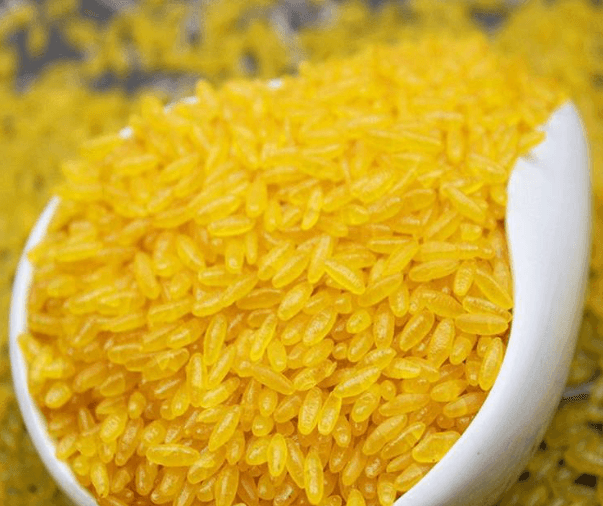
Rice is a staple food for over half of the world’s population, providing a significant portion of daily caloric intake, particularly in Asia, Africa, and Latin America. However, milled white rice is inherently low in essential micronutrients, contributing to widespread “hidden hunger” – deficiencies in vitamins and minerals that affect billions. Fortified rice, which involves enriching rice kernels with vital nutrients, represents a powerful, cost-effective, and scalable solution to this global public health challenge. The successful production of fortified rice is not a single-step process but a complex interplay of science, technology, and logistics. This in-depth article elucidates the ten fundamental elements critical to manufacturing high-quality, effective, and acceptable fortified rice. These elements span the entire value chain, from nutrient selection and premix formulation to extrusion technology, blending accuracy, quality assurance, regulatory compliance, consumer acceptance, and market distribution. A deep understanding of these facets is indispensable for governments, private sector actors, NGOs, and public health officials aiming to implement successful and sustainable rice fortification programs.Fortified rice making machine
1. The Scientific Selection of Nutrients and Bioavailable Compounds
The foundational step in rice fortification is deciding what to add. This is not arbitrary; it is a data-driven decision based on the specific nutritional deficiencies of the target population, the technological feasibility of adding certain nutrients, and their bioavailability.
- Identifying Nutritional Gaps: The process begins with a comprehensive nutritional needs assessment. National dietary surveys, biochemical data on micronutrient status (e.g., anemia rates indicating iron deficiency, serum retinol for Vitamin A), and food consumption patterns are analyzed. The goal is to identify the “gap” between current intake and recommended dietary allowances. For instance, in regions with high anemia prevalence, iron becomes a priority. In areas where rice is washed excessively before cooking, water-soluble vitamins like B1 (Thiamine) and B9 (Folic Acid) are crucial.Fortified rice making machine
- Core Nutrients for Rice Fortification: A typical rice fortification blend often includes:
- Iron: The most critical yet challenging nutrient to add. The choice of iron compound is paramount. Inexpensive forms like ferrous sulfate can cause unacceptable organoleptic changes (rancidity, discoloration) and interact with other nutrients. Therefore, more stable but bioavailable compounds are used:
- Electrolytic Iron Powder: Cheap and relatively stable but has lower bioavailability.
- Ferrous Fumarate: A good balance of cost, stability, and bioavailability.
- Sodium Iron EDTA: A chelated compound with very high bioavailability and minimal sensory impact, but it is more expensive. It is particularly recommended in populations with high levels of iron inhibitors in their diet (e.g., phytates).
- Vitamin A (Retinyl Palmitate): Essential for vision, immune function, and growth. It is fat-soluble and susceptible to oxidation and degradation by heat, light, and air. It requires robust encapsulation technology to protect it during storage and cooking.
- B Vitamins: A complex of water-soluble vitamins.
- Vitamin B1 (Thiamine Mononitrate): Prevents Beriberi. Stable during extrusion but can be lost if rice is washed after fortification or cooked in excess water that is discarded.
- Vitamin B3 (Niacinamide): Stable and cost-effective.
- Vitamin B9 (Folic Acid): Critical for preventing neural tube defects in newborns. Relatively stable but can be lost in cooking water.
- Vitamin B12 (Cyanocobalamin): Essential for neurological function and preventing anemia. Sensitive to light.
- Iron: The most critical yet challenging nutrient to add. The choice of iron compound is paramount. Inexpensive forms like ferrous sulfate can cause unacceptable organoleptic changes (rancidity, discoloration) and interact with other nutrients. Therefore, more stable but bioavailable compounds are used:
- Zinc (Zinc Oxide or Zinc Sulfate): Supports immune function and growth. Stable and easy to incorporate.
- The Premix Formulation: These individual micronutrients are meticulously blended into a uniform “premix” powder. The concentration in the premix is calculated based on the intended dilution ratio with normal rice (typically 0.5% to 2.0%). The particle size of the premix must be compatible with the rice kernel to ensure uniform mixing and prevent separation. The formulation must ensure nutrient stability, minimize nutrient-nutrient interactions (e.g., iron can oxidize Vitamin A), and maximize bioavailability.
2. The Technology of Rice Kernel Production: Hot Extrusion
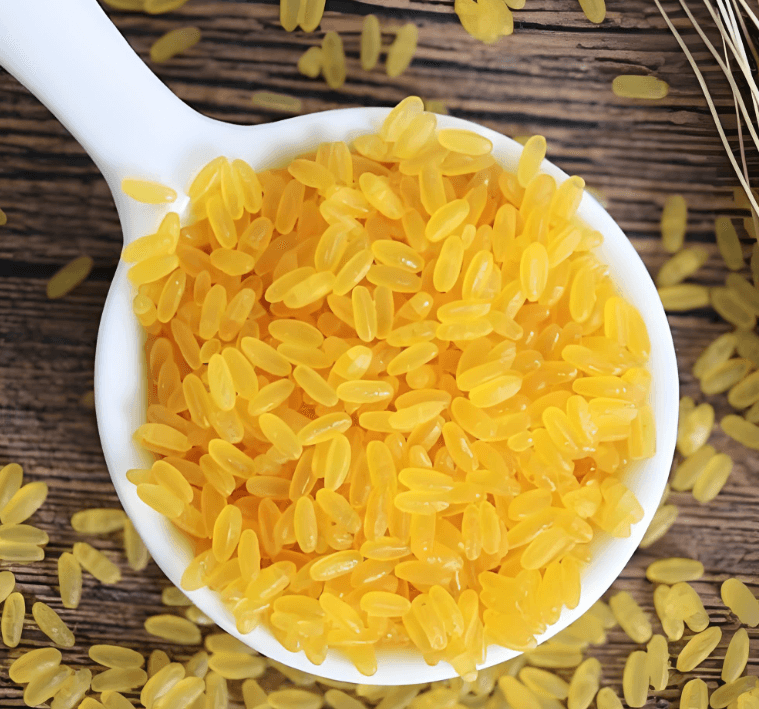
The heart of modern rice fortification lies in creating simulated rice kernels that carry the nutrients. The dominant and most effective technology for this is Hot Extrusion.Fortified rice making machine
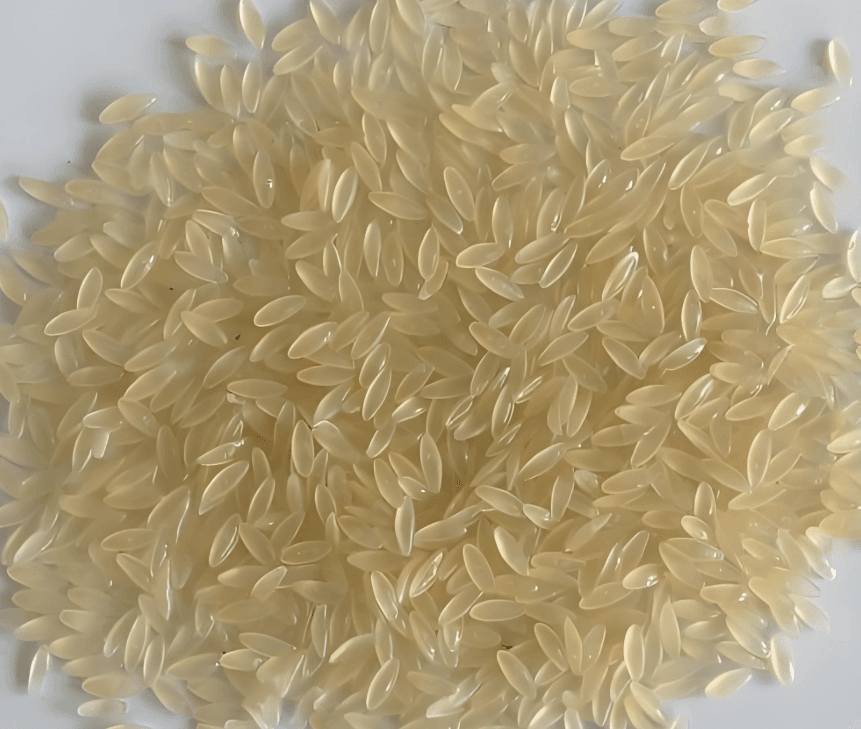
- The Process: A dough is created by mixing rice flour (often from broken rice kernels, making the process cost-effective), a nutrient premix, water, and a binding agent (e.g., guar gum). This slurry is passed through a twin-screw extruder cooker.
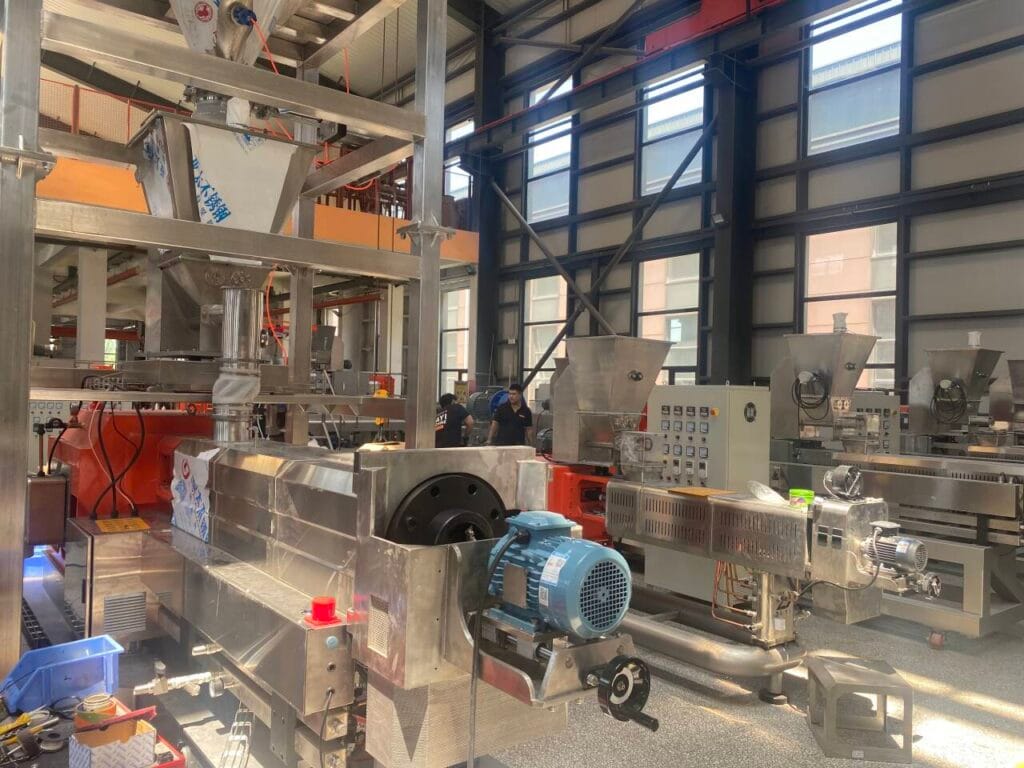
- The Machinery: The extruder is a sophisticated piece of equipment that subjects the dough to high temperature, pressure, and shear force. This process cooks the dough, gelatinizing the starch, which is crucial for giving the final kernel its hard, vitreous structure.
- Forming the Kernel: At the end of the extruder barrel, the molten dough is forced through a die plate specifically designed with rice-shaped holes. As the strands emerge, a rotating knife cuts them to the approximate length of a grain of rice.
- Drying and Polishing: The soft, extruded kernels are then dried in ovens to reduce their moisture content to a level similar to or lower than that of regular rice (around 10-12%). This drying step is critical for achieving the necessary hardness and storage stability. Finally, the kernels may be polished to give them a smooth, shiny surface that closely mimics the appearance of natural milled rice.
- Advantages of Hot Extrusion:
- Nutrient Stability: The hot process helps encapsulate the nutrients within the rice flour matrix, offering protection during storage and handling.Fortified rice making machine
- Sensory Properties: Produces kernels that are hard, similar in size and shape to regular rice, and have a neutral taste and color.
- Cooking Performance: The gelatinized starch allows the fortified kernel to have cooking properties (cooking time, texture) very close to those of regular rice, preventing it from becoming mushy or remaining hard.
- Alternative Technologies: While less common, other methods include:
- Cold Extrusion: Does not use heat, requiring a subsequent drying step. It is less effective at encapsulating nutrients and often produces a kernel that is more porous and less durable.
- Coating: Dusting regular rice grains with a powder premix and then applying an edible coating (e.g., waxes, gums) to seal the nutrients. This method is simpler but often results in significant nutrient loss during washing and cooking.
3. Achieving and Maintaining a Uniform Blend (The 1:100 or 1:200 Rule)
Fortified rice is not 100% simulated kernels. It is a blend of these kernels with regular, non-fortified rice. The typical ratio is 0.5% to 2.0% fortified kernels to 98.0% to 99.5% regular rice. This means that in every 100 grams of final product, there is only 1 gram of fortified kernels. The absolute necessity for a homogeneous blend cannot be overstated.
- The Blending Equipment: Standard powder mixers are insufficient. specialized continuous or batch blenders designed for granular materials are required. These include:
- Twin-Screw Mixers: Provide gentle yet highly efficient mixing, preventing the breakage of the fragile extruded kernels.
- Horizontal Ribbon Mixers: Effective for batch blending.
- Gravity Blenders: Utilize the differential in particle density and shape to achieve mixing as the materials flow.
- The Challenge of Segregation: Due to differences in density, size, and shape (even minor ones), the fortified kernels can separate from the regular rice during handling, packaging, and transportation—a phenomenon known as segregation. This can lead to “hot spots” (pockets with too many kernels) and “cold spots” (pockets with too few or no kernels), rendering the product ineffective and potentially unsafe (if over-fortified).
- Mitigating Segregation:
- Kernel Matching: The number one strategy is to engineer the fortified kernels to have a physical profile (size, shape, density, and, crucially, terminal velocity) as close as possible to the target regular rice. This is known as “kernel-to-rice matching.”
- Handling Procedures: Minimizing the number of transfers, drops, and conveyor movements after blending reduces the opportunity for separation.
- In-line Blending: For large-scale operations, blending the kernels with rice immediately before packaging is the most effective way to prevent segregation in the supply chain.
4. Rigorous Quality Assurance and Quality Control (QA/QC)
A robust QA/QC system is the backbone of any successful fortification operation. It ensures that every batch of fortified rice meets predefined standards for safety, quality, and nutrient content.
- Incoming Raw Material Control: Testing the regular rice for moisture, broken kernels, and foreign material. Testing the premix for potency, particle size, and microbial contamination.
- In-Process Control: Monitoring critical control points during extrusion (dough moisture, temperature), drying (kernel moisture), and blending (blending time, homogeneity checks).
- Finished Product Testing: This is multi-faceted:
- Homogeneity Testing: Sampling from the top, middle, and bottom of a blended batch or packaged product and analyzing the nutrient content to ensure uniform distribution. This often uses a simple iron spot test (for iron-fortified rice) where a sample is treated with acid and thiocyanate to produce a red color, the intensity of which can be visually compared to a standard.Fortified rice making machine
- Nutrient Analysis: Using high-performance liquid chromatography (HPLC) for vitamins and atomic absorption spectroscopy (AAS) or inductively coupled plasma (ICP) spectroscopy for minerals to verify that the nutrient levels are within the specified tolerance ranges (usually 100% to 150% of the label claim at production to account for losses during shelf-life).
- Physical Tests: Checking the kernel strength (using a texture analyzer), water absorption index, and cooking quality.
- Shelf-Life Stability Testing: Conducting accelerated stability studies (storing product at elevated temperatures and humidity) to predict the degradation of sensitive nutrients like Vitamin A over time and establish a “use-by” date.
5. Ensuring Stability and Nutrient Retention Through Storage and Cooking
The journey of a nutrient from the factory to the human body is fraught with perils. A successful program must account for and minimize losses at every stage.

- Storage Stability: Nutrients are degraded by oxygen, moisture, light, and heat. Packaging plays a key role. High-barrier packaging materials (e.g., multi-layer polypropylene bags) protect against moisture and oxygen ingress. Storage in cool, dark, and dry warehouses is essential.
- The Cooking Challenge: This is the greatest point of potential nutrient loss, especially for water-soluble vitamins (B vitamins, Vitamin C). Traditional cooking methods in many rice-consuming cultures involve washing rice thoroughly before cooking and then cooking it in excess water that is drained away (e.g., the method used for basmati rice). This can lead to losses of up to 60-90% of water-soluble vitamins.
- Mitigation Strategies:
- Consumer Education: The single most important tool. Promoting cooking methods that conserve nutrients, such as the absorption method (using just enough water so it is all absorbed during cooking) or using the leftover cooking water (congee) in other preparations.
- Kernel Design: The hot-extruded kernel is designed to minimize the leaching of nutrients. The starch matrix acts as a barrier, releasing nutrients more slowly during cooking.
- Nutrient Selection: Using stable forms of nutrients and encapsulation technologies (especially for Vitamin A) that protect the micronutrient until it is consumed and digested.
6. Navigating the Regulatory and Legal Framework
Rice fortification cannot operate in a legal vacuum. A clear and supportive regulatory environment is essential for creating a level playing field, ensuring product safety, and building consumer trust.
- Standards of Identity: Legal definitions of what constitutes “fortified rice.”
- Mandatory vs. Voluntary Fortification: Governments must decide whether to make fortification compulsory for all rice produced/imported (mandatory) or an optional choice for manufacturers (voluntary). Mandatory fortification has a far greater public health impact by ensuring universal access.
- Nutrient Levels and Compounds: Regulations must specify which nutrients are required, how much must be added (e.g., per gram of rice), and which specific compounds are permitted (e.g., specifying “ferrous fumarate” or “sodium iron EDTA”).
- Labeling Requirements: Rules for how the product must be labeled, including a statement that it is fortified, a list of added nutrients, and any specific claims.
- Monitoring and Enforcement: Establishing a government body (often the food safety authority) with the capacity to monitor products in the market and enforce compliance with the regulations.
7. Fostering Consumer Acceptance and Demand
A technically perfect product is useless if people won’t eat it. Consumer acceptance is the ultimate determinant of success.Fortified rice making machine
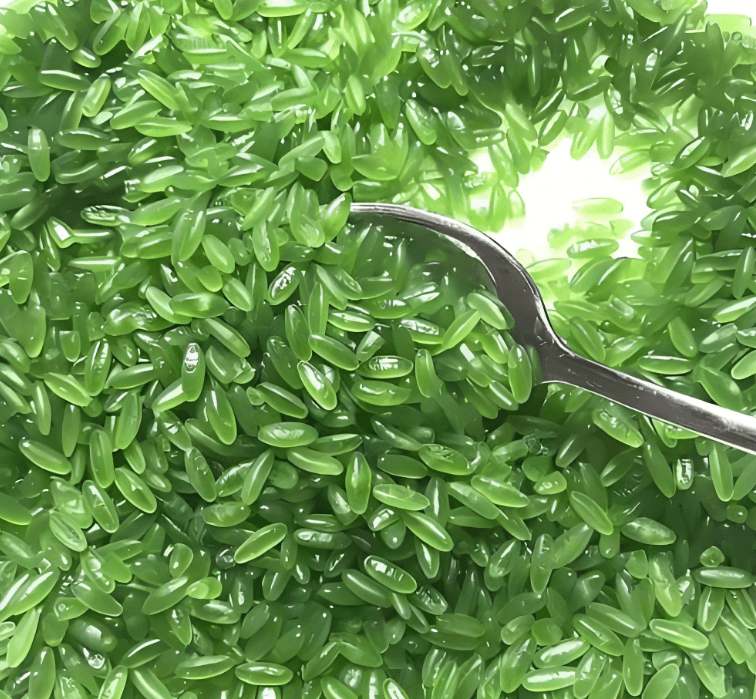
- The “No Sensory Change” Imperative: The fortified rice must be indistinguishable from regular rice in appearance, taste, aroma, and texture when cooked. Any noticeable difference (off-color, strange smell, gritty texture) will lead to immediate rejection. This is why the kernel-matching technology is so vital.
- Strategic Communication and Marketing: The public needs to understand why the rice is fortified. Education campaigns should focus on the benefits: “for stronger children,” “for healthy pregnancies,” “to increase your energy.” Messaging should be simple, positive, and culturally appropriate.
- Addressing Myths and Misinformation: Proactively countering fears about fortification being “unnatural,” a “conspiracy,” or causing harm. Using trusted community leaders, healthcare workers, and media figures as ambassadors.
- Building a Brand: Creating a recognizable logo or seal (e.g., “Fortified with Essential Vitamins and Minerals”) that helps consumers easily identify the product and trust its quality.
8. Building a Sustainable and Efficient Supply Chain & Market Distribution
The product must reach the intended consumers, especially the most vulnerable, reliably and affordably.
- Integration into Existing Systems: The most sustainable approach is to integrate fortified rice into existing commercial and government distribution channels.
- Commercial Market: Working with large rice millers and brand owners to produce and sell fortified rice through normal retail outlets.
- Social Safety Nets: Distributing fortified rice through government programs like public food distribution systems (PDS), school feeding programs, and welfare schemes. This directly targets low-income and high-risk populations.
- Cost Considerations: Fortification adds cost. The key is to minimize this “incremental cost.” Using broken rice for the kernels, achieving economies of scale, and efficient production can keep the cost increase to a very low level (often just 1-3% more than regular rice). Governments may need to provide temporary subsidies or tax incentives to kick-start production until scales of economy are achieved.
- Logistics: Ensuring the supply chain—from factory to warehouse to retailer—handles the product correctly to prevent segregation and protect packaging integrity.
9. Implementing Effective Monitoring, Evaluation, and Surveillance
A fortification program is a public health intervention, and its impact must be measured.
- Process Monitoring: Tracking inputs and outputs: How much premix is used? How many kernels are produced? How much fortified rice is blended and shipped? This is internal factory monitoring.
- Outcome Monitoring: Measuring the biological impact on the population. This involves periodic national surveys to assess changes in micronutrient status (e.g., anemia rates, Vitamin A deficiency prevalence) following the implementation of the fortification program. A reduction in deficiency rates is the ultimate marker of success.
- Consumption Surveys: Understanding if the target populations are actually consuming the fortified rice and in what quantities.
10. Fostering Multi-Stakeholder Engagement and Partnerships
No single entity can succeed alone. Fortification requires a “whole-of-society” approach.
- The Public Sector (Government): Provides the regulatory framework, mandates standards, funds social safety net distribution, and conducts monitoring.
- The Private Sector (Industry): Brings the technical expertise, manufacturing capacity, and distribution networks. They are the engine of production.
- International Agencies & NGOs (e.g., GAIN, UNICEF, WHO, WFP): Provide technical assistance, funding, evidence-based guidelines, and global best practices.
- Academic & Research Institutions: Conduct the underlying research on nutrient bioavailability, new technologies, and impact evaluations.
- Civil Society and Community Organizations: Act as liaisons with the community, building trust and advocating for the program’s benefits.
Only through continuous collaboration, dialogue, and shared commitment among all these stakeholders can a rice fortification program be launched, sustained, and scaled to achieve its transformative public health potential.
Conclusion
The production of effective fortified rice is a sophisticated, multi-disciplinary endeavor far more complex than simply mixing nutrients into a food. It is a carefully orchestrated process where science, technology, regulation, marketing, and logistics must align perfectly. The ten elements outlined—from the precise science of nutrient selection and the engineering of extrusion technology to the critical importance of blending homogeneity, quality control, and consumer acceptance—form an interconnected framework for success. Neglecting any single element can compromise the entire program. When executed correctly, rice fortification stands as one of the most powerful and cost-effective tools in the global arsenal to combat micronutrient malnutrition, offering the promise of improved health, cognitive development, and economic productivity for billions of people who depend on rice as their life-sustaining staple.
Leave A Comment