
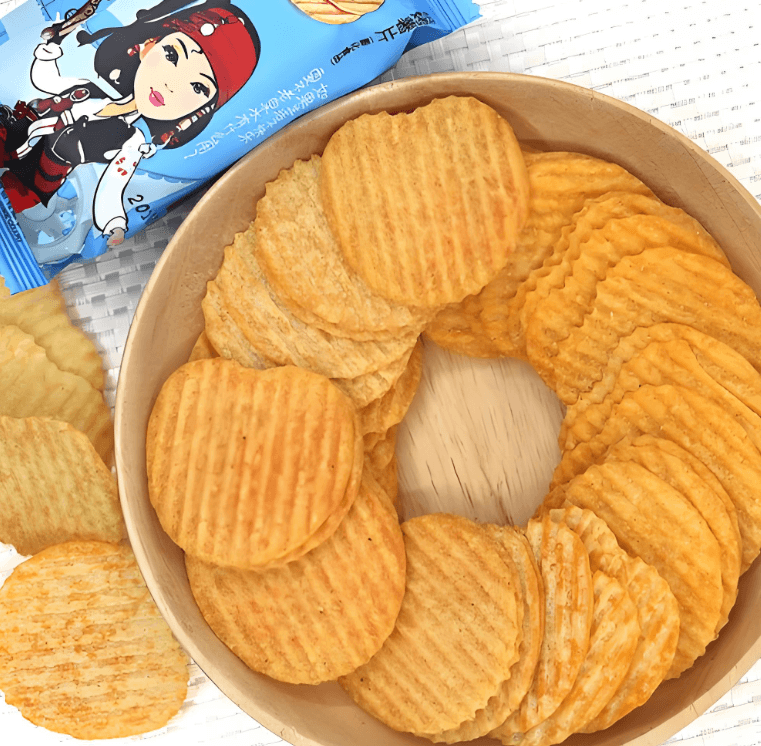
The Six Pillars of Composite Potato Chip Manufacturing: A Comprehensive Guide to Engineering a Modern Snack
Abstract
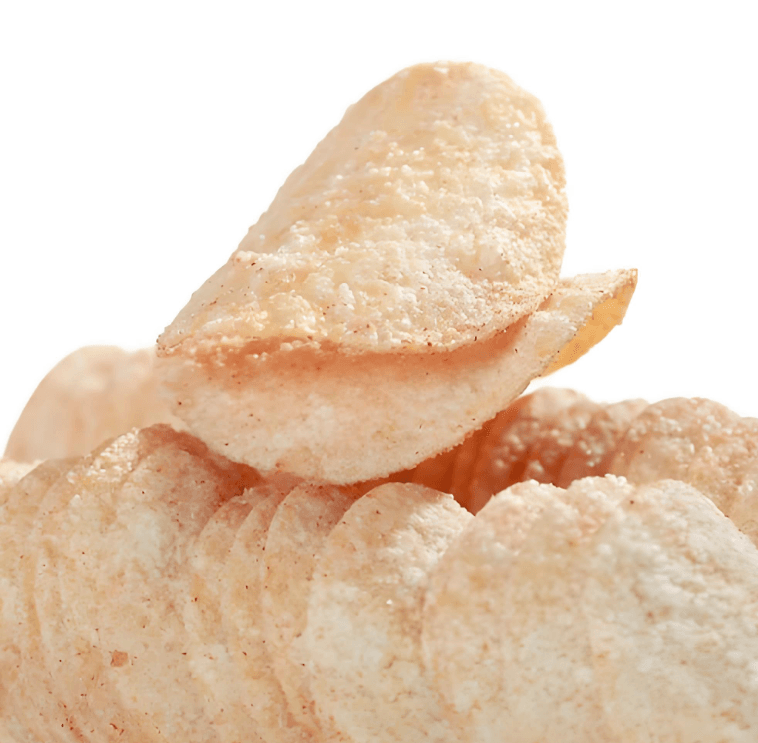
The snack food industry has evolved dramatically from the simple, single-ingredient potato chip. Today’s market is dominated by a sophisticated product category known as composite chips. Unlike traditional chips made from sliced whole potatoes, composite chips are manufactured from a dough consisting of potato-based ingredients (flakes, granules, starches) combined with other starches (e.g., corn, tapioca, wheat) and flavoring agents. This process, akin to baking or extrusion, allows for unprecedented control over the chip’s shape, texture, nutritional profile, and flavor intensity. Products like Pringles, Lay’s Stax, and countless private-label versions are testaments to the success of this technology. This article delves deep into the six critical elements that define the successful production of high-quality composite chips. These pillars are: 1) The Science of Ingredient Selection and Formulation; 2) Advanced Particle Size Management and Rheology; 3) Precision Dough Mixing and Hydration Dynamics; 4) The Art and Science of Forming and Sheeting; 5) Multi-Stage Thermal Processing: Frying and/or Baking; and 6) Integrated Quality Assurance and Packaging Excellence. Each element will be explored in exhaustive detail, revealing the intricate interplay of food science and engineering required to produce a consistent, shelf-stable, and craveable snack.
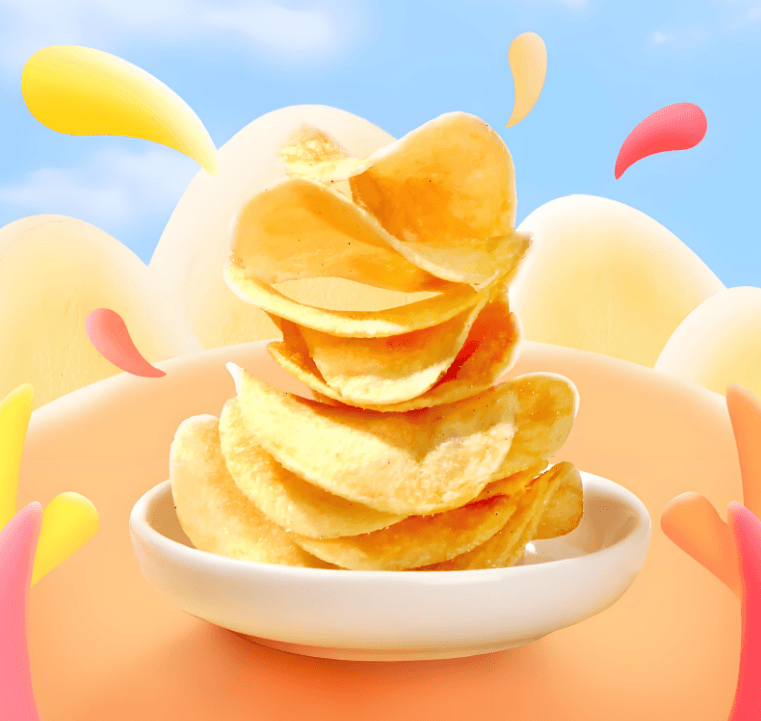
Pillar 1: The Science of Ingredient Selection and Formulation
The foundation of any composite chip is its, or recipe. This is not a simple list of ingredients but a carefully balanced scientific formula designed to achieve specific functional and sensory outcomes. The choice and proportion of each component dictate the chip’s final texture, flavor, appearance, and nutritional content.potato chips machine
1.1 The Core Ingredients: Building the Matrix
- Potato-Based Materials: The primary source of potato flavor and structure.
- Potato Flakes: Created by cooking, mashing, and drum-drying potatoes into thin sheets that are then ground. Flakes tend to have intact cell structures, which can absorb more water and contribute to a fluffier, more potato-like texture. However, they can be variable and require careful handling to avoid over-working the dough.potato chips machine
- Potato Granules: Produced by an add-back process where cooked potatoes are mixed with dry, raw potato granules to create a free-flowing, semi-agglomerated powder. Granules are less likely to form gluten-like networks when mixed, leading to a more uniform and often crispier texture. They offer better flowability and consistency for automated systems.
- Potato Starches: Added separately to fine-tune the dough’s properties. Native potato starch provides thickening power and crispness. Modified potato starches (e.g., cross-linked, pre-gelatinized) are used to improve processing tolerance, enhance crispness retention in high-humidity environments, and control oil absorption.
- Complementary Starches and Flours: Pure potato-based doughs can be challenging to process. Other starches are essential for functional enhancement.
- Corn Starch: A workhorse ingredient that provides a clean, neutral flavor and contributes to a light, crispy texture. It helps control dough viscosity and reduces shrinkage after forming.
- Tapioca Starch: Known for providing a clear, glossy finish and a strong, hard crunch. It improves expansion during frying or baking.potato chips machine
- Wheat Flour: Contains gluten, which can form a protein network, adding strength and flexibility to the dough sheet, reducing breakage during processing. Its use must be carefully controlled to avoid a tough, bread-like texture.
- Binders and Hydrocolloids: These ingredients are crucial for water management and structural integrity.
- Gums (e.g., Xanthan Gum, Guar Gum): Used in very small quantities (often <1%), these hydrocolloids dramatically increase the water-holding capacity of the dough, improving cohesiveness and machinability. They prevent the dough from becoming too sticky or too crumbly.
- Emulsifiers (e.g., Mono- and Diglycerides, Lecithin): These help distribute fat evenly throughout the dough, improving texture and shelf life. They also interact with starch to soften the crumb and reduce stickiness.
- Leavening Agents: Chemical leaveners like sodium bicarbonate (baking soda) and disodium dihydrogen pyrophosphate are added to create a slight puff or lift during cooking. This controlled expansion creates a lighter, less dense texture and a more delicate crunch.
- Flavor Base and Seasonings: Salt, sugar, maltodextrin, and yeast extract are often incorporated directly into the dough to provide a foundational flavor, ensuring taste even if the surface seasoning is lost.
1.2 Formulation Strategy: Balancing Act for Function and Flavor
The formulation process is a complex balancing act. A nutritionist or food scientist must consider:
- Starch Gelatinization Profile: Different starches gelatinize at different temperatures. The配方 must be designed so that gelatinization occurs uniformly during thermal processing for consistent texture.
- Water Absorption Index (WAI) and Water Solubility Index (WSI): Each ingredient absorbs water differently. The ratios must be calculated to achieve the target dough moisture content (typically 35-45%) without making it too wet or too dry.
- Cost and Supply Chain: Formulations must be cost-effective and rely on ingredients with stable, long-term availability.
Pillar 2: Advanced Particle Size Management and Rheology
The physical properties of the dry powder mix are as important as its chemical composition. Particle size distribution profoundly influences water absorption, dough rheology, and the final chip’s texture.potato chips machine
2.1 The Importance of Granulometry
- Controlling Hydration Kinetics: A mix with a wide range of particle sizes will hydrate unevenly. Fine particles will form a sticky paste quickly, while larger particles will remain dry, leading to a lumpy, inconsistent dough. A controlled, narrow particle size distribution ensures all particles hydrate at a similar rate, resulting in a smooth, homogeneous dough.
- Impact on Texture: Finer particles generally lead to a smoother, more uniform chip texture with fewer visible specks or graininess. A coarser grind can be used intentionally to create a more “artisanal” or grainier texture.
- Flowability and Handling: The dry mix must flow freely from storage silos and feeders. The right particle size and shape are critical to prevent bridging, rat-holing, or segregation of ingredients within the powder blend.
2.2 Dough Rheology: The Science of Flow and Deformation
Rheology is the study of how matter deforms and flows. Composite chip dough is a viscoelastic material, meaning it exhibits properties of both a viscous liquid (it flows) and an elastic solid (it springs back).
- Viscosity: The resistance of the dough to flow. It must be low enough to be sheeted easily but high enough to hold its shape after forming.potato chips machine
- Elasticity (or Elastic Modulus): The dough’s tendency to return to its original shape after a deforming force is removed. High elasticity can cause the dough to shrink after being cut, distorting the final chip shape.
- Measuring and Controlling Rheology: Food technologists use instruments like farinographs and mixolabs to measure the dough’s consistency, stability, and tolerance. The goal is to formulate a dough with the right balance—pliable enough for sheeting but strong enough to be transferred to the cooker without tearing.
Pillar 3: Precision Dough Mixing and Hydration Dynamics
The mixing stage is where the dry is transformed into a workable dough. This is a critical unit operation where precise control over time, energy, and hydration is paramount.
3.1 Mixer Technology
- Continuous Mixers: Ideal for high-volume production, these mixers continuously meter in dry ingredients and water, mixing them as they move through a chamber. They offer excellent consistency and are integrated directly into the production line.
- Batch Mixers: Such as horizontal ribbon blenders or twin-shaft paddle mixers, are used for smaller batches or more complex formulations. They allow for more control over the mixing cycle but can introduce batch-to-batch variation.
3.2 The Hydration Process
Water is not just an ingredient; it is a processing aid. Its functions are multifaceted:
- Solvation and Hydration: It dissolves salts and sugars and hydrates starches and gums, allowing them to swell and develop viscosity.
- Plasticizer: It acts as a lubricant between particles, making the dough soft and pliable.
- Gelatinization Agent: It is the medium for starch gelatinization during the subsequent cooking stage.
The mixing sequence is crucial. Often, a pre-blend of dry ingredients is created before water is added in a controlled stream. Mixing time and speed are carefully optimized. Under-mixing results in an inhomogeneous dough with dry pockets. Over-mixing can over-develop starch or protein networks, making the dough tough, rubbery, and difficult to sheet, and can lead to a blistered or blistered final product.potato chips machine
Pillar 4: The Art andcience of Forming and Sheeting
This stage defines the iconic shape and uniform thickness of the composite chip. The goal is to transform the lump of dough into a thin, continuous sheet of consistent density and thickness.
4.1 Sheeting and Laminating
The dough is first fed through a series of counter-rolling sheeter rolls. The gap between these rolls is progressively reduced, thinning the dough sheet to its final target thickness, often between 0.8mm and 1.5mm.
- Laminating: A key technique for creating a flaky, layered texture is lamination. The initial sheet is folded over itself multiple times before being sheeted to its final thickness. This creates discrete layers within the dough. During frying, the steam generated between these layers causes them to separate, resulting in a lighter, flakier crunch compared to a homogeneous, cracker-like texture.
4.2 Die-Cutting
The thin, continuous dough sheet then passes under a rotary die cutter. This roller has raised edges that cut the desired shape (round, oval, etc.) out of the sheet. The scrap dough (known as “net” or “web”) surrounding the cut pieces is lifted away from the conveyor belt. This scrap dough is recycled back to the mixer, a crucial step for economic efficiency and waste reduction. The precision of the die cutter ensures each chip has identical dimensions and weight.
Pillar 5: Multi-Stage Thermal Processing: Frying and/or Baking
This is the stage where the raw dough piece is transformed into a finished chip, developing its structure, color, and flavor. Composite chips can be fried, baked, or a combination of both.
5.1 The Physics of Frying
Frying is a rapid dehydration and cooking process. The chip is conveyed through a bath of hot oil (typically 170-190°C / 340-375°F).
- Moisture Flash-Off: Surface water instantly vaporizes, creating a porous structure.
- Starch Gelatinization: The heat and moisture cause the starch granules to swell, rupture, and lose their crystalline structure, forming a gel that sets the chip’s structure.
- Maillard Reaction and Color Development: The high heat promotes Maillard reactions between reducing sugars and amino acids, creating the characteristic golden-brown color and roasted, savory flavors.
- Oil Uptake: Oil replaces the evaporated water within the porous matrix. The majority of oil absorption occurs in the final stages of frying as the chip exits the oil and capillary forces draw oil into the empty pores.
5.2 Baking as an Alternative
Baked chips are produced in multi-zone convection ovens. Baking is a gentler, slower process.
- Pros: Lower fat content, a different, often harder crunch, and a “clean label” perception.
- Cons: Less flavor development (fewer Maillard reactions), a drier mouthfeel, and potentially higher energy costs. To compensate, baked chips often rely more heavily on surface seasonings and flavor systems.
5.3 Post-Frying/Baking Oil Management
After frying, excess surface oil is removed using air knives or centrifugal force. The chips are then cooled on a long conveyor to set their structure before seasoning.
Pillar 6: Integrated Quality Assurance and Packaging Excellence
The final pillar ensures that the high-quality chip reaches the consumer in perfect condition.
6.1 Seasoning Application
The cooled chips enter a rotating seasoning drum. A fine mist of oil is often applied first to act as a adhesive, followed by the precise application of dry seasoning blends. The tumbling action ensures an even, complete coating. The seasoning systems are highly sophisticated, capable of applying multiple layers of flavorings and ensuring minimal waste.
6.2 In-Line Quality Control
- Checkweighers: Ensure each container meets the stated weight.
- Metal Detectors/X-ray Systems: Identify and reject any product containing foreign material.
- Optical Sorters: High-speed cameras detect and eject chips with color defects, blisters, or broken pieces.
6.3 Advanced Packaging
The packaging is the final, critical barrier.
- Modified Atmosphere Packaging (MAP): The air in the bag is replaced with an inert gas like nitrogen. This prevents oxidation (rancidity) of the fats and cushions the chips from breakage.
- High-Barrier Films: The bags are made from multi-layer laminates that provide an excellent barrier against moisture and oxygen, which are the enemies of crispness and freshness. The seals must be perfect to maintain this protective environment.potato chips machine
Conclusion
The production of composite potato chips is a pinnacle of modern food engineering, far removed from the simplicity of frying a potato slice. It is a process built upon six interdependent pillars: a scientifically designed, meticulous control over particle size and dough rheology, precision mixing and forming, controlled thermal processing, and uncompromising quality assurance. Mastering each element allows manufacturers to create a diverse array of snacks with consistent quality, specific textures, and intense flavors, meeting the ever-evolving demands of the global snack market. The humble chip, in its composite form, is a testament to the deep scientific understanding and technological prowess that underpin the modern food industry.
Leave A Comment