
The Comprehensive Processing Technology of Composite Potato Chips: From Powder to Perfect Snack
Composite potato chips represent a significant evolution in the snack food industry, diverging from the traditional method of slicing whole potatoes. Instead, they are engineered products created from a dough comprising potato derivatives (flakes, granules, or starch), other cereal flours, and functional ingredients. This manufacturing approach offers unparalleled advantages in terms of shape consistency, flavor control, nutritional fortification, and production scalability. This article provides a meticulous, step-by-step exploration of the entire processing technology for composite potato chips. It delves into the science of raw material functionality, the critical parameters of dough mixing and sheeting, the precision of forming and cutting, the dynamics of frying or baking, and the intricacies of seasoning and packaging. Furthermore, it addresses quality assurance protocols, troubleshooting common production issues, and emerging trends shaping the future of this dynamic sector.Potato chips making machine
1. Introduction: The Rise of an Engineered Snack
The global snack food market is a multi-billion dollar industry, with potato chips holding a dominant share. While traditional, kettle-style chips made from sliced whole potatoes have their niche appeal, they present inherent challenges: variability in size and shape due to the natural potato form, dependence on seasonal and geographical potato quality, Potato chips making machine and limitations in producing complex, uniform shapes. Composite potato chips emerged as a technological solution to these constraints.
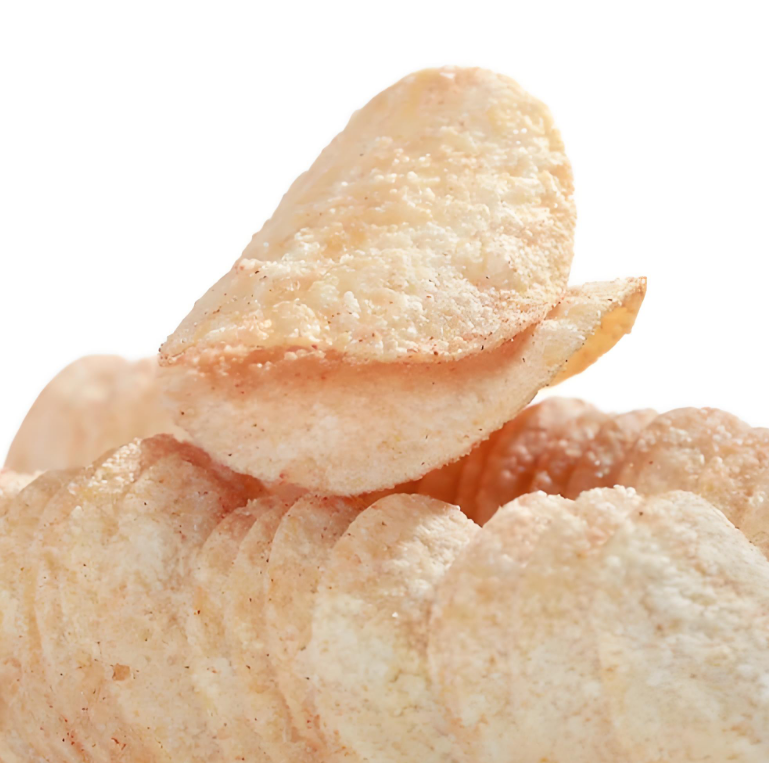
Also known as fabricated chips, formed chips, or potato crisps, composite chips are not “sliced” but “built.” The core innovation lies in creating a malleable dough from dehydrated potato products and other ingredients, which is then sheeted, molded into specific shapes (from classic ovals to whimsical triangles and cylinders), and cooked. This process,Potato chips making machine pioneered on an industrial scale in the latter half of the 20th century, unlocked new possibilities for brand identity, product consistency, and mass production. Understanding the sophisticated technology behind this ubiquitous snack is key to appreciating its global success.
2. Raw Material Selection and Preparation: The Foundation of Quality
The quality of the final product is intrinsically linked to the quality and properties of the raw materials. Each ingredient plays a specific functional role.
2.1. Potato Components: The Soul of the Chip
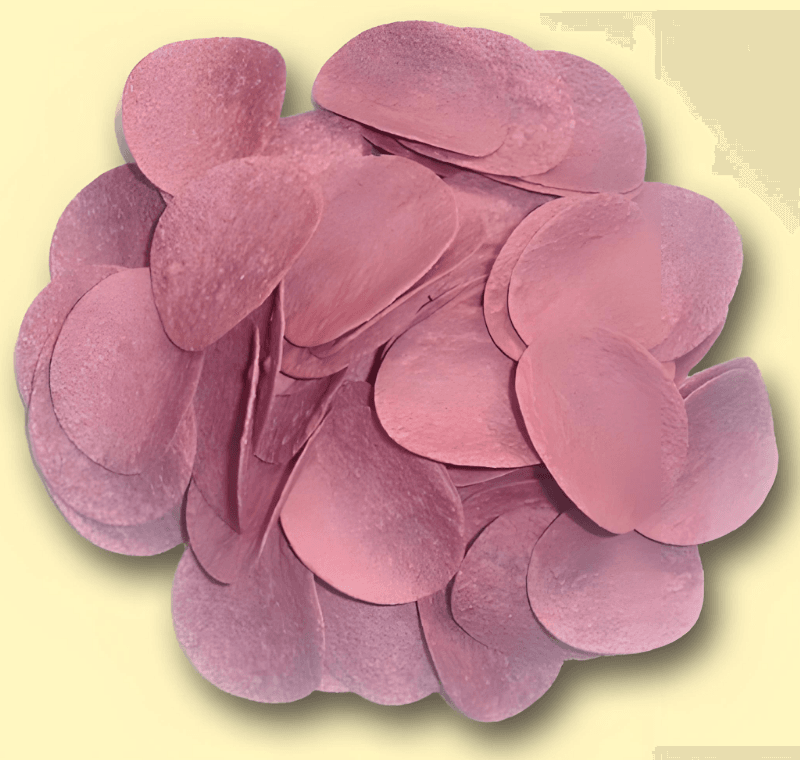
The primary source of potato flavor and texture comes from dehydrated potato products.Potato chips making machine The choice between flakes and granules is fundamental.
- Potato Flakes: Produced by cooking and mashing potatoes, which are then drum-dried into thin sheets and ground into flakes. Flakes retain more of the intact potato cell structure, resulting in a chip with a lighter, flakier texture that more closely mimics a traditional chip. They have high water absorption capacity, which is a critical factor in dough rheology.
- Potato Granules: Produced using an add-back process where cooked potatoes are mixed with previously dried granules to prevent cell rupture during drying. Granules are more granular and free-flowing, yielding a denser, harder texture in the final chip. They absorb less water than flakes. The choice depends on the desired final texture; many manufacturers use a blend to achieve a specific mouthfeel.Potato chips making machine
- Native and Modified Potato Starch: This is a crucial ingredient, even when flakes or granules are used. Native starch contributes to binding and structure. Modified potato starch, however, is often the backbone of the composite chip structure. Modifications (through physical, chemical, or enzymatic means) enhance properties like:
- Cold Water Swelling: Allows the starch to hydrate and thicken in cold water, essential for dough formation.
- Retrogradation Resistance: Prevents the staling and hardening of the chip over time.
- Gel Strength: Provides the structural integrity to hold the chip’s shape during frying.
- Binding Capacity: Helps cohesively bind the dough, preventing it from disintegrating in the fryer.
2.2. Cereal Flours and Binders: The Structural Framework
While potato provides flavor, other ingredients build the structure.
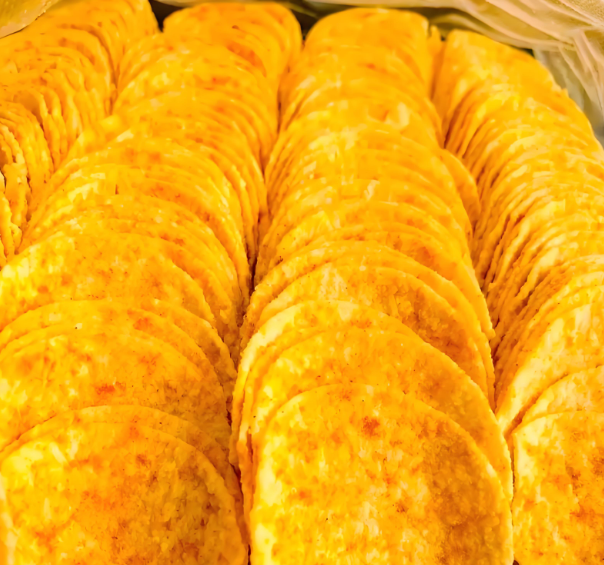
- Corn Flour: Very common due to its neutral flavor, light color, and ability to create a crisp texture.
- Wheat Flour: Provides gluten, which can add toughness and chewiness if overused, but in controlled amounts, it adds strength to the dough sheet, reducing breakage during processing.
- Rice Flour: Produces a very crisp and clean-tasting chip, often used in premium or gluten-free formulations.
- Tapioca Starch: Imparts a chewy, crispy texture and excellent expansion properties.
- Gums and Hydrocolloids: Ingredients like xanthan gum, guar gum, or cellulose gum are used in small quantities (0.1%-0.5%) to significantly improve water binding, control viscosity, enhance dough cohesiveness, and improve the overall texture and mouthfeel of the fried product.
2.3. Liquids: The Medium for Hydration
- Water: The primary liquid used for dough formation. Its temperature, hardness, and pH can affect ingredient functionality. The precise water-to-dry-ingredient ratio is one of the most critical variables in the entire process.Potato chips making machine
- Oil: Sometimes added to the dough in small amounts (1-3%) as a lubricant, which can facilitate sheeting and improve tenderness.
2.4. Seasonings and Flavorings
While often applied after frying, some key ingredients are incorporated into the dough:
- Salt: Essential for taste. It also acts as a minor preservative and can modify the dough’s texture.
- Monosodium Glutamate (MSG) and Yeast Extracts: Used to enhance the savory “umami” flavor.
- Sugar: In small amounts, it aids in Maillard browning during frying, giving the chip a golden color.
- Emulsifiers: Such as lecithin, are used to create a stable dough emulsion, ensuring even distribution of fats and water, and improving texture.
2.5. Leavening Agents
Chemical leavening agents like sodium bicarbonate (baking soda) are often added. Upon heating during frying, they release gas (CO₂), creating tiny bubbles within the chip’s structure. This is crucial for achieving a light, crisp, and aerated texture rather than a hard, dense one.
2.6. Preservation Additives
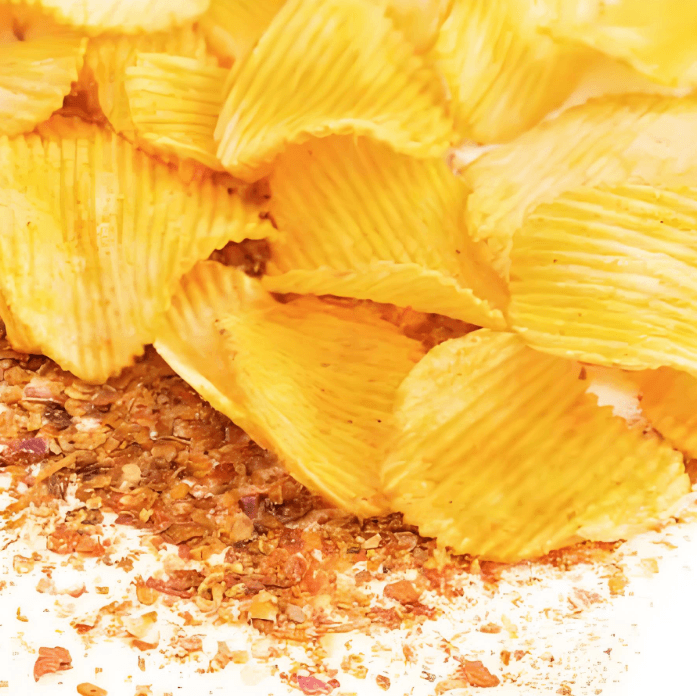
- Antioxidants: Like TBHQ (Tertiary Butylhydroquinone) or mixed tocopherols (Vitamin E), are added to the dough or the frying oil to prevent rancidity and extend shelf life.
3. The Core Manufacturing Process: A Step-by-Step Analysis
The transformation of these raw materials into a finished snack is a continuous, highly automated process.
3.1. Dry Ingredient Handling and Pre-Blending
The first stage involves the precise weighing and mixing of all dry ingredients. This is typically done using high-volume systems like bulk bags or silos connected via pneumatic conveying to weigh hoppers. Computer-controlled systems ensure recipe accuracy. Potato chips making machine Pre-blending the dry mix (potato products, flours, starches, leavening agents, dry seasonings) is critical to achieve a homogeneous distribution, which is the foundation for consistent product quality.
3.2. Dough Mixing: The Heart of the Process
This is where the dough is born, and it is a operation requiring extreme precision. A continuous mixer is standard in large-scale production.
- Process: The pre-blended dry mix is fed into the mixer at a controlled rate. Simultaneously, water (and any liquid ingredients) is metered in. The ratio is typically around 1:1.5 to 1:2 (water to dry mix), but this must be finely tuned.
- Science of Mixing: The goal is to achieve complete hydration of the starch and other components without over-developing the structure (like gluten) or causing excessive starch gelatinization in the cold dough. Over-mixing can lead to a tough, sticky dough that is difficult to sheet, resulting in a hard, blistered chip. Under-mixing leads to a crumbly dough that won’t form a coherent sheet. Mixing time, speed, and shear are tightly controlled. The ideal dough should be pliable, cohesive, and have a putty-like consistency.
3.3. Dough Sheeting: From Mass to Sheet
The amorphous dough mass must now be transformed into a thin, uniform sheet of precise thickness. This is accomplished using a series of sheeting rolls, often a “sheeting head” with multiple rollers.
- Process: The dough is initially formed into a rough sheet, which is then progressively thinned by passing it through a series of consecutive roller pairs, Potato chips making machine each set with a narrower gap than the previous one.
- Critical Parameters:
- Roller Gap: Determines the final thickness of the chip, typically between 0.8mm and 1.5mm.
- Roller Speed: The speed must be synchronized to prevent stretching or tearing of the dough web.
- Dough Rheology: The dough’s viscoelastic properties must be perfect. If too elastic, it will shrink back after sheeting. If not elastic enough, it will tear.
Dusting with starch is sometimes used to prevent the dough from sticking to the rollers.
3.4. Forming and Cutting: Creating the Signature Shape
The continuous dough sheet now moves to the forming stage. This is where the iconic shapes of composite chips are created. There are two primary methods:
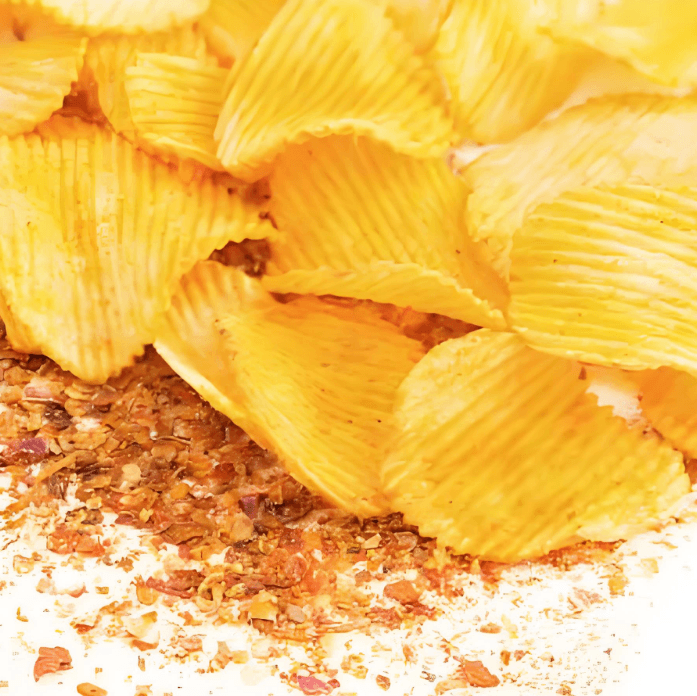
- Rotary Cutting (Die Cutting): A rotary drum, embedded with the desired shape (e.g., a round or oval), stamps out the individual chips from the dough sheet. The scrap dough (known as “regrind” or “web”) is lifted away by a conveyor and recycled back into the mixer or the sheeting head. Efficient regrind handling is crucial for economic efficiency, though excessive recycling can affect dough quality and temperature.
- Lamination for Layered Chips: For products that require a flaky, layered texture (imitating kettle-cooked styles), a lamination process is used. Multiple thin dough sheets are layered on top of one another before the final sheeting and cutting. When this laminated structure hits the hot oil, the steam generated between the layers pushes them apart, creating a blistered, flaky texture.
3.5. Frying: The Transformation
This is the most dramatic and critical step where the raw, moist dough piece is transformed into a crisp, palatable chip. Continuous frying in a long, temperature-controlled oven is the standard.
- Fryer Design: A multi-zone fryer is used. Zones can have different temperature profiles to optimize moisture removal, texture development, and color control.
- Oil Selection: The choice of frying medium is vital for flavor and stability. Common oils include sunflower, corn, canola, palm olein, and high-oleic variants designed for high stability. The oil is continuously filtered and monitored for free fatty acid (FFA) content, polar compounds, and polymer levels to maintain quality.
- The Frying Process Dynamics:
- Initial Contact (0-10 seconds): The cold, wet chip enters the hot oil (typically 165-185°C or 330-365°F). A violent boiling of surface water occurs.
- Crust Formation and Moisture Migration (10-30 seconds): A dry, porous crust forms on the chip’s surface. Internal moisture turns to steam, which migrates outwards through pores, preventing oil from penetrating too deeply initially. The starch undergoes rapid gelatinization, and the proteins denature, setting the chip’s structure.
- Cooking and Browning (30-60 seconds): As the internal temperature rises, the leavening agents decompose, creating gas bubbles that expand the chip’s internal structure, making it light and crispy. The Maillard reaction and caramelization occur between reducing sugars and amino acids, developing the characteristic golden-brown color and roasted flavors.
- Final Drying and Oil Uptake (End of Fry): The chip’s moisture content is reduced to a final level of 1.5-2%. Interestingly, a significant portion of oil uptake happens as the chip is removed from the fryer, as surface oil is sucked into the porous structure during cooling. Proper fryer shaking at the exit can help drain excess oil.
3.6. Baking as an Alternative
To produce “low-fat” or “baked” chips, a multi-zone oven is used instead of a fryer. The dough pieces are baked with hot air. While this drastically reduces fat content (from ~35% to ~10% or less), the texture and flavor are notably different—often harder and less rich—due to the absence of the frying medium and the different heat transfer mechanism.Potato chips making machine
3.7. De-oiling and Cooling
After frying, chips pass under an air knife or through a centrifuge to remove excess surface oil. They are then conveyed through a cooling tunnel. Cooling is essential to set the structure and prevent the chips from becoming soggy due to condensation if packaged while warm. It also allows the oil within the chip to solidify slightly.
3.8. Seasoning Application
The bland, fried base chip now receives its flavor identity. Seasoning is applied via a powder drum or an electrostatic seasoning system.
- Powder Drum: The chips tumble in a rotating drum while the seasoning blend is sprayed or dusted onto them. Baffles inside the drum ensure even coating.
- Electrostatic Seasoning: A more efficient method where the seasoning particles are given an electrostatic charge, and the chips are grounded. The opposite charges attract, causing the seasoning to cling uniformly to the chips with minimal waste. This is especially important for expensive seasoning blends and for ensuring coverage on complex 3D shapes.
- Seasoning Formulations: These are complex blends of salt, sugar, spices, yeast extracts, cheese powders, acidulants (e.g., citric acid for sour cream), hydrolyzed vegetable proteins, and flavor oils. Anti-caking agents like silicon dioxide are often included to keep the seasoning free-flowing.
3.9. Inspection and Quality Control
Before packaging, the product stream undergoes rigorous inspection.
- Metal Detection: All chips pass through a metal detector to catch any ferrous, non-ferrous, or stainless steel contaminants.
- Optical Sorting: High-resolution cameras and sophisticated software scan each chip for visual defects—burnt pieces, off-color chips, misshapen products—and use puffs of air to reject them.
- Check-weighing: Individual packages are dynamically weighed to ensure they meet the declared net weight, complying with regulatory standards.
3.10. Packaging: The Final Barrier
Packaging is the final, critical step in preserving the chip’s freshness and crispness.

- Materials: The primary material is a multi-layer laminated film. A typical structure might include:
- Outer Layer: Biaxially Oriented Polypropylene (BOPP) or Polyester (PET) for printability and strength.
- Middle Layer: Aluminum foil or metallized film, which provides an excellent barrier against light and oxygen, the two main enemies of snack freshness (causing rancidity and staleness).
- Inner Layer: A sealant layer like Cast Polypropylene (CPP) or Linear Low-Density Polyethylene (LLDPE) that can be heat-sealed to form the package.
- Gas Flushing (Modified Atmosphere Packaging – MAP): After the chips are fed into the package, the air is evacuated and replaced with an inert gas, typically nitrogen (N₂). Nitrogen is inert, prevents oxidative rancidity, and acts as a cushion to protect the fragile chips from physical damage during transportation and handling.
- Sealing: The packages are heat-sealed with absolute integrity to maintain the nitrogen atmosphere.
4. Quality Assurance and Troubleshooting
A robust Quality Assurance (QA) program runs parallel to the entire manufacturing process.
- In-line Testing: Continuous monitoring of dough moisture, dough viscosity, fryer oil quality, and final product moisture and color.
- Laboratory Analysis:
- Texture Analysis: Using a texture analyzer to measure snap force and crispness.
- Color Measurement: Using a colorimeter (Lab* scale) to ensure consistent visual appeal.
- Fat Content Analysis: Using solvent extraction (Soxhlet) or faster NIR methods.
- Sensory Evaluation: Trained panels regularly evaluate products for flavor, aroma, and mouthfeel against established standards.
- Common Defects and Causes:
- Blistering: Caused by over-mixing, incorrect water temperature, or dough that is too tough, trapping steam.
- Tough/Hard Texture: Insufficient leavening, over-mixing, or too much gluten-forming flour.
- Oily/Greasy Chip: Frying temperature too low, poor oil quality, or insufficient de-oiling.
- Pale Color: Frying temperature too low, Potato chips making machine insufficient frying time, or low reducing sugar content in the potato ingredients.
- Dark Color/Burnt Flavor: Frying temperature too high, frying time too long, or high sugar content in the dough.
- Lack of Expansion: Inactive or insufficient leavening agents.
5. Future Trends and Innovations
The composite chip industry is continuously evolving.
- Health and Wellness: Demand for “clean label” products (no artificial additives), reduced sodium, reduced-fat (via advanced baking technologies), and added fiber or protein.
- Sustainability: Efforts to reduce water and energy consumption in processing, use of recyclable or compostable packaging materials, and sourcing sustainable palm oil.
- Novel Ingredients and Flavors: Exploration of alternative base ingredients like lentil flour, chickpea flour, or vegetable purees to create new snack categories. Fusion and globally inspired flavors continue to drive consumer interest.
- Process Digitalization and Industry 4.0: Implementation of AI and machine learning for predictive maintenance, real-time process optimization, and enhanced quality control through advanced vision systems.Potato chips making machine
The production of composite potato chips is a remarkable feat of food engineering, a symphony of material science, thermodynamics, and precision engineering. It transforms simple, dry powders into a universally loved, consistent, and shelf-stable snack. From the specific functionality of modified starches to the precise control of frying kinetics and the protective science of packaging, every step is optimized for quality and efficiency. As consumer demands shift towards health, sustainability, and novel experiences, the underlying processing technology will continue to adapt and innovate, ensuring the composite potato chip remains a dominant force in the global snack landscape for years to come.
Leave A Comment