
The Comprehensive Guide to Infant Rice Cereal Processing Technology and Equipment Selection
Abstract
Infant rice cereal is a foundational food, often serving as the first solid food introduced to babies around the world. Its primary role is to bridge the nutritional gap between a milk-only diet and a more diverse solid food regimen, providing essential energy, vitamins, and minerals critical for growth and development. The production of this seemingly simple product is, in fact, a highly sophisticated process that intertwines food science, nutritional engineering, and stringent quality control. This extensive article provides a deep dive into the complete (processing technology) of infant rice cereal, from raw material selection to packaged product. It meticulously details each unit operation, including rice selection and preparation, drying, milling, blending, hydrolysis, thermal processing (cooking and drying), packaging, and quality assurance. A significant focus is dedicated to the critical aspect of (equipment selection), exploring the machinery required for each stage, the principles of their operation, and the key factors that dictate the choice between different technologies. Furthermore, the discussion extends to the vital considerations of nutrient fortification, microbial safety, allergen control, and meeting global regulatory standards (such as those from the FDA, EFSA, and Codex Alimentarius). By synthesizing technical engineering details with nutritional science and regulatory frameworks, this article serves as an indispensable resource for food engineers, product developers, quality assurance managers, and entrepreneurs aiming to establish or optimize a production line for safe, high-quality, and nutritious infant rice cereal.baby food making machine
1. Introduction: The Significance of Infant Rice Cereal
The transition from exclusive milk feeding to complementary foods is a critical phase in an infant’s life, typically beginning around six months of age. At this stage, an infant’s iron stores, accumulated in utero, are depleting, and breast milk or standard formula alone can no longer meet all nutritional requirements, particularly for iron, zinc, and energy. Infant rice cereal is uniquely positioned to address this need:
- Nutritional Vehicle: It is an ideal medium for fortification with key micronutrients like iron, zinc, calcium, and B-vitamins.
- Low Allergenicity: Rice is the least likely grain to cause allergic reactions, making it a safe first food.
- Mild Flavor and Smooth Texture: Its neutral taste and ability to be processed into a very smooth, semi-liquid consistency are well-accepted by infants.
- Energy Dense: It provides easily digestible carbohydrates for energy.
The production of this cereal is governed by a simple goal: to create a highly digestible, safe, and nutrient-rich powder that reconstitutes easily with water, milk, or formula. Achieving this goal requires a complex and carefully controlled manufacturing process.baby food making machine
2. Raw Material Selection and Specification
The quality of the final product is inextricably linked to the quality of the raw materials. Stringent specifications are non-negotiable.

2.1. Rice Selection
- Type of Rice: White, long-grain or medium-grain rice is typically preferred. Brown rice, while nutritious, contains higher levels of phytic acid (an anti-nutrient that can inhibit mineral absorption) and fats that can become rancid, limiting shelf life. Furthermore, its stronger flavor and darker color are less desirable for a first food.
- Quality Parameters:
- Purity: Must be free from impurities like stones, husks, foreign seeds, and metallic particles.
- Microbiological Standards: Low total plate count, absence of E. coli, Salmonella, and other pathogens. Bacillus cereus is a particular concern in rice and must be controlled.
- Chemical Residues: Must comply with strict limits for pesticides, herbicides, and heavy metals (e.g., arsenic, cadmium, lead). Given婴儿’ vulnerability, these limits are often more stringent than for adult foods.
- Broken Kernels: While not necessarily a detriment for milling, the percentage of broken kernels is often monitored as a general quality indicator.
2.2. Fortificants and Other Ingredients
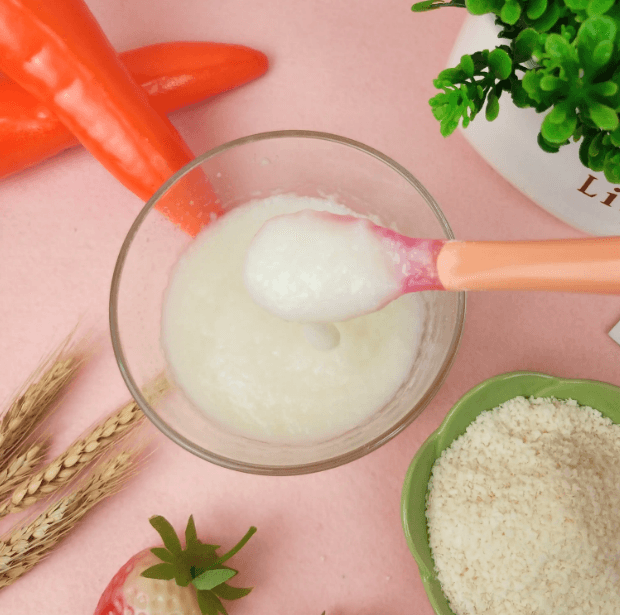
- Micronutrient Premix: A custom-blended powder containing iron, zinc, calcium, and vitamins (e.g., A, B1, B6, B12, C, D, E). The form of iron is critical; ferrous fumarate and ferrous sulfate are common but can cause oxidation and off-flavors. More advanced, encapsulated forms are used to improve stability and sensory properties.baby food making machine
- Other Ingredients: May include:
- Probiotics: (Bifidobacterium, Lactobacillus) added post-heat-processing.
- Prebiotics: (e.g., Inulin, GOS, FOS) to promote healthy gut bacteria.
- DHA/ARA: Fatty acids important for brain and eye development, often added as microencapsulated oils.
- Lecithin: An emulsifier to improve reconstitution and prevent clumping.
- Natural Flavors: In later-stage cereals (e.g., vanilla).
3. The Infant Rice Cereal Processing Technology: A Step-by-Step Analysis
The process can be broken down into distinct unit operations, each with a specific technological purpose.
3.1. Raw Material Reception and Pre-Cleaning
- Process: Rice is delivered in bulk or bags. It is weighed and undergoes initial cleaning to remove coarse impurities.
- Equipment: Vibrating Screens and Aspirators. Vibrating screens with different mesh sizes remove larger and smaller impurities. Aspirators use air currents to remove lighter impurities like dust and husks.
3.2. Drying (Conditioning)
- Process: While not always necessary, some processes begin by drying the rice to a very low and uniform moisture content (~12%). This “conditions” the rice, making it more brittle and easier to mill consistently. It also contributes to microbial reduction.
- Equipment: Fluidized Bed Dryers or Continuous Belt Dryers. These provide uniform and controlled heating.
3.3. Milling
- Process: The rice is milled into a fine flour. The particle size is critical. Too coarse, and the reconstituted cereal will be gritty and unpalatable for a baby. Too fine, and it may become dusty and difficult to reconstitute without clumping. A target particle size of 150-200 microns (80-100 mesh) is typical.
- Equipment Selection:
- Hammer Mills: The most common choice. They use rotating hammers to shatter the grain against a screen. They are versatile, high-capacity, and allow for particle size control by changing the screen size. However, they generate heat due to impact, which must be managed to avoid damaging nutrients.
- Pin Mills: Use two disks with intermeshing pins that impact the material. They can achieve a finer and more uniform particle size than hammer mills and generate less heat.
- Jet Mills (Fluid Energy Mills): Use high-speed jets of air to collide particles into each other, causing fracture. They produce the finest particles with no heat generation but are more expensive and have lower capacity. They are less common for basic rice flour.
- Considerations: The choice depends on capital cost, desired particle size distribution, heat sensitivity of any inherent nutrients, and energy consumption. A hammer mill with efficient cooling is often the standard workhorse.
3.4. Blending
- Process: The rice flour is blended with the precise amount of micronutrient premix and other dry ingredients (e.g., dry milk powder, vitamins, minerals). Achieving a perfectly homogeneous blend is absolutely critical to ensure every serving contains the declared amount of nutrients.
- Equipment Selection:
- Ribbon Blenders: The most widely used blender for powders. A horizontal trough with an internal spiral ribbon agitator provides efficient mixing. Design must ensure no dead zones where material can remain unmixed.
- Paddle Blenders: Similar to ribbon blenders but with paddle-shaped agitators, can be gentler on some products.
- Ploughshare Mixers: Highly efficient mixers that use plough-shaped tools to lift and mix material rapidly. Excellent for achieving homogeneity quickly.
- Twin-Shell (V-Cones) Blenders: Suitable for smaller batches or more fragile ingredients, using a tumbling action.
- Considerations: The blender must be of food-grade stainless steel, easy to clean (often with CIP systems), and designed to prevent segregation of particles of different sizes and densities after mixing is complete.baby food making machine
3.5. Hydrolysis (Enzymatic Treatment) – Optional but Common
- Process: Some manufacturers treat the rice slurry with enzymes (amylases) to partially break down the starch molecules. This serves two purposes:
- Reduced Viscosity: Allows for higher solid content in the slurry before drying, improving energy efficiency.
- Enhanced Digestibility and Sweetness: Creates simpler sugars (maltodextrins, maltose, glucose), making the cereal easier for an infant to digest and imparting a naturally slightly sweeter taste.baby food making machine
- Process Control: This is a highly controlled biochemical reaction. Parameters like enzyme concentration, temperature, pH, and reaction time must be tightly monitored and controlled to achieve the desired Degree of Hydrolysis (DE). The reaction is then stopped by a high-heat treatment (cooking) that denatures the enzymes.
- Equipment: Requires Slurry Tanks with precise Temperature and pH Control and efficient agitation.
3.6. Thermal Processing: Cooking and Drying
This is the heart of the process, where food safety is achieved, and the final product structure is defined. There are two main technological pathways: Drum Drying and Extrusion Cooking.
A. Drum Drying
- Process: The blended flour (or hydrolyzed slurry) is made into a thin slurry with water. This slurry is applied as a thin film onto one or two slowly rotating, steam-heated hollow drums. The starch gelatinizes instantly upon contact. As the drum rotates, the cooked film is dried to a low moisture content (~3-5%) in a single revolution. A doctor blade scrapes the dried sheet off the drum, which is then broken into flakes and milled into a powder.baby food making machine
- Equipment:
- Single-Drum Dryer: One drum, sometimes with auxiliary applicator rolls.
- Double-Drum Dryer: Two drums rotating towards each other. The gap between them determines the film thickness.
- Feeding Systems: Various applicators exist (e.g., nip feed, dip feed, spray feed) to apply a uniform layer of slurry.
- Advantages:
- Produces a very light, flaky product that reconstitutes instantly in cold or warm liquid.
- High thermal efficiency due to large heat transfer area.
- Well-established, relatively simple technology.
- Disadvantages:
- Can cause more Maillard browning (caramelization) due to high surface temperature, affecting color and flavor.
- Potential for nutrient loss on the hot surface, especially heat-sensitive vitamins.
- The final product can have a slightly “toasted” or “cereal” flavor.
B. Extrusion Cooking
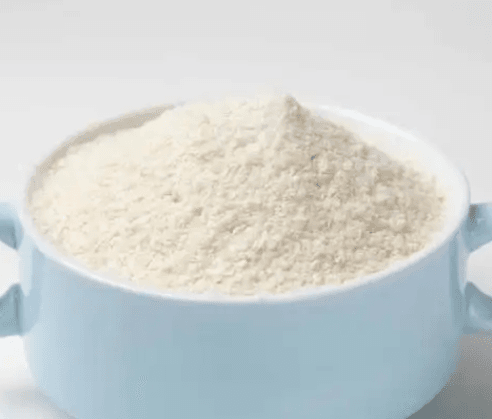
- Process: The dry blend of rice flour and nutrients is fed into an extruder. Water and steam are injected to moisten and cook the mix. The material is conveyed down a barrel by one or two screws and subjected to intense shear, pressure, and temperature (120-180°C). This cooks and gelatinizes the starch thoroughly. The hot, plasticized mass is forced through a die at the end of the barrel, where it expands due to the sudden pressure drop and is cut into pellets or small shapes by a rotating knife. These pellets are then dried and milled into a powder.
- Equipment Selection:
- Single-Screw Extruders: Simpler, lower cost. Mainly used for simple cooking and forming. Less flexibility and control.
- Twin-Screw Extruders (Corotating, Intermeshing): The industry standard for infant cereals. They offer superior control over the process parameters (temperature, shear, residence time). The screws are self-wiping, preventing dead zones and ensuring uniform treatment. They are highly flexible and can handle a wider range of recipes and moisture contents.
- Advantages:
- High-temperature/short-time (HTST) process minimizes nutrient degradation and microbial load effectively.
- Very high level of starch gelatinization and product sterility.
- Less Maillard browning, resulting in a lighter color and blander flavor, often preferred for first-stage cereals.
- Incredibly versatile; can produce a wide array of textures and shapes.
- Disadvantages:
- Higher capital investment cost.
- More complex operation and maintenance require higher skilled personnel.
- Can cause more starch degradation due to high shear, which may not be desirable for all products.
Equipment Selection Decision: The choice between drum drying and extrusion is fundamental. Extrusion is increasingly favored for its superior control, safety profile, and product quality, despite the higher initial cost.
3.7. Post-Drying Milling and Sizing
- Process: The dried material from either process (drum-dried flakes or extruded pellets) is milled into a fine powder. The powder is then passed through screens (sieves) to ensure a consistent, lump-free particle size that is ideal for reconstitution.
- Equipment: Impact Mills (e.g., hammer mills) or Air Classifier Mills are used. Vibratory Sieves or Rotary Sifters are used for sizing and ensuring no oversized particles are present.
3.8. Post-Processing Addition of Sensitive Ingredients
- Process: Heat-sensitive ingredients like probiotics, certain vitamins (e.g., Vitamin C), and encapsulated oils (DHA/ARA) cannot survive the cooking and drying stages. They are added to the powder after it has cooled.
- Equipment: A second, smaller Blending system is used. This is often a dedicated ribbon or cone blender to ensure these valuable ingredients are evenly distributed without damage.
3.9. Packaging
- Process: The finished powder is packaged in a low-humidity environment to prevent moisture pickup and caking. The primary packaging must provide an excellent barrier against moisture, oxygen, and light to protect nutrients and prevent rancidity.
- Equipment:
- Form-Fill-Seal (FFS) Machines: The most common technology. They form a pouch from a roll of barrier film, fill it with a precise weight of powder, and seal it. Multi-laminated films with aluminum foil are the gold standard.
- Can Filling Lines: For filling metal tins, which offer superior protection but are heavier and more expensive.
- Nitrogen Flushing: Often integrated into the filling line. Oxygen in the package headspace is replaced with inert nitrogen gas to drastically reduce oxidative spoilage.
- Checkweighers: Placed after the filler to ensure every package meets its stated weight.
4. Integrated Quality Control and Food Safety
Quality control is not a separate step but an integral part of the entire process.
- HACCP (Hazard Analysis Critical Control Point): A mandatory systematic preventive approach. Critical Control Points (CCPs) in this process include:
- CCP 1: Raw Material Receival (for microbiological and chemical hazards).
- CCP 2: Thermal Processing (Cooking/Drying) for pathogen destruction.
- CCP 3: Metal Detection post-packaging.
- Testing Regime: Includes:
- In-Process: Particle size analysis, moisture content, viscosity of slurries, enzyme activity.
- Finished Product: Nutritional analysis (to verify fortification levels), microbiological testing (Salmonella, E. coli, B. cereus, total plate count), moisture, water activity (<0.6 for microbial stability), reconstitution properties, sensory evaluation.
- Packaging: Integrity testing (leak tests).
- Allergen Control: Given that other cereals (wheat, oats) may be produced in the same facility, strict allergen control procedures are essential, including dedicated production lines, sequencing, and thorough cleaning protocols.
5. Conclusion: A Symphony of Technology and Nutrition
The production of infant rice cereal is a perfect example of how food technology serves nutritional science. It transforms a simple grain into a life-supporting, nutritionally complete first food. The choice of processing technology—particularly the decision between drum drying and extrusion—profoundly influences the product’s characteristics, nutritional profile, and shelf life. While extrusion represents the modern, high-tech standard for its control and safety, drum drying remains a viable and effective technology.
The selection of equipment at each stage must be guided by a deep understanding of the functional requirements: achieving the right particle size, ensuring perfect homogeneity, executing a lethal thermal process, and packaging the product hermetically. Beyond the machinery, success is dictated by an unwavering commitment to quality and safety, embodied in rigorous QA/QC systems like HACCP.
As consumer demands evolve towards organic, clean-label, and novel functional ingredients, the processing technology and equipment will continue to advance. However, the core objective will remain constant: to safely and reliably deliver the essential nutrients that support the healthy growth and development of the world’s youngest and most vulnerable consumers.
Leave A Comment