
The Bugle’s Making Machine: An Industrial Deconstruction of the Conical Snack
Introduction: More Than a Mere Snack
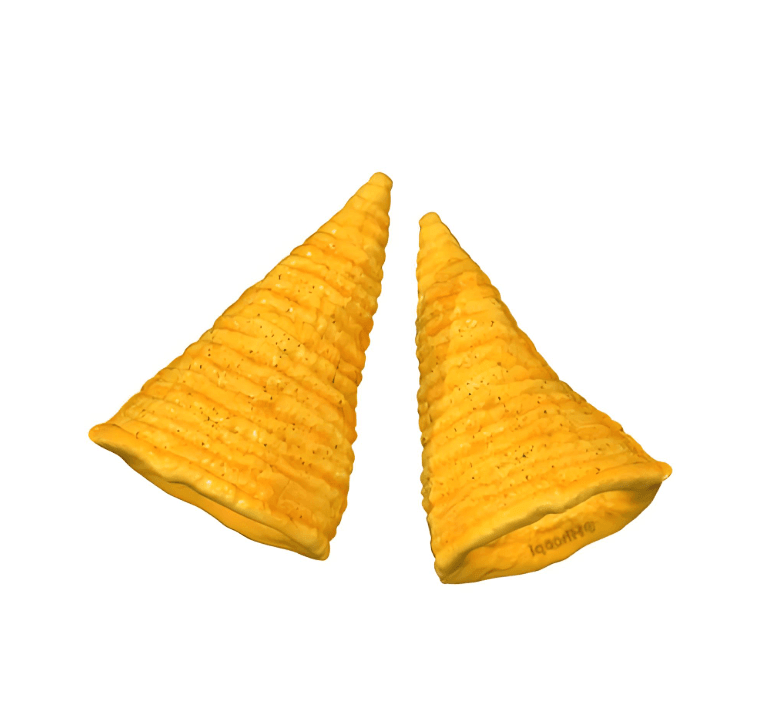
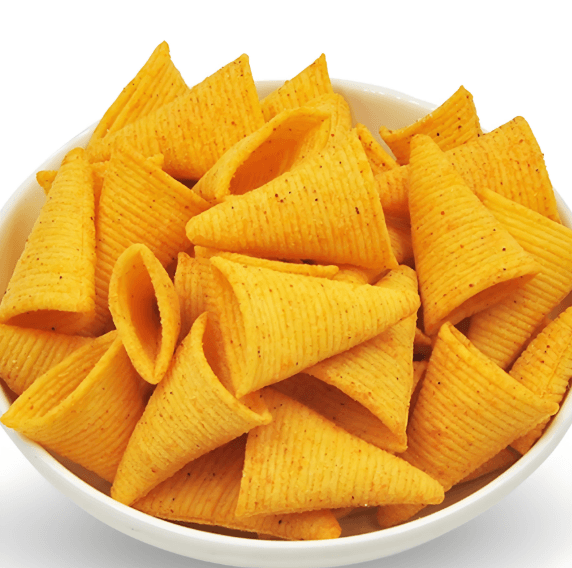
In the vast and competitive landscape of shaped snacks, few are as iconic and structurally unique as the Bugle. Since its introduction in the 1960s, this conical, horn-like crisp has captivated consumers with its shape, its satisfying crunch, and its distinctive salty-savory flavor. To the average eater, it is a fun, bite-sized treat. But to a food scientist or process engineer,Bugle’s Making Machine it is a remarkable artifact of industrial food design—a product whose very form is a direct consequence of a specific and fascinating manufacturing technique.
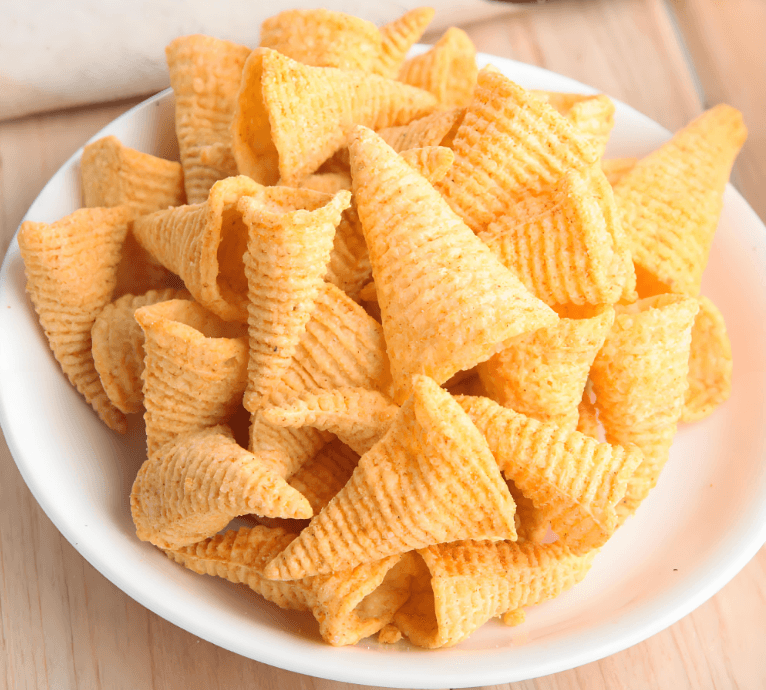
This article is a journey inside the factory, a detailed examination of the alchemy that transforms raw, humble grains into the airy, golden Bugle. We will explore the science of extrusion, the engineering of flavor, and the sophisticated packaging that preserves its delicate texture. This is a reveal of the hidden world behind one of America’s most recognizable snack foods.
Chapter 1: The Foundation – Raw Material Selection
The journey of a Bugle begins not with its shape, but with its substance. The primary ingredient is the cornerstone of its texture and flavor.
- The Grain: Unlike many puffed snacks that use corn meal as their base, Bugles are traditionally made from oat flour or a blend of oat and other grains (like corn or wheat). This choice is critical. Oat flour contributes to a specific density and a slightly richer, nuttier flavor profile compared to pure corn. It also influences the Maillard reaction during cooking, yielding a distinct golden-brown color and toasted taste.
- The Other Components: The dry mix, prepared in large batches, includes:
- Water: Acts as a plasticizer and is essential for the cooking and gelatinization of starch.
- Starches: Potato, corn, or tapioca starch may be blended with the oat flour to fine-tune the expansion and final crispness.
- Oil: A small amount of vegetable oil (e.g., coconut, sunflower, or canola) is often included in the mix to improve dough flow through the machinery and contribute to mouthfeel.
- Leavening Agents: Ingredients like baking soda or monocalcium phosphate may be added to generate extra gas during the heating process, aiding in the final puff.
- Emulsifiers: Lecithin is commonly used to create a more homogeneous dough, ensuring a consistent texture throughout the snack.
This carefully calibrated dry blend is stored in silos, ready to be transformed into dough.
Chapter 2: The Heart of the Matter – The Extrusion Process
This is where the magic happens. The creation of the Bugle’s signature shape is a feat of food engineering centered around a process called low-pressure extrusion.
Step 1: Mixing and Cooking
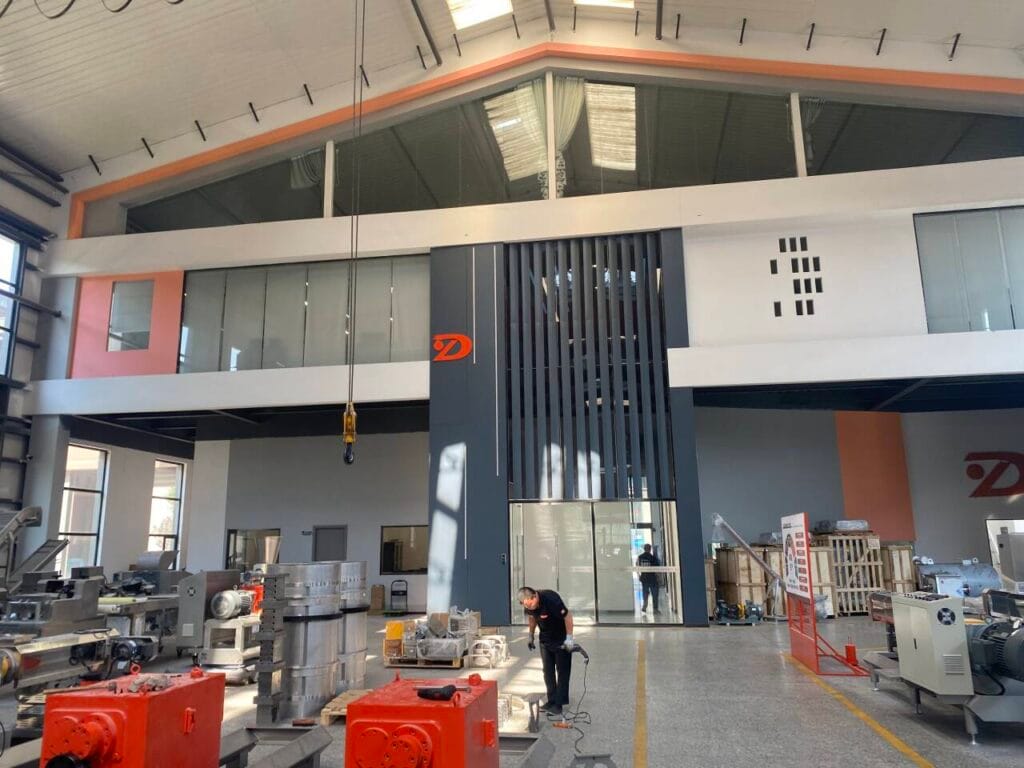
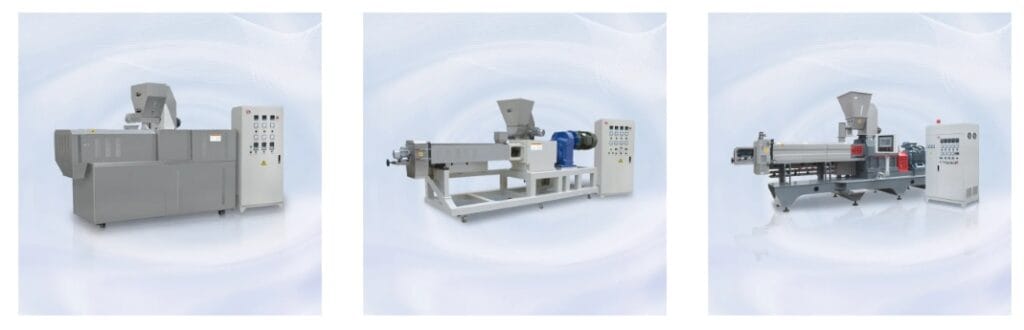
The dry blend is fed into a preconditioner, where it is mixed with warm water and steam. This hydrates the mixture and begins the cooking process. It then enters the extruder itself—a large, barrel-like machine with a rotating screw inside. As the screw conveys the moist mixture forward, Bugle’s Making Machine it subjects it to shear, pressure, and controlled heat. This combination fully gelatinizes the starch. The starch granules swell, rupture, and lose their crystalline structure, forming a hot, pliable, and viscous mass—a dough that is now ready to be shaped.
Step 2: The Die – Where the Shape is Born
At the end of the extruder barrel lies the die. This is not a simple hole. It is a precision-machined plate with specific cut-outs. For Bugles, the die features small, Bugle’s Making Machine star-shaped or otherwise patterned openings. However, the true secret to the cone shape lies in what happens immediately after the dough exits the die.
As the hot, pressurized dough is forced through the die, it emerges as a continuous, ribbon-like tube. Instantly, a set of specially designed knives slices these tubes at an angle and at high speed.
Step 3: The Forming and Drying
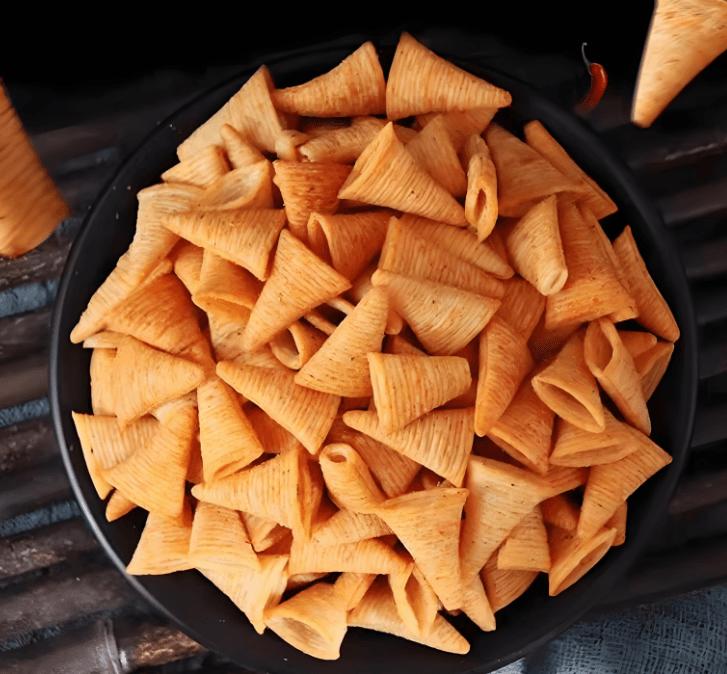
The angled, cut pieces of dough are then carried away from the die by a conveyor belt. This is the critical moment of formation. As each piece is carried, it is allowed to fall and drape over small, conical molds or fingers on the conveyor. The hot, pliable dough naturally curls around these forms, creating the iconic horn shape. The pieces then travel through a multi-zone dryer.
- The Dryer’s Role: The dryer uses hot air to accomplish two things:
- Set the Shape: It rapidly reduces the surface moisture, “setting” the dough in its conical form.
- Puff the Snack: The remaining internal moisture, superheated from the extrusion process, turns to steam. Trapped within the now-set structure, this steam expands, creating the final, airy, and crisp texture of the Bugle. This is a form of “post-extrusion puffing.”
This method differs from the high-pressure extrusion used for snacks like cheese puffs, where the explosive puffing happens directly at the die face. For Bugles, the shaping and puffing are more deliberate, two-stage processes.
Chapter 3: The Flavor Encounter – The Seasoning Application
The plain, puffed Bugle exiting the dryer is bland and ready for its flavor identity.
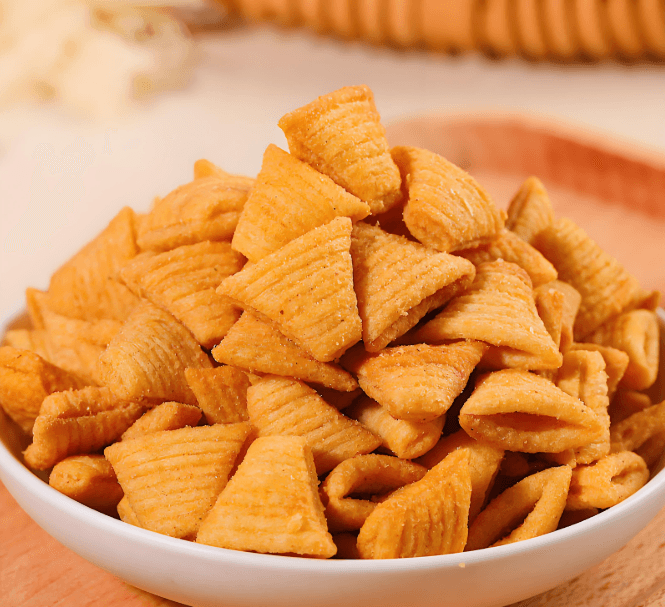
- The Flavor Matrix: The classic “Original” Bugle flavor is a masterclass in simplicity and potency. The seasoning is primarily a mixture of:
- Salt (Sodium Chloride): The fundamental flavor.
- Vegetable Oil: The seasoning is typically applied using an oil-slurry method. The Bugles are tumbled in a large, rotating drum while a fine mist of heated vegetable oil is sprayed over them. This oil acts as a sticky adhesive.
- Flavor Enhancers: Monosodium Glutamate (MSG) and/or yeast extract are almost certainly used to provide the deep, savory, umami notes that make the flavor “pop” and linger.
- The Application: After the oil mist, the dry seasoning blend is introduced into the tumbler. The oily surface of the tumbling Bugles captures the fine powder, ensuring a relatively even coat on both the inside and outside of the conical shape. The tumbling action must be gentle enough not to break the fragile snacks but vigorous enough to ensure an even distribution.
Chapter 4: The Final Steps – Cooling and Quality Control
After their flavorful bath, the Bugles are warm and still slightly pliable.
- Cooling: They are passed through a cooling tunnel, where ambient or slightly chilled air circulates around them. This step is crucial. It brings the snack to room temperature and allows the structure to fully harden into its final, rigid, glassy state. Packaging them while warm would cause condensation inside the bag, leading to sogginess and rapid staleness.
- Automated Inspection: Before packaging, the Bugles pass under sophisticated optical sorters. High-resolution cameras and sensors scan for off-color, misshapen, or broken pieces, which are swiftly ejected from the line by puffs of air. Metal detectors and check-weighers ensure every batch is safe and meets weight specifications.
Chapter 5: The Armor – Sophisticated Packaging
The Bugle’s delicate, airy structure is its greatest weakness when facing its enemies: moisture and physical damage. The packaging is its first and last line of defense.
The bag is a marvel of multi-layer laminate technology, typically consisting of:
- An outer layer of Biaxially Oriented Polypropylene (BOPP) for strength and a high-quality printing surface.
- A middle barrier layer, often a thin, vacuum-deposited coating of aluminum, Bugle’s Making Machine which is exceptionally effective at blocking moisture and oxygen from seeping in.
- An inner sealant layer of polyethylene (PE) that can be heat-sealed to create an airtight environment.
The packaging process is a high-speed “form-fill-seal” operation. The film is shaped into a tube, the bottom is sealed, a precise volume of Bugles is dropped in, the air is often displaced with inert nitrogen gas to prevent oxidation (rancidity), and the top is sealed. The nitrogen also acts as a cushion, protecting the fragile cones from being crushed during shipping and handling.
The Bugle is far more than a fried piece of dough. It is a carefully engineered product whose existence hinges on a precise interplay of ingredient science, mechanical physics, and thermal dynamics. From the selection of oat flour to the angled cut at the die, from the graceful draping over a mold to the final nitrogen-flushed bag, every step is calibrated to produce a consistent, recognizable, and satisfying snack.
Its unique shape is not a gimmick but a direct and clever result of a specific low-pressure extrusion and forming process. The next time you place a Bugle on your finger like a witch’s hat or simply enjoy its light, crispy bite, remember the immense industrial food science that made that simple moment possible. It is a testament to how human ingenuity can shape nature’s bounty into something both fun and fundamentally delicious.
Leave A Comment