
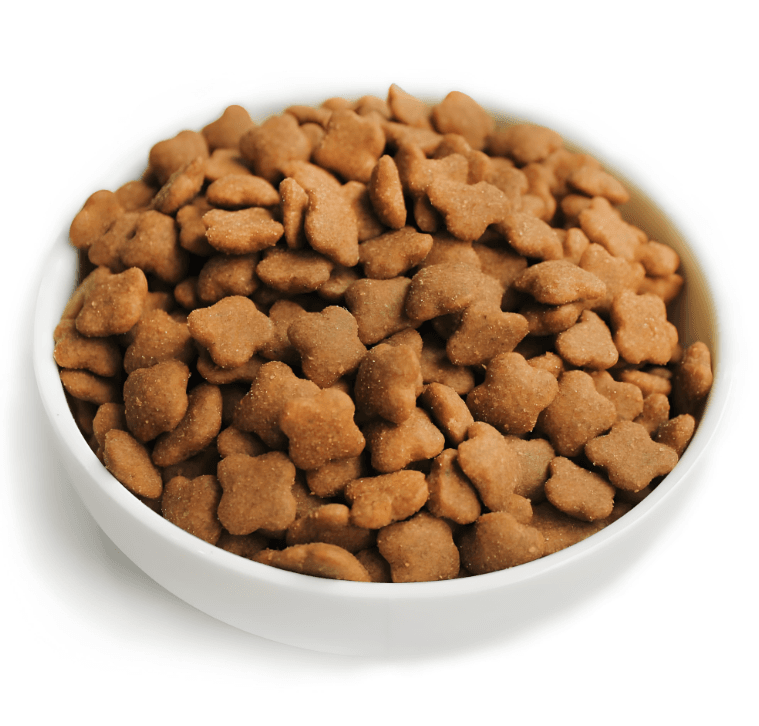
The Alchemy of Kibble: A Detailed Exposé of the Six Pillars of Dog Food Processing
The journey of dog food from its humble origins as simple table scraps or raw meat to the scientifically formulated, shelf-stable kibble of today is a remarkable story of technological innovation, nutritional science, and industrial scaling. The modern pet food industry represents a multi-billion dollar global enterprise, built on the profound shift in the human-canine bond. Dogs are now widely considered family members, and their nutrition is prioritized accordingly. This demand for high-quality, convenient, and health-promoting food has driven the development of complex manufacturing processes that are as sophisticated as those for human food.dog food making machine
However, to the average consumer, a bag of dry dog food—or kibble—can appear deceptively simple. The true complexity lies hidden behind the scenes, in a series of precisely controlled engineering operations that transform raw agricultural materials into a nutritionally complete, safe, and palatable product. This process is a delicate ballet of thermodynamics, chemistry, and mechanics, where a single misstep can compromise the entire batch.
This article will pull back the curtain on this intricate world, providing a detailed examination of the six fundamental pillars that underpin the successful industrial production of dry dog food. We will move beyond a superficial overview and delve into the critical parameters, scientific principles, and potential challenges inherent in each stage. These six pillars are: 1) The Science of Formulation: Blueprinting Nutrition; 2) Ingredient Sourcing and Preparation: The Foundation of Quality; 3) The Grinding and Mixing Phase: Achieving Homogeneity; 4) The Heart of the Process: Extrusion and Cooking; 5) The Finishing Touches: Drying, Coating, and Cooling; and 6) The Guardians of Safety and Quality: Packaging and Quality Assurance.
Pillar 1: The Science of Formulation: Blueprinting Nutrition
Long before the first machine is activated, the process begins on a computer screen with the formula. This is the nutritional blueprint, the recipe that dictates not only the health value of the final product but also its physical properties and processing behavior. Formulation is a complex science, balancing canine nutritional needs with ingredient functionality and cost constraints.
1.1 Understanding Canine Nutritional Requirements
Dogs are facultative carnivores, meaning they are optimized for a meat-based diet but can survive on a wider range of materials. AAFCO (Association of American Feed Control Officials) provides nutrient profiles that establish the minimum and, in some cases, maximum levels of essential nutrients required for a food to be labeled “complete and balanced” for a specific life stage (e.g., growth, adult maintenance, all life stages). Key nutritional components include:
- Proteins: Essential for building and repairing tissues, producing enzymes and hormones. The formula must specify the protein sources (e.g., chicken meal, fish meal, corn gluten meal) and ensure they provide a complete amino acid profile. The concept of biological value is crucial—animal-based proteins are generally more digestible and complete than plant-based ones.
- Fats: A concentrated source of energy, essential fatty acids (like Omega-3 and Omega-6 for skin, coat, and inflammatory response), and carriers for fat-soluble vitamins (A, D, E, K).
- Carbohydrates: While not strictly essential, they provide a cost-effective source of energy, fiber for digestive health, and contribute to the kibble’s structure. Common sources include corn, wheat, rice, barley, and potatoes.
- Vitamins and Minerals: Precisely added in premixed forms to ensure the diet meets all micronutrient requirements. This includes calcium and phosphorus for bones, electrolytes for cellular function, and trace minerals like selenium and zinc.
1.2 The Challenge of Palatability
A nutritionally perfect food is useless if dogs refuse to eat it. Formulators must consider palatability, which is driven primarily by smell and taste. Fats and proteins are key drivers. Palatability enhancers, such as “animal digests” (enzymatically broken-down tissues), can be included in the formula or added later as a coating.
1.3 Functional Ingredients and Specialized Diets
Modern formulas often go beyond basic nutrition to include functional ingredients:
- Joint Support: Glucosamine and chondroitin, often derived from poultry meal or other animal tissues.
- Digestive Health: Prebiotics (e.g., FOS, MOS) to feed beneficial gut bacteria and probiotics (live microorganisms) added after processing to support a healthy microbiome.
- Skin and Coat Health: Elevated levels of Omega-3 fatty acids from sources like fish oil.
- Weight Management: Higher fiber content (e.g., from cellulose or beet pulp) to promote satiety with fewer calories.
The formula is a precise mathematical model, where each ingredient is chosen for its nutritional contribution, its functional role in processing (e.g., starch for expansion, fat for lubrication), and its cost.
Pillar 2: Ingredient Sourcing and Preparation: The Foundation of Quality
The nutritional blueprint is only as good as the raw materials used to build it. The integrity, quality, and safety of the ingredients are paramount. This stage involves receiving, inspecting, and preparing ingredients for the manufacturing process.
2.1 Ingredient Receiving and Inspection
Every shipment of raw materials must be rigorously inspected before being accepted into the facility. This involves:
- Visual Inspection: Checking for foreign material, signs of pest infestation, or visible damage.
- Laboratory Testing: Samples are taken and analyzed for key parameters:
- Proximate Analysis: Verifying protein, fat, moisture, and fiber content to ensure they match the supplier’s specifications.
- Microbiological Testing: Screening for pathogens like Salmonella and E. coli, as well as mold counts (which can produce harmful mycotoxins).
- Chemical Contaminants: Testing for heavy metals (lead, arsenic), pesticides, and other adulterants. The 2007 melamine contamination scandal, where an industrial chemical was added to wheat gluten to artificially inflate its protein reading, underscores the critical need for this vigilance.
2.2 Ingredient Preparation: Grinding
Most solid ingredients, particularly grains and meat meals, are too coarse to be mixed uniformly or processed through an extruder. They must first be reduced in size by a hammer mill or a roller mill.
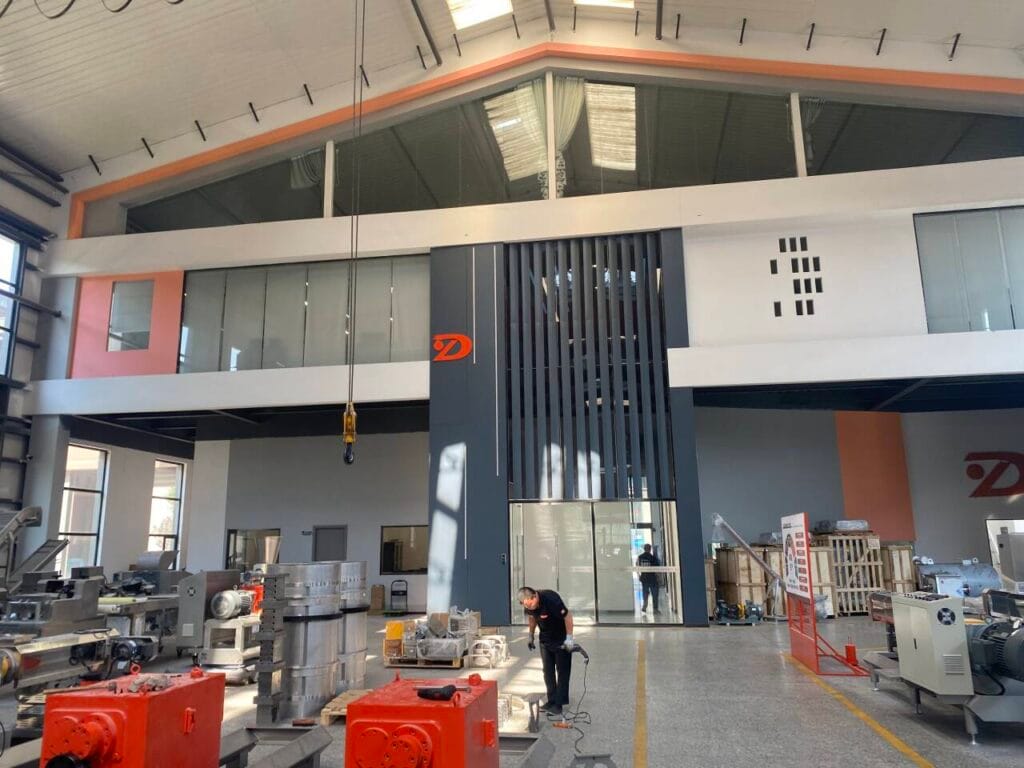
- The Process: Ingredients are fed into a chamber where rotating hammers or rollers pulverize them against a screen. The size of the screen’s holes determines the final particle size.
- The Importance of Particle Size: A consistent and appropriate particle size is critical for several reasons:
- Uniform Mixing: Ensures even distribution of micronutrients like vitamins and minerals throughout the batch.
- Water Absorption: A finer grind allows for more efficient water absorption during the conditioning phase, leading to more complete starch gelatinization.
- Extruder Performance: Prevents clogging and ensures a consistent flow of material through the extruder, which is essential for producing kibble of uniform size and density.
This preparatory step lays the groundwork for a homogeneous mixture, which is the foundation of consistent nutrition in every bite.
Pillar 3: The Grinding and Mixing Phase: Achieving Homogeneity
Once the individual ingredients are prepared, they must be combined into a uniform blend. Achieving a perfectly homogeneous mixture is one of the most critical steps in ensuring that every single piece of kibble contains the same nutritional profile.
3.1 The Mixing Process
The ground ingredients are transported via augers or pneumatic systems to a large, industrial-scale mixer, such as a ribbon blender or a paddle mixer. The dry ingredients (grains, meals, vitamins, minerals) are loaded first and mixed until uniform. Then, the liquid ingredients (fats, oils, water, meat slurries) are added gradually while the mixer continues to run.
3.2 The Challenge of Micro-Ingredients
The greatest mixing challenge involves “micro-ingredients” like vitamins, minerals, and amino acids. These are added in very small quantities (often less than 1% of the total batch). To prevent them from clumping or forming pockets of concentration, they are first pre-mixed with a “carrier” substance (like rice hulls or corn flour) to create a larger, more manageable volume. This premix is then added to the main batch.
3.3 Quality Control at Mixing
The mixing time is carefully controlled. Under-mixing leads to nutrient hotspots and deficiencies, while over-mixing can cause the separation of ingredients by density (segregation). Quality control technicians take samples from different parts of the mixer and analyze them to ensure nutritional consistency before the batch is released for the next stage. The resulting uniform powder is now ready for its transformation.
Pillar 4: The Heart of the Process: Extrusion and Cooking
This is the central, most complex, and most transformative stage of the entire process. Extrusion is a high-temperature, short-time cooking process that uses heat, pressure, and mechanical shear to plasticize the ingredient mixture and form it into the familiar kibble shape.
4.1 The Extruder: A Precision Cooking Machine
An extruder is a long barrel with a screw(s) rotating inside. The mixed powder, or “meal,” is fed into one end.
- The Screw Configuration: The screw is designed with different sections: a feed section that conveys the material, a compression section that kneads and heats it, and a melting section where the material becomes a viscous dough.
- The Application of Heat and Steam: As the meal is conveyed along the barrel, steam is injected directly into the product. The combination of this external heat, the internal frictional heat generated by the screw, and the direct steam injection cooks the dough.
4.2 Starch Gelatinization: The Key Transformation
The most critical chemical change during extrusion is starch gelatinization. The starch granules in the grains absorb water and swell under heat and pressure, losing their crystalline structure. The granules rupture, and the starch molecules leach out, forming a gelatinized, plasticized mass. This transformation is essential because:
- It improves digestibility, making the energy in the starch available to the dog.
- It gives the dough its expansion properties. The gelatinized starch acts like a balloon that can trap steam.
4.3 The Die and Knife: Shaping the Kibble
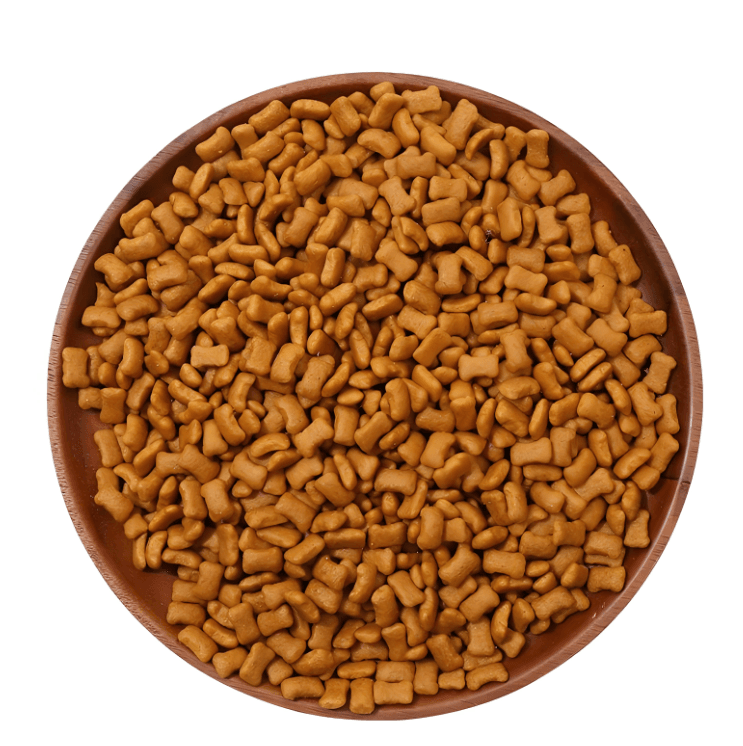
At the end of the extruder barrel is a metal die plate with precisely shaped holes. The cooked, pressurized dough is forced through these holes. As it exits the die into the ambient pressure of the room, the superheated water within the dough instantly flashes into steam. This rapid expansion “puffs” the dough, creating the kibble’s airy, porous texture. Immediately outside the die face, a rotating knife cuts the extruding strands into individual pieces of the desired length.
The size, shape, and thickness of the die holes, along with the cutter speed, determine the final kibble’s geometry, which can be tailored for different dog sizes—from tiny pieces for Chihuahuas to large, dense kibble for Mastiffs.
Pillar 5: The Finishing Touches: Drying, Coating, and Cooling
The kibble exiting the extruder is fully cooked but soft, moist, and fragile. It must undergo several more steps to become the shelf-stable, crunchy product found in bags.
5.1 Drying
The expanded kibble, with a moisture content of around 20-25%, is conveyed through a multi-pass dryer. This is essentially a large oven where hot, dry air is circulated over the product. The drying process reduces the moisture content to a level of about 8-10%. This low moisture is critical for:
- Shelf Stability: It prevents the growth of mold and bacteria.
- Creating Crunch: It sets the kibble’s rigid, crunchy texture.
The temperature and time in the dryer are carefully controlled to avoid case-hardening (creating a hard shell that traps moisture inside) or over-drying, which can make the kibble brittle and prone to breakage.
5.2 Fat and Flavor Coating
After drying, the kibble is often porous and somewhat bland. To increase palatability and energy density, it passes through a coating drum or flavor enhancer.
- The Process: A fine mist of hot, liquid fat (e.g., chicken fat, beef tallow, or vegetable oil) is sprayed onto the tumbling kibble. The fat is absorbed into the porous structure.
- Palatability Enhancers: This fat coating often contains powdered palatability enhancers, such as animal digests or powdered liver, which give the kibble its irresistible (to dogs) aroma and taste. This is also the stage where heat-sensitive ingredients, like probiotics and some vitamins, are often added, as they would have been destroyed during the high-heat extrusion and drying processes.
5.3 Cooling
The kibble is now hot from drying and coating. If it were packaged immediately, the residual heat would cause condensation inside the bag, leading to spoilage. Therefore, the kibble is conveyed through a cooler, where ambient or cooled air is circulated around it, bringing it down to room temperature and stabilizing it for packaging.
Pillar 6: The Guardians of Safety and Quality: Packaging and Quality Assurance
The final steps are crucial to preserving the quality and safety achieved through the complex previous stages.
6.1 Automated Packaging
The cooled kibble is transported to automated packaging lines. It is funneled into bags made from multi-layer plastic films that provide a barrier against moisture, oxygen, and light. The most critical step is nitrogen flushing. Just before the bag is sealed, a jet of inert nitrogen gas is injected into the bag, displacing the oxygen-rich air.
- Why Nitrogen? Oxygen causes oxidative rancidity in fats, leading to off-flavors and the destruction of fat-soluble vitamins. By replacing oxygen with inert nitrogen, the shelf life of the product is extended from a few weeks to many months.
6.2 Quality Assurance: A System, Not a Step
Quality control is not a single event but an integrated system that runs throughout the entire process. It includes:
- In-Process Checks: Continuously monitoring critical control points like extrusion temperature, dryer temperature, and moisture content.
- Metal Detection: The kibble stream passes through a metal detector to remove any metal fragments from the machinery.
- Finished Product Testing: Every batch of finished product is tested before release for:
- Nutritional Analysis: Verifying that it meets the guaranteed analysis for protein, fat, fiber, and moisture.
- Microbiological Safety: Confirming the absence of pathogens like Salmonella.
- Physical Properties: Checking kibble size, shape, and durability.
6.3 The HACCP System
Modern pet food plants operate under a Hazard Analysis Critical Control Point (HACCP) system. This is a proactive, preventive framework that identifies potential biological, chemical, and physical hazards at each step of production and establishes controls to prevent them. For example, the extrusion cooking step is a Critical Control Point (CCP) for the elimination of biological hazards like Salmonella.
The production of a simple bag of dry dog food is a remarkable feat of modern food technology. It is a symphony of precisely controlled operations, where agricultural science, thermodynamics, chemistry, and mechanical engineering converge. From the initial formulation on a computer to the final nitrogen-flushed seal, every parameter—particle size, moisture, temperature, pressure—is a critical note that must be in perfect harmony. The next time you pour kibble into your dog’s bowl, you can appreciate the immense technological journey it has undertaken—a process designed to deliver consistent, safe, and complete nutrition to our canine companions, supporting their health and vitality through every stage of their lives.
Leave A Comment