
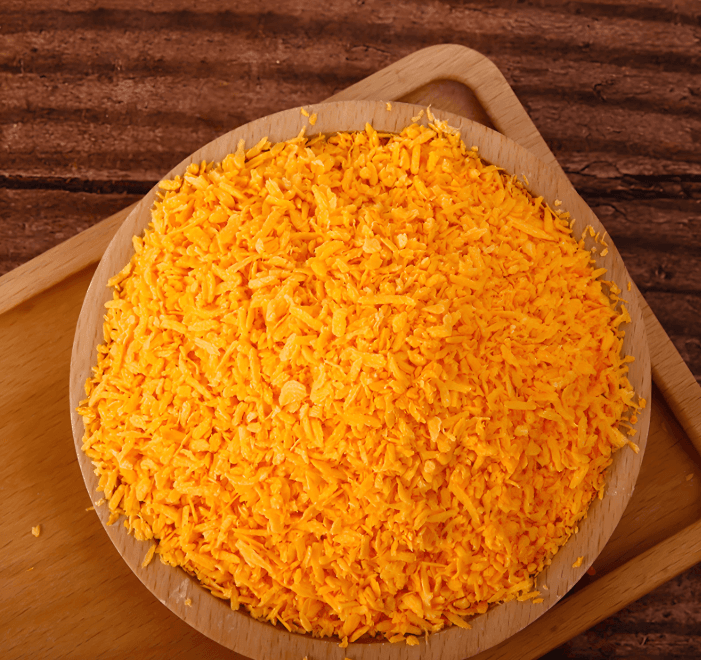
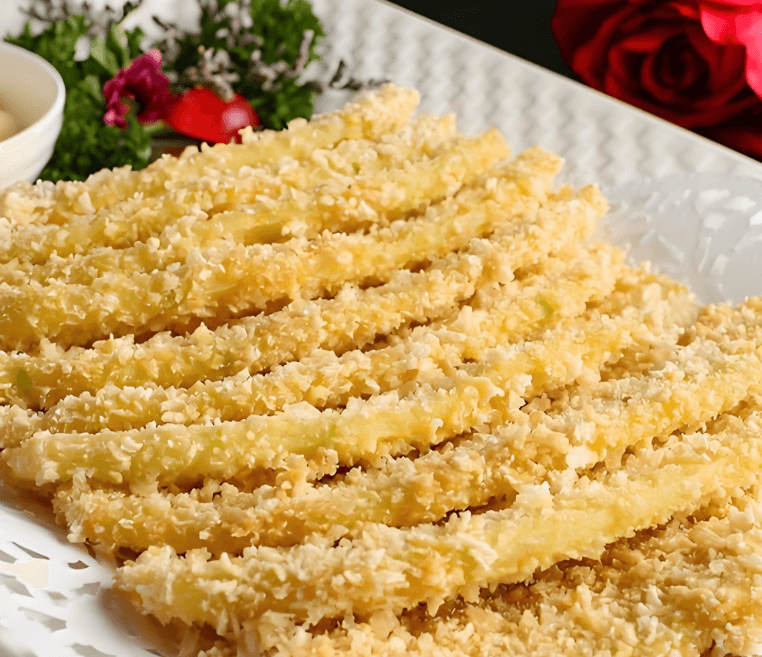
Needle-style breadcrumbs, characterized by their long, slender, and needle-like shape, offer a unique crispy texture and superior adherence, making them ideal for coating high-end food products such as seafood, cutlets, and appetizers. commercial bread crumb machine The production process utilizes a specialized extrusion cooking system to transform raw flour directly into the final product, bypassing traditional baking and crumbling steps. Here is a detailed breakdown of the processing technology.
1. Raw Material Preparation
The process begins with the selection and pre-treatment of key ingredients:
- Primary Flour: High-quality wheat flour is the base, typically with a medium protein content (9-11%) to provide structure without excessive chewiness.
- Functional Additives:
- Starches: (e.g., potato, tapioca) are added to enhance crispiness and expansion.
- Leavening Agents: A small amount of baking powder or yeast extract may be used to promote a slight internal aeriation.
- Salt, Sugar, & Seasonings: Added for basic flavor. The levels are kept low as these crumbs are often used in seasoned applications.
- Emulsifiers: (e.g., lecithin) improve dough homogeneity and process stability.
- Mixing: Dry ingredients are precisely weighed and blended in a high-speed powder mixer to ensure a perfectly homogeneous pre-mix. This uniformity is critical for consistent extrusion.
2. Dough Conditioning & Feeding
The dry mix is transferred to a live hopper above the extruder.
- Liquid Addition: Water (and sometimes minor liquid ingredients like oil or liquid emulsifiers) is injected directly into the preconditioning chamber or the first barrel section of the extruder via a metering pump.
- Pre-conditioning (Optional but Beneficial): The mixture may pass through a pre-conditioner where it is blended with steam and hot water. commercial bread crumb machine This hydrates the flour and begins starch gelatinization, improving extruder throughput and stability.
3. Thermo-Mechanical Cooking & Shaping (The Core Extrusion Process)
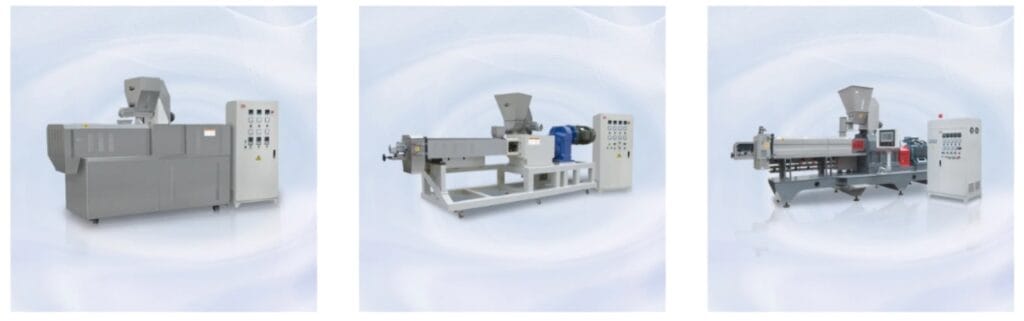
This is the most critical stage, conducted in a twin-screw food extruder, which offers the necessary precision and shear control.
- Cooking Zone: The moistened mix enters the extruder barrel. Through a combination of mechanical shear from the intermeshing screws and conductive heat from barrel heaters, the dough is rapidly cooked. Starch undergoes gelatinization, and the mass becomes a viscous, plasticized dough.
- Key Parameters: Low to moderate moisture content (~20-28%), high temperature (130-160°C), and specific mechanical energy (SME) input are tightly controlled to achieve partial gelatinization without excessive expansion.
- Forming & Cooling Zone: The cooked dough is then conveyed into a cooler, final section of the barrel. Here, screw elements are configured to gently cool and densify the dough before it reaches the die.
- Die & Cutter Assembly (Key to Needle Shape): The plasticized dough is forced through a specialized die plate. This die contains hundreds of small, precise holes (typically 1.0-1.5mm in diameter). As the dough extrudes through these holes, it forms long, continuous strands.
- A high-speed rotary cutter, mounted directly against the die face, slices these strands into uniform, short lengths (typically 3-6mm), creating the characteristic “needle” shape. The cutter speed is synchronized with the extrusion rate.
4. Post-Extrusion Drying & Toasting
The soft, moist needles must be dehydrated and texturized.

- Multi-Stage Conveyor Dryer: The extruded needles are transferred to a multi-pass belt dryer.
- First Stage (High Humidity): Uses lower temperatures (80-100°C) to gently remove surface moisture without case-hardening.
- Second/Third Stage (Toasting): Employs higher temperatures (110-130°C) to remove internal moisture, create a crispy texture, and develop a uniform golden-brown color through Maillard reactions.
- Precise Moisture Control: The final moisture content is critical, typically reduced to 5-8% to ensure shelf-stability and crispiness.
5. Cooling & Sizing
- Cooling: The hot, dried needles are passed through a cooling conveyor to bring them to near ambient temperature, preventing condensation in packaging.
- Screening: The product is passed over vibratory screens to remove any fines (broken pieces) or oversized agglomerates, ensuring a uniform particle size distribution.
6. Coating (Optional Enhancement)
For premium applications, an optional coating step may be included:
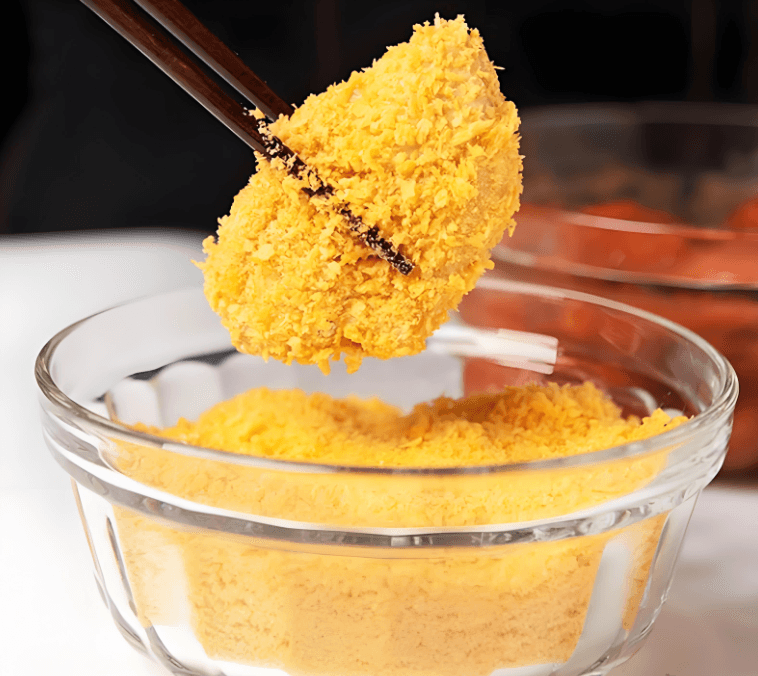
- An oil/seasoning drum coater can be used to apply a fine mist of oil and adhere powdered seasonings (e.g., paprika, onion powder) to the crumbs, enhancing flavor, color, and browning characteristics during the end-user’s frying process.
7. Packaging
The finished needle-style breadcrumbs are weighed and packed using automatic bagging machines.
- Packaging Material: Must have excellent moisture barrier properties (e.g., metallized PET/PE) to maintain crispness.
- Nitrogen Flushing: Often used to displace oxygen, further extending shelf life and preventing rancidity.
Key Process Advantages Over Traditional Methods
- Consistency: Produces uniform shape, size, and texture batch after batch.
- Efficiency: A continuous, single-step process from flour to finished crumb, reducing energy and labor costs compared to baking, drying, and grinding.
- Customization: The texture (hardness/crispiness), color, and even flavor can be adjusted by modifying the extrusion parameters (moisture, temperature, SME) and recipe.
- Superior Functionality: The needle shape and porous structure created by extrusion provide excellent adhesion and a uniquely delicate, crispy mouthfeel.
This integrated extrusion technology allows for the efficient, commercial bread crumb machine high-volume production of a premium coating ingredient with consistent quality and superior performance characteristics.
Leave A Comment