
Deconstructing the Matrix: A Comprehensive Deep Dive into the Processing Technology of Textured Vegetable Protein
Abstract:
The global food landscape is undergoing a seismic shift. Driven by concerns for personal health, animal welfare, and environmental sustainability, consumers are increasingly seeking alternatives to traditional animal-based proteins. At the forefront of this revolution is Textured Vegetable Protein (TVP), a versatile and nutritious ingredient that forms the backbone of countless meat analog products. Despite its prevalence, the complex manufacturing processes that transform humble legumes—primarily soybeans—into fibrous, meat-like structures remain largely opaque to the public. This article aims to demystify TVP production. We will embark on a detailed journey from raw material selection through advanced extrusion and finishing techniques, exploring the science, engineering, and innovation that make modern plant-based meats possible. We will examine the critical role of protein chemistry, the physics of extrusion, and the future of this rapidly evolving industry.soya chunk making machine
Introduction: The Rise of a Plant-Based Pillar
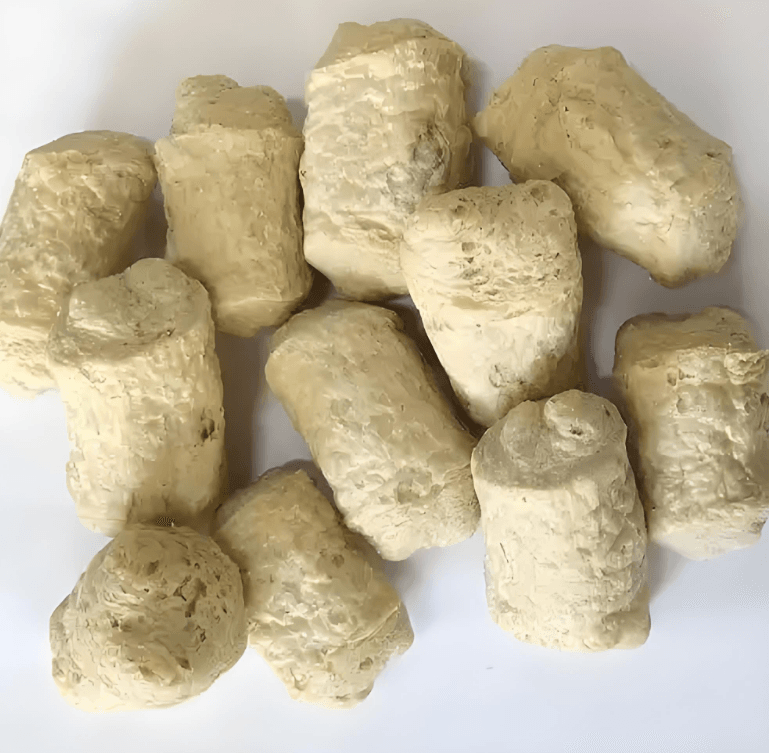
Textured Vegetable Protein, also known as textured soy protein (TSP), soy meat, or plant protein chunks, is a defatted soy flour product that has been processed into a textured, fibrous, and porous structure. Its invention and commercialization in the 1960s provided a cheap, shelf-stable, and high-protein ingredient for the food industry, initially finding its way into school cafeterias, institutional settings, and budget-conscious products as an extender for ground meat.soya chunk making machine
Today, its role has dramatically evolved. TVP is no longer just a filler; it is the primary structural component in high-end plant-based burgers, sausages, chicken nuggets, crumbles, and even whole-muscle analogs like steaks and chicken breasts. The driving forces behind this evolution are multifaceted:
- Health Consciousness: TVP is cholesterol-free, low in saturated fat, and high in protein and fiber. It aligns with dietary recommendations for reducing red meat consumption.
- Environmental Concerns: Livestock farming is a major contributor to greenhouse gas emissions, land use, and water consumption. Soy cultivation for direct human consumption (like TVP) is significantly more resource-efficient.
- Ethical Considerations: Growing awareness of animal welfare issues in industrial farming is pushing consumers toward cruelty-free alternatives.
- Technological Advancement: Breakthroughs in food science and processing technology have enabled the creation of TVP products with sensory properties (taste, texture, mouthfeel) that closely mimic animal meat, appealing to a broader flexitarian audience.
Understanding how TVP is made is key to appreciating its value and potential. The process is a marvel of food engineering, leveraging thermomechanical energy to fundamentally alter the architecture of plant proteins.soya chunk making machine
Chapter 1: The Raw Material Foundation – Selecting the Right Protein
The journey of TVP begins not in the factory, but in the field. The choice of raw material is paramount, as it defines the final product’s nutritional profile, functional properties, and flavor.
1.1 The Sovereignty of Soy
Soybeans (Glycine max) are the undisputed king of TVP production for several reasons:
- High Protein Content: Soybeans contain about 36-40% protein on a dry basis, one of the highest among legumes.
- Complete Protein: Soy protein is a complete protein, meaning it contains all nine essential amino acids required by the human body.
- Excellent Functionality: Soy proteins, particularly the storage proteins glycinin (11S) and β-conglycinin (7S), possess unique functional properties—such as solubility, gelation, emulsification, and water/oil absorption—that are crucial for texturization.
- Established Supply Chain: Decades of cultivation for oil and animal feed have created a massive, reliable, and cost-effective global supply chain for soybeans.
1.2 Beyond Soy: The Emergence of Alternatives
While soy dominates, other proteins are gaining traction due to allergies, consumer preference for non-GMO sources, and a desire for variety.soya chunk making machine
- Pea Protein: Isolated from yellow peas, it is hypoallergenic and non-GMO. Its functionality is different from soy, often requiring specific processing adjustments to achieve optimal texture.
- Wheat Gluten: The protein component of wheat, it is highly elastic and viscous (viscoelastic), providing a chewy, cohesive texture. It is often used in blends with other proteins.
- Fava Bean Protein: Similar to pea protein, it offers a strong, sustainable profile.
- Mycoprotein: A unique filamentous fungal protein (e.g., from Fusarium venenatum, used in Quorn products). While not a plant protein per se, it is a key meat alternative produced via fermentation, creating a natural fibrous structure.
- Blends: Most commercial TVP products use a blend of proteins (e.g., soy-pea, pea-wheat gluten) to optimize cost, nutrition, and, most importantly, the final texture and flavor.
1.3 From Bean to Base: Primary Processing into Flour, Concentrate, and Isolate
Raw soybeans are not directly used for extrusion. They undergo primary processing to remove fats and other non-protein components, resulting in three main base materials:
- Defatted Soy Flour: Produced by dehulling and cracking soybeans, conditioning them with heat, flaking them to rupture oil cells, and then extracting the oil using hexane solvent. The resulting flakes are toasted and ground into flour with a protein content of ~50-55%.
- Soy Protein Concentrate (SPC): Further processed from defatted flour to remove soluble carbohydrates (sugars), often using aqueous alcohol extraction or acid leaching. This raises the protein content to ~65-70% and significantly reduces the “beany” and flatulent oligosaccharides.
- Soy Protein Isolate (SPI): The purest form of soy protein, obtained by extracting the protein at an alkaline pH, separating the insoluble fiber (okara), and then precipitating the protein at its isoelectric point (pH ~4.5). It is then neutralized, pasteurized, and spray-dried. SPI has a protein content of >90%. It offers superior gelling and water-binding capacity but is more expensive.
The choice between flour, concentrate, and isolate involves a trade-off between cost, protein content, functionality, and final product quality. High-end meat analogs often use SPC or SPI, while economical TVP chunks and extenders use defatted flour.
Chapter 2: The Heart of the Matter – The Science and Technology of Extrusion
Extrusion is the transformative core of TVP manufacturing. It is a continuous process that combines multiple unit operations—mixing, kneading, cooking, shearing, and shaping—into a single piece of equipment: the extruder.
2.1 Anatomy of a Twin-Screw Extruder
While single-screw extruders exist, modern TVP production almost exclusively relies on co-rotating, intermeshing twin-screw extruders for their superior mixing, pumping, and process control capabilities. Key components include:
- Feed Hopper: Where the dry protein powder and other solid ingredients are introduced.
- Liquid Injection Ports: For precise addition of water, steam, and liquid ingredients (oils, colors, flavors).
- Barrel: A long, hardened steel cylinder housing the screws. It is split into multiple segments, each with independent temperature control (via electrical heaters or liquid coolant).
- Twin Screws: Two intricately designed screws that intermesh. Their configuration—comprising conveying elements (to push material forward), kneading blocks (to impart shear and mixing), and reverse elements (to create resistance and backflow)—is custom-designed for each product.
- Die: A metal plate with one or more shaped holes at the end of the barrel. It shapes the product and creates the final pressure build-up inside the barrel.soya chunk making machine
2.2 The Thermomechanical Transformation: A Step-by-Step Journey
The process inside the extruder barrel is a carefully orchestrated physical and chemical ballet:
- Feeding and Mixing (Solid Conveying Zone): The dry protein mix is fed into the hopper and conveyed into the barrel. Here, it is blended into a homogeneous dry mix.
- Hydration and Plasticization (Melt Zone): Water is injected, and the screws thoroughly mix it with the powder, creating a damp dough. The mechanical energy from the rotating screws and the thermal energy from the heated barrel walls begin to raise the temperature of the dough.
- Cooking and Shearing (High-Shear Zone): This is the critical stage. The dough enters a section configured with kneading blocks and restrictive elements. The screws’ mechanical action generates intense shear stress and viscous dissipation, rapidly heating the dough to temperatures between 120°C and 180°C. Under this combination of high heat, pressure (20-40 bar), and intense shear, several key changes occur:
- Protein Denaturation: The intricate tertiary and quaternary structures of the native globular proteins unfold (denature), exposing their hydrophobic cores and functional groups.
- Cross-Linking and Realignment: The unfolded protein chains align along the direction of the shear flow. Disulfide bonds (-S-S-), hydrophobic interactions, and hydrogen bonds form between these aligned chains, creating a new, three-dimensional, cross-linked protein network—a “melt.”
- Vaporization and Texturization (Die Zone): The hot, pressurized protein melt is forced through the die. As it exits into the ambient pressure, the superheated water trapped within the matrix instantly flashes into steam. This violent expansion (vaporization) creates countless tiny bubbles and pores within the plasticized protein network, puffing the product. The protein network, now set by the cross-linking, stretches around these bubbles, forming the characteristic spongy, fibrous, and anisotropic (directionally oriented) structure of TVP.
- Cutting: A rotating knife blade at the face of the die cuts the expanding extrudate into the desired shapes—chunks, flakes, granules, or strips.soya chunk making machine
2.3 Low-Moisture vs. High-Moisture Extrusion
The above process describes Low-Moisture Extrusion Texturization, where the final moisture content of the extrudate is below 35%. The product is hard, dry, and shelf-stable, requiring rehydration before use.
A more advanced technology, High-Moisture Extrusion Cooking (HMEC), is responsible for the latest generation of whole-muscle meat analogs. The principle is similar, but key differences yield a vastly different product:
- Moisture Content: Water is added at a much higher rate (often 60-80% of total mass), resulting in a final product moisture content of 50-70%—similar to cooked meat.
- Cooling Die: The most crucial component. After the protein melt is cooked, it is conveyed through a long, water-cooled die (a “cooling tube”). This allows the fibrous structure to solidify and align under tension and cooling, rather than expanding. This creates dense, layered, muscle-like fibers with a chew and mouthfeel remarkably similar to chicken breast or pork.
- Product State: The output from HMEC is a continuous, hot log of fibrous protein that can be sliced, shredded, or formed. It is sold fresh or chilled, not dried.
Chapter 3: Post-Processing and Finishing – From Bland Sponge to Savory Delicacy
The extruded TVP, especially the low-moisture variety, is a blank canvas. It is porous, bland, and beige-colored. Post-processing is essential to make it palatable and functional.
3.1 Drying and Cooling
Low-moisture extrudates are hot and still contain some moisture. They are conveyed through dryers (often multi-pass belt dryers or fluidized bed dryers) to reduce the moisture content to 8-10% for microbial stability and long shelf life. They are then cooled to ambient temperature to prevent condensation in packaging.
3.2 The Art and Science of Flavoring
The porous structure of TVP is a blessing for flavorists. It acts like a sponge, eagerly absorbing any liquid it contacts. Flavoring can be achieved through:
- Liquid Soaking/Spraying: The dried TVP is rehydrated in a flavored broth or solution containing salt, hydrolyzed vegetable protein (HVP), yeast extract, spices, herbs, vegetable powders, and umami compounds (like mushroom extract or MSG). This is the most common method.
- Dry Coating: A dry seasoning blend is adhered to the TVP using a small amount of oil or a binding agent like maltodextrin.
- Inclusion during Extrusion: Some heat-stable flavors and colors can be added directly to the extruder, though this is less common due to potential flavor loss or degradation.
3.3 Coloring
The Maillard reaction (browning reaction between amino acids and reducing sugars) that gives cooked meat its color does not occur to a significant degree in TVP extrusion. Therefore, color must be added.
- Natural Colorants: Beet juice concentrate (red), paprika extract (orange-red), annatto (yellow), and caramel color (brown) are widely used. These are often added to the rehydration broth.
- Leghemoglobin: A heme protein found in soy root nodules, now produced via fermentation (e.g., the “heme” in Impossible Foods products). It provides a meat-like red color and catalyzes Maillard-like flavor reactions during cooking, creating a uniquely meaty sensory experience.
3.4 Fat Application
Meat’s juiciness and mouthfeel come largely from fat. To replicate this, TVP products are often coated with fats and oils—such as sunflower, coconut, or canola oil—after rehydration and flavoring. Coconut oil is popular because it is solid at room temperature and melts upon cooking, mimicking the behavior of animal fat.
Chapter 4: Quality, Nutrition, and the Future
4.1 Evaluating TVP Quality
Quality control is rigorous and multi-faceted:
- Physical Properties: Water/oil absorption capacity, bulk density, piece integrity, and texture (measured by instruments like a Texture Analyzer for hardness, chewiness, springiness).
- Nutritional Analysis: Protein content (via Kjeldahl or Dumas method), amino acid profile, fiber, fat, moisture, and ash.
- Microbiological Safety: Testing for total plate count, yeast, mold, E. coli, and Salmonella to ensure safety.
- Sensory Evaluation: Trained panels and consumer testing evaluate appearance, aroma, texture, flavor, and overall acceptability.
4.2 Nutritional Considerations
TVP is a highly nutritious ingredient. It is a rich source of protein and dietary fiber and is cholesterol-free. However, critics point to its status as a processed food. The extent of processing is a topic of debate. While extrusion does involve heat and mechanical energy, it is a physical process that does not typically involve harsh chemicals (aside from the initial hexane extraction for defatted flour, though residual hexane is minimized to negligible levels). The addition of salt, flavors, and fats in finished products can affect their health halo, making it crucial for consumers to read labels.
4.3 The Horizon: Future Innovations in TVP Processing
The technology is far from static. The next frontier involves moving beyond mimicking ground meat to replicating the complex, vascularized structure of whole-muscle meat with marbled fat. Key areas of innovation include:
- Shear Cell Technology: An alternative to extrusion that uses a Couette cell (concentric cylinders) to create laminar shear flow, aligning protein fibers into larger, more organized structures. Proponents believe it can create more realistic marbling by layering protein and fat.
- 3D Food Printing: Using precision printers to deposit layers of different protein “inks,” fat emulsions, and even synthetic blood (like leghemoglobin) to build complex, customized meat structures from the ground up.
- Scaffolding Technologies: Using biomaterials to create micro-scale scaffolds that guide plant protein cells or mycoprotein hyphae to grow into specific, tissue-like architectures.
- Novel Protein Sources: Exploring proteins from algae, lupin, mung bean, and even upcycled sources like brewer’s spent grain.
- Precision Fermentation: Not for producing the structure itself, but for producing key ingredients like heme proteins, specific fats, and flavor compounds that are identical to their animal-derived counterparts, thereby enhancing the sensory profile of TVP-based products.
Conclusion
The processing of Textured Vegetable Protein is a sophisticated fusion of agricultural science, protein chemistry, mechanical engineering, and culinary art. What begins as a simple legume is transformed through the precise application of heat, pressure, and shear into a diverse range of nutritious and sustainable food ingredients. From the economical dry chunks to the high-moisture fibrous logs that rival animal meat in texture, TVP technology has come an incredibly long way.
This deep dive reveals that TVP is not a “frankenfood” but the result of deliberate and refined processing techniques designed to maximize the innate potential of plant proteins. As technology continues to advance, pushing the boundaries of texture, flavor, and nutritional optimization, TVP and its next-generation counterparts are poised to play an even more central role in building a more sustainable, ethical, and healthy global food system. The secret is out: the future of meat is being engineered, one extruder die at a time.
Leave A Comment