
Deconstructing the Jar: A Comprehensive Exposé on the Industrial Production of Baby Rice Cereal
The journey of a baby’s first solid food, from a humble grain of rice to the fine, fortified powder in a sealed container, is a marvel of modern food engineering. For most parents, it is a product of pure convenience and trust—trust in safety, trust in nutrition, and trust in the regulatory frameworks that govern infant nutrition. However, the industrial process that creates this staple is a complex, multi-stage operation shrouded in technical jargon and corporate secrecy. This deep dive aims to pull back the curtain, examining the six fundamental pillars that define the production of commercial baby rice cereal. We will explore the raw material selection, the precision grinding and milling, the transformative heat treatments, the critical science of nutrient fortification, baby food making machine the uncompromising protocols of quality control, and the final packaging that ensures shelf stability. In doing so, we will reveal not just how it’s made, but the profound decisions, baby food making machinepotential compromises, and immense technological effort that go into every single spoonful.
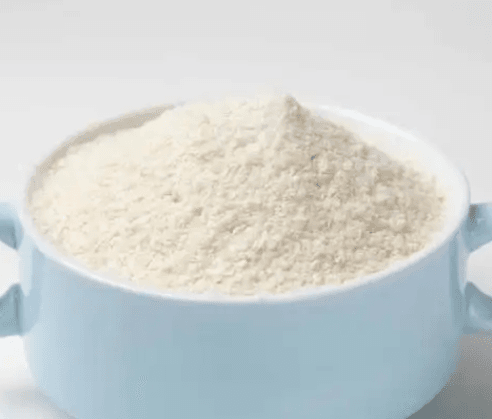
Point 1: The Foundation – Sourcing and Selection of Raw Materials
The axiom “garbage in, garbage out” is nowhere more pertinent than in the production of food for infants. The entire process is fundamentally dependent on the quality of its primary ingredient: rice. But this is not merely about choosing any rice; it is a meticulous selection process governed by agronomic science, supply chain logistics, and stringent safety thresholds.
The Agri-Contract and Specific Rice Varieties:
Unlike the generic rice found on supermarket shelves, baby food manufacturers typically contract with specific farms or agricultural cooperatives that can guarantee a consistent supply of a particular rice variety. The most commonly used is refined, white rice. Brown rice, while nutritionally superior in theory due to its higher fiber and vitamin content, is used less frequently. The reasons are twofold: first, its higher oil content in the bran layer can lead to rancidity, shortening shelf life. Second, and more critically, the bran layer is where environmental contaminants, such as heavy metals, are more likely to concentrate. White rice, having had the bran and germ removed, presents a “cleaner” albeit less nutritious starting point, which manufacturers then rebuild through fortification.
The variety of rice is chosen for its functional characteristics. Medium or short-grain rice is often preferred over long-grain varieties because it tends to have a higher starch content. This starch is crucial as it breaks down into the simple sugars that give the cereal its characteristic mild sweetness and smooth, non-gritty texture when mixed with liquid. The rice is harvested and then transported to processing facilities where it is stored in controlled environments to prevent moisture absorption and pest infestation.
The Invisible Threat: Heavy Metal Contamination and Soil Management:
This is arguably the most controversial and critically examined aspect of raw material sourcing. Independent and governmental studies have repeatedly found trace amounts of heavy metals—including inorganic arsenic, lead, cadmium, and mercury—in baby rice cereals. Rice is a particularly efficient “bio-accumulator” of arsenic, which is naturally present in soil and water and can be exacerbated by historical use of arsenic-based pesticides and industrial pollution.
Manufacturers do not simply accept this as an inevitability. Sourcing strategies have become the first line of defense. This involves:
- Geographic Sourcing: Procuring rice from specific regions known to have lower natural arsenic levels in the soil and water. For instance, rice from California has been shown to have lower inorganic arsenic levels on average than rice from the Southern U.S. due to different geological and historical agricultural practices.
- Soil Testing and Crop Rotation: Working with contracted farms to implement rigorous soil testing protocols. Fields with heavy metal concentrations above internally set thresholds (which are often stricter than government regulations) are disqualified for infant food production.
- The Organic Question: It is vital to note that “organic” certification pertains to the non-use of synthetic pesticides and fertilizers. It does not inherently mean the rice is free from heavy metals, as these elements are naturally occurring. An organic label addresses one set of concerns but not necessarily the most pressing one regarding inorganic arsenic.
Pre-Processing: Cleaning and Dehulling:
Before the rice even enters the main production line, it undergoes extensive pre-processing. The raw, harvested rice, known as paddy rice, is cleaned using a series of screens, air aspirators, and magnets to remove foreign materials like stones, dust, husk fragments, and metal shards. It is then dehulled, a process that removes the tough, inedible outer husk to yield brown rice. If the final product is to be a white rice cereal, the brown rice then moves to the milling stage where the bran layers and germ are mechanically abraded, leaving behind the starchy endosperm. This milling process, while removing potential contaminants and increasing shelf stability, also strips away a significant portion of the grain’s natural fiber, oils, B-vitamins, and minerals—a nutritional deficit that the fortification process must later address.
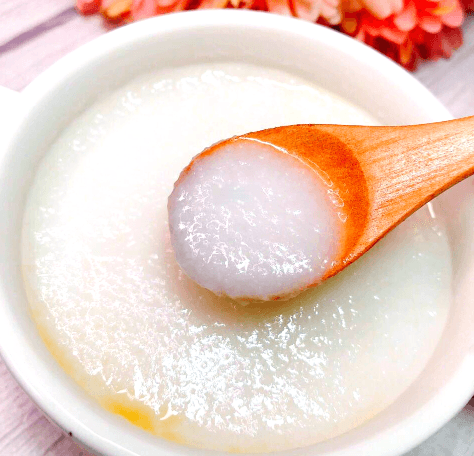
The selection and initial preparation of the raw material set the stage for everything that follows. A failure at this juncture, whether through the use of an inferior variety or contamination that slips through the testing net, cannot be fully rectified downstream. It is a silent, foundational step upon which the entire house of cards is built.
Point 2: The Transformation – Grinding, Milling, and Particle Size Reduction
Once the rice has been cleaned and milled to the desired specification (typically as white rice kernels), the next critical step is to reduce it to a fine powder. This is not a simple grinding process; it is a carefully calibrated operation that directly impacts the final product’s digestibility, mixability, and sensory appeal.
The Mechanics of Size Reduction:
The rice kernels are first passed through crushers or coarse grinders that break them down into a gritty meal. This coarse meal is then fed into the heart of the particle reduction system: high-tech impact mills or air-jet mills. Impact mills function by propelling the rice particles at high velocity against a hardened surface or against other particles, causing them to shatter. Air-jet mills, often used for ultra-fine powders, use compressed air to create high-speed vortices where particles collide with each other, resulting in a more uniform and controlled particle size.
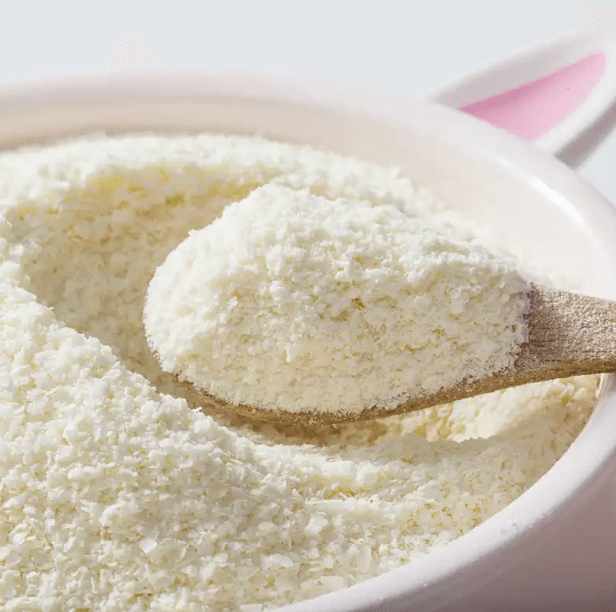
The goal is to achieve a specific particle size distribution, usually in the range of 150 to 200 microns or even finer. This is crucial for several reasons:
- Smooth Texture: A fine, consistent particle size is what prevents the reconstituted cereal from having a gritty or sandy mouthfeel, which babies (and parents) would reject.
- Rapid Hydration: The increased surface area of the fine powder allows it to absorb liquid (water, formula, or breast milk) almost instantaneously, creating a smooth paste without lumps.
- Digestibility: While rice starch is inherently easy to digest, reducing it to a fine powder pre-digests it mechanically, making it even gentler on an infant’s immature digestive system.
- Uniform Fortification: A consistent particle size is essential for the subsequent fortification step, ensuring that the micronutrient powder blends evenly with the rice base. If particle sizes vary widely, the heavier or lighter particles can separate during transport and storage, a phenomenon known as “de-mixing,” leading to inconsistent nutrient levels in the final product.
The Role of Starch Gelatinization (Pre-Cooking):
In many modern production lines, the grinding process is not performed on raw rice. Instead, the rice is subjected to a pre-cooking and drying step before it is milled. This involves using steam and pressure to partially or fully gelatinize the starch granules within the rice. baby food making machine Gelatinization is the process where starch granules swell, break open, and absorb water, which is what happens when you cook rice at home.
This pre-gelatinization has a profound impact:
- Enhanced Digestibility: The starch is already broken down, making it even easier for the baby to digest.
- Instant Properties: Pre-gelatinized rice flour becomes “instant.” It requires no cooking, simply mixing with warm or cold liquid. This is a key selling point for convenience-focused parents.
- Different Microbial Profile: The heat from pre-cooking also serves to reduce the microbial load (bacteria, molds, yeasts) on the raw rice, adding an extra layer of safety before the main heat treatment.
The milling stage, therefore, is far from a brute-force operation. It is a precision engineering step that defines the physical structure of the product, transforming a hard, glassy kernel into a hyper-fine, functional powder that is primed for the next stages of transformation and enrichment.
Point 3: The Purification – Heat Treatment and Microbial Control
Infant food is held to the highest possible standards of microbial safety. An infant’s immune system is still developing, making them exceptionally vulnerable to foodborne pathogens like Salmonella, Cronobacter sakazakii (formerly Enterobacter sakazakii), and E. coli. The presence of even a single viable pathogen in a finished product is considered a catastrophic failure. Consequently, baby food making machinethe heat treatment stage is designed as a lethal barrier to any biological contamination.
The Science of Microbial Destruction:
The primary goal of heat treatment is to achieve “commercial sterility.” This does not mean the product is completely sterile in the absolute scientific sense (devoid of all living organisms), but that it is free from pathogens and spoilage microorganisms that could proliferate under normal storage conditions. This is achieved by understanding the thermal death kinetics of target microorganisms.
Manufacturers employ a principle called the “D-value,” which is the time required at a given temperature to reduce a microbial population by 90% (one log cycle). For a highly resistant pathogen like Cronobacter, which is a major concern in powdered infant formula and cereal, the process must be designed to achieve a several-log reduction, effectively reducing the probability of a surviving cell to less than one in a billion.
Industrial Sterilization Technologies:
The fine rice flour, either in its raw or pre-gelatinized state, is subjected to one of several high-temperature processes:
- Dry Heating / Roasting: The flour is passed through a continuous roaster or a fluidized bed dryer where it is exposed to hot, dry air. This effectively reduces microbial load and also develops a slightly toasted, nutty flavor. However, dry heat is less efficient at transferring energy than wet heat, requiring higher temperatures or longer times to achieve the same lethal effect.
- Steam Injection (Superheating): A more rapid and efficient method involves injecting high-pressure steam directly into a flowing stream of the rice flour. The instantaneous transfer of heat from the steam to the particles rapidly raises the temperature to the target (often 120-140°C or higher) for a very short “holding time,” sometimes just a few seconds. This approach, similar to Ultra-High Temperature (UHT) processing for milk, is highly effective at destroying microbes while minimizing the impact on the product’s nutritional and sensory qualities.
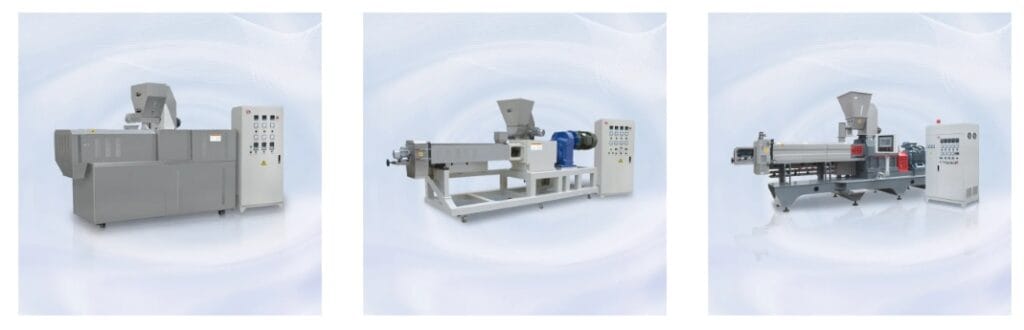
- Extrusion Cooking: In some integrated processes, the rice flour is subjected to extrusion cooking. Here, the flour is mixed with water to form a dough, which is then forced through a barrel by a screw under high pressure and temperature. The combination of heat, pressure, and shear force cooks the product, gelatinizes the starch, and sterilizes it simultaneously. The extrudate is then cut and dried before being milled into the final powder.
The Critical Balance: Safety vs. Nutrient Integrity:
This stage represents a delicate balancing act. The heat necessary to ensure safety can also be detrimental to the product. It can:
- Destroy Heat-Sensitive Nutrients: Naturally occurring vitamins (like Thiamine – B1, and Vitamin C) are vulnerable to degradation under high heat.
- Create Maillard Reaction Products: The reaction between amino acids and reducing sugars can lead to browning and the development of off-flavors.
- Affect Protein Quality: Excessive heat can denature proteins, potentially reducing their bioavailability.
The industry’s solution to this paradox is a key insight into the entire process: they intentionally “over-process” the base ingredient to guarantee safety, accepting the loss of its native nutrients. The nutritional profile is then systematically rebuilt in the next stage with a precise cocktail of synthetic vitamins and minerals that are more stable and bioavailable. The heat treatment, therefore, is a purification and safety step that creates a nutritionally blank—but biologically safe—canvas.
Point 4: The Rebuilding – The Precise Science of Nutrient Fortification
After the rice has been milled, heat-treated, and rendered into a safe but nutritionally sparse base, the most crucial step from a public health perspective begins: fortification. This is the process of adding back essential vitamins and minerals to create a product that can serve as a significant source of nutrition for a growing infant. The simplicity of the final product belies the immense scientific complexity of this operation.
The “Why” of Fortification:
Plain, white rice is primarily a source of carbohydrates (starch) and provides minimal amounts of protein, and virtually no key micronutrients like iron, zinc, or certain B-vitamins after milling. Since rice cereal is often the first and primary solid food for months, it has been leveraged as a vehicle to address critical nutrient gaps in an infant’s diet. The addition of iron is the most famous example. An infant’s iron stores, built up in utero, begin to deplete around six months of age. Breast milk is low in iron, making fortified cereals a primary strategy for preventing iron-deficiency anemia, a condition that can have severe and lasting cognitive and developmental effects.
The Fortification Cocktail:
A standard baby rice cereal is typically fortified with a precise blend of micronutrients, which almost always includes:
- Iron: The form of iron used is critical. Ferrous sulfate is highly bioavailable but can cause rancidity and off-flavors. More stable, but slightly less bioavailable forms like ferrous fumarate or electrolytic iron are often used. The level added is substantial, often providing 45-60% of the Daily Value per serving, making it a “high-potency” source.
- Zinc: Essential for immune function and growth, often added as zinc sulfate.
- Calcium: Added to support bone development, typically as calcium carbonate.
- B-Vitamins: A mix including Thiamine (B1), Riboflavin (B2), Niacin (B3), and Vitamin B6, which are co-factors in energy metabolism.
- Vitamin C (Ascorbic Acid): Added not only for its own nutritional benefits but also because it can enhance the absorption of non-heme (plant-based) iron when consumed in the same meal.
The Engineering of Precision:
Fortification is not a matter of simply tossing a handful of vitamin powder into a vat of rice flour. It is a high-precision operation governed by the principles of powder technology.
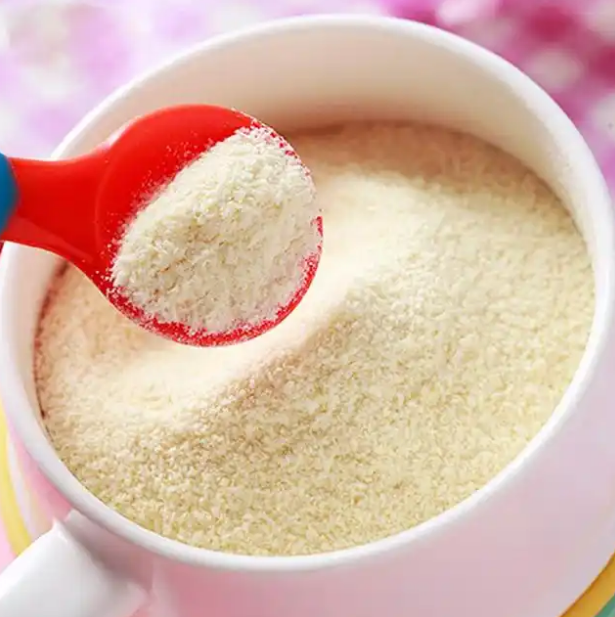
- Premixing: The individual micronutrients, which are purchased as fine powders from chemical suppliers, are first blended together in a small, high-shear mixer to create a homogeneous “premix.” This step is vital to prevent the “spotting” of individual nutrients.
- Dilution and Geometric Mixing: The potent premix is then diluted with a small amount of the rice flour base. This diluted mix is then added to a larger batch, and then that batch to an even larger one. This step-wise, geometric approach ensures a far more even distribution than attempting to mix a tiny volume of premix directly into a multi-ton batch.
- Industrial Mixing: The final blending occurs in large, stainless steel ribbon blenders or paddle mixers. These machines are designed to create a gentle but thorough folding and shearing action to achieve a perfectly homogeneous blend without segregating the particles based on size or density. Mixing times are carefully validated.
Validation and Homogeneity Testing:
The entire process is validated through rigorous testing. Multiple samples are taken from different parts of the batch—top, middle, bottom, center, and sides—and analyzed for key nutrients, particularly iron. The results must show a near-identical concentration of the nutrient across all samples, proving that the mixing was effective and that every spoonful of the final product contains the advertised level of fortification. A failure in this step could mean one jar is nutritionally adequate while the next is virtually devoid of the critical iron it promises. This step transforms a simple carbohydrate powder into a powerful nutritional tool, representing one of the most successful public health interventions in modern food history.
Point 5: The Sentinel – Quality Assurance and Analytical Testing
Quality Control (QC) and Quality Assurance (QA) are not single steps but pervasive, continuous systems that envelop the entire production process from farm to fork. They are the sentinels that guard the final product, ensuring it meets not only regulatory standards but also the company’s own, often stricter, internal specifications. This system is a complex web of checks, tests, and documentation.
The Hazard Analysis and Critical Control Points (HACCP) Framework:
Modern infant food production is built around the HACCP system, a proactive, preventive methodology. It involves:
- Conducting a Hazard Analysis: Identifying every potential biological, chemical, or physical hazard at each step.
- Determining Critical Control Points (CCPs): Identifying the points in the process where control can be applied to prevent, eliminate, or reduce a hazard to an acceptable level.
- Establishing Critical Limits: Setting the measurable boundaries for each CCP (e.g., “the heat treatment must reach a minimum of 140°C for at least 15 seconds”).
- Monitoring Procedures: Continuously or periodically measuring the CCPs.
- Corrective Actions: Defining what to do if a critical limit is not met (e.g., diverting and destroying the affected product).
- Verification Procedures: Using additional tests and audits to confirm the HACCP system is working.
- Record-Keeping: Meticulously documenting every aspect for traceability.
The Battery of Tests:
Throughout production, the rice cereal is subjected to a relentless barrage of analytical tests:
- Incoming Raw Material Testing: The rice is tested for moisture content, pesticide residues, and most critically, heavy metals (inorganic arsenic, lead, cadmium).
- In-Process Testing: During production, samples are taken to check for particle size distribution, moisture, and microbial counts.
- Finished Product Testing: This is the final and most comprehensive check. A “hold and test” protocol is common, where the entire production batch is quarantined until it passes all tests. These tests include:
- Microbiological Assays: Testing for standard plate count, yeast and mold, E. coli, Salmonella, and Cronobacter.
- Nutritional Analysis: Verifying that the levels of declared vitamins and minerals fall within the mandated tolerance ranges (e.g., 100% to 150% of the label claim).
- Heavy Metal Analysis (Again): The finished product is retested to ensure that the cumulative process has not introduced contamination and that the final levels are below the internal and regulatory thresholds.
- Physical Tests: Checking for moisture (to prevent caking and microbial growth), water activity, and sensory attributes like color and odor.
Traceability and Recall Preparedness:
Every component—the rice lot, the vitamin premix batch, the packaging film roll—is logged with unique codes. This allows for complete traceability. In the event of a problem, a manufacturer can pinpoint exactly which batches are affected and execute a precise and rapid recall. baby food making machine This system, while costly, is non-negotiable. It represents the industry’s acknowledgment of its profound responsibility and the catastrophic consequences of failure, both for the infants consuming the product and for the company’s reputation and legal standing.
Point 6: The Seal of Preservation – Packaging and Gas Flushing
The final, critical step in securing the product’s safety and shelf life happens not in a mixer or a cooker, but in the packaging line. The meticulously produced, sterile, and fortified powder is incredibly vulnerable to its two greatest enemies: oxygen and moisture. The packaging process is a race against time to encase the product in a protective barrier before it can be compromised.
The Packaging Materials:
Baby rice cereal is typically packaged in a multi-layered, flexible pouch, often housed inside a cardboard box for rigidity and marketing. The pouch itself is a feat of material science, usually composed of:
- An Outer Layer: Often polyester or nylon, providing strength, durability, and a printable surface.
- A Middle Barrier Layer: This is the heart of the package. It is almost always a thin layer of aluminum foil, which is an absolute barrier to oxygen, moisture, and light.
- An Inner Layer: A food-grade polypropylene or polyethylene plastic, which provides a heat-sealable surface and ensures the food does not come into contact with the aluminum.
This laminate structure creates a near-impenetrable fortress, protecting the product from the degradative effects of the external environment.
The Packaging Environment and Process:
The packaging hall is a controlled environment, often maintained with positive air pressure and HEPA filtration to minimize airborne contaminants. The process is highly automated:
- Filling: The cereal powder is fed from a hopper into the open pouches via automated filling machines that measure the weight to a high degree of accuracy.
- The Critical Step: Gas Flushing (Modified Atmosphere Packaging – MAP): This is the secret to the product’s long shelf life. Just before the pouch is sealed, a nozzle injects a burst of inert gas—usually nitrogen (N2)—into the headspace (the air at the top of the pouch). The nitrogen displaces the ambient air, which is about 21% oxygen. The pouch is then immediately heat-sealed.
Why is this so important?
- Prevents Oxidative Rancidity: Although rice cereal is low in fat, any remaining lipids can oxidize in the presence of oxygen, leading to off-flavors and a loss of nutritional quality (e.g., degradation of certain vitamins).
- Prevents Clumping and Microbial Growth: By removing oxygen and moisture, the powder remains free-flowing. While the product is commercially sterile, the absence of oxygen further inhibits the growth of any aerobic microorganisms that could potentially contaminate the product post-processing.
- Protects Nutrients: Oxygen can degrade many of the added vitamins, such as Vitamin C and Vitamin A. A nitrogen-flushed environment preserves the nutritional potency of the fortificants throughout the product’s shelf life.
The final heat seal is tested for integrity, and the pouches are cartoned, case-packed, and palletized for distribution. The unassuming box on the shelf is, in reality, the final piece of a complex technological puzzle—a time capsule designed to deliver a safe, stable, and nutritious product from the factory to the baby’s bowl, unchanged by the passage of weeks or months.
Conclusion: An Industrial Marvel with Unanswered Questions
The production of baby rice cereal is a testament to human ingenuity in food science and safety engineering. It is a process that takes a raw agricultural commodity and, through a series of controlled, validated, and highly technical steps, transforms it into a product of unparalleled safety and targeted nutritional value. From the geographic sourcing of rice to mitigate heavy metals, to the precision grinding and lethal heat treatments, to the scientific rebuilding of its nutrient profile and its final entombment in a nitrogen-flushed pouch, every stage is optimized for a single purpose: to provide a safe, convenient, and nutritionally consistent first food.
However, this exposé reveals that this industrial marvel is not without its trade-offs and ongoing controversies. The process inherently creates a highly refined, processed food. The reliance on fortification, while a public health success, means the product’s nutrition is synthetic rather than natural. The persistent issue of heavy metals, while managed, is not yet fully solved and requires constant vigilance from both manufacturers and regulators.
For parents, this deep dive provides not a reason for alarm, but a foundation for informed choice. Understanding this process empowers them to look beyond the marketing claims on the box. It encourages them to see baby rice cereal for what it is: a useful, safe, and fortified tool—but not the only tool. This knowledge can lead to a more diversified approach to infant feeding, incorporating a variety of grains and whole foods when appropriate, while still appreciating the sophisticated safety net that a jar of industrially produced baby cereal represents. The spoonful of simple-looking cereal is, in the end, anything but simple.
Leave A Comment