
Deconstructing the Delicacy: An Exhaustive Analysis of Filled Rice Cracker Processing Technology
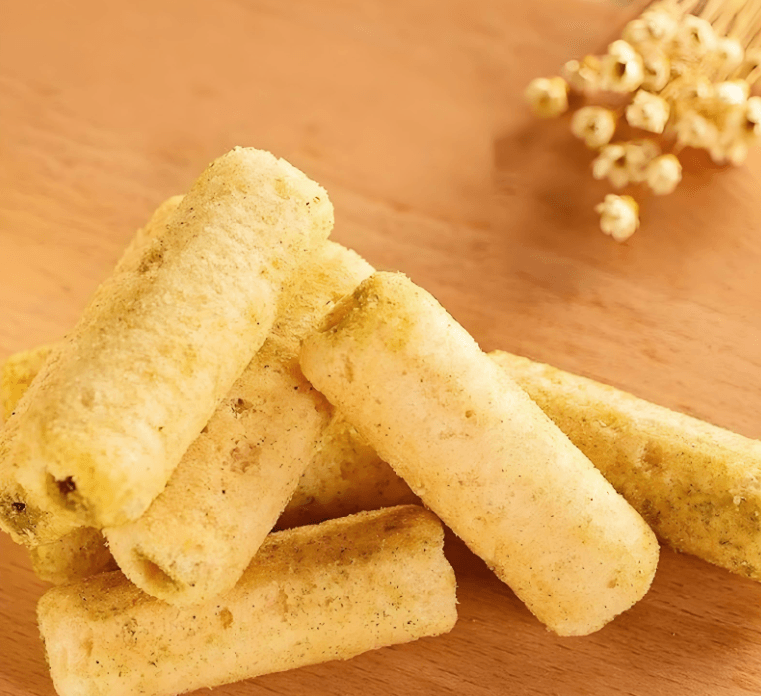
The filled rice cracker, known as Yōken in Japan and commonly referred to as a rice crispie or wafer snack elsewhere, is a marvel of modern snack food engineering. core filled snack food production line It presents a seemingly simple construct: a delicate, airy, and crisp rice-based shell enveloping a sweet or savory filling. core filled snack food machine However, this simplicity belies an extraordinarily complex manufacturing process that harmonizes food chemistry, precision mechanics, and thermal dynamics. This article will deconstruct this process, revealing the secrets behind its unique texture, structural integrity, and consistent quality. The analysis is structured around six fundamental pillars: I. The Alchemy of Raw Materials: Selecting and Preparing the Core Components, II. The Creation of the Shell: Rice Expansion and the Science of Puffing, III. The Heart of the Matter: Engineering the Filling, IV. The Precision Assembly: Co-extrusion and Lamination Technologies, V. The Final Transformation: Post-Baking, Drying, and Setting, and VI. The Fortress of Freshness: Packaging and Quality Assurance.
Pillar I: The Alchemy of Raw Materials: Selecting and Preparing the Core Components
The journey of a filled rice cracker begins with the meticulous selection and preparation of its raw materials. core filled snack food production lineThe quality and specific properties of these ingredients are not merely a matter of taste; they are the foundational variables that dictate the success of every subsequent manufacturing stage.
1.1 The Shell Matrix: Rice and Its Transformative Properties
The shell’s primary ingredient is rice, but not all rice is suitable for creating the perfect airy, crisp, and stable structure.
- Rice Selection: The Critical Role of Amylose and Amylopectin: Rice starch is composed of two glucose polymers: amylose (a largely linear molecule) and amylopectin (a highly branched molecule). The ratio of these two components is the single most important factor in determining the puffing characteristics of the rice.
- Waxy Rice (Glutinous Rice): This rice variant has a starch composition of nearly 99% amylopectin and less than 1% amylose. Waxy rice is known for its sticky, chewy texture when cooked. While it can puff, it tends to produce a more closed, less crispy, and sometimes harder texture. It is less commonly used as the sole ingredient for the shell of standard filled crackers but may be used in blends to modify texture and improve dough cohesion.
- Non-Waxy Rice (Japonica or Indica Varieties): These rices contain a significant proportion of amylose, typically ranging from 15% to 25%. High-amylose rice is the preferred choice for optimal puffing. The linear amylose chains, when gelatinized and then retrograded (re-crystallized), form a strong, rigid gel network. This network is capable of trapping superheated steam during the puffing process, resulting in a larger, more uniform, and crispier expanded structure. The final product is more brittle and less dense, providing the classic “melt-in-the-mouth” sensation.
- Rice Flour Milling: The Paramount Importance of Particle Size Distribution (PSD): The rice is milled into a fine flour. The PSD of this flour is a critical control parameter.
- Impact on Water Absorption: Finer particles have a larger total surface area and absorb water more rapidly and completely during dough mixing. This leads to more uniform starch gelatinization.
- Impact on Dough Rheology: A flour with a wide PSD (a mix of fine, medium, and some coarse particles) often creates a more workable dough. The fine particles form a smooth paste, while the coarser particles provide structural points that can prevent the dough from becoming overly sticky and unmanageable.
- Impact on Expansion: An overly fine flour can sometimes lead to a dough that is too cohesive, potentially limiting expansion by creating a less permeable membrane. An overly coarse flour can create weak points in the dough sheet, leading to irregular, burst, or shrunken shells. Laser diffraction analysis is routinely used in quality control labs to ensure the PSD falls within a strict specification window.
- Water: The Universal Agent of Change: The quality and quantity of water used in the dough are precisely controlled.
- Hydration Ratio: The water-to-flour ratio is crucial. Too little water results in incomplete starch gelatinization, leading to poor expansion, a dense texture, and a dough that is brittle and prone to cracking during sheeting. Too much water creates a slurry-like dough that is impossible to sheet, sticks to equipment, and requires excessive drying, which can lead to a hard, tough shell rather than a light, crisp one.
- Water Chemistry: The pH and mineral content (hardness) of the water can influence dough behavior. Slight adjustments may be made to optimize the performance of other functional ingredients.
- Minor but Mighty: Functional Additives in the Shell:
- Starch Modifiers: Small amounts of modified food starches (e.g., pre-gelatinized starch) may be added to improve dough consistency, enhance expansion, or contribute to a more uniform cell structure.
- Emulsifiers: Ingredients like lecithin or glycerol monostearate are used in minute quantities (often less than 0.5%). Their role is multifunctional: they reduce the surface tension between the water and flour components, leading to a more homogeneous dough; they help stabilize the air bubbles formed during mixing, which can act as nucleation sites for steam during puffing; and they can improve the release of the dough from processing equipment.
- Leavening Agents: Chemical leaveners such as sodium bicarbonate (baking soda) may be used. While the primary leavening force is steam, these agents can provide an initial gas release to help initiate the pore structure before the main steam expansion occurs, leading to a finer and more controlled crumb structure.
- Salt and Seasonings: Salt is added for flavor and also to slightly strengthen the gluten-like network formed by the rice proteins and starch. Other seasonings can be incorporated directly into the dough for flavored shells.
1.2 The Filling Core: A World of Viscosity and Flavor
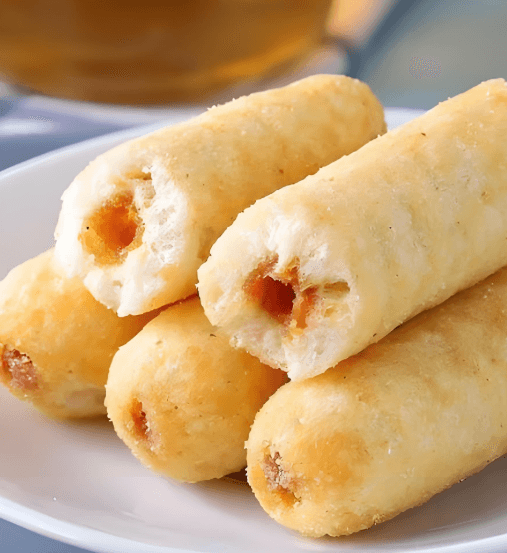
The filling is a separate, complex food system designed to be pumpable, stable, and delicious. Its formulation is a tightrope walk between flavor, texture, and functionality.
- The Fat Base:
- Oil and Fat Selection: The filling often contains a significant proportion of vegetable fats or oils (e.g., palm oil, soybean oil, canola oil). The choice of fat is critical for mouthfeel and, more importantly, for the filling’s melting point. A filling with a melting point too low will become liquid at room temperature, causing leakage and soggy shells. A melting point too high will result in a waxy, unpleasant mouthfeel. Often, a combination of liquid oils and solid fats (or hydrogenated/high-oleic oils) is used to achieve the perfect solid fat content (SFC) profile, ensuring the filling is firm at room temperature but melts smoothly at body temperature.
- The Role of Fat: Fat provides richness, carries fat-soluble flavors, and contributes to the creamy texture. It also acts as a barrier, helping to prevent moisture migration from the filling into the hygroscopic rice shell.
- The Sweetener System:
- Sugars: Powdered sugar (icing sugar) is the most common sweetener. Its fine particle size dissolves easily and contributes to a smooth texture. It also increases the viscosity of the filling.
- Syrups: Corn syrup, high fructose corn syrup (HFCS), or malt syrup are used to control sweetness, add viscosity, inhibit sugar crystallization (preventing a grainy texture), and, crucially, to bind water. This “water activity” reduction is vital for shelf stability.
- The Dairy and Flavor Components:
- Milk Powders: Skim milk powder or whole milk powder are ubiquitous in cream-style fillings. They provide a rich, creamy background flavor, contribute to browning (Maillard reaction) if the product is baked, and their proteins can help emulsify and thicken the filling.
- Flavor Powders: Cocoa powder, cheese powder, fruit powders, and peanut flour are used for primary flavoring. These are often spray-dried for consistent particle size and flavor dispersion.
- Natural and Artificial Flavors: Highly concentrated liquid or powdered flavors are added to achieve the target flavor profile with precision. core filled snack food production line
- The Stabilizing System:
- Emulsifiers: Similar to the shell, lecithin is frequently used in the filling to ensure a stable emulsion of fat and water, preventing separation.
- Texture Modifiers: Ingredients like soy protein isolate or hydrocolloids (e.g., guar gum, xanthan gum) may be used in minute quantities to thicken the water phase, control viscosity, and provide structural stability to the filling, preventing it from being squeezed out too easily when bitten.
The preparation of the filling is a dedicated process. The dry ingredients are first blended uniformly. The liquid fats/oils and any liquid flavors are then added, and the entire mixture is kneaded in a heavy-duty mixer to form a homogeneous, pliable paste. This paste is then typically held in temperature-controlled tanks to maintain its ideal viscosity for the subsequent co-extrusion process.
Pillar II: The Creation of the Shell: Rice Expansion and the Science of Puffing
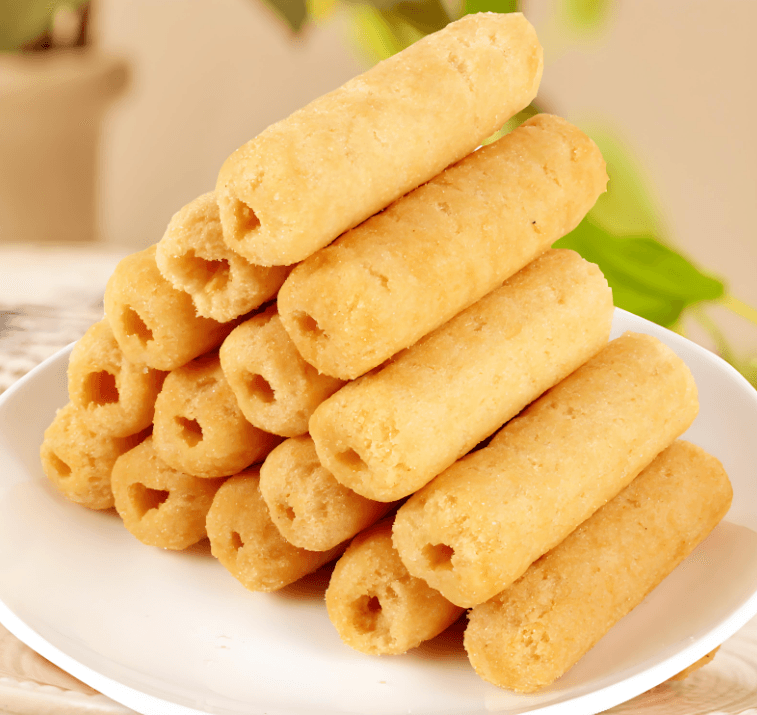
This is the transformative stage where the dense, hydrated rice dough is converted into a porous, rigid, and low-density foam. core filled snack food production line This process relies on the controlled application of heat and pressure to exploit the unique properties of starch.
2.1 Dough Mixing and Hydration: Laying the Groundwork for Expansion
The rice flour, water, and minor ingredients are combined in a mixer to form a cohesive dough. The goal is not to develop a gluten network (as in wheat bread) but to achieve complete and uniform hydration of the starch granules. This hydration is the first step towards gelatinization. The mixing must be thorough yet gentle to avoid incorporating large, uneven air bubbles. The resulting dough is a dense, moist mass.
2.2 The Two Primary Puffing Methodologies
There are two dominant industrial methods for creating the puffed shell: baking and extrusion-puffing. Each imparts a distinct texture and structure.
- Method A: The Baking (or Toasting) Process:
- Sheeting and Cutting: The hydrated rice dough is first passed through a series of precision rollers to form a thin, continuous sheet of consistent thickness. This sheet is then cut into specific shapes—commonly round or rectangular—using a rotary or reciprocating cutter.
- The Primary Baking Stage: The cut dough pieces are conveyed through a multi-zone oven. The initial zones use lower temperatures to further dry the surface and set the structure. The key transformation happens in the high-temperature zones (often 200-300°C / 400-570°F).
- The Physics of Oven-Puffing: As the dough piece heats rapidly, the free water within it turns to steam. The pressure from this steam builds dramatically within the dense, gelatinizing starch matrix. When the internal pressure exceeds the tensile strength of the dough’s outer surface (which has dried and formed a slight crust), the material expands violently. The steam forces its way through the soft, plasticized starch, creating a multitude of tiny bubbles and cavities. The starch polymers, now fully gelatinized, are stretched into a thin film around these bubbles. As the product moves towards the oven’s end, the temperature causes the water to evaporate fully, and the starch structure sets into a rigid, glassy state through the process of vitrification. This creates the final crisp texture.
- Method B: The Extrusion-Puffing Process:
- The Extruder: This is a more continuous and aggressive process. The rice dough is fed into a screw extruder—a barrel containing a single or twin screw that rotates, conveying, mixing, and compressing the material.
- Cooking and Pressurization: As the dough moves down the barrel, it is subjected to intense mechanical shear and heat (from both external heaters and internal friction). This cooks the dough thoroughly, ensuring complete starch gelatinization under high pressure (which prevents boiling and expansion inside the barrel). The material exits the barrel through a die that gives the product its general shape (e.g., a round tube for a cylindrical cracker).
- The Instantaneous Puff: The moment the hot, pressurized dough exits the die, it is exposed to ambient atmospheric pressure. This sudden pressure drop causes the superheated water within the dough to flash into steam instantaneously, resulting in a dramatic expansion. The product is then typically cut to length by a rotating knife at the die face. Extrusion-puffed shells often have a more uniform, fine, and spherical cell structure compared to the more irregular, open structure of baked shells.
The choice between baking and extrusion depends on the desired final product characteristics. Baked shells often have a more traditional, toasty flavor and a slightly denser bite, while extruded shells are often lighter and more uniformly airy. For filled crackers, the shell must be robust enough to withstand the filling process without shattering, which influences the chosen method and parameters.
Pillar III: The Heart of the Matter: Engineering the Filling
The filling is not merely a flavored paste; it is a carefully engineered colloidal system designed for stability, texture, and compatibility with the shell.
3.1 The Critical Concept of Water Activity (aw)
Water Activity is a measure of the “free” or available water in a food product, expressed on a scale from 0 (bone dry) to 1.0 (pure water). It is more important than total moisture content for predicting microbial growth and physical changes.
- The Problem: The puffed rice shell is extremely hygroscopic. If the filling has a high water activity, moisture will naturally migrate from the filling (area of high aw) into the shell (area of low aw) over time. This leads to a catastrophic failure of the product: the shell becomes soft, chewy, and loses its crispness, while the filling may become unpleasantly dry and hard.
- The Solution: Fillings are formulated to have a very low water activity, typically below 0.6, and often closer to 0.3-0.4. At this level, the water is so tightly bound to the solutes (sugar, salts, proteins) that it is not available for microbial growth or for migration into the shell. This is achieved through the use of high concentrations of humectants, primarily sugars and syrups, which effectively bind the water molecules.
3.2 Rheology: The Science of Flow and Deformation
The filling’s flow behavior, or rheology, must be perfectly calibrated for the assembly process.
- Viscosity Profile: The filling must be viscous enough to not leak out of the shell seams immediately after assembly, yet fluid enough (often exhibiting shear-thinning behavior) to be pumped through pipes and nozzles during the co-extrusion process without requiring excessive pressure. The fat system and texture modifiers are key to controlling this property.
- Yield Stress: Many creamy fillings exhibit a property called yield stress—a minimum force that must be applied before they start to flow. This is desirable because it means the filling will hold its shape inside the cracker until a bite force is applied, at which point it yields and provides a creamy, melting sensation.
3.3 Flavor Delivery and Stability
The filling’s composition must protect delicate flavors from degradation by heat (during any post-assembly baking) and oxidation. The fat base can help encapsulate and protect fat-soluble flavors. The low water activity also inhibits enzymatic and oxidative reactions that lead to off-flavors.
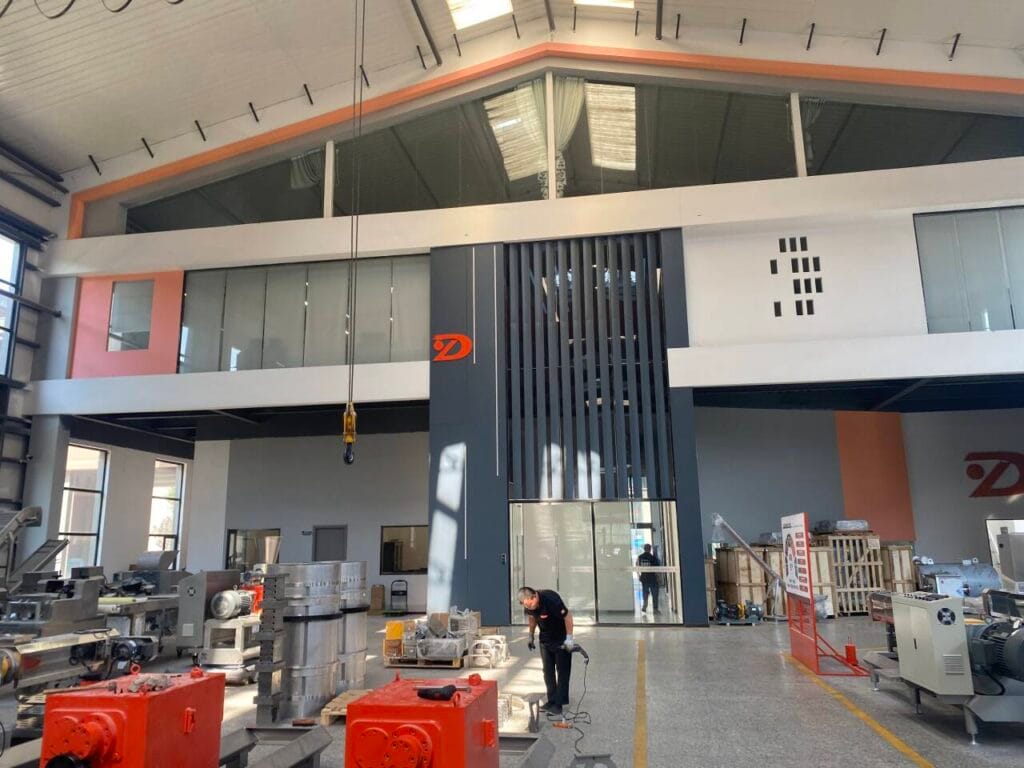
Pillar IV: The Precision Assembly: Co-extrusion and Lamination Technologies
This is the stage of true technological marvel, where the shell and filling are combined with high-speed precision. The dominant technology is co-extrusion.
4.1 The Co-extrusion Process: A Tube Within a Tube
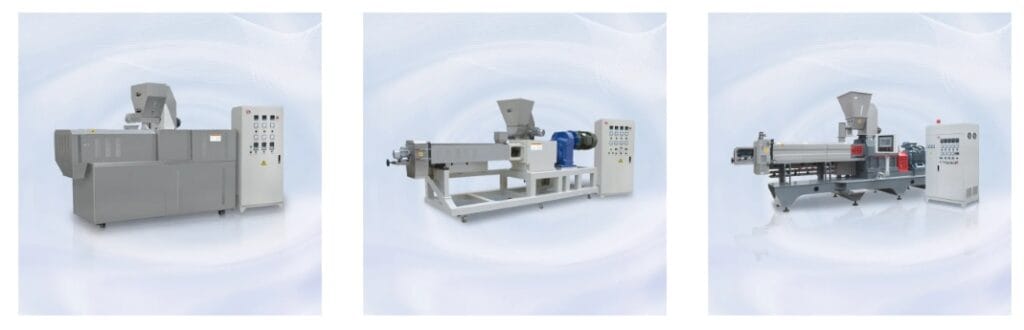
A co-extrusion machine is, in essence, a device that creates a food “tube” with two concentric layers.
- The Shell Dough Hopper: The prepared, hydrated rice dough (or in some cases, a pre-gelatinized rice paste) is fed into the main chamber of the extruder.
- The Filling Injection System: The prepared filling paste is held in a separate, temperature-controlled tank and pumped through a central tube or needle that runs directly through the middle of the shell dough chamber.
- The Forming Die: As both materials are pushed forward, they simultaneously exit through a single, shaped die. The die is designed so that the shell dough forms a continuous outer tube, while the filling is injected perfectly concentrically within it. This creates a continuous, rope-like product with a filling core encased in an outer shell of dough.
- Cutting to Size: Immediately after the die, a synchronized cutting mechanism—often a spinning blade or a guillotine cutter—chops the continuous rope into individual pieces of precise length. The ends are typically left open, exposing the filling.
4.2 Critical Control Parameters in Co-extrusion
- Dough Viscosity Matching: The viscosity and flow properties of the shell dough and the filling must be compatible. If the shell dough is too soft, the filling pressure can cause it to rupture (“blow-outs”). If the shell is too stiff, it may not form a continuous tube around the filling.
- Pressure and Flow Rate Balance: The pumps for the shell and filling must be perfectly synchronized. Any pulsation or imbalance can lead to uneven distribution of the filling, resulting in some pieces with little to no filling (“duds”) and others with overfilled, burst shells.
- Temperature Control: The temperature of both components affects their viscosity. The filling, in particular, is kept cool to maintain its stability, while the shell dough may be slightly warmer to ensure it remains pliable.
4.3 Alternative Method: The Sandwich or Lamination Method
For certain product forms, particularly flat, rectangular crackers, a lamination process is used.
- Process: Two thin, pre-puffed or pre-baked rice sheets are used as the top and bottom layers. A precise amount of filling is deposited onto the bottom sheet in a pattern (e.g., dots or a continuous layer). The top sheet is then carefully placed over the filling.
- Challenges: This method requires the sheets to be robust. The filling deposition must be accurate, and the sealing of the edges is often a challenge. Some products may undergo a light secondary baking to “set” the assembly, but care must be taken not to over-puff or burn the already-cooked shells.
Pillar V: The Final Transformation: Post-Baking, Drying, and Setting
For co-extruded products, the assembly is not yet complete. The shell dough is still in its raw, un-puffed state. This pillar covers the final thermal processing that creates the finished product’s texture.
5.1 The Secondary Baking or Puffing Stage
The co-extruded, unfired “dough tubes” with their filling core are conveyed into a second oven. This is a delicate thermal balancing act.
- The Goal: To puff and set the rice shell without damaging the heat-sensitive filling inside.
- Optimized Oven Zones: The oven is meticulously zoned.
- Zone 1 (Drying/Surface Set): Gentle heat is applied to dry the surface of the dough. This helps form a skin that will allow for proper steam pressure buildup.
- Zone 2 (High-Temp Puffing): The temperature is sharply increased. The water in the shell dough rapidly turns to steam, causing the shell to expand around the filling. The presence of the cooler filling core influences the heat transfer, often resulting in a shell that is slightly less puffed in the very center, which can actually be beneficial for structural integrity.
- Zone 3 (Color Development/Curing): The temperature is reduced but remains high enough to fully dry and “set” the starch structure of the puffed shell through vitrification. If a toasted color or flavor is desired, this zone provides the conditions for Maillard browning reactions.
- Protecting the Filling: The oven profile must be designed so that the heat penetrates and puffs the shell before it can significantly raise the temperature of the filling to a point where it would melt, separate, or degrade. The filling itself, with its high fat and sugar content, has a different specific heat capacity than the starchy shell, which provides a small degree of inherent thermal protection.
5.2 Cooling and Stabilization
Upon exiting the oven, the products are very hot and slightly pliable. They are conveyed through a long, ambient or forced-air cooling tunnel.
- Purpose: This cooling step is critical for several reasons:
- Structure Lock-in: It allows the amorphous, gelatinized starch in the shell to fully transition into a rigid, glassy state, permanently locking in the puffed, crisp texture.
- Fat Crystallization: It allows the fat in the filling to re-crystallize into its stable form, ensuring the filling is firm and non-greasy.
- Moisture Equilibration: It allows any residual moisture gradients within the product to even out, preventing subsequent condensation inside the package.
Pillar VI: The Fortress of Freshness: Packaging and Quality Assurance
The final, fragile product must be protected from its enemies: moisture, oxygen, light, and physical damage. This is the role of packaging, backed by relentless quality assurance.
6.1 The High-Barrier Packaging Laminate
The bag containing filled rice crackers is a feat of materials engineering, typically a lamination of three or more layers:
- Outer Layer (e.g., Biaxially Oriented Polypropylene – BOPP): Provides mechanical strength, puncture resistance, and a high-quality surface for printing.
- Barrier Layer (e.g., Metallized Film or Polyvinylidene Chloride – PVDC): This is the critical layer. A microscopically thin layer of aluminum vapor-deposited onto a polymer film creates an nearly impenetrable barrier against moisture vapor and oxygen. It also blocks all light, which can cause lipid oxidation in the filling and fading of colors.
- Inner Sealant Layer (e.g., Cast Polypropylene – CPP or Linear Low-Density Polyethylene – LLDPE): A food-safe polymer that has a low melting point, allowing the jaws of the packaging machine to heat-seal the bag shut, creating a hermetic closure.
6.2 The Packaging Process: Form-Fill-Seal and Gas Flushing
Modern packaging uses vertical form-fill-seal (VFFS) machines.
- Forming: A flat roll of the packaging film is shaped into a vertical tube.
- Filling: The cooled crackers are fed into this tube. Multi-head weighers ensure each bag receives the precise target weight.
- Gas Flushing: Just before the final top seal is made, the air inside the bag is evacuated and replaced with an inert gas, almost always Nitrogen (N₂). This serves two vital functions:
- Oxygen Removal: By displacing oxygen, nitrogen prevents oxidative rancidity of the fats in the filling and shell, which would lead to off-flavors and spoilage.
- Cushioning: The nitrogen gas acts as a cushioning buffer, protecting the delicate crackers from being crushed during transportation and handling. The “pillow pack” is not full of air, but of pure nitrogen.
- Sealing: The bag is hermetically sealed, trapping the nitrogen and the product inside a protective atmosphere.
6.3 The Unseen Guardian: Total Quality Management
From raw material intake to the finished bag, every step is governed by Quality Assurance.
- Incoming Inspection: Raw materials are tested for compliance with specifications (moisture, aw, PSD, microbiological counts).
- In-Process Controls (IPCs): Operators and automated systems constantly monitor:
- Dough moisture and viscosity.
- Filling aw and temperature.
- Puffing oven temperatures and product color.
- Filling-to-shell ratio in the co-extruded rope.
- Cooler temperatures.
- Package seal integrity and oxygen headspace analysis.
- Finished Product Testing: Samples are tested for:
- Texture: Using a texture analyzer to measure hardness and fracturability.
- Moisture Content and aw: To ensure shelf-stability.
- Sensory Evaluation: By trained panels to assess flavor, crispiness, and overall quality.
- Weight and Dimension Checks.
The humble filled rice cracker is a testament to the sophistication of modern food technology. It is not a simple baked good but a complex composite food system. Its production is a symphony of disciplines—materials science, colloidal chemistry, rheology, thermal engineering, and precision mechanics—all working in concert. From the selection of high-amylose rice to the precise ballet of co-extrusion and the protective science of modified atmosphere packaging, each step is a calculated move in the battle against moisture, physical failure, and flavor degradation. The next time one enjoys the satisfying crunch and burst of flavor from a filled rice cracker, it is an appreciation not just of a tasty snack, but of a profound engineering achievement.
Leave A Comment