
Critical Control Points: Ensuring Quality and Safety in the Production of Puffed Corn Snacks
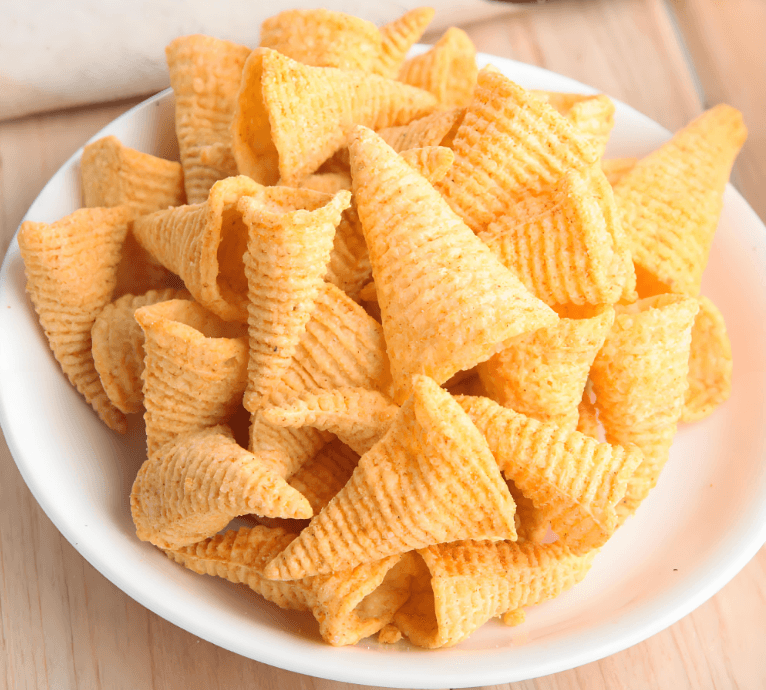
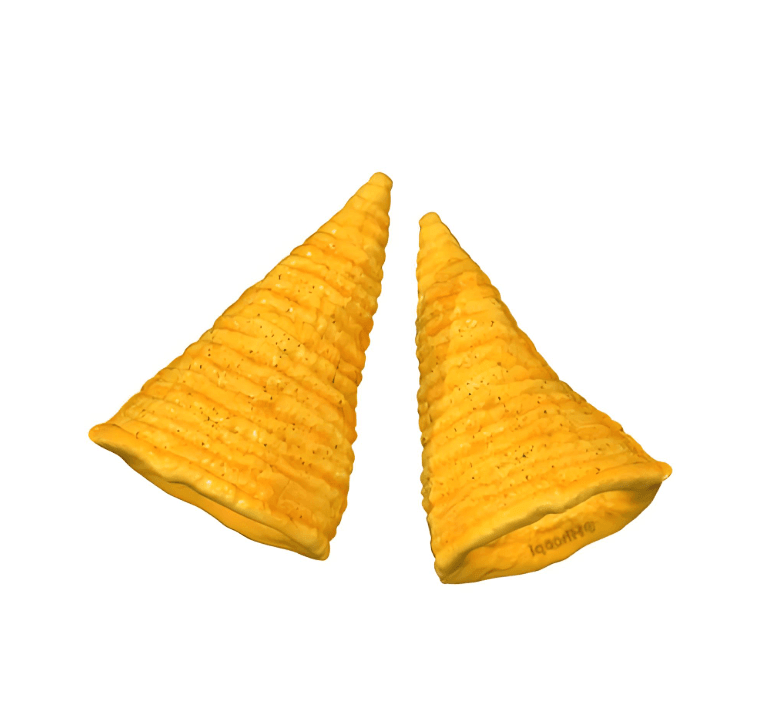
The production of poured corn snacks, known by brand names such as Bugles or Mystery Crunch Angles, is a marvel of modern food engineering. It is a continuous, high-speed process that transforms raw grains into light, crispy, and flavorful shapes. However, this complexity means that vigilance at every stage is paramount. A minor deviation in one parameter can lead to significant issues in the final product, resulting in waste, consumer dissatisfaction, or even safety hazards.
This article details the critical points throughout the manufacturing process where strict control is essential to ensure a consistent, high-quality, and safe snack product.
1. Raw Material Receiving and Storage
The foundation of a perfect snack is perfect ingredients. Problems introduced here can be impossible to rectify later.
- Corn Grits/Meal Quality:
- Particle Size Distribution: This is perhaps the most critical factor. Grits that are too fine can absorb water too quickly, creating a pasty dough that leads to dense, hard products and can clog the extruder. Grits that are too coarse will not hydrate and cook evenly, resulting in inconsistent puffing, black specks (un-gelatinized starch), and a rough texture. Control: Strict sieving analysis and supplier specifications.
- Moisture Content: High moisture in the raw grits can promote microbial growth (mold, bacteria) during storage and disrupt the precise water-to-dry-mix ratio in the preconditioning stage. Control: Moisture meters and proper vendor certification.
- Foreign Material: The presence of husks, stones, metals, or other grains is unacceptable. Control: Magnets, sieves, and optical sorters at the receiving point.
- Oil Quality:
- Oxidation (Rancidity): Oils used in the dough mix and for seasoning must be fresh. Rancid oil introduces off-flavors that are detectable even at very low levels. Control: Monitor peroxide value and free fatty acid content upon receipt; use a first-in-first-out (FIFO) inventory system.
- Seasoning Quality:
- Microbiological Load: Spices and cheese powders can harbor pathogens like Salmonella. Control: Supplier guarantees and Certificates of Analysis (CoA) confirming treatment (e.g., steam sterilization, irradiation) and safety.
- Clumping: Hygroscopic powders can absorb moisture and clump, leading to uneven application. Control: Storage in a cool, dry environment and the use of anti-caking agents in the seasoning blend.
2. The Preconditioning and Extrusion Process
This is the heart of the operation, where the product’s fundamental texture and shape are created.
- Water Injection Rate and Temperature: The ratio of water to dry mix must be exact. Too little water results in incomplete starch gelatinization, poor expansion, and a burnt taste. Too much water creates excessive steam pressure, causing uncontrolled expansion, a weak cell structure, and a snack that is prone to collapsing or becoming too fragile.
- Barrel Temperature Profile: The temperatures along the extruder barrel must be precisely controlled. Insufficient heat leads to incomplete cooking and poor expansion. Excessive heat, especially in the final sections, can cause the product to scorch, producing off-colors and a bitter taste.
- Screw Speed and Configuration: The screw’s rotational speed and design dictate the shear and pressure applied to the dough. Incorrect settings can lead to:
- Under-puffing: Dense, hard snacks from insufficient shear and pressure.
- Over-puffing: A snack that is too airy, fragile, and has a “melt-away” texture that lacks substance.
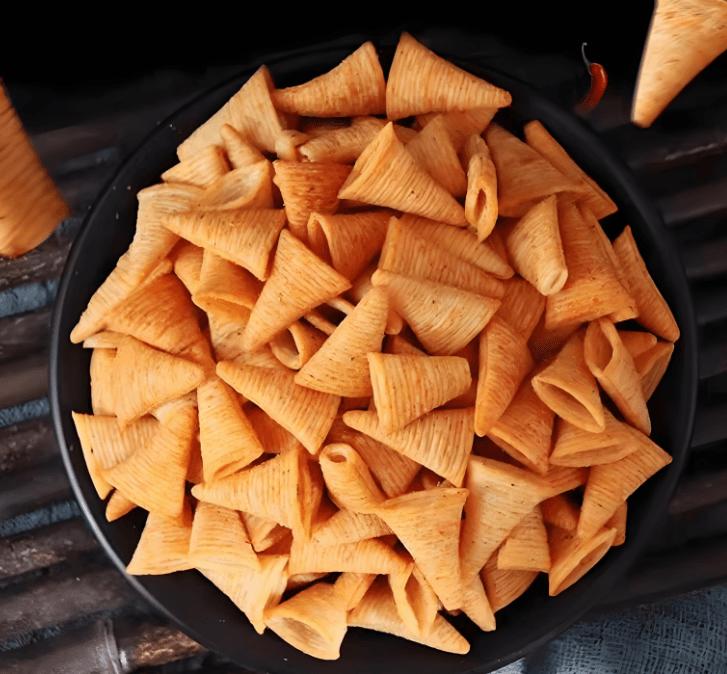
- Shape Distortion: The dough may not flow evenly through the die, resulting in misshapen or “torn” products.
- Die Health and Maintenance: The die plate must be kept clean and free of carbonized material buildup. A worn or damaged die will produce products with irregular shapes and blurred features. Regular cleaning and inspection are mandatory.
3. Drying and Toasting
After extrusion, the product has a high moisture content and must be dried to achieve its crispness.
- Temperature and Airflow Uniformity: If the hot air in the multi-pass dryer does not circulate evenly, some products will be under-dried (soft and chewy) while others will be over-dried (darkened and bitter). Control: Regular calibration of temperature sensors and maintenance of fan systems.
- Residual Moisture: The final moisture content must be reduced to a very low level (typically 1-2%) to ensure crispness and microbial stability. However, over-drying makes the product brittle and prone to breakage during seasoning and packaging. Control: Online moisture analyzers and frequent lab testing.
4. Seasoning Application
This stage defines the flavor and is a major source of cost control.
- Oil Application:
- Temperature and Viscosity: The oil must be at the correct temperature to ensure a fine, even mist. Cold, viscous oil will form large droplets, leading to greasy spots and uneven seasoning adhesion.
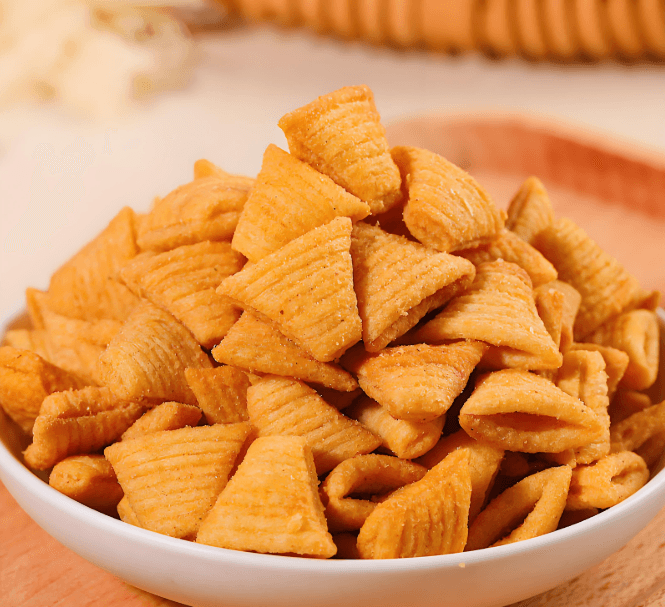
- Application Rate: Too little oil results in poor seasoning pickup, leading to bland-tasting snacks and “seasoning fall-out” (fines) at the bottom of the bag. Too much oil makes the snack greasy, clogs the packaging machinery, and can accelerate rancidity.
- Powder Application:
- Uniformity: The seasoning tumbler must ensure every piece receives a consistent coat. Improper tumbling speed or time can lead to uneven flavor.
- Fines Generation: The fragile snacks can break during tumbling, creating small fragments that absorb a disproportionate amount of seasoning, distorting the overall flavor profile and creating waste.
5. Packaging: The Final Guardian
The most perfectly made snack can be ruined by poor packaging.
- Gas Flushing: The air in the bag is replaced with an inert gas, typically Nitrogen. This prevents oxidation (rancidity) and protects the physical structure.
- Problem: Inadequate gas flush or seal integrity allows oxygen to remain, leading to stale, rancid products and loss of crispness.
- Packaging Material Integrity: The multi-layer laminate must have an excellent barrier against moisture and oxygen. Any pinholes, weak seals, or tears will compromise the product’s shelf life.
- Check-weighing: Every single bag must be weighed. Underweight bags violate labeling laws and anger consumers. Overweight bags represent a direct loss of profit. The filling system must be constantly monitored and adjusted.
6. Sanitation and Food Safety
This is a non-negotiable area that underpins the entire operation.
- Allergen Control: If the line produces products with different allergens (e.g., milk, soy, wheat), strict sanitation protocols and production scheduling are required to prevent cross-contamination.
- Pathogen Control: The low-moisture environment of the final product is generally hostile to pathogens. However, the post-cooking, pre-packaging stages (seasoning, cooling) are critical control points. Contamination from the environment or equipment at this stage can pose a risk. Control: Comprehensive Hazard Analysis and Critical Control Points (HACCP) plan, environmental monitoring programs for Salmonella and Listeria, and rigorous cleaning-in-place (CIP) and sanitation procedures.
- Metal and Physical Contaminant Control: Metal detectors or X-ray inspection systems must be in place just before packaging to catch any potential physical contaminants introduced during the process. These systems require frequent validation checks.
Producing a consistent, high-quality puffed corn snack is a complex ballet of physics, chemistry, and engineering. Attention to detail is required from the moment the raw grains arrive at the dock to the moment the sealed bag is placed in a carton. By identifying and rigorously controlling these critical points—from particle size and extrusion parameters to oil viscosity and seal integrity—manufacturers can ensure that every bag delivers the satisfying crunch, perfect shape, and delicious flavor that consumers expect. It is a process where precision is not just a goal, but a necessity.
Leave A Comment