
A Guide to Manufacturing High-Quality Kurkure: Mastering the Science of Extruded Snacks
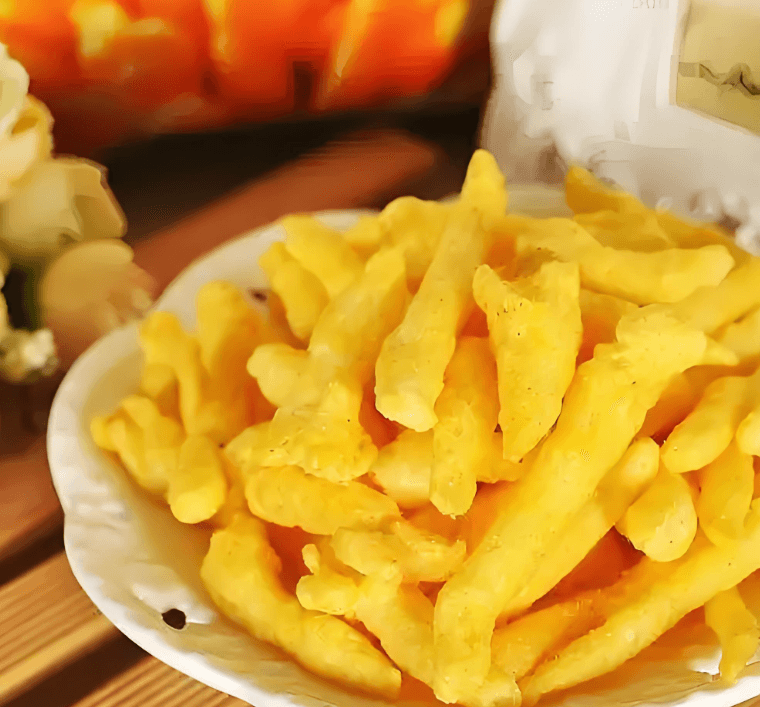
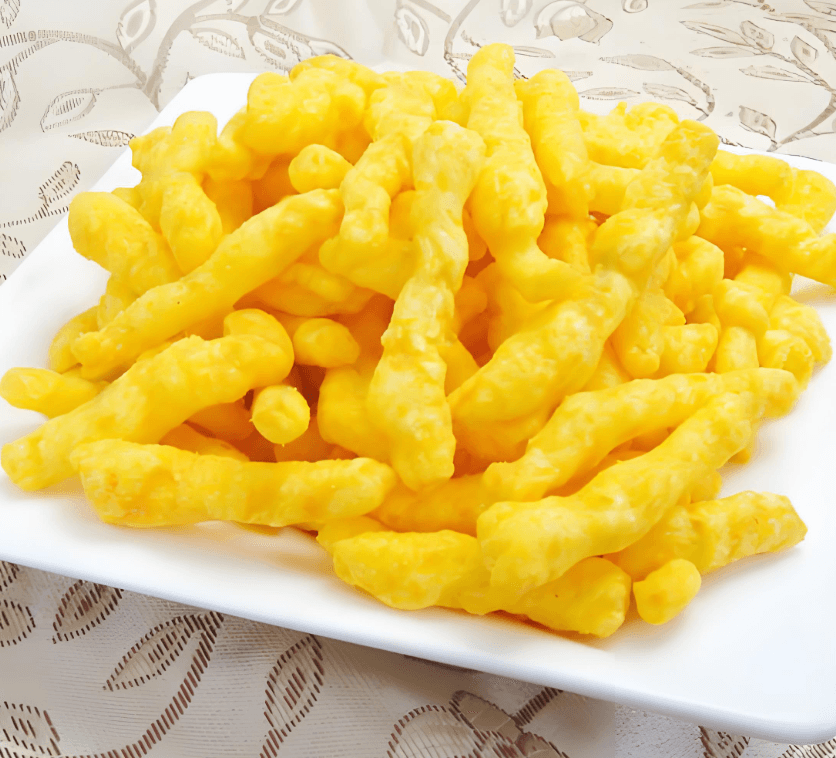
Producing high-quality Kurkure is a precise science that blends food technology, mechanical engineering, and rigorous quality control. Kurkure production line The goal is to consistently achieve a product with a light, crunchy texture, a perfectly irregular and bubbly shape, a consistent golden color, and a bold, evenly distributed flavor that remains fresh until consumption. Achieving this level of quality requires meticulous attention across six fundamental areas of the manufacturing process.
1. The Foundation: Precision in Raw Material Selection and Blending
The journey to a superior Kurkure begins with the selection and proportioning of raw materials. The base composition, typically a blend of corn grits, rice flour, Kurkure production line and chickpea flour (besan), is the DNA of the final product.
- Grain Specifications: Do not compromise on the quality of the primary grains. Use corn grits with a consistent particle size distribution to ensure uniform water absorption and cooking during extrusion. Rice flour, often from waxy rice varieties, is critical for creating the light, airy “melt-in-the-mouth” texture due to its high amylopectin content. The chickpea flour must be fresh, with a low microbial count and a consistent protein content, as it provides the distinctive nutty flavor and contributes to the protein matrix that allows for the formation of strong yet flexible shapes.
- The Critical Role of Moisture: The moisture content of the raw dry mix must be monitored and controlled. Batch-to-batch variations in the moisture of the flours can throw off the precise water-to-dry-mix ratio needed for optimal extrusion. High-quality production involves pre-conditioning the dry mix with steam or water to begin the hydration process uniformly before it even enters the extruder.
- Oil Quality: The choice of frying oil is paramount.Kurkure production line Use a high-stability oil with a neutral flavor, such as palm olein or high-oleic sunflower oil. The oil must have a high smoke point to withstand continuous frying at 160-180°C without breaking down. Key Point: The quality of the oil in the fryer directly dictates the taste and shelf-life of the final product. There is no such thing as a high-quality snack fried in low-quality oil.
2. The Heart of the Process: Mastering the Extrusion Parameters
The extruder is where the raw material blend is transformed into the puffed snack base. Consistency here is non-negotiable for high quality.
- Specific Mechanical Energy (SME): This is the amount of mechanical energy input by the extruder screws per unit mass of product. SME is a function of screw speed, screw configuration, feed rate, and moisture content. A consistent and optimal SME is vital.
- Too Low SME: Results in under-cooked dough, poor starch gelatinization, low expansion, and a dense, hard texture.
- Too High SME: Overworks the dough, can cause excessive starch degradation, and leads to a weak, fragile structure that breaks easily. It can also create an overly porous product that absorbs too much oil.
- Temperature and Pressure Control: The temperature profile along the extruder barrel must be precisely managed. The goal is to cook the dough thoroughly (typically reaching 130-150°C) and build sufficient pressure (often over 50 bar) in the final metering zone. When this hot, pressurized dough exits the die, the sudden pressure drop causes the superheated water to flash into steam, creating the characteristic puffing. Inconsistent temperature or pressure will result in uneven expansion, variable density, and inconsistent texture across the production run.
- Moisture Content During Extrusion: The total moisture content in the extruder barrel (from the raw materials plus added water/steam) must be held within a tight window, typically 12-18%. Real-time monitoring and feedback loops are ideal for maintaining this balance.
3. Creating the Signature Texture: Die Design and Maintenance
The unique, twisted shape of Kurkure is not accidental; it is engineered.
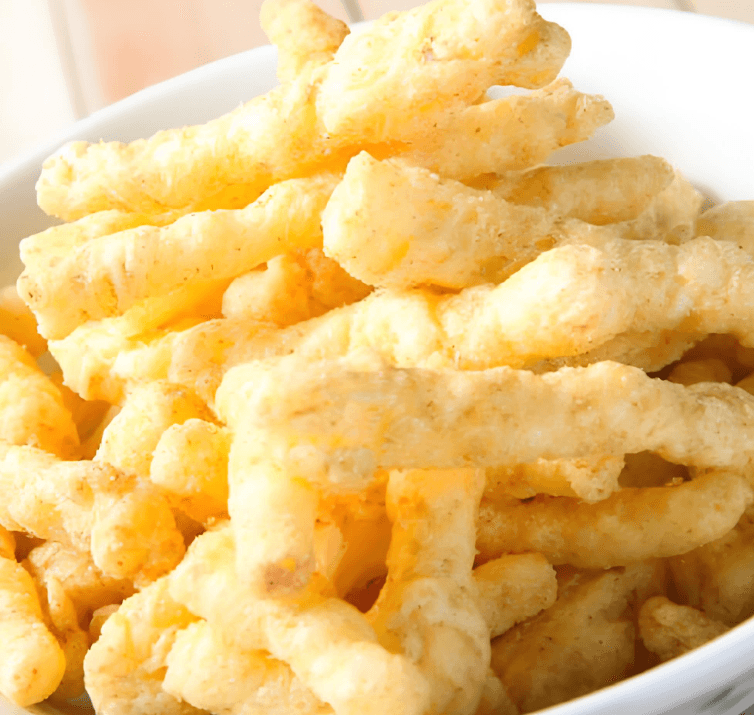
- Die Design: The die is not just a hole; it is a precision tool. The internal geometry is designed to create resistance, texturize the dough flow, and cause it to expand in an irregular, “crackling” manner. The design forces the dough to split and recombine under high pressure, creating internal laminations that result in the bubbly, twisted shape upon exit.
- Die Maintenance: A worn or damaged die is a primary cause of quality failure. Regular cleaning, polishing, and inspection are essential. Even minor nicks or scratches on the die surface can alter the product’s shape, cause tearing, or create unwanted “die-lip” buildup, which leads to burnt particles contaminating the product.
4. Perfecting the Crunch: The Frying and Drying Stage
After extrusion, the product has its shape but is still soft and moist. Frying sets the structure and develops the flavor.
- Precise Frying Temperature and Time: The relationship between fryer temperature and residence time is critical. The goal is to reduce the moisture content from ~8-10% down to 1-2%, which sets the starch structure into a rigid, glassy state.
- Under-frying: Results in a pale-colored, soft, or oily snack with a residual raw taste and reduced shelf-life due to high moisture.
- Over-frying: Leads to a dark, burnt color, a hard and brittle texture, and the promotion of oil breakdown and off-flavors.
- Oil Management is Paramount: This cannot be overstated. To produce high-quality Kurkure, the frying oil must be kept in pristine condition.
- Continuous Filtration: Implement a robust, continuous external filtration system to remove fine particles (fines) that can burn and impart bitter flavors.
- Oil Turnover: Maintain a high rate of oil turnover by continuously adding fresh oil to the system. This dilutes the concentration of free fatty acids (FFA) and polar compounds that accumulate from degradation.
- Rigorous Monitoring: Conduct frequent (e.g., hourly) checks on the oil for FFA, peroxide value, and color. Oil that is out of specification must be replaced; there is no shortcut.
5. Delivering the Flavor: Advanced Seasoning Application
A high-quality base product can be ruined by poor seasoning application.
- Uniform Coating: Use a well-designed, rotating seasoning drum. Ensure the drum’s speed and angle are optimized to create a continuous, cascading “curtain” of product. This ensures every piece spends an equal amount of time in the seasoning zone.
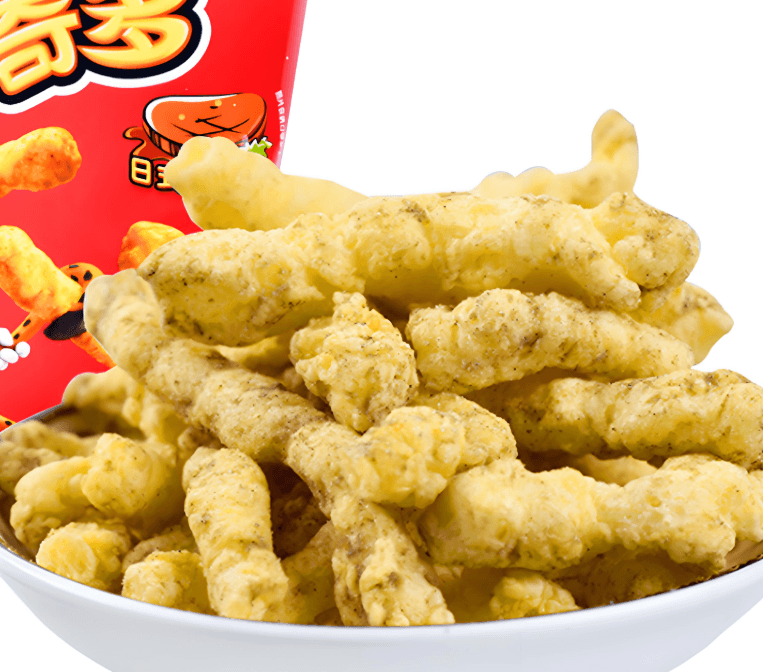
- Optimal Adhesion: The key to adhesion is the residual surface oil from the fryer. For challenging seasoning blends, a liquid adhesive (a fine mist of oil or a water-oil emulsion) can be applied just before the dry seasoning. The amount must be precisely controlled—too little causes seasoning fallout (the powder at the bottom of the bag), while too much makes the product greasy and causes clumping.
- Seasoning Quality: The seasoning blend itself must be of high quality, with controlled particle size and no clumps. The blend should be consistent from batch to batch to ensure the flavor profile never changes.
6. Preserving the Quality: Robust Packaging and Quality Assurance
The final, and crucial, step is to protect the product from its enemies: moisture, oxygen, and physical damage.
- High-Barrier Packaging: Use a multi-layered laminate packaging film. The critical layer is a metallized film that provides an excellent barrier against moisture vapor and oxygen. It also blocks light, which can cause photo-oxidation and rancidity.
- Gas Flushing (Nitrogen Purging): Implement a highly efficient nitrogen flushing system on the form-fill-seal machines. By displacing the oxygen-rich air inside the bag with inert nitrogen, you prevent oxidative rancidity of the oils and provide a cushion that protects the fragile snacks from being crushed during transit. Regularly audit the residual oxygen levels in finished packages to ensure the flushing process is effective.
- A Culture of Quality Assurance (QA): Quality cannot be inspected into a product; it must be built into every step.
- In-Process Controls (IPCs): Establish and monitor critical control points (CCPs) throughout the process: raw material inspection, dough moisture,Kurkure production line extrusion SME and temperature, fryer oil quality, final product moisture, and seasoning rate.
- Finished Product Testing: Conduct regular sensory evaluation (texture, taste, aroma) and analytical testing (fat, moisture, salt) against a strict specification.
- Shelf-Life Testing: Perform ongoing shelf-life studies to verify the product maintains its quality throughout its intended lifespan.
Producing high-quality Kurkure is not about a single “secret” ingredient or machine setting. It is about the synergistic excellence across all stages of production. It requires a deep understanding of the raw materials, a disciplined control of the extrusion and frying processes, an artistic touch in shaping and flavoring, and an uncompromising commitment to protection and quality control. By mastering these six interconnected pillars, a manufacturer can consistently deliver a snack that meets the highest standards of texture, flavor, and freshness, building strong consumer trust and brand loyalty.

Leave A Comment