
A Comprehensive Taxonomy of the Global Snack Food Industry: Navigating the Expansive World of Casual Consumption
Introduction: The Ubiquity and Significance of Snack Foods
Snack foods, once considered mere intermeal tidbits or indulgent treats, have evolved into a cornerstone of global food culture. The term “snack” itself has expanded beyond its simple definition—a small amount of food eaten between meals—to encompass a vast and diverse universe of products that cater to every possible taste preference, nutritional goal, and occasion. The global snack food market is a multi-trillion-dollar behemoth, characterized by relentless innovation, fierce competition, and deeply intertwined with shifting consumer lifestyles.
The rise of snacking is a socio-economic phenomenon. Busier schedules, the blurring of traditional meal times, increased single-person households, and a growing preference for informal, grazing-style eating patterns have all contributed to the sector’s explosive growth. Snacks are no longer just about quelling hunger; they are about pleasure, convenience, functionality, and even identity. They are consumed during work breaks, as fuel for exercise, as part of social gatherings, and as a tool for mindfulness and relaxation.
Given this immense diversity, creating a definitive classification system for snack foods is a complex but necessary endeavor. A clear taxonomy helps marketers identify target audiences, assists retailers in optimizing store layouts, guides product developers in spotting trends, and, ultimately, helps consumers navigate the overwhelming array of choices. This article proposes a multi-faceted classification framework, examining snacks through several critical lenses:
- Primary Ingredient and Base Material: The fundamental component from which the snack is derived (e.g., potatoes, corn, meat, fruit).
- Processing Method and Technology: The key manufacturing technique that defines the snack’s texture and structure (e.g., extrusion, frying, baking).
- Texture and Sensory Profile: The mouthfeel and eating experience (e.g., crunchy, chewy, crispy, meltable).
- Occasion and Consumption Context: The time, place, and reason for consumption (e.g., on-the-go, health & wellness, indulgence).
- Nutritional Positioning and Health Claims: How the product is marketed in terms of health benefits (e.g., low-fat, high-protein, gluten-free).
This comprehensive analysis will delve into each of these categories, providing a detailed map of the modern snack food landscape.
Category 1: Classification by Primary Ingredient and Base Material
This is the most intuitive way to classify snacks, as it connects the product directly to its agricultural origin.
1.1. Potato-Based Snacks
The humble potato is the foundation of one of the largest snack categories in the world.
- Potato Chips: The classic, thin-sliced potato snack, typically deep-fried or baked until crisp. This category has numerous sub-varieties:
- Traditional Chips: Made by slicing whole potatoes (like Russet or Maris Piper varieties) and frying them. They have a variable shape and a rustic texture.
- Kettle-Cooked Chips: Cooked in smaller batches at a lower temperature, resulting in a harder, crunchier texture and a more artisanal appearance.
- Crinkle-Cut Chips: Sliced with a wavy blade, providing a sturdier chip ideal for dipping.
- Stacked Chips: Made from a dehydrated potato dough that is rolled into a sheet, cut, and fried. This process creates uniform, perfectly round chips that can be stacked neatly in a canister (e.g., Pringles).
- Potato Sticks and Straws: These are extruded or cut into thin, stick-like shapes from potato dough and then fried. They are often lighter and airier than traditional chips.
- Fabricated Potato Snacks: Similar to stacked chips, these are made from potato flakes, starch, and water formed into various shapes (e.g., balls, tubes) and then fried or baked. This allows for great variety and consistency.
1.2. Corn-Based Snacks
Corn, or maize, is incredibly versatile due to its ability to be processed into various forms like grits, meal, and flour. Its natural ability to expand when heated makes it ideal for puffing.
- Tortilla Chips and Corn Chips: Made from corn that has been treated with limewater in a process called nixtamalization, which improves its nutritional value and flavor. The dough (masa) is formed into triangles (tortilla chips) or other shapes and fried.
- Multigrain and Black Bean Chips: Often corn-based but incorporate other grains or legume flours for added flavor, nutrition, and texture.
- Puffed Corn Snacks: Made from corn grits that are cooked under pressure and extruded through a die, causing them to puff up. These are often light and airy with a melt-in-the-mouth quality (e.g., Chester’s Puffcorn).
- Corn Nuts: Whole corn kernels that are soaked in water to rehydrate them and then deep-fried until they become incredibly crunchy and hard.
1.3. Seed and Nut-Based Snacks
This category leverages the natural goodness of nuts and seeds, which are inherently nutrient-dense.
- Roasted and Salted Nuts: The simplest form of nut snack. Peanuts, almonds, cashews, and walnuts are dry-roasted or oil-roasted and seasoned with salt or other spices.
- Flavored and Coated Nuts: Nuts that are glazed with honey, sugar, or spices (e.g., chili, wasabi). This includes candied nuts and nuts coated in a seasoned powder.
- Trail Mix: A mixture of nuts, seeds, dried fruits, and sometimes chocolate pieces or granola clusters. Originally designed for hikers, it is now a mainstream snack.
- Sunflower and Pumpkin Seeds: Often sold in-shell to be cracked open by the consumer, or shelled and roasted. A popular snack in many cultures.
- Seed and Nut Bars: While often overlapping with the nutritional bar category, these are primarily bound clusters of nuts and seeds with a minimal sweetener.
1.4. Fruit and Vegetable-Based Snacks
This category has grown exponentially due to the consumer demand for “better-for-you” options that provide a serving of fruits or vegetables.
- Dried Fruit: A traditional snack where most of the water content has been removed naturally (sun-drying) or through industrial dehydrators. Examples include raisins, apricots, mangoes, and banana chips. Note: Banana chips are often fried and sweetened, altering their health profile.
- Fruit Leathers and Strips: Made by pureeing fruit and drying it into a pliable, chewy sheet. Modern versions are often made with no added sugar.
- Freeze-Dried Fruits: Fruits that have been frozen and then had their water content removed via sublimation in a vacuum. This process preserves the fruit’s shape, color, and most of its nutrients while creating a light, crisp texture (e.g., freeze-dried strawberries).
- Vegetable Chips: Made from root vegetables like sweet potatoes, beets, parsnips, and carrots, sliced and fried or baked. These often have a more complex flavor profile and vibrant colors than potato chips.
- Plant-Based Crisps: A newer trend involving snacks made from vegetables like cauliflower, broccoli, or mushrooms, combined with grains or starches to form a chip. They are often marketed as a low-carbohydrate alternative.
1.5. Grain and Cereal-Based Snacks (Beyond Corn)
This encompasses a wide range of snacks derived from wheat, oats, rice, and other grains.
- Pretzels: A baked snack made from wheat flour dough, typically shaped into a distinctive knot or stick, and sprinkled with coarse salt. They are boiled in a lye or baking soda solution before baking, which gives them their unique shiny brown surface and distinctive flavor.
- Popcorn: A whole-grain snack made from a special type of corn that explodes when heated. It can be air-popped, oil-popped, or sweetened (caramel corn).
- Rice Cakes and Crackers: Made from puffed rice pressed into a cake shape. They are often low in calories and serve as a base for toppings. Rice crackers, popular in Asia, come in many varieties, from savory senbei to sweet arare.
- Crispbreads and Flatbreads: Dense, dry crackers made from whole grains like rye. They are a staple in Nordic countries and are valued for their high fiber content.
- Granola and Cereal Bars: A blend of oats, nuts, honey, and other ingredients that are baked until crisp. Eaten as a snack, often for breakfast on-the-go.
1.6. Meat and Seafood-Based Snacks
These are protein-centric snacks, often leveraging traditional preservation methods.
- Jerky: Lean meat (beef, turkey, pork) that has been trimmed of fat, cut into strips, and dried (dehydrated) to prevent spoilage. Modern jerkies come in a vast array of flavors and textures, from artisanal to mass-produced.
- Meat Sticks: Similar to jerky but often ground, seasoned, and stuffed into a casing, then smoked and dried. They can be shelf-stable or require refrigeration.
- Biltong: A South African variant of jerky that is typically air-dried without heat and often includes vinegar in the curing process, resulting in a different flavor and texture.
- Fish Skins: A recent trend where salmon or other fish skins are fried or baked until crispy, often seasoned with salt and vinegar or other classic chip flavors.
- Seafood Jerky: Made from fish like salmon or tuna, or even squid, dried into a chewy snack.
1.7. Dairy-Based Snacks
Dairy snacks focus on protein and calcium, often with a creamy or firm texture.
- Cheese Snacks:
- Cheese Cubes and Sticks: Block cheese cut into convenient, portable portions.
- String Cheese: A type of mozzarella that is stretched and aligned in parallel fibers, making it fun to peel apart.
- Crisps and Puffs: Snacks made from baked or fried cheese (e.g., Parm Crisps) or from a corn/cheese mixture extruded into puffs (e.g., Cheetos).
- Yogurt Snacks:
- Yogurt Tubes and Pouches: Drinkable or squeezable yogurt for a convenient, often child-targeted snack.
- Frozen Yogurt Bars: Yogurt frozen on a stick, sometimes with a coating or inclusions.
- Yogurt-Covered Items: Pretzels, raisins, or nuts coated in a sweetened yogurt-flavored coating.
Category 2: Classification by Processing Method and Technology
The manufacturing process is what transforms raw ingredients into a snack, defining its fundamental structure and texture.
2.1. Extrusion Cooking
This is a highly versatile and efficient continuous process that combines mixing, cooking, and shaping. It is the backbone of the modern snack industry.
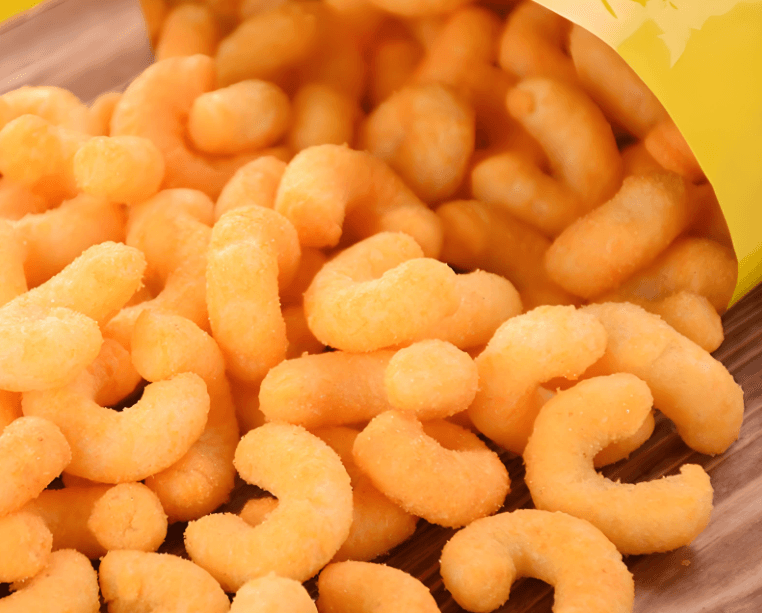
- Direct-Expanded Snacks: The most common type of extruded snack. A mixture of flour (corn, potato, rice) and water is cooked under high pressure and temperature inside an extruder barrel. When the molten dough is forced through a die into the atmosphere, the superheated water flashes into steam, causing the product to expand dramatically. The product is then cut to size. These snacks are characterized by their light, airy, and crispy texture (e.g., Cheese Puffs, certain types of ball-shaped snacks).
- Pellet-Based (Third-Generation or 3G) Snacks: This is a two-step process. First, a dense, unexpanded pellet is made via extrusion. These semi-finished pellets have a very long shelf life. In the second step, the pellets are puffed by frying, hot air, or microwaving. This allows for great flexibility, as snack manufacturers can puff the pellets as needed. This category includes snacks like Bugles and various shaped snacks.
- Co-Extrusion: A more advanced process where two or more components are extruded simultaneously. The most common application is a crisp, outer shell co-extruded with a soft, filling center (e.g., a cheese-filled snack). This creates a complex, multi-textured experience.
2.2. Frying
Frying uses hot oil as a cooking medium, which simultaneously cooks the snack, removes moisture to create crispness, and adds flavor.
- Deep-Frying: The snack is fully submerged in hot oil (typically 160-190°C). This results in a fast, uniform cook, a characteristic rich flavor, and a high fat content. Most potato chips and tortilla chips are deep-fried.
- Vacuum Frying: A technology used for heat-sensitive materials, particularly fruits and vegetables. The frying occurs under reduced pressure, which lowers the boiling point of water. This allows the product to be fried at a much lower temperature (e.g., 80-90°C), preserving its natural color, flavor, and nutrients better than deep-frying. Vacuum-fried fruit chips are a premium product.
- Air Frying: While more common in home kitchens, the principle of using rapidly circulating hot air to mimic frying is being adopted industrially to create snacks with a lower fat content than traditionally fried products.
2.3. Baking
Baking uses convective heat in an oven to cook the snack. It is generally perceived as a healthier alternative to frying because it requires little to no added oil.
- Baked Chips and Crisps: Snacks that achieve crispness through baking rather than frying. They often have a harder, less greasy texture and a lower fat content.
- Crackers and Cookies: The classic baked snacks. A dough is prepared, sheeted, cut into shapes, and baked. This category is immense, encompassing everything from simple saltines to elaborate, multi-layered cream-filled cookies.
- Baked Pretzels: As described earlier, the baking process is essential to the pretzel’s character.
2.4. Drying and Dehydration
This is one of the oldest food preservation methods, which also creates a stable, portable snack.
- Air Drying: Used for meats (jerky) and some fruits. The product is exposed to a controlled flow of warm, dry air over a prolonged period.
- Freeze-Drying (Lyophilization): As mentioned for fruits, this process is also used for creating “astronaut” ice cream and even freeze-dried yogurt drops or ice cream. It produces a very light, crisp texture that dissolves quickly in the mouth.
- Roasting: A dry-heat method used for nuts, seeds, and chickpeas. Roasting enhances flavor through the Maillard reaction and creates a crunchy texture.
Category 3: Classification by Texture and Sensory Profile
Texture is a critical, and often overlooked, driver of snack preference. It defines the “eating experience.”
- Crunchy/Crispy: Characterized by a sharp, high-pitched sound and a clean break when bitten. This texture is achieved by a rigid, brittle structure that fractures easily. Examples: Potato chips, crisp apples, crackers. Subtle difference: “Crispy” often implies a thinner, more delicate structure (a cracker), while “crunchy” implies a louder, more substantial break (a thick vegetable chip).
- Puffy/Airy: Snacks with a cellular, porous structure that are light and melt-in-the-mouth. They offer little resistance to biting. Examples: Cheese puffs, rice cakes, popcorn.
- Chewy: Requires sustained chewing effort. The snack is deformable but offers resistance. Examples: Jerky, fruit leather, soft granola bars, dried mango.
- Creamy/Meltable: Soft snacks that dissolve or spread in the mouth with little chewing. Examples: Yogurt, soft cheese, chocolate.
- Craggy/Hard: Snacks that are very dense and require significant jaw effort. Examples: Hard pretzels, some nut clusters, old-fashioned hardtack.
Many sophisticated snacks aim for a combination of textures, such as a chocolate-covered, crunchy nut bar (combining creamy, crunchy, and chewy) or a yogurt-covered pretzel (combining creamy and crunchy).

Category 4: Classification by Occasion and Consumption Context
This classification is highly relevant for marketing and product positioning.
- On-the-Go Snacks: Designed for convenience and portability. Characterized by single-serve packaging that is easy to open and consume without utensils. Examples: Granola bars, yogurt tubes, small bags of chips.
- Sharing Snacks: Packaged in large-format bags or boxes for social settings like parties, movie nights, or family gatherings. Examples: Large bags of chips, party mixes, big boxes of cookies.
- Functional/Performance Snacks: Consumed with a specific purpose in mind, such as providing energy before a workout, replenishing nutrients afterwards, or offering a cognitive boost during work or study. These are often high in protein or complex carbohydrates. Examples: Protein bars, energy balls.
- Indulgent/Treat Snacks: Positioned as a reward or a moment of pure pleasure. Often high in sugar, fat, or salt. The packaging and branding evoke fun and decadence. Examples: Premium ice cream, chocolate bars, gourmet popcorn.
- Mindful/Wellness Snacks: Consumed slowly and consciously, often aligned with specific dietary philosophies like vegan, paleo, or keto. They are marketed as supporting overall well-being. Examples: Organic vegetable chips, adaptogen-infused snacks, keto-friendly fat bombs.
Category 5: Classification by Nutritional Positioning and Health Claims
This is a dynamic and increasingly important category driven by consumer health awareness.
- “Free-From” Snacks:
- Gluten-Free: Made without wheat, barley, or rye. Essential for those with celiac disease but also popular with a wider health-conscious audience.
- Dairy-Free/Lactose-Free: Using plant-based alternatives like nuts, oats, or soy.
- Vegan: Containing no animal products whatsoever.
- Allergen-Free: Often free from the “Big 9” allergens (milk, eggs, fish, shellfish, tree nuts, peanuts, wheat, soy, sesame).
- Nutrient-Enhanced Snacks:
- High-Protein: Formulated with added protein isolates (whey, soy, pea) to promote satiety and muscle repair.
- High-Fiber: Often containing added chicory root fiber, psyllium, or oat bran to support digestive health.
- Fortified: With added vitamins and minerals, such as Vitamin D or calcium.
- Macro-Nutrient Focused Snacks:
- Low-Calorie/Light: Formulated to have fewer calories than their standard counterpart.
- Low-Fat/No-Fat: Achieved through baking instead of frying or using fat replacers.
- Low-Carb/Keto: Designed to be very low in net carbohydrates, high in fat, and moderate in protein to support a ketogenic diet.
- Low-Sugar/No-Sugar-Added: Using sugar alcohols (e.g., erythritol) or high-intensity sweeteners (e.g., stevia, monk fruit) to reduce sugar content.
- “Natural” and “Clean Label” Snacks: This is less about a specific nutrient and more about the ingredient list. Consumers seek snacks with simple, recognizable ingredients, no artificial flavors, colors, or preservatives. The term “organic” falls strongly into this category.
Conclusion: The Converging Trends Shaping the Future of Snacking
The classification of snack foods is not a static exercise. The boundaries between categories are constantly blurring as innovation accelerates. The most significant trends driving this evolution are:
- The “Healthification” of Indulgence: Consumers are increasingly seeking snacks that offer the best of both worlds: the taste and texture of an indulgent treat with the nutritional benefits of a health food. Think keto-friendly ice cream, high-protein chocolate, or baked vegetable chips with bold, “junk food” flavors.
- Plant-Based Dominance: The plant-based movement has moved far beyond burgers and into every snack category, from seafood-style chips to vegan jerky and cheese alternatives.
- Global Flavor Exploration: As palates become more adventurous, snacks are becoming a vehicle for global flavors, such as Korean gochujang, Indian tikka masala, or Middle Eastern za’atar.
- Sustainability and Transparency: Consumers are concerned with the environmental and ethical footprint of their snacks. This drives demand for recyclable packaging, ethically sourced ingredients, and clear supply chain information.
Understanding the multifaceted nature of snack food classification is essential for anyone involved in the food industry. By viewing products through these different lenses—ingredient, process, texture, occasion, and nutrition—we can better understand consumer behavior, anticipate market shifts, and contribute to the development of the next generation of snacks that will nourish, delight, and sustain the global population. The simple snack has become a complex and fascinating reflection of our times.
Leave A Comment