
The Imperative of Fortified Rice: A Comprehensive Guide to Quality, Safety, and Impact
Rice is the staple food for over half of the world’s population, providing a significant portion of daily caloric intake for billions, particularly in Asia, Africa, and Latin America. Fortified rice making machine supplier However, while an excellent source of energy, milled white rice is inherently low in essential micronutrients. Diets overly reliant on such staple foods, often due to economic constraints and limited dietary diversity, can lead to “hidden hunger” – micronutrient deficiencies that cause profound health consequences without visible signs of undernutrition. Iron deficiency anemia, vitamin A deficiency leading to blindness, and zinc deficiency impairing immune function are widespread public health challenges. To combat this, food fortification, the practice of deliberately increasing the content of essential micronutrients in food, has emerged as a proven, cost-effective, and scalable strategy. Among fortified foods, fortified rice holds unique promise due to its central dietary role. Fortified rice making machine supplierThis article provides a comprehensive examination of the critical considerations in producing, distributing, and ensuring the effective consumption of fortified rice, a process far more complex than simply adding vitamins to grains.

Part 1: Understanding the “Why”: The Rationale and Micronutrient Selection
Before delving into the “how,” it is essential to ground the process in a clear understanding of the public health imperative and scientific rationale.
1.1 The Burden of Micronutrient Deficiencies:
The global burden is staggering. According to the WHO, approximately 2 billion people suffer from anemia, often due to iron deficiency, Fortified rice making machine supplier impacting cognitive development in children and productivity in adults. An estimated 250 million preschool children are vitamin A deficient. Zinc deficiency is linked to nearly half a million deaths annually from diarrhea and pneumonia in children under five. These deficiencies trap communities in cycles of poor health, diminished educational outcomes, and reduced economic potential.
1.2 The Principle of Fortification:
Fortification is designed to fill dietary gaps without requiring changes in consumer behavior. It is passive, equitable, and sustainable. The goal is not to provide 100% of daily requirements from a single source but to contribute significantly to the overall dietary intake, bringing populations closer to recommended nutrient intakes.
1.3 Selecting Appropriate Micronutrients:
The choice of micronutrients is not arbitrary. It is based on:
- Documented Public Health Need: Evidence of a prevalent deficiency in the target population.
- Technical Feasibility: The nutrient must be stable and compatible with the rice matrix and processing conditions.
- Bioavailability: The added form must be absorbable and utilizable by the human body.
- Safety: Risk of excessive intake must be negligible, even for high consumers.
The most common micronutrients added to rice are: - Iron: The biggest challenge. Elemental iron powders (e.g., electrolytic) are inexpensive but poorly absorbed. Fortificants like Ferric Pyrophosphate (micronized) or encapsulated forms like NaFeEDTA offer better bioavailability but are costlier. The choice is a critical trade-off between efficacy, stability, and cost.
- Vitamin A: Typically added as retinyl palmitate in a stabilized, encapsulated form to protect against oxidation and degradation by heat and light.
- Folic Acid (Vitamin B9): Crucial for preventing neural tube defects. It is relatively stable but can be lost in washing and cooking water if not properly bound.
- Vitamin B12: Essential for neurological function and red blood cell formation, especially important in vegetarian populations. Often added as cyanocobalamin.
- Zinc: Usually added as zinc oxide. It is stable and does not significantly affect taste or color.
1.4 Formulating the Premix:
Micronutrients are combined into a “premix” – a uniform blend of fortificants and sometimes a filler like rice starch. Fortified rice making machine supplier The formulation must ensure chemical compatibility between nutrients (e.g., some forms of iron can oxidize vitamin A) and precise dosing. The premix is the heart of the fortification process, and its quality is paramount.
Part 2: The Core Technology: Production Methods and Their Nuances
The primary technical challenge is that rice is washed and often cooked in excess water, which can leach out water-soluble nutrients. Simply coating rice grains is ineffective. Therefore, specialized techniques have been developed to integrate micronutrients into the rice structure.

2.1 The “Hot Extrusion” Process (The Most Common Method):
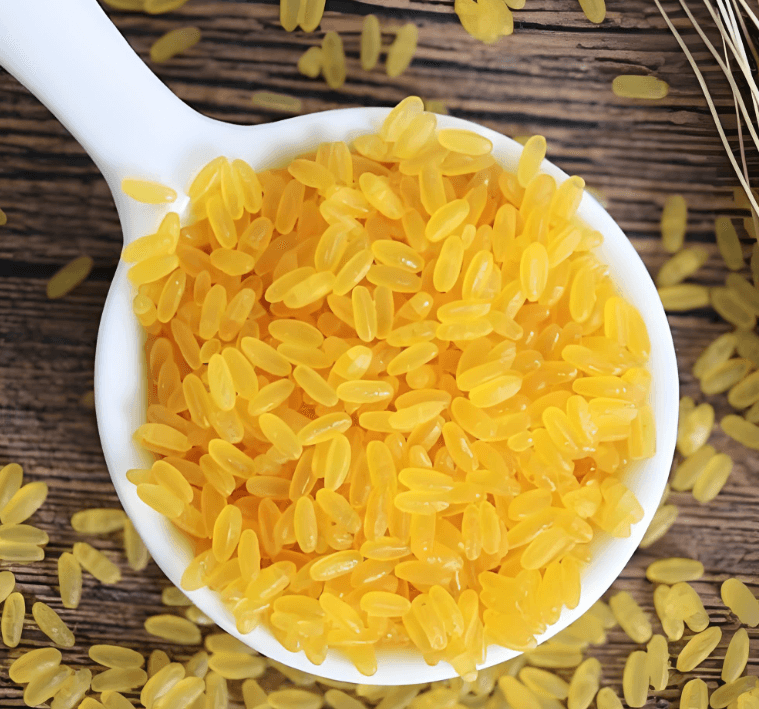
This method creates simulated rice kernels, often called “micronutrient kernels” or “premix rice.”
- Raw Material: Rice flour is obtained from broken rice kernels, a by-product of milling.
- Mixing: The rice flour is blended with the precise amount of vitamin and mineral premix and water to form a dough.
- Extrusion: The dough is forced through a die under high temperature and pressure in an extruder. The heat gelatinizes the starch.
- Shaping and Cutting: The extrudate is shaped to resemble rice grains and cut to size.
- Drying: The kernels are dried to a moisture content similar to natural rice (~14%) for stability and to prevent microbial growth.
- Critical Considerations:
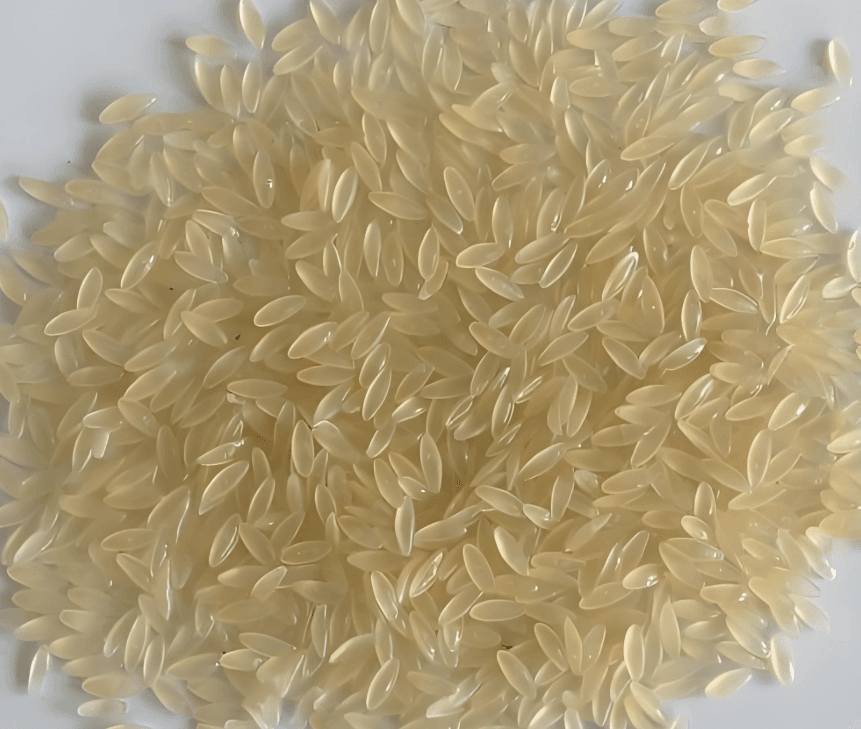
- Similarity in Physical Properties: The fortified kernels must match the size, shape, density, and texture of the local natural rice variety. Fortified rice making machine supplier Any difference will lead to segregation during transport or consumer sorting and rejection.
- Thermal Stability: The extrusion process subjects nutrients to high heat (80-110°C). The premix must be specially formulated with heat-stable or encapsulated forms to withstand this.
- Nutrient Overages: To account for processing losses and storage degradation, nutrients are added at levels higher than the target final content (“overage”). Calculating the correct overage requires stability studies.
2.2 The “Cold Extrusion” Process:
Similar to hot extrusion but conducted at lower temperatures (typically <70°C). It is gentler on heat-sensitive nutrients like some B vitamins but may require binding agents and results in a less dense kernel that must be carefully matched to natural rice.
2.3 Coating and Encapsulation Technologies:
These methods aim to fortify individual natural rice grains.
- Dusting: Powdered fortificants are adhered to rice grains using an edible fat or wax coating. It is low-cost but offers poor retention through washing and cooking.
- Spray Coating: A nutrient solution is sprayed onto rice in a rotating drum, followed by a coating layer (e.g., shellac, ethyl cellulose) to protect against washing. More effective than dusting but can alter taste and appearance if not perfectly controlled.
- Advanced Encapsulation: Technologies like lipid-based encapsulation or gel formation create a robust barrier around each nutrient particle, significantly improving wash and heat stability. This is an area of active research and development.
2.4 Blending: The Final, Critical Step
The fortified kernels (typically at a ratio of 0.5% to 2% by weight, e.g., 1:200) are uniformly blended with bulk natural rice. This step is deceptively simple but failure-prone.
- Blending Equipment: Continuous or batch blenders must be precisely calibrated. Even a 0.1% deviation in the blend ratio can lead to significant under- or over-fortification.
- Segregation Prevention: Due to differences in size or density, the kernels can separate during handling, packaging, and transport. Packaging should minimize vibration and movement. Educating distributors and retailers on gentle handling is crucial.
Part 3: Beyond Production: The Ecosystem of Quality, Safety, and Regulation
Producing the kernels is only the beginning. Fortified rice making machine supplier A robust system must envelop the entire supply chain.
3.1 Quality Assurance (QA) and Quality Control (QC):
QA is the system of processes to ensure quality; QC is the testing of outputs.
- Incoming Raw Material Inspection: Rice flour, premix, and packaging must meet specifications.
- In-Process Controls: Monitoring of extrusion parameters (temperature, moisture), kernel physical properties (size, shape, color), and blend uniformity.
- Finished Product Testing: This is non-negotiable. Every production batch must be tested for:
- Micronutrient Content: Using standardized analytical methods (HPLC, ICP-MS, spectrophotometry) to verify the levels of each nutrient are within the target range.
- Physical Attributes: To ensure no segregation has occurred.
- Microbiological Safety: Testing for pathogens like Salmonella and E. coli.
- Stability Studies: Conducting shelf-life studies under realistic storage conditions (temperature, humidity) to validate the overage calculations and establish an expiration date.
3.2 Packaging and Storage:
Packaging serves multiple functions: protection from physical damage, moisture, insects, and, critically, from light and oxygen which degrade nutrients like vitamin A and folic acid.
- Material: High-barrier, food-grade polypropylene or laminated bags are often used.
- Labeling: Clear labeling in the local language is essential. It should state “Fortified Rice,” list the added nutrients and their quantities (per 100g), cooking instructions to maximize nutrient retention, and a “Best Before” date. Use of a recognizable fortification logo can build consumer trust.
3.3 Regulatory Framework and Standards:
A strong, enforceable national standard is the bedrock of a successful program.
- Mandatory vs. Voluntary: Mandatory fortification, when applied to a major staple like rice through a government program (e.g., social safety nets, school meals), achieves the greatest public health impact by ensuring universal coverage.
- Standard Setting: The national standard (e.g., Codex Alimentarius guidelines, national regulations) must define:
- The specific nutrients and their chemical forms.
- Minimum and maximum levels per kilogram of rice.
- Allowed production technologies.
- Labeling requirements.
- Approved methods for monitoring and enforcement.
- Third-Party Certification: Systems like NSF International or SGS certification provide an independent check on compliance, building credibility with governments and donors.
Part 4: Ensuring Impact: Delivery, Monitoring, and Consumer Acceptance
The most perfectly fortified rice is useless if it does not reach the plate of the target population or is not consumed.
4.1 Supply Chain Integration and Targeting:
- Social Safety Nets: Integrating fortified rice into Public Distribution Systems (PDS), food aid programs, Fortified rice making machine supplier and school feeding programs ensures it reaches the most vulnerable efficiently.
- Commercial Markets: Making fortified rice available in local markets at an affordable price (subsidized if necessary) ensures sustainability and reach. A “push-pull” strategy, combining government procurement with consumer demand creation, is often most effective.
4.2 Monitoring and Evaluation (M&E):
M&E is the feedback loop that tells you if the program is working.
- Process Monitoring: Are factories compliant? Is blending accurate? Is the rice properly packaged and stored at distribution points?
- Household and Market Surveillance: Are the right nutrients present in the rice purchased from markets or received by households? This involves random sampling and testing.
- Impact Evaluation: The ultimate measure. This involves measuring biomarkers (e.g., hemoglobin levels, serum retinol, zinc status) in the target population before and after the program’s implementation through well-designed studies. This provides irrefutable evidence of the program’s health impact.
4.3 Consumer Awareness and Behavior Change:
Acceptance cannot be assumed. A comprehensive communication strategy is vital.
- Addressing Sensory Concerns: Fortified rice must be virtually indistinguishable in taste, smell, color, and cooking properties. Any alteration can lead to rejection.
- Messaging: Communications should focus on benefits (e.g., “strength for children,” “energy for mothers,” “protection from illness”), not technical details. Use trusted community channels—health workers, teachers, local leaders.
- Cooking Instructions: Clear guidance to minimize nutrient loss: “Do not wash excessively,” “Use just enough water to be absorbed during cooking,” “Keep the pot covered.” Developing and promoting appropriate cooking methods is part of the technology.
Part 5: Special Considerations and Future Directions
5.1 Stability During Cooking: The final frontier of efficacy. Research is ongoing into ultra-stable fortificants and coatings that survive varied traditional cooking methods (boiling, steaming, frying).

5.2 Cost and Cost-Effectiveness: The incremental cost of fortification is low (typically 2-5% of the rice price), but for large-scale government programs, Fortified rice making machine supplier it is a significant budget line. Cost-benefit analyses consistently show returns of $8-$30 in economic productivity for every $1 invested in fortification, making it one of the most impactful development interventions.
5.3 Equity and Accessibility: Programs must be designed to avoid exacerbating inequalities. Ensuring fortified rice is available to the poorest, often through targeted subsidies, is an ethical and practical imperative.
5.4 The Role of Public-Private Partnerships (PPPs): Successful fortification often leverages the efficiency of the private sector in production and distribution, guided by the public sector’s regulatory and public health mandate. PPPs can accelerate scale-up and innovation.
5.5 Integration with Other Interventions: Fortified rice is not a silver bullet. It should be part of a comprehensive nutrition strategy that includes promoting dietary diversity, breastfeeding, supplementation for high-risk groups, and disease control (e.g., deworming, which improves iron absorption).
Conclusion
The production of high-quality, effective fortified rice is a multidisciplinary endeavor that sits at the intersection of food science, public health, engineering, regulatory policy, and social marketing. It requires meticulous attention at every stage: from the scientific selection of bioavailable nutrient forms, Fortified rice making machine supplier through the precision engineering of extrusion and blending, to the rigorous enforcement of quality standards and the nuanced understanding of consumer behavior. Getting it wrong means wasting resources and, more importantly, failing to alleviate the silent suffering of millions. Getting it right requires sustained commitment, investment, and collaboration across sectors. When executed with this comprehensive rigor, fortified rice ceases to be just a commodity and transforms into a powerful, life-saving vehicle for delivering essential health, one of the most fundamental and scalable tools in the global fight against hidden hunger and its devastating consequences. The process, therefore, is not merely a technical checklist but a commitment to equity and health, demanding excellence from the laboratory to the last mile.

Leave A Comment