
Introduction: The Nexus of Quality, Cost, and Market Demand
The global pet food market, with cat food as a dominant segment, is a multi-billion-dollar industry characterized by robust growth and intense competition. For a new entrant or an existing company looking to expand, the decision of investing in a production line is one of the most capital-intensive and strategically defining choices to be made. Cat food making machineThe term “cost-effective” in this context transcends the simplistic notion of finding the cheapest available machinery. True cost-effectiveness is a holistic concept that encompasses the Lowest Total Cost of Ownership (TCO) over the equipment’s operational lifespan, while simultaneously enabling the production of a product that meets market quality standards and generates profit.
A poorly chosen production line can lead to a cascade of financial drains: exorbitant downtime, inconsistent product quality leading to recalls and brand damage, high energy and maintenance costs, limited flexibility to adapt to market trends, and low production yields. Cat food making machineConversely, a wisely selected line, even with a higher initial price tag, can become a powerful engine for growth, ensuring operational excellence, product consistency, and the agility to capitalize on new opportunities.
This guide provides a detailed, step-by-step framework for navigating the complex process of selecting a cat food production line. We will dissect the components, analyze the cost drivers, and provide a strategic approach to ensure your investment becomes a cornerstone of your business’s success, delivering genuine, long-term value.
Section 1: Foundational Analysis – Defining Your Business and Product Strategy
Before examining a single machine, you must have absolute clarity on what you intend to produce. The production line is a tool to execute your business strategy; it should not dictate it.
1.1. Product Portfolio and Formulation
The type of cat food you plan to manufacture is the primary determinant of the required technology.
- Kibble (Dry Food): This is the most common form and the primary focus of this article. It requires an extrusion-based production line.
- Standard Nutrition: Maintenance, adult, and kitten formulas.
- Premium/Super-Premium: High-meat content, grain-free, Cat food making machine limited ingredient diets. These often require more advanced extrusion and coating capabilities.
- Veterinary Prescription Diets: These require absolute precision, often involving unique shapes and specialized nutrient incorporation, demanding high flexibility from the extruder.
- Wet Food: This involves a completely different process Cat food making machine (mixing, grinding, cooking, filling into cans or pouches, and retort sterilization) and is not covered by an extrusion line.
- Semi-Moist Food and Treats: These may use extrusion or a different technology like baking or injection molding.
1.2. Production Capacity and Scalability
Your market forecast dictates the required output of your line.
- Calculating Required Capacity: Determine your target annual tonnage. From this, calculate your required hourly output, factoring in:
- Number of Shifts: Will you operate 8, 16, or 24 hours?
- Working Days: Account for holidays and maintenance windows.
- Line Efficiency: No line runs at 100% efficiency. Assume 85-90% efficiency for a well-maintained line. The formula is:
Required Hourly Capacity (kg/h) = (Annual Target Tonnage * 1000) / (Working Days * Shift Hours * Efficiency)
- The Scalability Imperative: Your initial capacity might be 1 ton per hour. Will the line allow you to grow to 2 or 3 tons per hour with manageable upgrades? Investing in a line with a “buffer” or modular design (e.g., an extruder driven by a larger motor than initially needed) can be a highly cost-effective strategy for the future, preventing a complete line replacement in 3-5 years.
1.3. Target Product Specifications: The “Recipe” for Your Line
The physical and nutritional qualities of your kibble are direct results of the machinery’s capabilities.
- Pellet Density: Will you produce standard-density or low-density (highly expanded) kibble? Low-density requires more starch and higher expansion, influencing extruder design.
- Pellet Shape and Size: Small-bite kittens, standard adult, or large dental care shapes? Each requires a different die and cutter.
- Fat Coating Level: Standard kibble may have 8-12% fat coating, while high-energy formulas can exceed 20%. Achieving high fat content without oil leakage requires a vacuum coater, not a simple surface spray.
- Ingredient Integrity: Will you use high levels of fresh meat or inclusion particles (e.g., freeze-dried chicken pieces)? This affects the choice of mixer and how ingredients are added (e.g., post-extrusion inclusion).
1.4. Budgetary Constraints: Initial Capex vs. Long-Term Opex
Establish a clear budget, but understand its composition.
- Capital Expenditure (Capex): The upfront cost of the equipment, installation, and commissioning.
- Operational Expenditure (Opex): The ongoing costs of running the line: energy, water, labor, spare parts, and maintenance.
A line with a low Capex might have a prohibitively high Opex due to inefficient motors,Cat food making machine high waste, and frequent breakdowns. The TCO analysis is essential.
Section 2: The Core Technology – Deep Dive into the Extrusion Line and Its Components
A cat food production line is a sequence of integrated machines. Understanding the function and cost-quality trade-offs of each is crucial.
2.1. Raw Material Handling and Storage
This is the starting point. Efficiency here prevents bottlenecks downstream.
- Silos vs. Bags: Buying ingredients in bulk and storing them in silos is far more cost-effective per ton than manual handling of 25kg bags. It reduces labor cost and contamination risk. The investment in silos, pneumatic conveyors, and weighing systems pays back quickly for medium to large-scale operations.
- Screening and Magnetism: A simple, cost-effective gyratory sieve and magnetic separator at the intake point are non-negotiable for protecting downstream equipment from stones, strings, and metal debris.
2.2. Grinding System: The First Transformation
As detailed in the previous article, a consistent, fine particle size is critical for mixing homogeneity, digestibility, and pellet stability.
- Hammer Mill Selection:
- Screen Area: A larger screen area increases throughput and efficiency. Don’t undersize the hammer mill; it’s a key bottleneck.
- Air-Assisted Discharge: This is a valuable feature that uses airflow to pull ground material through the screen, preventing clogging and reducing heat generation, which protects heat-sensitive nutrients.
- Energy Efficiency: Compare the power (kW) of the motor relative to its capacity. A more efficient motor has a higher Opex saving.
2.3. Weighing and Mixing: The Heart of Formula Accuracy
Precision here ensures every bag of food is nutritionally identical.
- Batching System: Fully automated systems are more expensive but eliminate human error and provide full traceability. The cost of a single recall due to a mixing error can far exceed the investment in a good batching system.
- Mixer Type:
- Ribbon Mixer: The standard for dry mixing. Look for a robust design, a discharge mechanism that ensures a full, clean unload, and a mixing time that achieves homogeneity (validated by a salt test).
- Paddle Mixer / Twin-Shaft Mixer: More effective for cohesive powders or recipes with a high liquid fraction added during mixing. Cat food making machineMore expensive but offer superior mixing performance for complex formulations.
2.4. Pre-Conditioning: The Unsung Hero of Quality and Efficiency
The preconditioner is where the cooking process begins. Investing in a high-quality preconditioner is one of the most cost-effective decisions you can make.
- Single-Shaft vs. Twin-Shaft (Dual-Shaft) Preconditioner:
- Single-Shaft: The basic, lower-cost option. It provides adequate mixing but has shorter retention time (1-2 minutes) and less uniform hydration.
- Twin-Shaft: The premium choice. It creates a more intense mixing action, achieving near-perfect hydration and a longer, more controlled retention time (3-4 minutes). This allows for up to 90% of the starch gelatinization to occur before the extruder.
- The Cost-Benefit of a Twin-Shaft Preconditioner:
- Reduces Extruder Load: By doing most of the cooking in the preconditioner, the mechanical energy required by the extruder is significantly reduced, saving 20-30% on energy costs.
- Increases Capacity: The extruder can process more material as it’s primarily acting as a forming machine.
- Improves Product Quality: More uniform cooking improves digestibility and pellet durability.
- Increases Flexibility: Handles a wider range of recipes, especially those with high meat slurries.
The higher initial cost of a twin-shaft preconditioner is almost always justified by the dramatic Opex savings and quality improvements.
2.5. The Extruder: The Centerpiece of the Line
This is where the largest capital investment and the most critical technical decisions lie.
- Single-Screw vs. Twin-Screw Extruder: The Fundamental Choice
- Single-Screw Extruder:
- Pros: Lower initial capital cost (Capex), simpler mechanics, easier to operate and maintain.
- Cons: Less flexible, struggles with high-fat (>12%) or high-moisture recipes, lower control over product density and texture, generally less energy-efficient. The product quality is highly dependent on the recipe.
- Verdict: A cost-effective choice only for producers with a fixed, simple recipe (standard cereal-based diets) and a tight initial budget. It is a technological dead-end for a growing business.
- Twin-Screw Extruder:
- Pros: Exceptional flexibility, can handle a vast range of recipes (high-meat, high-fat, grain-free), precise control over product texture and density, higher energy efficiency per ton of output, self-wiping screws reduce cleaning time and cross-contamination.
- Cons: Higher initial Capex, more complex operation and maintenance, requires more skilled technicians.
- Verdict: The unequivocally more cost-effective choice in the long term for any business aiming to compete in the modern pet food market. Its flexibility allows you to pivot to new, trending formulas without re-investing in a new line.Cat food making machine Its efficiency and higher yield lower your Opex.
- Single-Screw Extruder:
- Key Extruder Specifications to Scrutinize:
- Motor Power (kW): Indicates the machine’s ability to do work. A larger motor provides more torque and flexibility for difficult recipes.
- Screw Length-to-Diameter Ratio (L/D Ratio): A higher L/D ratio (e.g., 12:1 to 18:1) provides more processing sections in the barrel, allowing for more complex cooking and shaping processes. It’s a mark of a more capable machine.
- Modularity: Can the screw configuration and barrel sections be easily changed? This is key to future flexibility.
- Control System: A modern, automated PLC (Programmable Logic Controller) with a touch-screen HMI (Human-Machine Interface) is essential. It stores recipes, automatically adjusts parameters, monitors machine health, and provides data for traceability. It reduces operator error and improves consistency.
2.6. Drying and Cooling
The extruded kibble is soft and moist (~25%) and must be dried to ~10% for stability and cooled to ambient temperature.
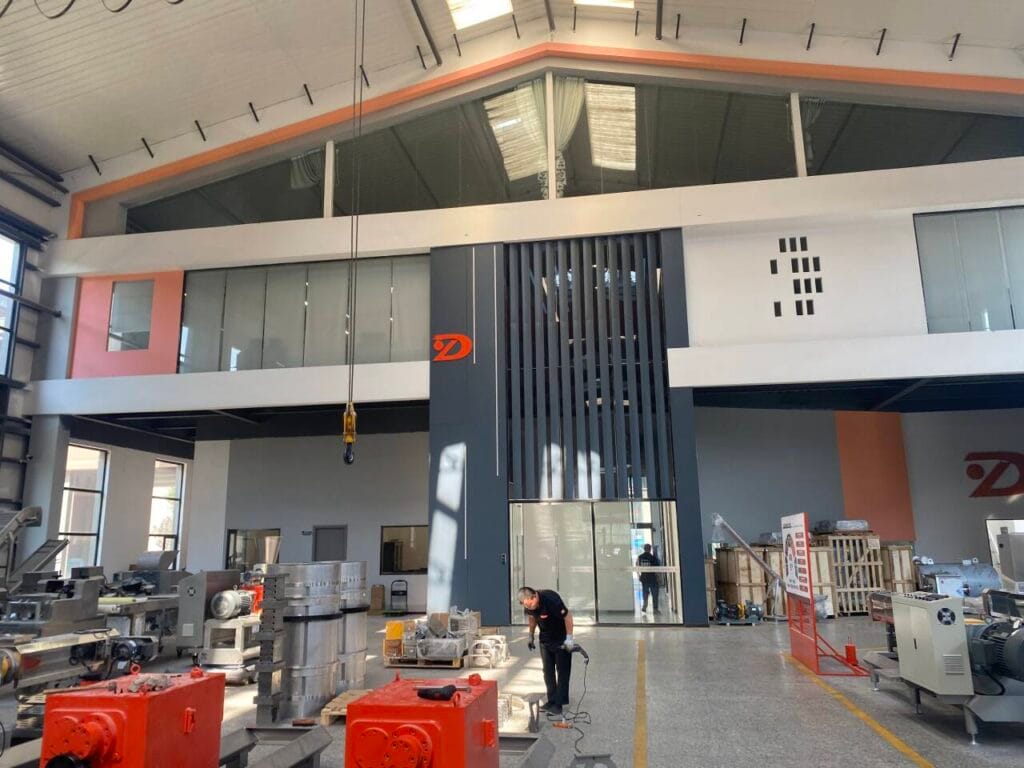
- Dryer and Cooler Type: Multi-pass conveyor dryers/coolers are the industry standard.
- Energy Efficiency: The dryer is the second-largest energy consumer after the extruder. Look for features like:
- Heat Recovery Systems: These capture waste heat from the dryer exhaust and use it to pre-heat incoming fresh air, dramatically reducing fuel (gas or oil) consumption.
- Automated Humidity Control: Sensors adjust the air flow and heating to optimize the drying process, preventing over-drying (which wastes energy) or under-drying (which causes spoilage).
- Gentle Handling: The conveyor belts and air flow should be designed to minimize pellet breakage and the creation of “fines” (dust), which represent lost product and lower yield.
2.7. Fat Coating and Flavoring
This is where palatability is finalized.
- Simple Drum Coaters: A rotating drum with a spray system. Cost-effective for low fat levels (<12%) but results in surface-only coating, which can lead to oil leakage and dusty bags.
- Vacuum Coaters: The premium solution. As described previously, the kibble is placed under a vacuum, and the fat is infused into the pores. This allows for very high fat levels (>20%) without leakage, eliminates dust, and improves palatability. For a producer aiming at the premium segment, a vacuum coater is a cost-effective necessity, as it enables a superior product that commands a higher market price.
2.8. Packaging
The final step protects the product you’ve just invested in creating.
- Weigher Type:
- Gross Weighers: Weigh the entire bag. Less accurate and slower.
- Net Weighers: Weigh the product before it drops into the bag. Much more accurate and faster. Reduces “giveaway” (putting more product in the bag than necessary to meet label weight), which saves thousands of dollars in lost product annually.
- Bag Material: Investing in high-barrier packaging (with foil layers) protects the kibble from oxidation and moisture, extending shelf-life and preventing customer complaints. The cost of a bag is minor compared to the cost of the product inside it.
Section 3: The Supplier Selection Process – A Strategic Partnership
The company you buy from is as important as the machinery itself.
3.1. Types of Suppliers
- Full-Line OEMs (Original Equipment Manufacturers): Companies that manufacture most key components (extruder, dryer, etc.) themselves. Cat food making machineThey offer single-point responsibility and integrated system guarantees.
- System Integrators: Companies that source components from various specialized manufacturers and assemble them into a complete line. They can sometimes offer more competitive pricing and best-in-class components.
3.2. Critical Due Diligence
- References and Track Record: Ask for a list of customers, preferably in your region making similar products. Contact them and ask about machine performance, reliability, and after-sales service.
- Pilot Testing: Never buy an extruder without testing your recipe in the supplier’s pilot plant. This de-risks the investment, confirms the product quality, and provides data for scaling up.
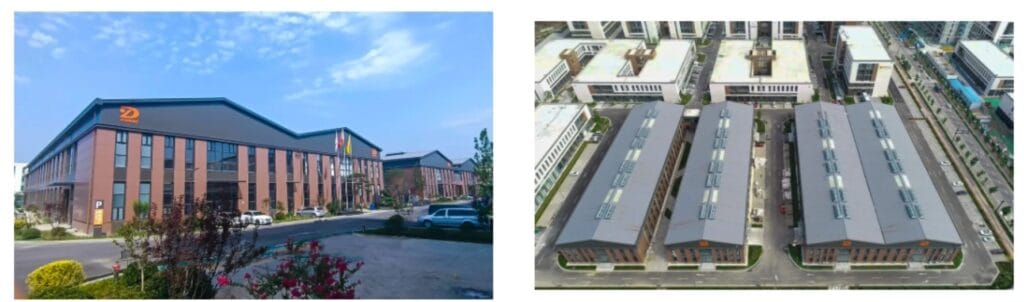
- After-Sales Service and Support: This is a critical part of cost-effectiveness. What is their response time? Do they have local technicians? What is the cost and availability of spare parts? A cheap machine with poor support can become a very expensive monument to downtime.
- Training: Comprehensive training for your operators and maintenance staff is essential to maximize uptime and product quality.
Section 4: The Financial Analysis – Calculating True Cost-Effectiveness
Move beyond the initial quote and build a detailed TCO model.
4.1. Key Performance Indicators (KPIs) for Cost-Effectiveness
- Product Yield: (Weight of Packaged Product / Weight of Raw Materials) x 100. A 1% increase in yield directly boosts profit.
- Energy Consumption per Ton: kWh per ton of finished product. Compare this figure between different supplier proposals.
- Labor per Ton: How many operators are required to run the line?
- Machine Availability/Uptime: The percentage of scheduled time the line is actually producing. Aim for >90%.
4.2. Building the Total Cost of Ownership (TCO) Model
Create a 5-10 year financial model that includes:
- Initial Investment: Equipment price, shipping, installation, commissioning, training.
- Operating Costs:
- Energy (electricity, gas)
- Water
- Labor
- Preventative maintenance (spare parts, service contracts)
- Raw material yield/waste
- Cost of Downtime: This is a hidden cost. Calculate the lost profit for every hour the line is not running.
A line with a 20% higher initial price but 15% lower operating costs and 50% less downtime will have a significantly lower TCO and be the more cost-effective choice.
Section 5: Implementation and Future-Proofing
5.1. Phased Implementation
For a start-up, consider a phased approach: start with a core line (grinding, mixing, extrusion, drying, coating) and add automated packaging later. This manages initial cash flow.
5.2. The Path to Premiumization
Your initial line might produce a good standard product. However, ensure the core extruder is capable of being upgraded with a vacuum coater, a flavor slurry system, or a post-extrusion inclusion feeder as your brand moves into higher-margin segments.
Conclusion: An Investment in Capability, Not Just a Purchase of Machinery
Selecting a cost-effective cat food production line is a complex, multi-faceted strategic exercise. It requires a deep understanding of your own business goals, a technical comprehension of the processes involved, and a disciplined financial analysis that looks beyond the initial price tag.
The most cost-effective choice is rarely the cheapest. It is the line that offers the optimal balance of:
- Robustness and Reliability to maximize uptime.
- Flexibility and Scalability to adapt to market changes and growth.
- Operational Efficiency to minimize the cost per ton produced.
- Quality Consistency to build a strong, reputable brand.
- Strong Supplier Support to ensure long-term operational success.
By following the structured approach outlined in this guide—defining your strategy, understanding the technology, vetting suppliers rigorously, and analyzing the true total cost—you can make an informed investment that will serve as a reliable, profitable,Cat food making machine and growing asset for your company for years to come. In the competitive landscape of pet food, your production line is not just a cost center; it is your primary competitive weapon. Choose it wisely.
Leave A Comment