
A Tale of Two Crisps: A Comprehensive Analysis of the Fundamental Differences Between Composite and Fresh-Cut Potato Chips
The humble potato chip, a global snack food icon, is not a monolithic product. Beneath its crunchy exterior and myriad flavors lies a fundamental dichotomy in production philosophy and technological execution: the world of fresh-cut chips versus that of composite chips. While consumers may casually enjoy both, the journey from field to bag for each is radically different,potato chips making machine resulting in distinct products with unique sensory profiles, structural properties, and market positions. This article provides a meticulous, multi-faceted comparison of these two chip categories. It delves into the core definitions and historical context before embarking on a detailed exploration of their differences in raw material selection, processing technology, structural and textural science, sensory characteristics, nutritional composition, quality control challenges, packaging requirements, and commercial implications. Understanding these differences is essential not only for food scientists and manufacturers but also for retailers and discerning consumers seeking to appreciate the intricate engineering and agricultural art behind this ubiquitous snack.
1. Introduction: Defining the Divide
The simplest way to distinguish between these two types of chips is by their point of origin.
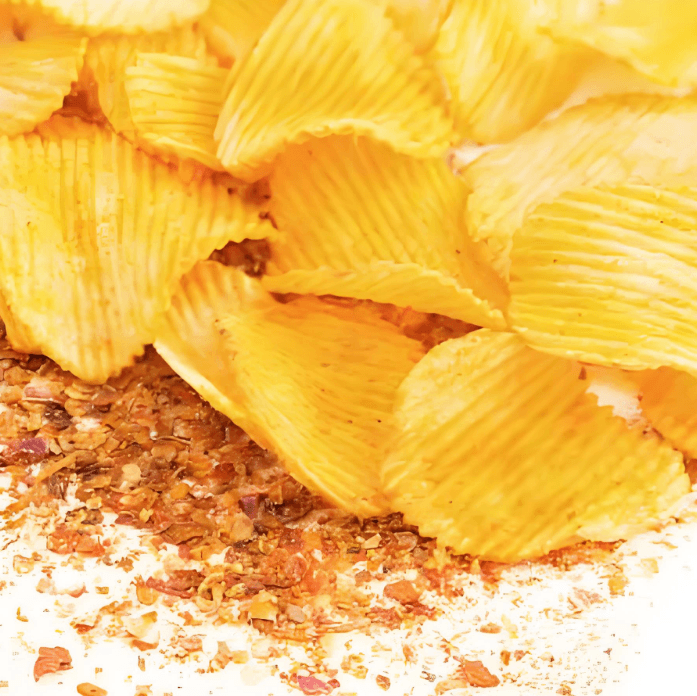
- Fresh-Cut Potato Chips (Also known as Traditional, Slice-style, or Kettle-style): These are produced by the direct slicing of whole, raw potatoes. potato chips making machine The slices are then washed, dried, and cooked (typically fried), and seasoned. The potato structure, with its inherent cellular arrangement and natural variations, is largely preserved. The final product is a direct, albeit transformed, representation of the original tuber.
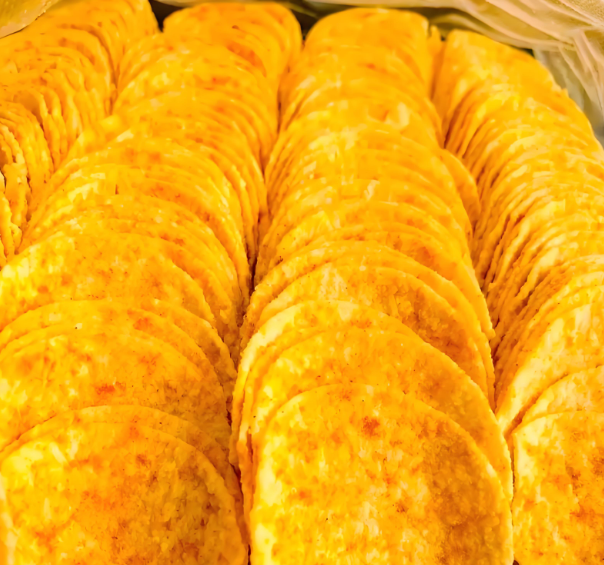
- Composite Potato Chips (Also known as Fabricated, Formed, or Potato Crisps): These are engineered products. They begin not with a whole potato, but with a dough made from dehydrated potato products (flakes, granules, starch), combined with other cereal flours, starches, water, and functional ingredients. This dough is then sheeted, cut into specific shapes, and cooked. The final product is a reconstruction of a chip, built to precise specifications.
The choice between these methods is not merely a matter of cost or scale; it is a fundamental decision that influences every subsequent aspect of the product, from its crunch to its marketability.
2. Historical Context and Technological Evolution
The histories of these two chip types are intertwined with industrialization and changing consumer demands.
- The Ascendancy of Fresh-Cut: The potato chip itself, legend has it, was invented in the 19th century as a fresh-cut product. Its initial production was small-scale and manual. The mid-20th century saw its industrialization with the invention of mechanical peelers and slicers, and the development of continuous frying systems. The “kettle-style” chip, fried in batches for a more artisanal, rustic appeal, emerged as a premium sub-category within the fresh-cut domain. For decades, the fresh-cut method was synonymous with the potato chip.
- The Rise of Composite: The composite chip was a child of post-war food science and a drive for efficiency and consistency. It addressed several key limitations of the fresh-cut model:
- Seasonality and Storage: Potatoes are seasonal and require vast, controlled storage facilities to prevent sprouting and sugar buildup. Dehydrated potato products have a much longer shelf life and are less susceptible to spoilage.
- Raw Material Inconsistency: Potatoes vary in size, shape, sugar content, and solids content, leading to variability in color, texture, and yield. potato chips making machine Composite chips start with standardized raw materials, offering unparalleled consistency.
- Shape and Functionality: The desire for uniform, stackable chips and novel shapes (rippled, spherical, etc.) was difficult to achieve with a naturally variable potato. Composite technology made this trivial.
- Reduction of Waste: The peeling and slicing of irregularly shaped potatoes generate significant waste. Composite processing uses virtually 100% of the dry ingredients.
The first commercially successful composite chips appeared in the 1960s and 1970s, heralding a new era of snack food engineering.
3. Raw Material Foundation: The Agricultural vs. The Industrial
This is the most profound point of divergence, setting the stage for all subsequent differences.
3.1. Fresh-Cut: The Primacy of the Whole Tuber
- Potato Selection: Not all potatoes are created equal for chipping. Specific cultivars are bred for high solids (specific gravity) and low reducing sugar content. High solids mean less oil absorption and a crisper texture. Low sugar is critical to prevent excessive browning (Maillard reaction) during frying, which leads to dark chips and a bitter flavor. The Russet Burbank and Atlantic varieties are common choices in North America. The entire agricultural supply chain, from seed selection to storage conditions (often at 8-10°C with high humidity to prevent sugar accumulation), is geared toward optimizing the potato for the fryer.
- Ingredient Simplicity: The ingredient list for a basic fresh-cut chip is short: potatoes, vegetable oil, and salt. The potato’s inherent composition is the star. potato chips making machine This simplicity is a key marketing point for brands emphasizing “natural” ingredients.
3.2. Composite: The Engineered Blend
- Dehydrated Potato Components: The potato arrives not as a tuber, but as a powder or granule.
- Potato Flakes: Made by cooking, mashing, and drum-drying potatoes. They retain more intact cell walls, contributing to a flakier texture.
- Potato Granules: Produced via an add-back process that minimizes cell rupture, resulting in a denser, more granular texture.
- Potato Starch: A critical ingredient, often modified to enhance binding, control texture, and prevent retrogradation (staling).
- The Supporting Cast: The dough requires other ingredients to function.
- Cereal Flours: Corn, wheat, or rice flour provide structural backbone and influence crispness.
- Functional Ingredients: Emulsifiers (e.g., lecithin) for dough stability, gums (e.g., guar gum) for water binding and texture modification, and leavening agents (e.g., baking soda) to create a light, aerated structure during frying.
- Water: The crucial medium for forming the dough.
- Ingredient Complexity: The ingredient list is inherently longer, which can be a perceptual negative for consumers seeking “clean labels,” but it allows for precise nutritional and textural manipulation.
4. Processing Technology: From Craft to Precision Engineering
The transformation of raw materials into a finished chip is where the two paths diverge most dramatically.
4.1. Fresh-Cut Processing Line: A Path of Preparation and Frying
- Receiving and Storage: Potatoes are stored in vast, climate-controlled warehouses.
- Washing and Peeling: Abrasive or steam peelers remove the skin, resulting in significant loss (10-20%).
- Slicing: High-speed, rotary blades slice the potatoes to a precise thickness (typically 1.0-1.8 mm). The sharpness of the blades is critical; dull blades crush cells, releasing starch that leads to clumping and oil absorption.
- Washing/Rinsing (Optional but common): Slices are rinsed to remove surface starch, which prevents sticking and produces a lighter-colored chip. However, this also washes away some of the potato’s natural flavor.
- Drying/Blowing: Surface water is removed using air knives; residual surface water causes violent oil splattering and increases oil degradation.
- Frying: Slices enter a continuous fryer (or a batch kettle) at 165-185°C (330-365°F). The process is one of simultaneous cooking and dehydration. Moisture flashes to steam, cooking the starch and creating a porous, rigid structure. The frying time is short (2-3 minutes).
- Salting/Seasoning: Seasonings are applied via a drum tumbler. The irregular surface of fresh-cut chips can make uniform seasoning a challenge.
- Cooling and Packaging.
4.2. Composite Processing Line: A Symphony of Reassembly
- Dry Ingredient Blending: Potato derivatives, flours, starches, and dry seasonings are pre-mixed to ensure homogeneity.
- Dough Mixing: The dry blend is combined with water and other liquids in a continuous mixer. This is a critical step. The water-to-dry-mix ratio and mixing shear must be perfectly controlled to achieve a dough that is cohesive but not sticky, pliable but not elastic.
- Sheeting: The dough is passed through a series of progressively tighter rollers to form a thin, continuous sheet of uniform thickness (e.g., 0.8-1.5 mm).
- Cutting/Forming: The sheet passes under a rotary die cutter that stamps out the desired shapes (rounds, ovals, etc.). The scrap dough (“regrind”) is recycled back into the mixer.
- Frying/Baking: The formed dough pieces are fried. The process is similar but the dynamics are different. The dough piece has a different porosity and moisture distribution than a natural slice. The leavening agents in the dough create gas, leading to a more uniform, bubbly structure. Baking is also a common alternative for low-fat products.
- Seasoning: The uniform, often flatter surface of composite chips is ideal for seasoning application, especially with electrostatic systems that ensure near-perfect adhesion with minimal waste.
- Cooling and Packaging.
5. Structural and Textural Science: The Physics of the Crunch
The different creation methods result in fundamentally different microstructures, which the consumer perceives as “texture.”
5.1. Fresh-Cut Chip Microstructure:
- A Cellular Foam: A fresh-cut chip can be visualized as a partially collapsed cellular foam. The potato’s original cell structure is still somewhat discernible. The cell walls are the continuous phase, strengthened by gelatinized starch and denatured protein.
- Irregular Porosity: The escape of steam during frying creates bubbles and voids of varying sizes and distributions. This irregularity is a hallmark of the fresh-cut chip.
- The “Kettle-Cook” Effect: Batch frying in kettle-style chips leads to a more pronounced and varied bubble structure. The chips slide and float in the oil, resulting in a very blistered, wavy, and rigid structure with a distinctly hard, glassy crunch.
5.2. Composite Chip Microstructure:
- A Starch-Based Matrix: The structure is a continuous matrix of gelatinized starch and other biopolymers from the flour and gums. It lacks the distinct cellular architecture of the original potato.
- Uniform Porosity: The expansion is driven by the controlled release of gas from chemical leavening agents. This results in a more uniform, finer, and smaller bubble structure throughout the chip.
- Laminated Structures: For chips designed to mimic kettle-style, the dough can be laminated (layered) before cutting. When fried, steam gets trapped between the layers, causing them to separate and create a flaky, blistered texture, albeit one that is more engineered and regular than its natural counterpart.
5.3. Perceived Texture:
- Fresh-Cut: Tends to have a harder, sharper, and more brittle fracture. The crunch is often louder and more shattering. The irregular structure means it breaks unpredictably along fault lines. The higher initial solids content can lead to a denser, more substantial “bite.”
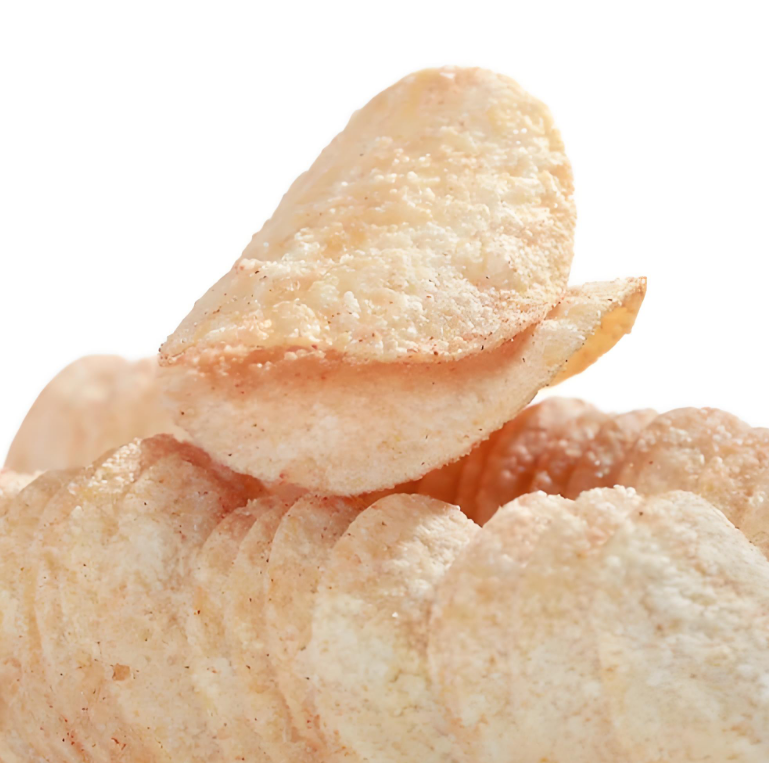
- Composite: Tends to have a lighter, crisper, and more uniform fracture. It is often described as “melt-in-the-mouth” due to its fine, airy structure. potato chips making machine The crunch is softer and less noisy. The texture is highly consistent from chip to chip.
6. Sensory Profile: Flavor, Mouthfeel, and Appearance
The sensory experience is a direct consequence of the processing differences.
6.1. Flavor:
- Fresh-Cut: The flavor profile is dominated by the potato itself, complemented by the taste of the frying oil and seasoning. There is a distinct “toasted potato” or “nutty” flavor resulting from the Maillard reaction and the decomposition of the potato’s natural sugars. Because the potato structure is intact, this flavor can be more complex and deep.
- Composite: The primary flavor is often that of the seasoning. The base chip has a milder, more neutral “potato” flavor, which is derived from the dehydrated products. The intense processing of dehydration and the inclusion of other flours can mute the nuanced potato notes found in fresh-cut chips. The base serves as a highly efficient, blank canvas for the delivery of applied flavors.
6.2. Mouthfeel:
- Fresh-Cut: The denser structure and higher oil content (often a result of surface irregularities) can lead to a richer, more unctuous mouthfeel. The hard fracture can leave larger, sharper fragments that require more oral processing.
- Composite: The airy structure and often lower fat content (due to a more uniform surface that drains oil better) create a lighter, less greasy mouthfeel. It dissolves more quickly, leaving less residue.
6.3. Appearance:
- Fresh-Cut: Variability is the norm. Chips have irregular shapes, sizes, and colors. There may be dark spots (concentrated sugars), green edges (sunlight exposure), or variations in brownness. This is often marketed as a sign of authenticity.
- Composite: Uniformity is the hallmark. Every chip is a perfect geometric clone of the next. The color is consistent, golden, and homogeneous. This is a sign of controlled, high-tech production.
7. Nutritional Composition and Dietary Considerations
While both are energy-dense snack foods, there are nuanced nutritional differences.
- Fat Content: Fresh-cut chips, especially artisanal kettle-cooked ones, can sometimes have a higher fat content. Their irregular surfaces and blistered structures can trap more oil. Composite chips, with their smooth, uniform surfaces, can be engineered for efficient oil drainage, potentially resulting in a lower fat content. However, this is highly dependent on the specific product and frying protocol.
- Sodium and Additives: The seasoning is the primary source of sodium for both, so levels are comparable. The key difference lies in additives. Composite chips, by their nature, contain emulsifiers, stabilizers, and anti-caking agents that are absent from a basic fresh-cut chip.
- “Clean Label” Perception: Fresh-cut chips have a significant advantage in the growing “clean label” market. Their simple ingredient list (potatoes, oil, salt) is highly appealing to consumers seeking minimally processed foods. The longer, more scientific ingredient list of composite chips can be a deterrent to this demographic.
- Allergens and Dietary Needs: Composite chips often contain gluten from wheat flour, making them unsuitable for those with celiac disease or gluten sensitivity. Many fresh-cut chips are naturally gluten-free (though cross-contamination in facilities must be considered). Conversely, composite technology allows for easier formulation of gluten-free, baked, or fortified (with fiber or protein) options.
8. Quality Control and Shelf-Life Challenges
The nature of the raw materials dictates different quality control foci.
- Fresh-Cut Challenges:
- Color Control: Constant monitoring of potato sugar levels is essential. A batch of potatoes stored too cold will accumulate sugars and produce unacceptably dark chips.
- Greening and Bruising: Visual inspection to reject potatoes with solanine (green) or internal defects.
- Texture Control: Managing solids content and frying parameters to achieve the desired crispness.
- Shelf-Life Enemies: Primarily oil rancidity and moisture uptake leading to staleness.
- Composite Challenges:
- Ingredient Functionality: Rigorous testing of the WAI (Water Absorption Index) and WSI (Water Solubility Index) of potato ingredients to ensure consistent dough rheology.
- Dough Rheology: This is the central challenge. A sticky or crumbly dough will halt production.
- Shape and Thickness: Ensuring the sheeting rolls and dies do not wear out, maintaining perfect dimensional consistency.
- Shelf-Life Enemies: The same as fresh-cut, but the use of modified starches and emulsifiers can be tailored to specifically retard staling and extend crispness.
9. Commercial and Market Implications
The two types have carved out distinct, though sometimes overlapping, market positions.
- Composite Chips: The Kings of Mass-Market. Their strengths—consistency, scalability, shape versatility, and stackability—make them ideal for national and global brands. They dominate the standard grocery store aisle. Their efficiency and low waste translate to competitive pricing. The ability to create fun shapes for children or perfect vessels for dipping (e.g., scoop-shaped chips) is a powerful marketing tool.
- Fresh-Cut Chips: The Standard-Bearers of Artisanal and Premium. They are the darlings of the craft snack movement. Their inherent variability is marketed as a virtue—a sign of being “hand-cooked” and “natural.” Kettle-style brands command a premium price. They appeal to consumers who value ingredient purity, a more robust texture,potato chips making machine and a perceived higher quality.
The difference between composite and fresh-cut potato chips is not a simple matter of “good vs. bad” or “real vs. fake.” It is a reflection of different goals and different technological applications. The fresh-cut chip is a celebration of the potato in its natural form, transformed by a simple, direct process. Its appeal lies in its authenticity, complex flavor, and rustic charm. The composite chip is a triumph of food engineering, a product designed for consistency, functionality, and scale. Its appeal lies in its perfect uniformity, its structural versatility, and its efficient production.

Ultimately, both have a rightful place in the pantheon of snack foods. They cater to different consumer moods, occasions, and values. The fresh-cut chip offers a taste of agricultural tradition, while the composite chip represents the ingenuity of modern food science. Understanding the profound journey each undertakes from field or factory to the bag allows for a deeper appreciation of both,potato chips making machine and of the remarkable diversity contained within the simple, universal act of enjoying a crisp, salty, satisfying potato chip. The market is vast enough for both philosophies to thrive, each telling its own compelling story of how a simple tuber is transformed into a global phenomenon.
Leave A Comment