
The Science and Technology of Corn Puff Production: An In-Depth Analysis of Extrusion Processing
Abstract
Corn puffs, a beloved snack food category known for their light, airy texture and bold flavors, are a marvel of modern food engineering. Their production is predominantly reliant on a sophisticated thermal process called extrusion, which transforms simple raw materials into complex, multi-textured products. This article provides an exhaustive examination of the complete processing technology behind corn puffs. It begins with a detailed analysis of raw material selection, focusing on the critical role of corn meal composition and functionality. The core of the paper delves into the extrusion process itself, explaining the physics and chemistry of starch transformation within the extruder barrel, from granule hydration and gelatinization to superheating and explosive expansion at the die. Subsequent unit operations, including cutting, drying, seasoning application, and packaging, are dissected for their impact on final product quality. Furthermore, the article explores key quality control parameters, safety considerations (including HACCP), and emerging trends in ingredient innovation and processing technology. This in-depth review establishes corn puff manufacturing as a precise, scientific discipline where ingredient functionality, process engineering, and product development converge.puffed snack food making machine
Table of Contents
- Introduction: The Ubiquitous Snack – Defining Corn Puffs
- Raw Material Selection: The Foundation of Quality
2.1. The Star of the Show: Corn Meal Specifications
2.2. Water: The Plasticizer and Reaction Medium
2.3. Oils and Fats: Texture and Mouthfeel Modifiers
2.4. The Flavor System: Seasonings and Cheese Powders - The Heart of the Process: Extrusion Technology
3.1. Principles of Extrusion Cooking: A Thermo-Mechanical Process
3.2. Pre-Processing: Blending and Pre-Conditioning
3.3. Anatomy of a Twin-Screw Extruder
3.4. The Journey Through the Barrel: A Phase Transformation
3.5. The Die and Instantaneous Expansion - Post-Extrusion Processing: From Puff to Package
4.1. Cutting and Sizing
4.2. Drying: Moisture Management for Crispness
4.3. Cooling and Equilibrium
4.4. Seasoning Application: The Art of Adhesion
4.5. Final Packaging: Preservation and Protection - Quality Assurance and Control: Measuring Success
- Food Safety and HACCP Considerations
- Advanced Variations and Future Trends
- Conclusion: The Precision Engineering of a Snack
1. Introduction: The Ubiquitous Snack – Defining Corn Puffs
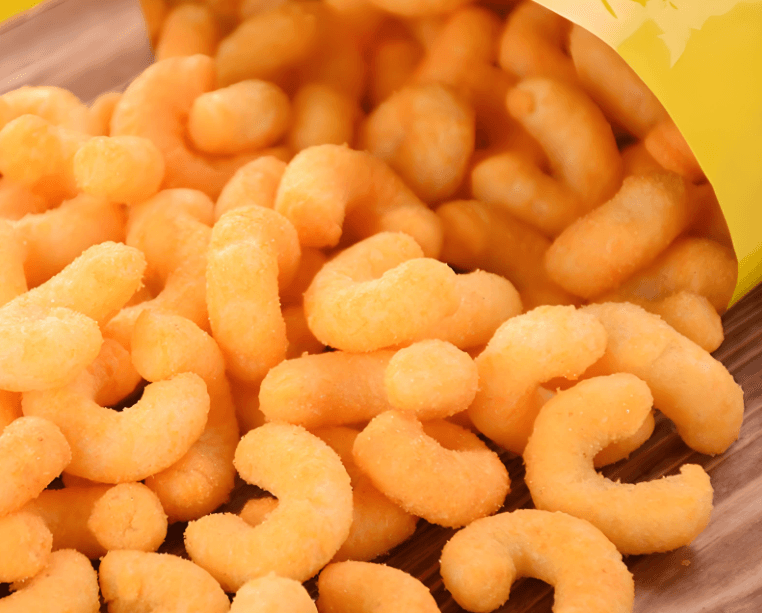
Corn puffs, often known by brand names like Cheetos™, cheese puffs, or corn curls, represent a multi-billion dollar segment of the global snack food industry. Their appeal lies in their unique textural properties: an intensely light, crispy, and airy matrix that readily melts in the mouth, combined with a powerful and often cheesy flavor delivery. This seemingly simple snack is, in fact, the product of a highly complex and precise manufacturing process centered around extrusion cooking.puffed snack food making machine
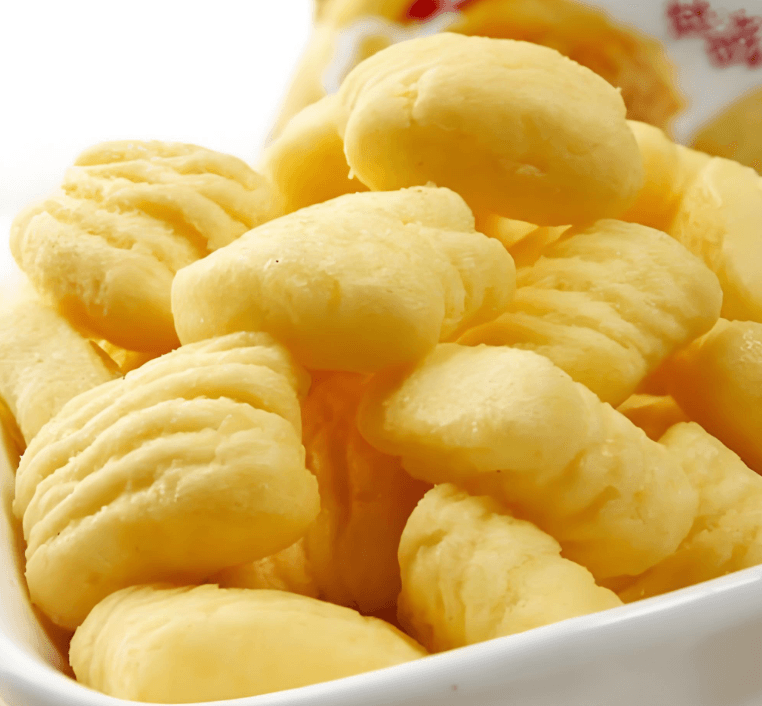
Unlike baked or fried snacks, the structure of a corn puff is not primarily built by gluten or slow dehydration but by the rapid phase change of water within a starchy matrix under high heat and pressure. This process, which creates their characteristic porous, expanded structure, is both a physical and chemical transformation. The success of the final product is acutely dependent on the interplay between the raw material properties (especially the starch composition of the corn meal), the mechanical and thermal energy inputs during extrusion, and the precise control of all subsequent processing steps. This article will deconstruct this entire process, providing a comprehensive overview of the technology behind the production of corn puffs.
2. Raw Material Selection: The Foundation of Quality
The quality and consistency of the final product are determined at the very beginning, with the careful selection and specification of raw materials.puffed snack food making machine
2.1. The Star of the Show: Corn Meal Specifications
The primary ingredient, constituting often 70-80% of the blend, is corn meal. Not just any corn meal is suitable; specific functional properties are required:
- Type of Corn: Yellow dent corn is the industry standard due to its high starch content and optimal hardness, which allows for proper milling into a consistent granulation.
- Granulation (Particle Size): This is a critical parameter. The corn must be milled to a very fine and uniform particle size, typically between 40 and 60 mesh (250 to 425 microns). A fine grind ensures:
- Uniform Hydration: Water can quickly and evenly penetrate the small particles during mixing and preconditioning.
- Consistent Gelatinization: All starch granules are subjected to similar thermal and mechanical forces, leading to a uniform melt in the extruder.
- Smooth Flow: Prevents clogging and ensures a consistent feed rate into the extruder.
- Superior Expansion: Fine particles allow for a more homogeneous melt, which expands more uniformly upon exit from the die.
- Starch Content: A high starch content (typically > 80% on a dry basis) is desirable as starch is the polymer responsible for expansion.
- Moisture Content: The inherent moisture of the incoming corn meal must be controlled (usually below 13%) to allow for precise calculation of the total moisture added during processing.
2.2. Water: The Plasticizer and Reaction Medium
Water is not merely an ingredient; it is a vital process aid. Injected into the extruder barrel as steam or liquid, it serves multiple functions:
- Plasticizer: It softens the starch granules, reducing their glass transition temperature (Tg) and making them more malleable. This reduces the mechanical energy required and wear on the extruder.
- Reaction Medium: It is essential for the gelatinization of starch, a process where granules swell, lose their crystalline structure, and leach amylose and amylopectin.
- Expansion Agent: Upon exiting the die, the superheated water flashes into steam, providing the force that expands the starch matrix. The amount of water directly influences the final expansion and texture.
2.3. Oils and Fats: Texture and Mouthfeel Modifiers
Fats may be added to the raw mix or injected into the extruder. Their roles are complex:
- Lubrication: They reduce the viscosity of the melt inside the barrel, decreasing mechanical energy input and product temperature.
- Texture Modification: Higher fat content generally results in a less expanded, more tender, and less hard final product. It creates a “shorter” texture.
- Mouthfeel: Contributes to a rich, smooth mouthfeel and carries fat-soluble flavors.
- Nutritional Impact: Adds calories and can be a source of unsaturated fats.
2.4. The Flavor System: Seasonings and Cheese Powders
The base expanded puff is relatively bland. Flavor is added after extrusion. The seasoning blend is a proprietary and complex mixture, often featuring:
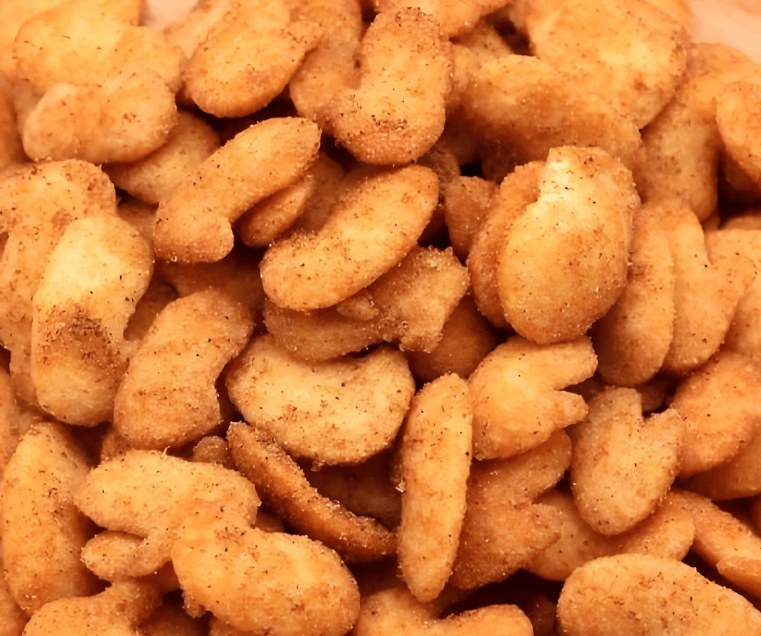
- Cheese Powder: The cornerstone of “cheese puffs.” Typically made from dehydrated cheddar or similar cheeses, often with whey solids and buttermilk powder added.
- Salt: Essential for basic taste and flavor enhancement.
- Flavor Enhancers: Monosodium glutamate (MSG) and yeast extracts are commonly used to boost savory, umami notes.
- Acidulants: Citric acid or lactic acid provide a sharp, tangy note that complements the cheese flavor.
- Spices and Natural Flavors: Paprika and turmeric provide color, while other natural flavors round out the profile.
- Oil: The seasoning mix is often applied with a vegetable oil mist to ensure adhesion. The oil acts as a sticky base for the dry powder particles.
3. The Heart of the Process: Extrusion Technology
This is the transformative step where raw materials are converted into the puffed product.
3.1. Principles of Extrusion Cooking: A Thermo-Mechanical Process
Extrusion cooking is a continuous process that combines several unit operations—mixing, cooking, kneading, shearing, and shaping—into a single piece of equipment. It subjects food materials to high temperatures, pressures, and shear forces for a short time.puffed snack food making machine
3.2. Pre-Processing: Blending and Pre-Conditioning
Before entering the extruder, the dry ingredients (corn meal, any dry additives) are blended to ensure homogeneity. This pre-blend is then fed into a pre-conditioner. Here, it is mixed with live steam and/or water. This initial hydration begins the starch gelatinization process gently and pre-heats the mix, significantly reducing the thermal and mechanical energy required in the main extruder barrel and improving overall process efficiency and stability.puffed snack food making machine
3.3. Anatomy of a Twin-Screw Extruder
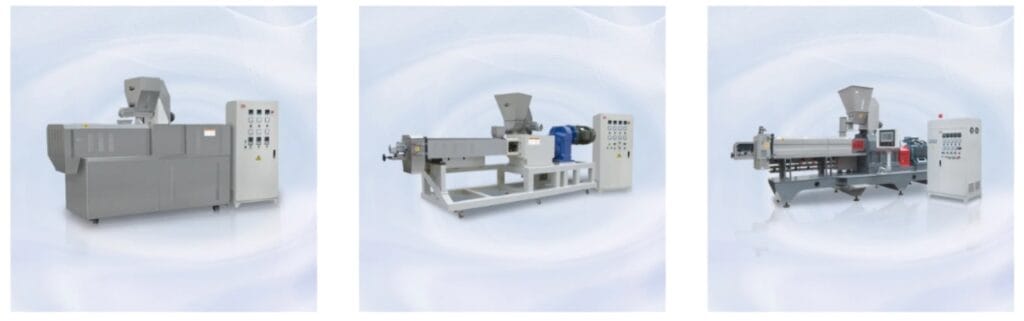
While single-screw extruders exist, the vast majority of modern corn puff production uses co-rotating twin-screw extruders for their superior control and flexibility. Key components include:
- Feed Hopper: Where the pre-conditioned mix is introduced.
- Barrel: A series of jacketed segments that can be heated or cooled. The internal screws configured with different elements.
- Screws: Two intermeshing screws that transport, mix, and shear the material. Screw elements can be conveying elements (to push material forward), kneading blocks (to impart high shear and mixing), and reverse elements (to create backpressure and fill levels).
- Die: A precision-machined plate with one or more openings at the end of the barrel that shapes the product and creates the necessary backpressure for cooking.
3.4. The Journey Through the Barrel: A Phase Transformation
The material undergoes a dramatic transformation as it moves through the configured screw segments:
- Feed Zone: The pre-conditioned mix is conveyed forward. The volume is mostly empty, and the material is still a powder.
- Compression and Melting Zone: The screw configuration reduces the volume, compacting the material. Kneading blocks are introduced, imparting intense mechanical shear. Combined with thermal energy from the barrel jackets and the dissipation of mechanical energy, the starch granules rapidly gelatinize. The powdery mix is transformed into a viscous, plasticized dough-like melt, often reaching temperatures of 130-180°C.
- Metering Zone: The melt is homogenized and pushed under high pressure towards the die. The pressure can range from 500 to over 2000 psi.puffed snack food making machine
3.5. The Die and Instantaneous Expansion
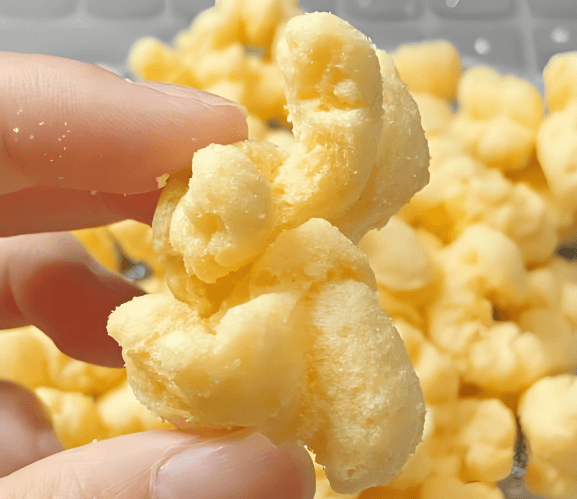
The pressurized, superheated melt is forced through the holes in the die. As it exits, it experiences an instantaneous pressure drop from the high internal pressure to atmospheric pressure. This causes the superheated water within the starch matrix to flash into steam. The expanding steam bubbles are trapped within the viscoelastic starch melt, creating a vast network of pores. The structure instantly sets or “freezes” due to the rapid moisture loss and cooling, locking in the expanded, foam-like structure. The shape of the die hole determines the shape of the puff (e.g., a round hole for a ball, an oval for a curl).

4. Post-Extrusion Processing: From Puff to Package
The product exiting the die is fully expanded but too moist and fragile for packaging. It requires several finishing steps.
4.1. Cutting and Sizing
A rotating knife cuts the extruded rope of product immediately as it exits the die. The speed of the knife determines the length of the individual pieces.puffed snack food making machine
4.2. Drying: Moisture Management for Crispness
The freshly extruded puffs have a moisture content of ~8-10%. They are soft and pliable. To achieve their final crispy texture, they must be dried in a multi-stage oven (e.g., a triple-pass dryer) to a final moisture content of ~1-2%. This process must be carefully controlled; too fast and the surface will harden, trapping moisture inside and creating a soggy center; too slow and the product can become overly hard and lose its delicate texture.
4.3. Cooling and Equilibrium
The hot, dried puffs are conveyed through a cooling tunnel. This stabilizes the product and allows for moisture to equilibrate within the pieces, preventing condensation in the bag, which would lead to loss of crispness.
4.4. Seasoning Application: The Art of Adhesion
The cool, dry puffs enter a rotating drum tumbler. Here, they are first misted with a fine spray of vegetable oil. The oil acts as a adhesive. Immediately afterwards, the dry seasoning powder is applied. The tumbling action ensures an even and complete coating. The ratio of oil to seasoning is critical for achieving the right flavor intensity and avoiding a greasy or dusty feel.
4.5. Final Packaging: Preservation and Protection
The finished puffs are fed into automated packaging machines. They are typically packaged in flexible pouches made from multi-layer polymer films (e.g., biaxially oriented polypropylene – BOPP) that provide an excellent barrier against moisture and oxygen, the two main enemies of snack food crispness and shelf life. Nitrogen gas flushing is almost universally used to displace oxygen from the package headspace, preventing oxidative rancidity of the fats and preserving product freshness and crunch.puffed snack food making machine
5. Quality Assurance and Control: Measuring Success
Throughout the process, rigorous QC checks are performed:
- Raw Materials: Particle size analysis, moisture content, and functional tests on corn meal.
- In-Process: Monitoring of extruder parameters (torque, pressure, temperature), product bulk density, and moisture.
- Finished Product: Key metrics include:
- Moisture Content: Critical for texture and shelf life.
- Water Activity (Aw): A more accurate predictor of microbial stability and texture than moisture content alone. Target is typically < 0.3.
- Bulk Density: A direct measure of expansion. Lower density equals higher expansion and a lighter texture.
- Texture Analysis: Instrumental measurement of hardness and crispness (e.g., via a Texture Analyzer using a compression test).
- Color: Measured by colorimeter to ensure consistency.
- Seasoning Pick-Up: Ensuring correct application weight.
6. Food Safety and HACCP Considerations
A HACCP (Hazard Analysis Critical Control Points) plan is mandatory. Key hazards and controls include:
- Physical Hazards: Metal fragments (controlled by magnets and metal detectors), foreign materials (sieves, filters).
- Chemical Hazards: Pesticides in raw materials (controlled by supplier certification), mycotoxins (controlled by incoming inspection), acrylamide formation (mitigated by controlling time-temperature profile in extruder).
- Biological Hazards: Low water activity (Aw < 0.6) in the final product prevents microbial growth, making it shelf-stable. The high temperatures during extrusion serve as a kill-step for any pathogens.
7. Advanced Variations and Future Trends
- Half-Products/Third-Generation Snacks: The extruded product is deliberately under-expanded and dried to a glassy state, creating a shelf-stable “half-product” that can be shipped and then expanded by frying or hot air popping at a later time.
- Ingredient Innovation: Use of whole-grain corn, ancient grains, pulse flours (e.g., chickpea, lentil) for improved nutrition and novel flavors.
- Clean Label: Removal of artificial flavors, colors, and MSG, relying on natural seasonings and yeast extracts.
- Protein Fortification: Addition of dairy or plant-based proteins to meet consumer demand for high-protein snacks.
- Process Optimization: Use of AI and machine learning to optimize extruder settings in real-time for maximum efficiency and consistency.puffed snack food making machine
8. Conclusion: The Precision Engineering of a Snack
The production of corn puffs is a testament to the application of food engineering and materials science. It is far from a simple mixing and cooking process. It is a precisely controlled, continuous transformation where the functional properties of starch are harnessed through the careful application of thermal and mechanical energy. Every step, from the particle size of the corn meal to the pressure at the die, from the drying profile to the nitrogen flush in the package, is meticulously designed and controlled to produce a consistent, high-quality, and safe snack food. Understanding this complex interplay is key to innovating and perfecting this popular and enduring product. The humble corn puff, therefore, stands as a iconic example of how technology can turn basic agricultural commodities into complex and enjoyable food experiences.
Leave A Comment